The Hidden Harmony Is Better Than The Apparent Harmony.

One of Plato’s teachers was Cratylus who in turn was a disciple of Heraclitus who was the author of the title of this post: “The hidden harmony is better than the apparent harmony.”

Not surprisingly the central character in Plato’s dialogues knew that the hidden harmony is better than the apparent harmony, as is evidenced in this passage from the Phaedo:

Upon this Cebes said: I am very glad indeed, Socrates, that you  mentioned the name of Aesop. For that reminds me of a question which has  been asked by others, and was asked of me only the day before yesterday  by Evenus the poet, and as he will be sure to ask again, you may as well  tell me what I should say to him, if you would like him to have an answer.  He wanted to know why you who never before wrote a line of poetry, now  that you are in prison are putting Aesop into verse, and also composing  that hymn in honor of Apollo.

Tell him, Cebes, he replied, that I had no idea of rivaling him  or his poems; which is the truth, for I knew that I could not do that.  But I wanted to see whether I could purge away a scruple which I felt about certain dreams. In the course of my life I have often had intimations in  dreams “that I should make music.” The same dream came to me sometimes  in one form, and sometimes in another, but always saying the same or nearly  the same words: Make and cultivate music, said the dream. And hitherto  I had imagined that this was only intended to exhort and encourage me in  the study of philosophy, which has always been the pursuit of my life,  and is the noblest and best of music. The dream was bidding me to do what  I was already doing, in the same way that the competitor in a race is bidden by the spectators to run when he is already running. But I was not certain  of this, as the dream might have meant music in the popular sense of the  word, and being under sentence of death, and the festival giving me a respite,  I thought that I should be safer if I satisfied the scruple, and, in obedience to the dream, composed a few verses before I departed.

The fact that Socrates interpreted the making of music (apparent harmony) as nothing other than the practice of philosophy (the hidden harmony) demonstrates how well he knew Heraclitus.

Why on earth would anyone interpret the fairly apparent command “make music” as requiring him to study and practice philosophy? It is striking that Socrates doesn’t give any evidence that he struggled for even a moment about interpreting this dream. For example he did not seem to think that his dream meant “compose music and consider learning a musical instrument” or even “develop your musical talents on an amateur level.”

He says,

“I had imagined that this was only intended to exhort and encourage me in  the study of philosophy, which has always been the pursuit of my life,  and is the noblest and best of music.”

If I had a recurring dream that said “Langley, make and cultivate music!” It would have taken a great many years to interpret this as “Langley, practice philosophy!”

I guess it is the common lot of mankind to be stuck in the world of what appears, and I mean appears in the most apparent sense of appears. How sad that most of us never get out of the purely sensible world, the purely visible world.

St. Paul says something about the visible world in Romans doesn’t he? I wonder if he was familiar with Heraclitus?

Nonetheless, Heraclitus does not insult the apparent harmony, in fact the apparent harmony is very pleasant. I like apparent harmony. I like really obvious harmony.

But the hidden harmony is better.

Unfortunately the hidden harmony is very difficult to see. In fact it is hidden. Which means that we cannot see it…at least not at first.

It might even take many years to develop eyes that are able to discern the hidden harmony. Our eyes are a little like those of a bat with respect to the sun. For bats, I am guessing, the things that are most apparent are actually quite dim in their appearance. Whereas in the clear light of the sun, bats eyes are useless. In other words the things which are most apparent to bats are in fact rather hidden (i.e. hidden in their dimness), and the things which are least apparent to bats are in themselves more apparent because they are illuminated better in themselves. (N.B. I don’t know a great deal about bat-eyes. I have never really come “face to face” with a bat, so I guess I am “flying in the dark” so to speak. But this whole bat analogy is quite good- and I think I should copyright it or something.)

Now I don’t know if any amount of training or education will help a bat to see more clearly in the daylight- but I am quite certain that human beings can be taught to see hidden harmonies – but only after a lengthy struggle which is called liberal education. A struggle without which we must wander as though in the dark although living in a world of light.



Posted in classical education, education | Tagged , , , , , , | Leave a comment

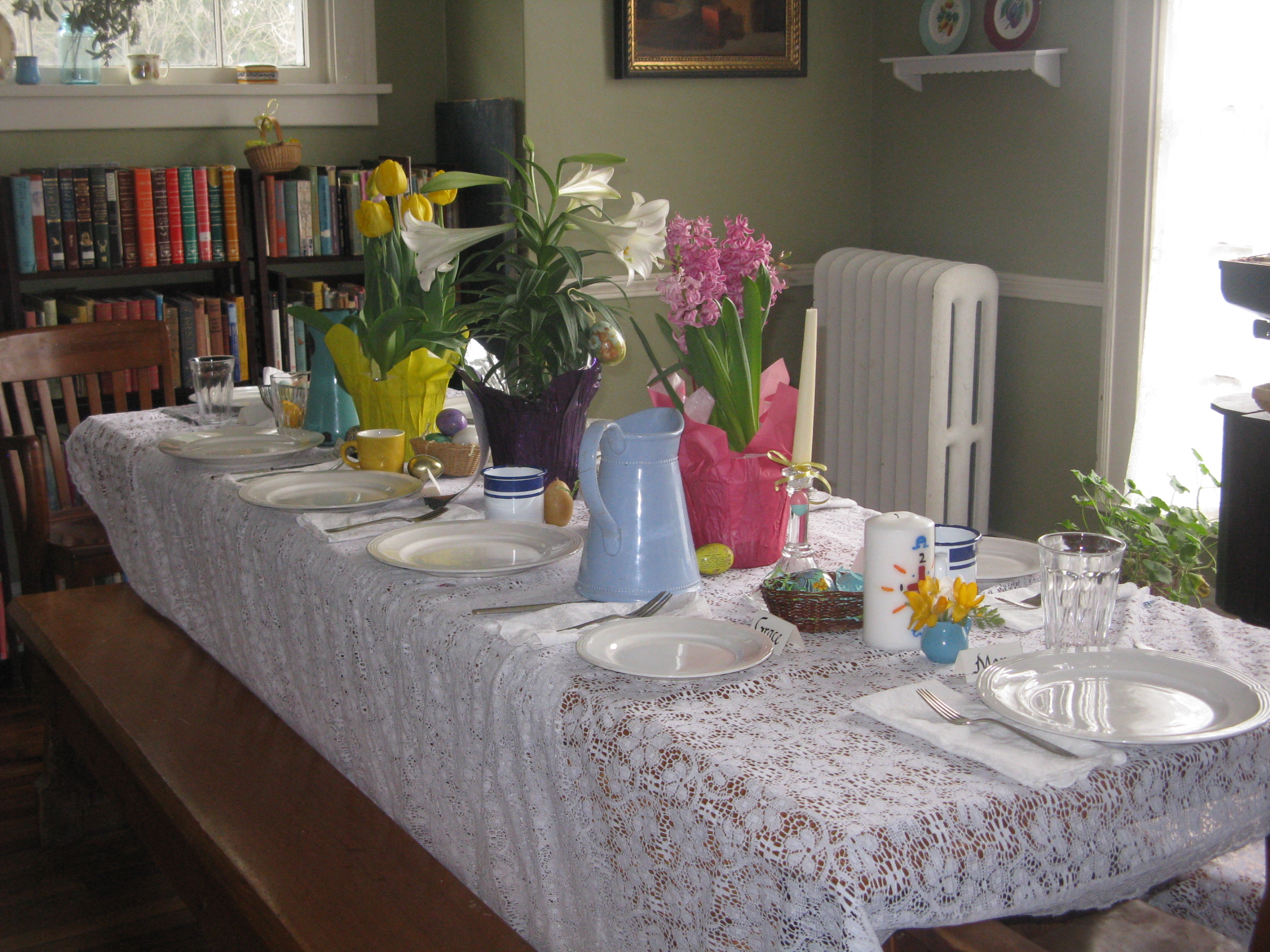
Alleluia Continued! Twice Baked Potatoes and Roast Beef

Easter.

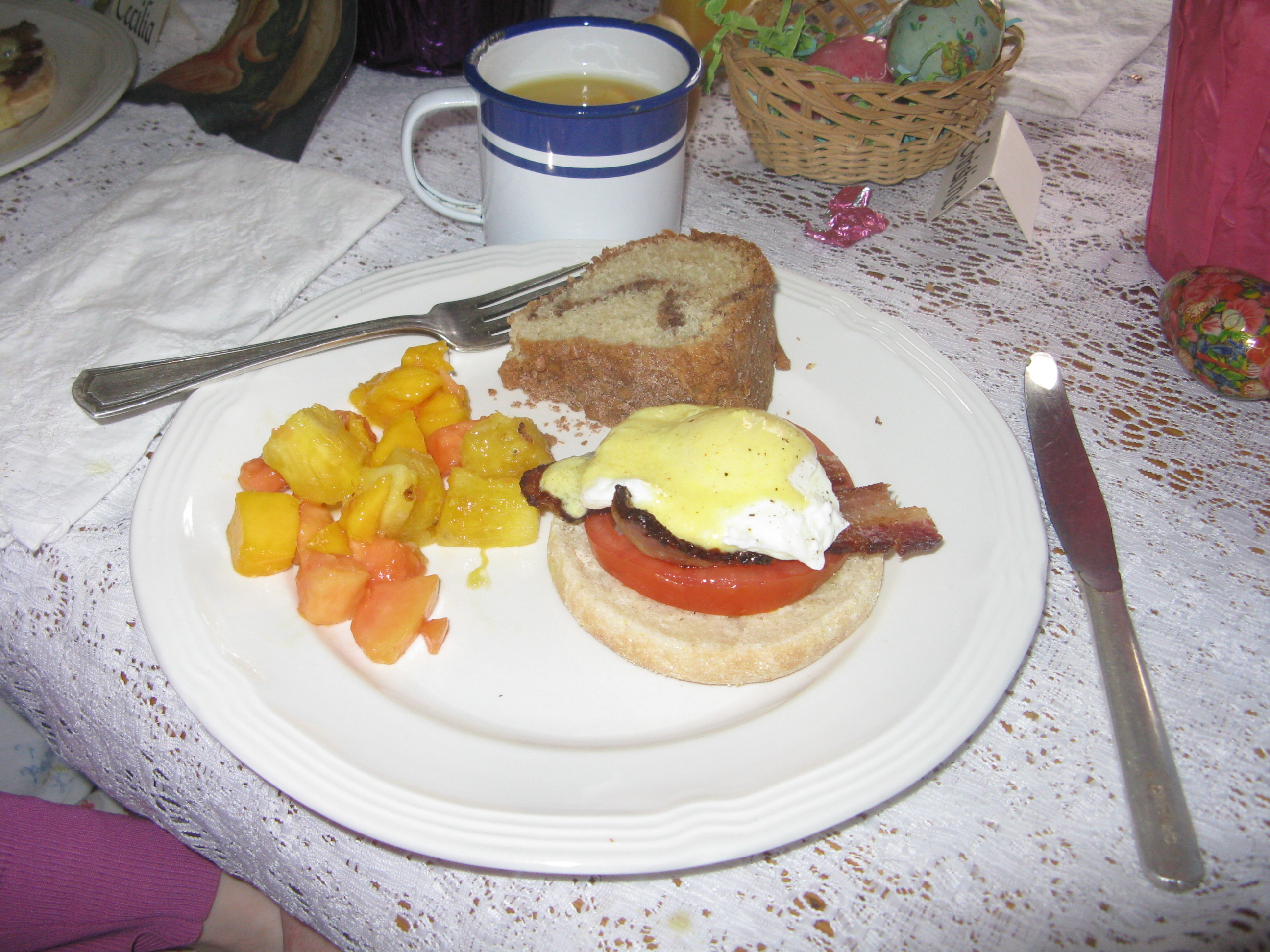
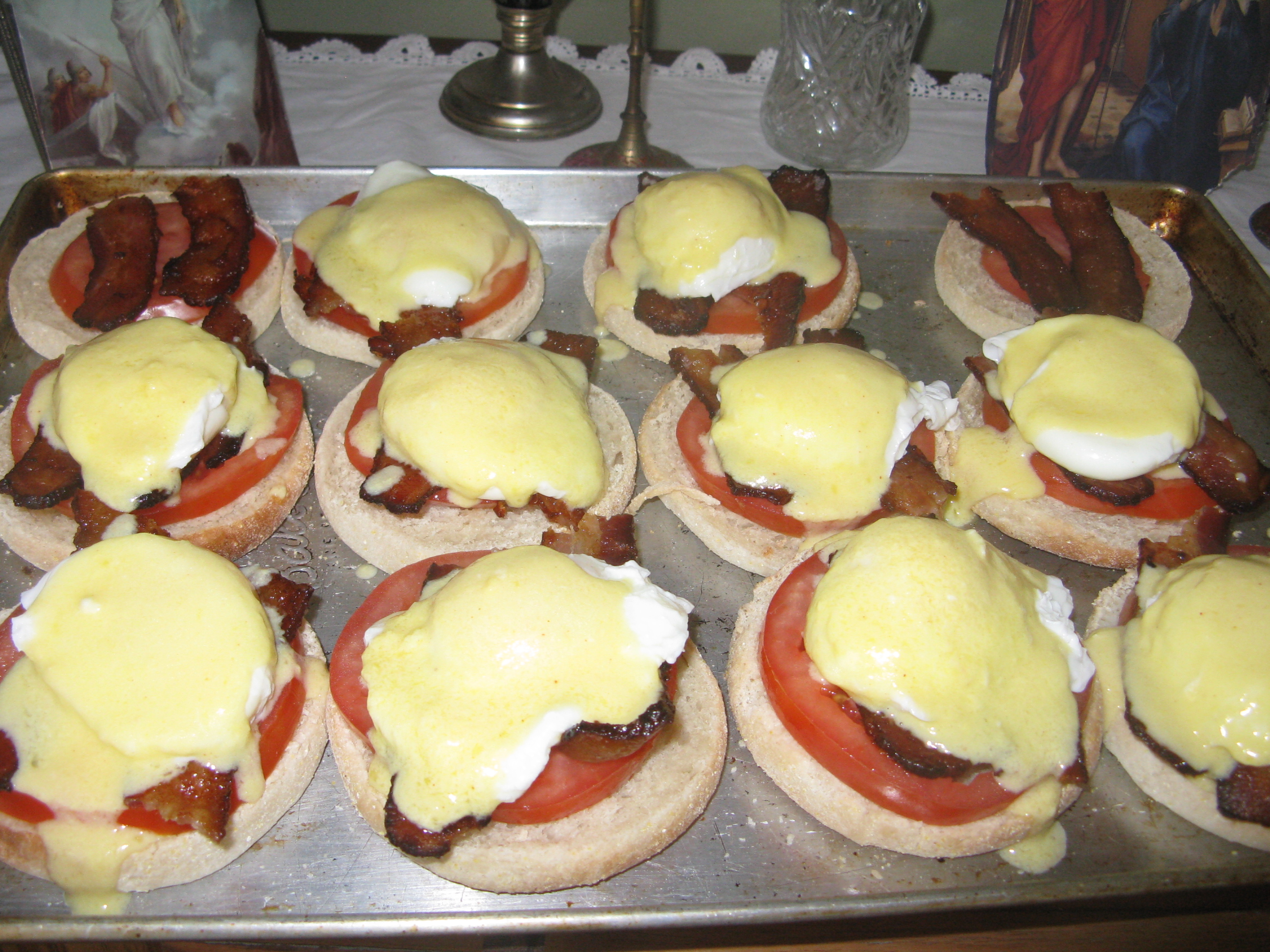
Brunch Menu: Eggs Benedict on a substratum of thick roasted bacon atop a slice of fresh tomato on an English muffin, Mango-Papaya-Pineapple fruit salad, with coffee cake, coffee and mimosa!

Dinner Menu: Roast Beef in an onion marinade, Twice Baked Potatoes with gorgonzola, Sweet Potatoes and peas in a cream sauce!

IMG_5883

Hyacinth- the most fragrant flower on the planet.

IMG_5896Beautiful. How did she poach all those eggs simultaneously?

IMG_5885  IMG_5900This isn’t my plate because I don’t see the coffee or the mimosa.

IMG_6059

I can’t believe that we still have an un-cracked china plate in the house.

I hope heaven is like this.

Posted in Easter | Tagged , , , , , | 1 Comment

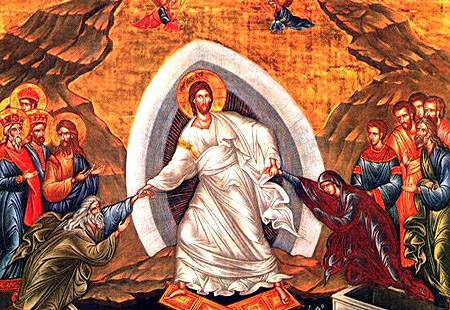
Alleluia! In Resurectione Tua

Happy Easter!

This is the day the Lord has made: all time and truth is God’s alone. Let heaven rejoice, let earth be glad, and praise surround high heaven’s throne. This is the day Christ rose from death; evil’s strong hold forever fell. This day the saints Christ’s triumph spread, and of the wonders all do tell. Hosanna in the highest strains Christians throughout the earth now raise. The highest heavens where Christ now reigns shall sing their glorious thanks and praise. (based on a hymn by Isaac Watts 1674-1748)

I love that.

And just listen to this!

Alleluia! In resurrectione tua

This is just beautiful! By Jacob Handle (1550-1591) Sung by the Cathedral singers conducted by Richard Proulx.

Alleluia! In resurrection tua Christe, Alleuia! Coelum et terra laetentur. Alleluia! Surrexit Dominus de sepulchro, Alleluia! Qui pro nobis pependit in lingno. Alleluia! Gari sunt discipuli viso Domino. Alleluia!

Posted in Sacred Music | Tagged , , | 2 Comments

Education And Second Thoughts

As often noted in this ‘little journal’ which is ostensibly about liberal education and the “formation of Catholic liberally educated ladies and gentlemen,” liberal education is supposedly something that frees students.

I say “supposedly” because as a high school teacher, I don’t really expect to see the results of liberal education until after the student has completed one, and I have always considered the years of primary school and secondary school really just as one very long beginning. And then after making, hopefully, an excellent beginning, the student is supposed to continue the pursuit of the ‘meat’ of liberal education in college having now been weaned off the ‘milk.’ So therefore I have always taken my role as a teacher as belonging much nearer to the beginning of education than towards the end.

And this makes sense to me. High school provides students, if they are lucky, an opportunity to read lots of books for the first time. It is a time for many introductions. It is a time for memorizing Shakespearean sonnets that clearly were addressed to someone much farther down the path of life’s harsh experience, and therefore a little absurd to the minds of the young.

The student is supposed to memorize lines like

“When forty winters shall besiege thy brow…”

or

“Devouring time blunt thou the Lions paws…”

And those thoughts are supposed to enter into the mind of the student at age 14 but not really reach their full meaning until he has had much more time to reflect.

It is a time to become acquainted with the whole Bible. Then he can study each book later in more detail in light of the whole.

It is a time for getting a glimpse of world history and introductions to every major nation and culture. How beneficial these glimpses and introductions will be for him later when he is enrolled in college and is perhaps undertaking a serious four-year program in philosophy, ethics, politics and metaphysics.

High school is also a time for delving deeply into this or that subject for the first time to whet the taste for further deep delving.

Clearly mature thinking and intellectual progress doesn’t happen by one consideration of anything important. Imagine only reading the Iliad once! Or Herodotus or Thucydides! What is that supposed to do – except to inspire the reader to say “I want to read this again so that I can really  understand it.”

Imagine hearing Our Lord’s Sermon on the Mount once. “Blessed are the poor!?!” What could that possibly mean? It sounds absolutely crazy on the first hearing.

It is only though giving things second thoughts and second considerations that we begin to mature and grow. The Doctors of the Church were all people who thought about Sacred Scripture more than once. By continual repetition and caring to give things second thoughts they began to understand and were consequently able to bear fruit – one hundred fold and sixty fold and forty fold.

Great thinkers and scientists and wise men were all people of second thoughts.

And so it seems to me that, for the most part, one is not able to complete a liberal education by the end of high school. But one is certainly able to complete a very fine beginning.

Of course I have met many people who think otherwise. It appears that many people think that liberal education is something that can be gained sufficiently by the time high school is complete. Or perhaps they think that it might not be gained perfectly, but given the necessities of life and the pressing obligations of the real world, one really needs to turn full attention, after high school, towards acquiring the special knowledge and skills that are required for this or that occupation or career path. So they say something like

“well as much as I would like my child to continue his liberal education – to be perfectly honest- that’s not a luxury that WE can afford.” 

or they say,

“Well my child has now pretty much received his liberal education… and certainly he could continue it, but the fact of the matter is that he has a good foundation – and besides that, he has also a really strong sense of the Faith which he received at home.”

Of course no high school wants to gainsay a parent saying something like this. What would a school say?

“Actually your child has not really received a complete education yet. Even though we as a school regularly boast about how excellent and thorough our curriculum is, and even though you have paid thousands of dollars in tuition over the course of the last several years- we hate to say this…but your child has really just made a beginning. Its far from over. If you would like a complete education for your child then he really needs to finish what he has only just begun… or perhaps he can sort of continue reading on weekends.”

Human beings do take a pathetically long time to learn in comparison to our friends in the non-rational animal world. Some insects appear to learn everything they need for a successful life within hours. Cats appear to take about six months to gain everything they need to survive pretty well. Dogs take longer- but their education still seems to be pretty quick and then apparently one can’t teach them anything new. So if one happened to be a dog, I would not recommend further schooling after high school. I suppose I wouldn’t even recommend you go to high school if you were a dog- probably completing the first grade would be sufficient.

I don’t know much about whales, but apparently they take a longer time to mature and I am guessing that perhaps “whale school” requires more time for a complete education than dog school.

Posted in classical education, Shakespeare | Tagged , , | Leave a comment

Dickens on Custom

A wise philosopher asked “what has more power in directing the course of our lives, reason or custom?”

Reading A Tale of Two Cities cannot but convince one that custom is by far the predominant influence. Take this passage for instance

They hanged at Tyburn, in those days, so the street outside Newgate had not obtained one infamous notoriety that has since attached to it. But, the gaol was a vile place, in which most kinds of debauchery and villainy were practised, and where dire diseases were bred, that came into court with the prisoners, and sometimes rushed straight from the dock at my Lord Chief Justice himself, and pulled him off the bench. It had more than once happened, that the Judge in the black cap pronounced his own doom as certainly as the prisoner’s, and even died before him. For the rest, the Old Bailey was famous as a kind of deadly inn-yard, from which pale travellers set out continually, in carts and coaches, on a violent passage into the other world: traversing some two miles and a half of public street and road, and shaming few good citizens, if any. So powerful is use, and so desirable to be good use in the beginning. It was famous, too, for the pillory, a wise old institution, that inflicted a punishment of which no one could foresee the extent; also, for the whipping-post, another dear old institution, very humanising and softening to behold in action; also, for extensive transactions in blood-money, another fragment of ancestral wisdom, systematically leading to the most frightful mercenary crimes that could be committed under Heaven. Altogether, the Old Bailey, at that date, was a choice illustration of the precept, that “Whatever is is right;” an aphorism that would be as final as it is lazy, did it not include the troublesome consequence, that nothing that ever was, was wrong. (A Tale of Two Cities Bk II Chapter – “A Sight”)

“So powerful is use”, so powerful is custom. As Dickens illustrates, even the inhabitants of the highly civilized city of London could grow accustomed to atrocities committed by their own legal system. For example take this lovely little discussion between Jerry Cruncher and another sight see-er or court watcher of sorts,

After some delay and demur, the door grudgingly turned on its hinges a very little way, and allowed Mr. Jerry Cruncher to squeeze himself into court.

“What’s on?” he asked, in a whisper, of the man he found himself next to.

“Nothing yet.”

“What’s coming on?”

“The Treason case.”

“The quartering one, eh?”

“Ah!” returned the man, with a relish; “he’ll be drawn on a hurdle to be half hanged, and then he’ll be taken down and sliced before his own face, and then his inside will be taken out and burnt while he looks on, and then his head will be chopped off, and he’ll be cut into quarters. That’s the sentence.”

“If he’s found Guilty, you mean to say?” Jerry added, by way of proviso.

“Oh! they’ll find him guilty,” said the other. “Don’t you be afraid of that.”

Jerry Cruncher and son Jerry

The sheer barbarity of the description shocks the reader but appears slightly humourous given the “relish” with which the torture is anticipated by these two respectable gentlemen, especially if read aloud in a cockney accent. But so powerful is custom that even the most disturbing things might appear as perfectly ordinary.

Dickens proceeds to manifest the effect of custom on the life of the mind by saying

“the Old Bailey, at that date, was a choice illustration of the precept, that “Whatever is is right;”

Whatever is established though long usage, whatever is firmly practiced in society by long custom, whatever thoughts or explanations have been trotted forth and repeated to such an extent that these thoughts become habits of mind … all of these are “whatever is” and they all become what “is right.”

Custom is powerful indeed, so powerful that its presence in directing our thoughts and actions becomes undetectable and we act according to it as if it were almost nature itself, or rather second nature.

Perhaps there is no escaping custom, and therefore “so desirable to be good use in the beginning.” But if we are to avoid acting and speaking “as those asleep” we can at least examine our lives, and examine our customs.

The trouble is precisely in identifying and distinguishing the thoughts that we have which spring from nature from those that spring from ‘second nature’ or custom.


Posted in Custom, slavery | Tagged , , , , , | 2 Comments

The “Four Hymn Mass” Is Not The Church’s Vision.

Well… we have been discussing sacred music and its role in the liturgy, and it might occur to someone to ask

“What does all this have to do with Catholic Classical Education?”

and

“Why are we spending so much time talking about music and the Mass? Can’t we get back to Fabre and Dickens and Shakespeare and Chaucer and Virgil and Thucydides and Euclid and Euripides and Heraclitus and Homer and the Bible?” (incidentally, my Virgil class has been admiring Virgil’s use of polysyndeton- I admit this figure of speech takes some practice especially to avoid the pedantry that it arouses in amateur writers)

The answer of course has to do with the phrase ‘Catholic Classical Education.’  As we have argued before, this phrase is really just a clever code phrase for ‘Catholic Liberal Eucation’ – or rather simply Liberal Education. And Liberal Education is the sort of education that frees men from certain things while at the same time freeing them for other things.

Among the things that Liberal Education frees a man for, are chiefly the actions that he ought to perform when addressing his Creator. Liberal Education frees men so that they will ultimately be able to enjoy the beatific vision.

Or is this an exaggeration?

I realize that everyone has a tendency to rationalize the significance of the project in which he happens to be engaged, but if truth is the end of education, it seems  to be no stretch of the truth to assert that the worship of God is the end especially of Liberal education.

Of course the worship of God is the end of every human activity, but I still maintain that the line between Liberal Education and the worship of God is straighter and shorter than say, the line between ‘plumbing’ or ‘farming’ and the worship of God.

No offense to plumbers and farmers here, both of which occupational groups are supremely important to our daily practical existence. As a matter of fact I should substitute the words politicians and lawyers for plumbers and farmers to make the point even clearer.

To put the point simply, Liberal Education frees men for the right and just worship of God. Therefore we need to speak every now and then, with as much clarity as is in the reach of our dim vision, about what the fitting worship of God looks like, so that we who participate in the education of the young might not perpetuate and contribute to ideas and practices and habits which will prove to set obstacles in their paths.

There. I think that was pretty clear.

Now back to Sacred music and the real point of this post, which is nothing other than to present a strong statement by Archbishop Samples of Portland Oregon.

“It is clear that the Council calls for the liturgy to be sung. In recent decades we’ve adopted the practice of singing songs at Mass. We take the Mass, and attach four hymns or songs to it. But this is not the Church’s vision. We need to sing the Mass. It is meant to be sung. The texts of the Mass are meant to be sung.

The Church provides us with chant, which is integral to liturgy, and should inspire the music of the Mass. We need to get away from singing songs at Mass and return to singing the Mass. And Gregorian chant is best suited to the Mass.”

I love this. Notice his use of the word integral. It is easy to see that Archbishop Samples is an intelligent man who knows how to follow a truth in principle out to the truth in its consequences.

If sacred music is integral to the Mass, then it follows that  “We need to sing the Mass.”

If hair, arms, legs and toe nails are integral parts of the body, then by golly I stand by the position that every body should have hair, arms, legs and toenails!

As a matter of fact I really do not see any reason why there should ever be a Mass anywhere that excludes at least some minimal singing.

I suppose in times of persecution it might be necessary to keep things hush hush, but even then I don’t see why people couldn’t just sing the Kyrie very very quietly.

Note also that the Archbishop distinguishes the kind of music that the Council Fathers envision. Not all ‘spiritual music’ is integral to the Mass, but rather that which clothes

“with suitable melody the liturgical text proposed for the understanding of the faithful”

as Pius X teaches in his Motu Proprio.

Quite obviously the liturgical text spoken about is not the text that we hear when we are asked to sing a “Processional” and an “Offertory Hymn” and a “Communion Song” and a “Recessional.” I suppose by accident one of these hymns might contain a snippet of the liturgical text- but again only by accident.

Time to dust off our Gradulales and Libers and get to work.

Posted in classical education, Sacred Music | Tagged , , | Leave a comment

An Integral Part: Music and the Mass

Foiled! I can’t find the official Latin edition of the principal text for anyone who wishes to understand the role of Sacred Music in the Liturgy.

You ask, “what is the fundamental text for those who wish to understand the role of Sacred Music in the Liturgy?”

That is an excellent question and very well phrased to boot. Here are three words which, by their mellifluous sound, indicate the musical nature of what they signify, to wit,

“Tra le Sollecitudine”

Try saying that 10 times fast.

One would think that the Vatican website would have it, but I checked and only found the English, Italian, Spanish and Portuguese translations.

Someone needs to alert Pope Francis about this. No wonder the music in our churches is so awful.

Here is a little taste of this important text in English

Sacred music, being a complementary part of the solemn liturgy, participates in the general scope of the liturgy, which is the glory of God and the sanctification and edification of the faithful. It contributes to the decorum and the splendor of the ecclesiastical ceremonies, and since its principal office is to clothe with suitable melody the liturgical text proposed for the understanding of the faithful, its proper aim is to add greater efficacy to the text, in order that through it the faithful may be the more easily moved to devotion and better disposed for the reception of the fruits of grace belonging to the celebration of the most holy mysteries. (Tra le Sollecitudine Pope Pius X Instruction on Sacred Music Motu Proprio promulgated on November 1903)

The immediate question that I have is “from what does the word complementary translate?”

Well- I happen to know. The question was purely rhetorical.

The Latin word is “integrans.” In other words the English translation should read,

“Sacred music, being an integral part of the solemn liturgy…” (parte integrans)

How do I know this? Well – just take a look at the Italian, Portuguese and Spanish texts

  1. “La musica sacra, come parte integrante della solenne liturgia, ne partecipa il fine generale…(Italian)
  2. “Como parte integrante de la liturgia solemne, la música sagrada tiende a su mismo fin,…” (Spanish)
  3. A música sacra, como parte integrante da Liturgia solene, participa do seu fim geral…(Portuguese)

I am not saying that I know any of these languages, but after staring at these sentences for about half an hour, I couldn’t help but to notice certain similarities.

But I also have an ace in my back pocket, because I happened to stumble across this:

CHIROGRAPH
OF THE SUPREME PONTIFF
JOHN PAUL II
FOR THE CENTENARY
OF THE MOTU PROPRIO
“TRA LE SOLLECITUDINI’
ON SACRED MUSIC


and Blessed John Paul II quotes the very line that I am talking about!

…the special attention which sacred music rightly deserves stems from the fact that, “being an integral part of the solemn Liturgy, [it] participates in the general purpose of the Liturgy, which is the glory of God and the sanctification and edification of the faithful”[3]

QED!

But, why oh why does the English translation have to say complementary?!?

The problem with the word complementary is firstly, the word complementary sounds exactly like complimentary and is therefore often confused with it. If Sacred music is merely complimentary, then it is obvious that sacred music is something that we can all live without.

The word comlementary makes sacred music’s role something akin to the role that a cherry plays atop an ice cream sundae.

As we all know, one is able to have a perfectly acceptable ice cream sundae without a cherry. An ice cream sundae without a cherry is a perfectly acceptable ice cream sundae. Nothing is missing that belongs to its own definition qua ice cream sundae.

Hot Fudge Double-Chocolate Cherry Sundaes | The Splendid Table

Sundae with a Cherry

Sundae without Cherry

Secondly, even if we use the word complementary to mean “completing” which is what it means, we still tend to use the word in a weaker sense such as “enhancing.” Thus we might say that “bread is a good complement to the dinner” or “flowers complement the dinner table.”

If we were all to agree that “complementary” mean strictly “to complete” then I wouldn’t mind. Because then the phrase

“Sacred music, being a complementary part of the solemn liturgy…”

has more ‘bite’ to it. The phrase would indicate to us that Sacred music is something that is necessary- necessary that is to anyone who would like a complete liturgy.

Now I know exactly what you are thinking. You are thinking,

“Well certainly one is able to have Mass without music. Why…as a matter of fact all those Irish priests in 1709 had to say Mass in secret without music because of the British “penal act” which attempted to force priests to take an oath etc. etc.”

Well, before you go on and lecture me about Irish history and Queen Anne and penal acts and all sorts of things that will obscure the argument, allow me to say that you have succeeded in nothing but making my point even clearer!

An integral part is not the same thing as an essential part.

For example one is able to have a man without hair on his head. Hair is not an essential part of a man. But would we say that a hairless man has all the parts that make up a complete man? No, a man should have hair! Every man is supposed to have hair by nature! And furthermore, I don’t care about that recent article in the WSJ about how bald men make more money!

[SB10000872396390444138104578032622283147376]

Ok, so now you are thinking “Yes maybe a bald man is in fact a complete man” and now after reading the article in the WSJ you are probably contemplating a trip to the barber.

Well what if a man was lacking an arm? Do we have a man? Yes we do, because an arm is not an essential part of a man.

But we would still admit, with regret, that an armless man appears to be lacking something which he should have. There is a deficiency that will no doubt have to be made up for in some other way. An armless man wants an arm, much more than, say, he wants a bow tie or a top-hat.

An integral part is the kind of part that allows us to have a complete thing, while noting that if something is missing its integral parts we might still have the thing- but not in its completeness.

On the other hand if a man lost his head, we would have to say that we really do not have the man anymore. The head is something more than an integral part. I might venture that the head would appear to be an essential part. A sine qua non for having the thing itself.

Image result for headless horseman irving

(In my humble opinion The “Headless Horseman” was not really a man at all in sofar as he was lacking an essential part!)

That probably goes for the torso as well.

I am not a doctor, but I bet a doctor would  be able to make a decent list of essential parts of the human body and another list of integral parts.

The point is that integral parts, while not being essential, are still necessary if one wishes to have the whole of what a thing is.

If you think there is no difficulty for a person to lack eyes, or arms, or legs, or even eyebrows, or fingernails or whatever…then go ahead. You will also claim that it is fine for a mass to lack sacred music.

But the truth is that something is missing which should be there.

As Pope St. Pius X taught, and was reaffirmed by the council fathers in Sacrosanctum Consilium, and his teaching was reiterated recently by Pope John Paul II…

sacred music is an integral part of the solemn liturgy.

Posted in Sacred Music | Tagged , , , , | 10 Comments

Sacred Music and The Catholic School II

115. Great importance is to be attached to the teaching and practice of music in seminaries, in the novitiates and houses of study of religious of both sexes, and also in other Catholic institutions and schools. To impart this instruction, teachers are to be carefully trained and put in charge of the teaching of sacred music. (Sacrosanctum Consilium – The Constitution on the Sacred Liturgy-Second Vatican Council)

What are Catholic educators supposed to make of this? Is this really the Catholic Church speaking? Does the Church really say that great importance should be attached to teaching sacred music?

Does the Second Vatican Council really express the view that – teaching sacred music is part of the ‘job description’ of Catholic schools… or am I misreading this?

What about sports? Doesn’t Vatican II say something about the great importance that athletic programs play in the lives of men and women as they forge their paths to heaven? What about sports?!? Maybe sports are recommended in some other encyclical or Papal Bull or something….

114. The treasure of sacred music is to be preserved and fostered with great care. Choirs must be diligently promoted, especially in cathedral churches; but bishops and other pastors of souls must be at pains to ensure that, whenever the sacred action is to be celebrated with song, the whole body of the faithful may be able to contribute that active participation which is rightly theirs, as laid down in Art. 28 and 30. (ibid.)

Does this say that pastors should take great pains to ensure that “the faithful may be able to contribute that active participation which is rightly theirs.” I guess it does say that… after all I think I am merely repeating it.

But again…what about sports? After all isn’t it true that “the battle of Waterloo was won on the fields of Eton”?

116. The Church acknowledges Gregorian chant as specially suited to the Roman Liturgy: therefore, other things being equal, it should be given pride of place in liturgical services.

But other kinds of sacred music, especially polyphony, are by no means excluded from liturgical celebrations, so long as they accord with the spirit of the liturgical action, as laid down in Art. 30.(ibid)

I wonder what kind of music Catholic schools should teach? Probably something contemporary and appealing to the minds of the young. After all the young couldn’t possibly learn to appreciate Gregorian Chant and Sacred Polyphony.

118. Religious singing by the people is to be intelligently fostered so that in devotions and sacred exercises, as also during liturgical services, the voices of the faithful may ring out according to the norms and requirements of the rubrics. (ibid)

I wonder what “intelligently fostered” means? Could this mean that every Catholic school ought to make room for teachers who know about Gregorian Chant and Polyphony? That sounds like an expensive idea.

Better that schools simply dedicate what limited resources they have to the athletic programs that are so clearly referenced in the documents of Vatican II. After all most students would prefer playing sports to sitting around in classrooms learning what a ‘torculus resupinus’ is.

112. The musical tradition of the universal Church is a treasure of inestimable value, greater even than that of any other art. The main reason for this pre-eminence is that, as sacred song united to the words, it forms a necessary or integral part of the solemn Liturgy. (ibid)

I know most musicians need to be encouraged but isn’t this going a little overboard?

And what about this business that sacred music “forms a necessary or integral part of the solemn Liturgy?”

After all isn’t sacred music an extra?

Can’t there be a solemn liturgy without sacred music?

Maybe we need to think about what kind of thing an “integral” part is?

Or perhaps it is just easier to ignore the whole issue and concentrate on sports like the Church says we should.

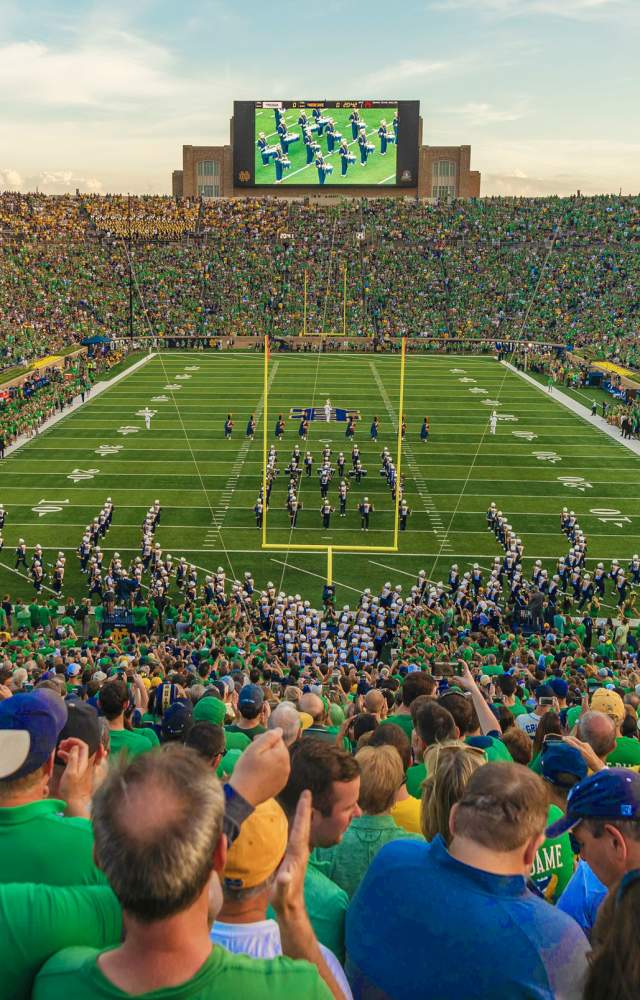
Notre Dame Football in South Bend | Schedule, Tickets & Guides

Posted in classical education, Sacred Music | Tagged , , | Leave a comment

Sacred Music and Catholic Classical Education

There is no doubt about it. Every  Catholic School ought to provide an enormous focus on singing Sacred Music.

By providing an enormous focus on singing Sacred Music I mean:

  • 1. Every student ought to be required to sing– even students with no vocal chords. Yes, even students with no mouths or lungs or any singing capacity whatsoever! Every Catholic school should in fact have a choir or schola or chorale (or whatever) whose membership is coerced.

I am very hesitant to modify this assertion. Suppose you actually do find a person who is incapable of singing (something which I have only seen once in twenty-five years of teaching), it still seems to me to be the case that such a person benefits enormously by at least sitting in the choir and thereby enlarging his soul.

Giovanni Pierluigi da Palestrina

2. The faculty should to the extent possible sing with the students. The authentic Catholic school is a community of learners which sings together. Singing is in the definition of school. “Schola”= School

This is probably the only time that any school might actually produce something beautiful together as a school.

3. A Catholic School would encourage singing according to the norms set forth by the Church. 

This is self evident. But how many Catholic educators really care about what the church says concerning the promotion of sacred music in its schools?

Quick… name three important documents in which the church sets forth her thoughts about sacred music.

So what are the norms concerning sacred music set forth by the church?

Voila! (as set forth by the good folks at the Adoremus Bulletin)

We should spend some time examining why the Choir is so central to the mission of all Catholic education, but for the moment let us dwell on these extraordinary directives from Sacrosanctum Concilium (from the Second Vatican Council’s Constitution on the Sacred Liturgy.)

 “The musical tradition of the universal Church is a treasure of inestimable value, greater even than that of any other art. The main reason for this pre-eminence is that, as sacred song united to the words, it forms a necessary or integral part of the solemn Liturgy.

…Therefore sacred music is to be considered the more holy in proportion as it is more closely connected with the liturgical action, whether it adds delight to prayer, fosters unity of minds, or confers greater solemnity upon the sacred rites. But the Church approves of all forms of true art having the needed qualities, and admits them into Divine Worship.

Accordingly, the Sacred Council, keeping to the norms and precepts of ecclesiastical tradition and discipline, and having regard to the purpose of sacred music, which is the glory of God and the sanctification of the faithful, decrees as follows.

113. Liturgical worship is given a more noble form when the Divine Offices are celebrated solemnly in song, with the assistance of sacred ministers and the active participation of the people.

114. The treasure of sacred music is to be preserved and fostered with great care. Choirs must be diligently promoted, especially in cathedral churches; but bishops and other pastors of souls must be at pains to ensure that, whenever the sacred action is to be celebrated with song, the whole body of the faithful may be able to contribute that active participation which is rightly theirs, as laid down in Art. 28 and 30.

115. Great importance is to be attached to the teaching and practice of music in seminaries, in the novitiates and houses of study of religious of both sexes, and also in other Catholic institutions and schools. To impart this instruction, teachers are to be carefully trained and put in charge of the teaching of sacred music.

It is desirable also to found higher institutes of sacred music whenever this can be done.

Composers and singers, especially boys, must also be given a genuine liturgical training.

116. The Church acknowledges Gregorian chant as specially suited to the Roman Liturgy: therefore, other things being equal, it should be given pride of place in liturgical services.

But other kinds of sacred music, especially polyphony, are by no means excluded from liturgical celebrations, so long as they accord with the spirit of the liturgical action, as laid down in Art. 30.


Posted in Sacred Music, Seven Fine Arts | Tagged , , , , | 1 Comment

St. Francis On Liberal Education

Well call me a prophet!

The very eve of the election of Cardinal Jorge Bergoglio as our new Pope Francis, the Holy Spirit must have moved me to quote St. Bonaventure speaking about whom? Why, of course, St Francis!

Not to draw undue attention to this…but this is a very close conjunction indeed- especially for me, someone who has never been particularly devoted to St Francis – to my embarrassment!

St. Francis has suddenly loomed very large… although he has been looming  very large indeed, for about nine centuries.

Allow me to cite St Bonaventure again.

“In beautiful things St. Francis saw Beauty itself, and through His vestiges imprinted on creation he followed his Beloved everywhere, making all things a ladder by which he could climb up and embrace Him who is utterly desirable.”

This thought is close to the heart of liberal education. It is also corollary to what St Paul teaches in his letter to the Romans:

“For the invisible things of him, from the creation of the world, are clearly seen, being understood by the things that are made; his eternal power also, and divinity: so that they are inexcusable.”

The beauty that we see in the visible world does not confine itself simply to the visible things that the eye can see, but extends to the beauty perceived by all the senses and even the to beauty that can be perceived by the mind.


For example the liberal arts and fine arts all concern themselves with the beauty of the visible world- and it is precisely though pursuing these arts that the mind is able to ascend as it were, by a ladder, to the beauty of God Himself.

The chief mark of beauty is order, and it is God who is responsible for the order that the mind alone is able to perceive in the created world. As the Book of Wisdom states in chapter 8,

“She reacheth therefore from end to end mightily, and ordereth all things sweetly. [2] Her have I loved, and have sought her out from my youth, and have desired to take her for my spouse, and I became a lover of her beauty. [3] She glorifieth her nobility by being conversant with God: yea and the Lord of all things hath loved her. [4] For it is she that teacheth the knowledge of God, and is the chooser of his works. [5] And if riches be desired in life, what is richer than wisdom, which maketh all things?”

With the ascension of Pope Francis to the throne of Peter we certainly will have a Pope whose very namesake will be a constant reminder of the central reason why Liberal education should be sought by all. Liberal education provides us with the opportunity to make “all things a ladder by which” we might “climb up and embrace Him who is utterly desirable”


Posted in classical education, Liberal Arts, Seven Fine Arts, Wisdom | Leave a comment