Celebrating Christ The King Sunday In A Democratic Republic

Can we all just admit it? The chief disadvantage of living in the “greatest nation on God’s green earth” is that we Americans find it just a little tougher to sympathize with and even celebrate Monarchy.

I mean, wouldn’t we rather celebrate “Christ the President of the Universe?” This idea of Christ the king is practically a frontal assault on all of our inclinations as patriotic Americans! Or perhaps even the idea of “President of the Universe” is objectionable to those who propose some sort of democratic socialism as an ideal.

Those (millions?) who participated in the recent “No Kings” rallies know what I mean for sure! How many Catholics participated in these rallies? I don’t know, but if there is one thing I learned from them it was this…the very concept of kingship appeared to be rather unsavory.

Nonetheless, for the great majority of Catholics who follow the Liturgical Calendar (promulgated by Pope Paul VI on February 14, 1969)…. and for those traditional Catholics who follow the traditional calendar (promulgated by Pope Gregory XIII in 1582, to which Pope Pius XI added the feast in 1925) Christ is still celebrated as …. The King of the Universe.
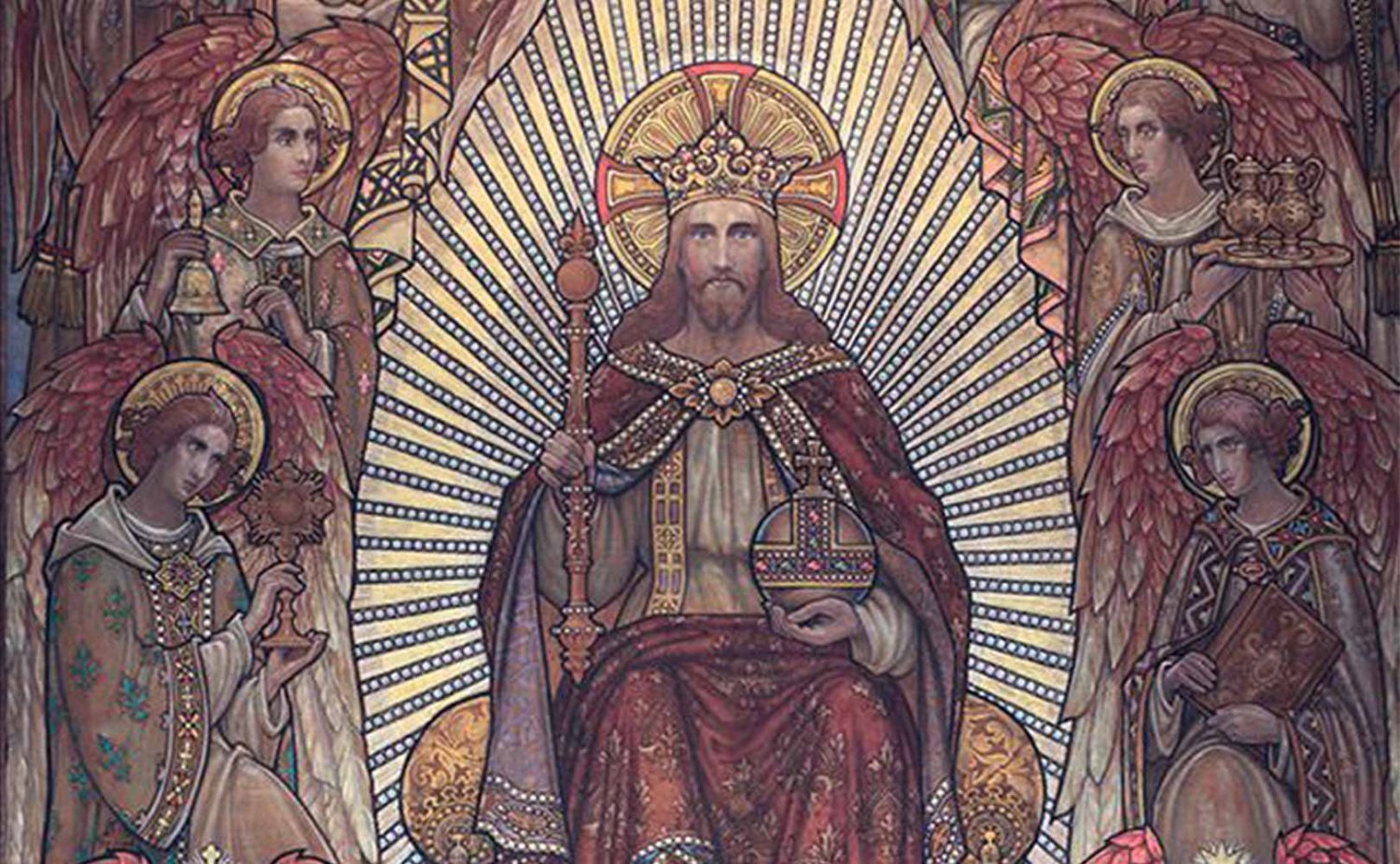
Image result for christ the king

In other words, if we all know that the democratic-republican form of government under which we live (with apologies to the democratic socialists among us!) is the most suitable government for mankind, doesn’t this realization dampen our enthusiasm a wee bit for celebrating monarchy and kingship- and therefore, all that is entailed by the theme of the last Sunday of the liturgical year?

The fact that Pope Pius XI added this feast to the Roman calendar fairly recently makes me think that he knew it would come as a little bit of a shock to free-thinking and independent Americans. I am sure he meant to give a slap in the face to the rising and militant secularism of the time – and certainly, he was thinking about the aggressive and violent assault on religious liberty in Mexico. Is there a greater antithesis to the mind of the secularist than the concept of Christ as the king of the universe?

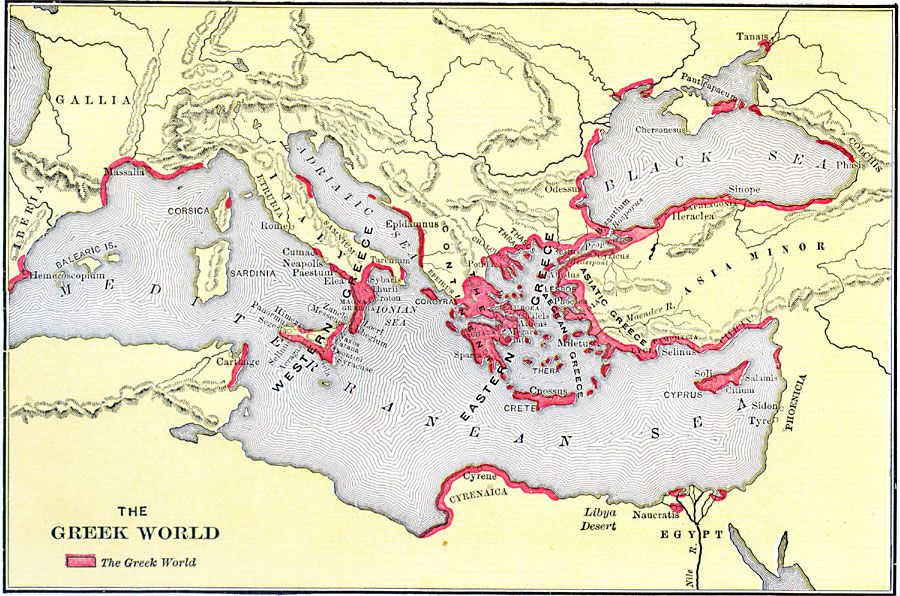
As a High-School teacher, it often befalls my lot to read Herodotus,’ The Histories, his legendary and not so succinct account of the “Persian War.” Herodotus details the rise and “worldwide” dominance of Persia until it was thwarted in its inexorable western expansion by a relatively small group of democratic free-thinking Greeks, at such places as Marathon and Thermopylae.

If there is a lesson to be learned from Herodotus, it is certainly this: As mighty as the Persian monarchs were, as massive as their armies grew, as multitudinous as were their servile and oftentimes sycophantic minions, they were nonetheless no match for the wits and bravery of a free-thinking democratic people. For heaven’s sake, Athens was the very cradle of democracy and yet according to Herodotus, Athens very nearly single-handedly put a stop to the seemingly all-powerful and haughty King Xerxes!

Image result for xerxes

One cannot read Herodotus without feeling a twitch of exultation about the wit and resourcefulness and spunk that seems to arise when men think for themselves and agree by mutual compact to band together in a great cause. One cannot refrain from thinking that there is something beautiful about men who rule themselves democratically!

And so how is an American Catholic supposed to feel this Sunday? The very fabric of our society, our notions of law and reason and science and culture were bequeathed to us by the Greeks. Americans pride themselves on self-direction. If I remember correctly our War of Independence was directed against overthrowing the rule of a monarch.

Image result for George the third

And although the French were exceedingly helpful to us in our efforts, we have never been quite comfortable with them either for all of their aristocratic leanings. Many Americans like Thomas Jefferson were at first quite sympathetic about the overthrow of the Catholic monarchy in France during their so-called “Revolution.”

But again here we are, patriotic Americans confronted with celebrating the very thing, the defeat of which, provided a foundation for the American Republic- Monarchy!

If I were the church organist and the official “four hymn selector” for my parish, I would choose the following hymns:

  1. Alleluia Sing To Jesus, His The Scepter His The Throne!
  2. Crown Him With Many Crowns!
  3. The King of Love My Shepherd Is.
  4. To Jesus Christ Our Sovereign King.

I like these hymns and given the fact that I wouldn’t dare sing the “Gregorian Propers,” as I would with a little more courage, these hymns are the next best thing. But notice the unfamiliar-to-Americans trappings of monarchy!

We have sceptres!
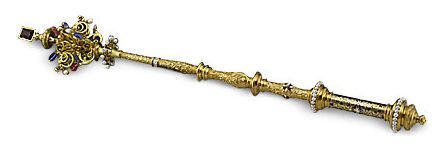
Image result for sceptre

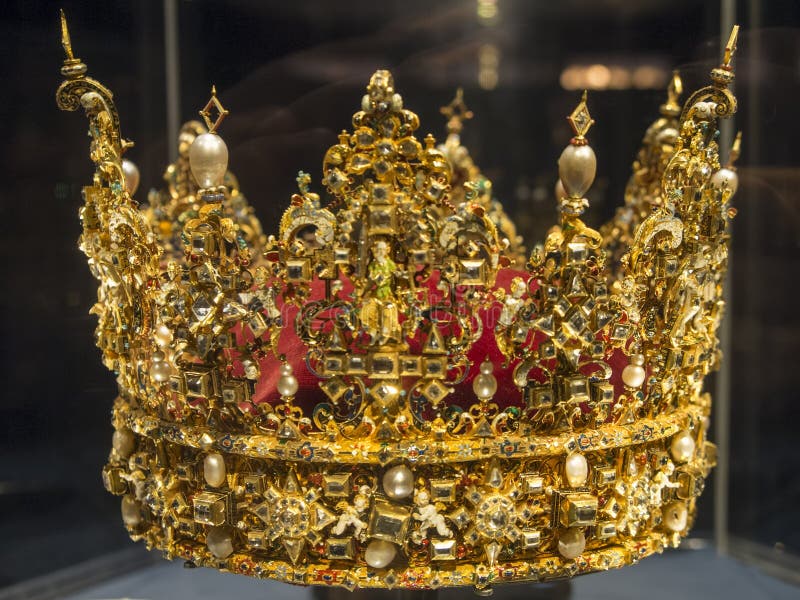
And (gasp!) Crowns!

Image result for crown renaissance

And thrones!

Oh the horror! How can Catholics celebrate such things if Monarchy is an unsuitable form of government?

I wonder if many Christians simply take in “Christ the King of the Universe” Sunday like many other things that the Faith proposes. After all the Church proposes all sorts of things for our belief which are simply not consonant with sound science and ordinary reason [Editor’s Note: This last statement, and several others, appear to have been made with a suggestion of irony]. So it’s perhaps best not to think about such things.

As if to say, perhaps there is a very real divide between faith and reason. When one goes to church or to worship, it is best to simply hang up one’s coat and hat and intellect on the rack outside the church to be donned only upon exit.

Image result for church vestibule coat rack

Could it be that Kingship or Monarchy is indeed the fitting rule for mankind? This is not to say that this or that specific group of humanity should adopt a monarchical form of rule immediately. This is not to say that the American representative form of government by which we govern ourselves is not, in fact, the very best form of government available to us right now on our own time and place. Perhaps that form of rule is best relative to the manners customs and mores of this or that people.

But if one had to choose the form of government that is simply best without qualification, what would one choose? What form of government did God Himself choose to rule his universe? Did he choose the best government? Is it relevant to our eternal happiness that He is a monarch? I guess the answer is obvious.

It is a fundamental rule of Christian living that the habits and affections that we develop on earth are significant in disposing our hearts towards heaven. As St. Thomas Aquinas was fond of saying “Grace perfects nature.” We are disposed towards the things of grace by the things of nature. Faith and reason are not opposed but rather the more we strive to reason aright, the more we provide an intellectual disposition for the gift of God’s grace.

That Christ is a monarch is a significant part of our faith. Insofar as we might identify various Christian monarchs that did not overstep their authority or abuse their power, perhaps every Christian might gather some lessons concerning how we ought to think, behave and feel in the presence of a monarch? Perhaps there are minor and major points of reverence and courtly behavior that are lost on the disciples of Democracy? Most importantly, perhaps there is a lesson to be learned about humbly and immediately adapting our will to that of his sovereign majesty, Christ the King; deference to a king is something a little more difficult for we rugged American individualists, who are accustomed to think it always right to have a say in our own affairs.

The Coonskin Cap – Thimbles and Acorns

Notwithstanding any obstacles in our path ascribable to our own political custom, I suspect that our celebration of Christ The King of the Universe this weekend will strike most Christians with the fitting annual realization that “Yes! Christ is the King! Christ should be enthroned in the very center and principal place in our hearts. Every Christian will undoubtedly be struck with the fitting thought that inasmuch as we have earthly concerns and earthly rulers, nonetheless Christ is ultimately in charge and we are to do nothing except it be his will!

Viva Christo Rey!

[Editorial Note: In a previous discussion of this question, my very good friend, Dr. Andrew Seeley made some excellent “counter points” which I think should be inserted in italics below in full: He says:

While I think you are right in some respects, allow me to suggest a few counterpoints.

Aristotle thinks that monarchy is only appropriate when some person is of a different order of virtue than the people (perhaps the philosopher). Otherwise, considerations of justice, affection, virtue and governance lead to a republican form of government in which all citizens have a role in governing and being governed:

http://www.artsofliberty.org/the-blessings-of-liberty-reminders-from-aristotle-and-livy-for-our-troubled-times/

Though St. Thomas simply argues for the superiority of monarchy in On Kingship, in the Summa quotes Augustine favorably when he says that a good people should be allowed to create magistrates for themselves. Only when the people becomes corrupt should that be taken away from them. (Summa, 1-2.97.1. See also 105.1.)

According to Tocqueville, American Catholics have no trouble worshiping Christ as King, because this guarantees that their rights are grounded in divine not human law, and emphasizes how no mere man can rightly claim divine rule. This attitude is expressed in a recent National Review article: http://www.nationalreview.com/article/453333/christ-king-catholic-churchs-alternative-secular-tyrants

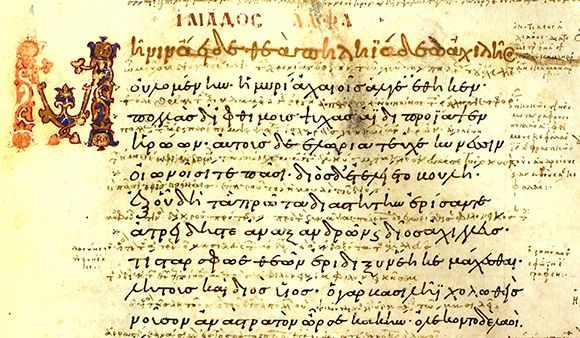
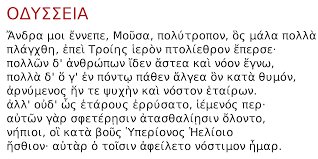
I agree with Dr. Seeley. there is not a necessary conflict between Christ’s kingship and the Democratic Republic form of government to which American Catholics are accustomed. Without a proper liberal education, however, I fear that they can’t escape their discomfort with monarchy. As the ancient Greek poet Pindar says, “Custom is King over all.”

Without a liberal education we suggest that those who oppose monarchy and kingship, ironically and unknowingly, serve at the throne of their own intellectual custom. Custom is a “tyrant” as Othello says.
Posted in Christendom, Feasts, Herodotus, liberal education, Religious Freedom, Sacred Music | Tagged , , , , , , , , , , , , , , , | Leave a comment

A Fitting Sentiment on the Feast Day of Leo the Great: Go away Barbarians

Posted in Uncategorized | Leave a comment

Newman and the “Education of a Gentleman”

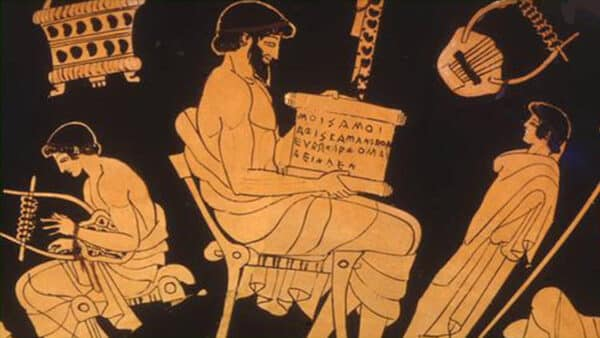
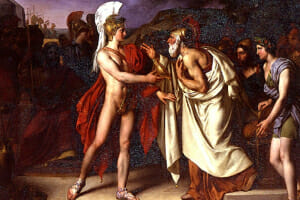
I have been telling my students for a long time that, if they had lived around 600 BC, the requirements for graduation consisted in having studied two principal works The Iliad and The Odyssey. Having mastered these foundational texts, they could, clad in cap and gown, march proudly up the isle and justly receive a diploma claiming membership in the elite society of “those who know.”

Now, I suppose mastery of these works at the time would have presumed an attentive and repeated listening to the texts sung in ancient Greek. Consequently, the knowledge of ancient Greek would be assumed in this distinction- and we might as well assume that such a student would also have the intellectual skills to appreciate the beauty of the works themselves, for example the ability to appreciate dactylic hexameter (i.e. scansion) and the various figures of speech Homer employed (e.g. the natural similes, metaphors, chiastic structures, epithets, ekphrases and so on). Merely having listened to the texts sung once around a village fire would not have been quite enough!

The “Ivy league” schools at the time (circa seventh century BC!)- and I suppose Greece is known for its ivy, properly named Hedera Helix-would also have required such a student to be able to chant at least one book of each of these works from memory, or at least their respective prologues.

Of course an understanding of The Iliad and The Odyssey would require a fair knowledge of Geography and a full scope of the ‘world’ at the time, mostly limited to the regions containing the Mediterranean sea and all the islands therein. How else can we understand the ten years it took Odysseus without this? Some passing knowledge of Astronomy, meteorology, topography, the nature of waves, winds, and currents would help for sure.

Even a fundamental knowledge of medicine and trauma management is to be presumed for the reader of The Iliad and The Odyssey. Yes, these works are replete with information for the student of medicine! According to one source,

A plethora of medical information lies within Iliad’s 24 rhapsodies, and a total of 147 injuries are described…A total of 21 cases were found and evaluated with a 5% mortality rate. The majority of these injuries were caused by an arrow (43%) and were located to the upper extremity (43%). Injuries of the head, neck and trunk were not treated as all of them were lethal. Many of the recorded trauma management techniques can be correlated to modern medicine. 

Although an understanding of Homer’s works might not have required four years of what we call “mathematics”- but is really the art of calculation – the λογιστικός that we call Algebra and Calculus, nonetheless some computational or estimative skill is certainly required in a correct numbering of the ships (1186!) that sailed to Troy, the number of men contained in each trireme and the total number of warriors involved.

Who can understand The Iliad and The Odyssey without also having a passing knowledge of Greek “theology,” the pantheon, the panoply of gods and goddesses involved? I suppose a reading of Homer the Homeric Hymns and Hesiod’s Theogony would help. Well, it wouldn’t just help, such knowledge is crucial in order to understand these works.

As we mentioned, our prospective graduates in the seventh century BC would surely have been required to chant, or at least appreciate the beauty of the chant of these epic poems or songs. Some fair musical ability is obviously important for understanding the chief works of the muses!

No doubt some degree of familiarity with the art of logical debate and persuasion, which is none other than the liberal art of rhetoric, is assumed for understanding Homer’s works. Without such knowledge we can scarcely appreciate many of the major dialogues and speeches in these works (e.g think of Odysseus, Ajax and Phoenix attempting to persuade Achilles to return to battle. Think of Odysseus’, in a rather pitiable condition, mastery of persuasion in persuading princess Nausicaa to help him, or Nestor’s rousing words inciting the Achaeans, paralyzed with fear, to fight again. Think of the words between Odysseus and Polyphemus, and Circe, and Calypso and of course Penelope!) These two works provide many examples where the art of persuasive speech was of pivotal importance for getting out of trouble and even mere survival.

On the other hand I suppose in reading Homer’s works all these various arts that belong to the educated person were to be acquired simply be reading and rereading these works as opposed to being assumed. Homer is the “teacher of all.” Homerus omnes docuit!

There really is nothing that is not contained in the works of Homer at least in some seminal way. After all, it was the great pre-Socratic philosopher Democritus who said,

Homer, obtaining by fate a divine nature, built a cosmos of all kinds of verse. (DK 21)

Happy the students that have the opportunity to read and discuss these works at length! No wonder, for comprised in these two relatively brief works is the entire substance of a liberal education.

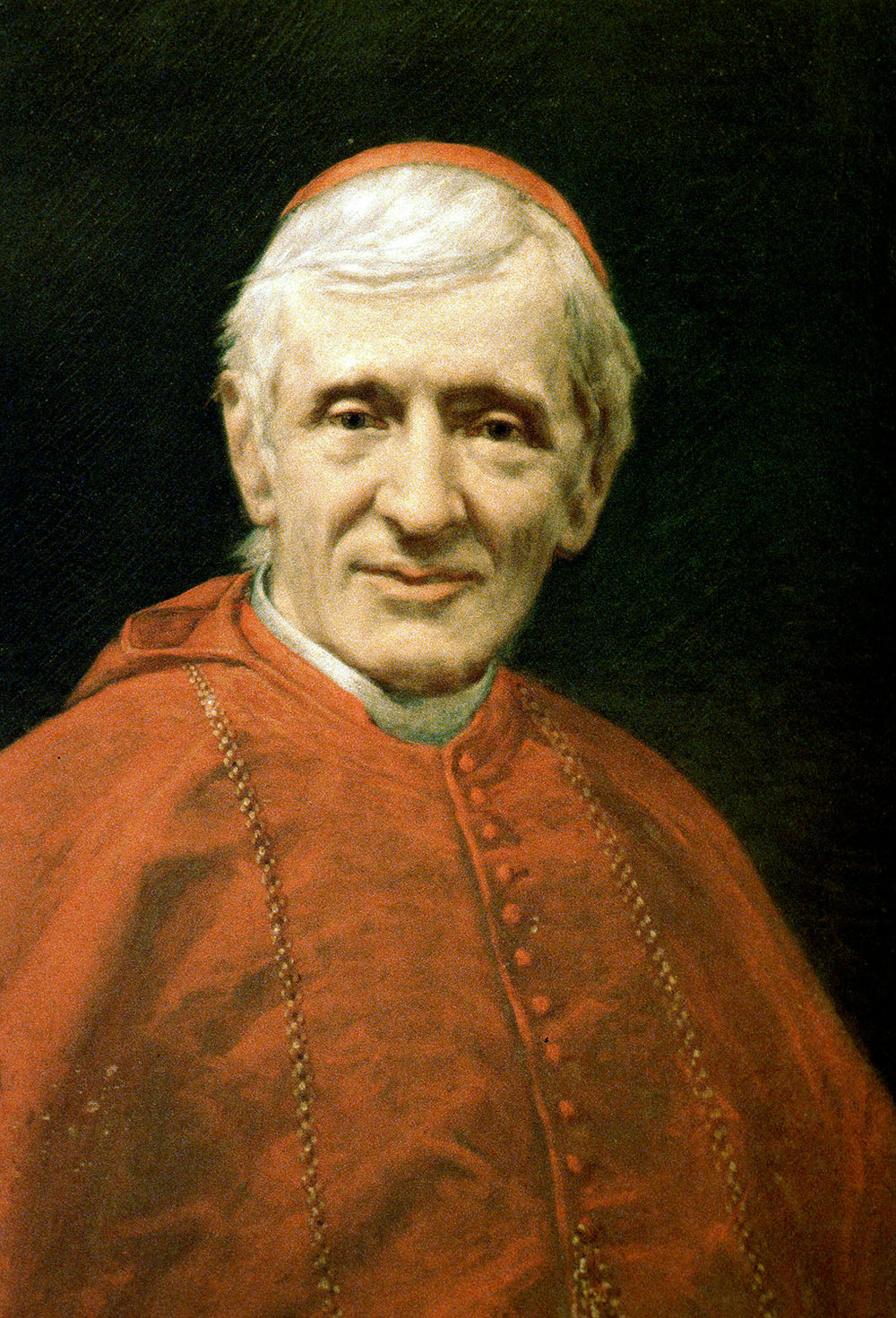
Declared “Doctor of the Church” let us allow John Henry Cardinal Newman to have the last word on the matter,

The great poet (Homer) remained unknown for some centuries,.. His verses were cherished by his countrymen, they might be the secret delight of thousands, but they were not collected into a volume, nor viewed as a whole, nor made a subject of criticism. At length an Athenian Prince took upon him the task of gathering together the scattered fragments of a genius which had not aspired to immortality, of reducing them to writing, and of fitting them to be the text-book of ancient education. Henceforth the vagrant ballad-singer… was submitted, to his surprise, to a sort of literary canonization, and was invested with the office of forming the young mind of Greece to noble thoughts and bold deeds.

Newman continues,

To be read in Homer soon became the education of a gentleman; and a rule, recognized in her free age, remained as a tradition even in the times of her degradation. Xenophon introduces to us a youth who knew both Iliad and Odyssey by heart; Dio witnesses that they were some of the first books put into the hands of boys; and Horace decided that they taught the science of life better than Stoic or Academic. Alexander the Great nourished his imagination by the scenes of the Iliad.

And in a little passage just before this Newman says,

In the country which has been the fountain head of intellectual gifts, in the age which preceded or introduced the first formations of Human Society, in an era scarcely historical, we may dimly discern an almost mythical personage, who, putting out of consideration the actors in Old Testament history, may be called the first Apostle of Civilization. Like an Apostle in a higher order of things, he was poor and a wanderer, and feeble in the flesh, though he was to do such great things, and to live in the mouths of a hundred generations and a thousand tribes. A blind old man; whose wanderings were such that, when he became famous, his birth-place could not be ascertained, so that it was said,

“Seven famous towns contend for Homer dead,
Through which the living Homer begged his bread.”

Posted in beauty, classical education, education, Homer, Homer Sightings, Literature, Newman | Tagged , , , , , , , | 1 Comment

Resurrexit 2025

As it is still Saturday within the octave of Easter, I knew I had to get out my “annual” Easter Post.

This year was a little different as I am a now a former church musician – that is to say, my family and I were not obliged in any way to provide music for Holy Week, the Easter Vigil or even Easter Sunday.

For anyone habituated to the choir loft, it did feel a little strange. Nonetheless, even though our Traditional Latin Mass sort of vanished over the last year, we did manage to cobble together attendance at a gorgeous Thursday evening Tenebrae service (according to the “usus antiquior”) about 70 miles away and attended a Low Latin Mass on Easter Sunday.

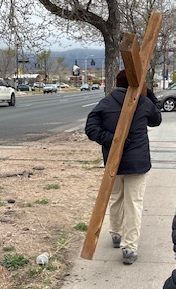
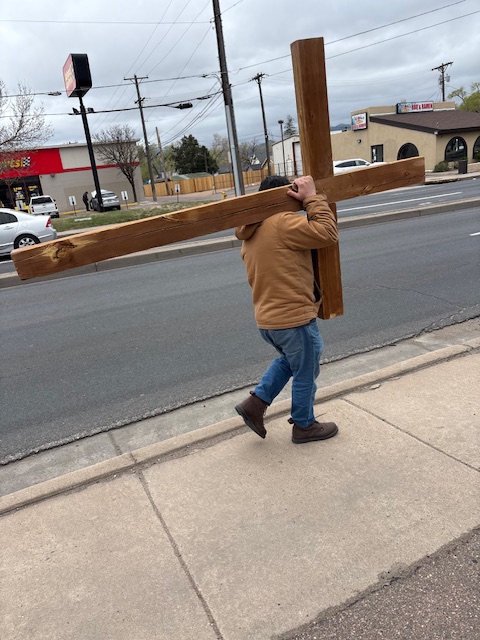
On Good Friday, however, I managed to go downtown to help a buddy carry the cross. Yes – an actual cross that he constructed out of 4X4 wooden beams. He begins his journey from the local abortion clinic and walks through the city to his parish- then turns around and walks back. Ordinarily he is joined by a few other sturdy souls so that he doesn’t have to carry the cross the whole way. This past Friday I decided to join him with my eleven year old son since I had always found a good excuse to miss this event in the past. The whole idea does strike me as wonderfully rudimentary but if I am not mistaken I believe our Lord said somewhere, “Take up your cross and follow Me.” After telling my buddy that I though his interpretation of that injunction was a bit childish, I finally thought to myself, “Well, why not?” My hunch is that our Lord was speaking metaphorically, but if He wasn’t, then I will have at least one occasion where I could honestly say that I took up the cross! Here are two companions hefting that cross just to give you the idea!

My friends and one other managed to carry the cross for a total of six miles! I attempted. like Simon the Cyrenian, to ease their burden for what seemed like a total of 75 feet. I believe Simon helped our Lord for a great deal longer but I figure he was probably in much better shape than I am.

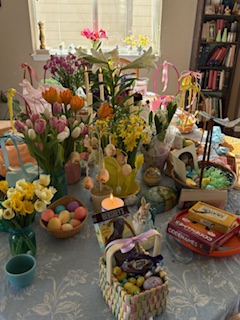
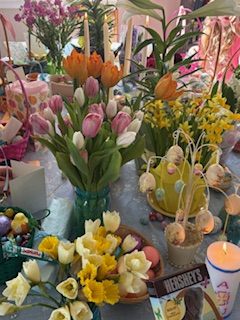
And so, having carried the cross for however long, I for one felt like I deserved the Easter Feast that my wife and daughter provided. Certainly the work they performed in preparing it was more difficult than my efforts deserved – but Easter is just such a time- that is, Easter is a time when we receive infinitely more than our meagre efforts merit!

Our day started off with this delicious monkey bread and coffee around the Easter Morning table. As Mass was not to be for several hours, we thought it best to start the day off with something.

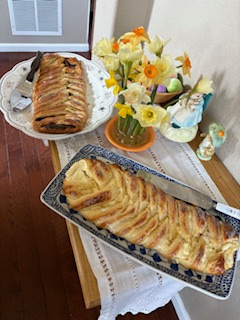
Then after Mass we came home and began to prepare in earnest for brunch! First a couple of beautiful pastries- one with a chocolate filler the other with some sort of creamy filler. A great quantity of butter was employed.

Meanwhile I commandeered the Mimosa preparation.

After snapping this photo, I immediately took the pastries to a safer location. We have always had difficulty finding enough surface area.

Meanwhile the Eggs Benedict and fruit salad look splendid.

Voila!

Now, of course afterwards, it was time for a walk (and a brief nap). But Easter Sunday tends to slip by more quickly than it should. Nonetheless, we had planned a late dinner (8pm) and so as those preparations were being made, we enjoyed an Aperol Spritz with assortment of cheeses.

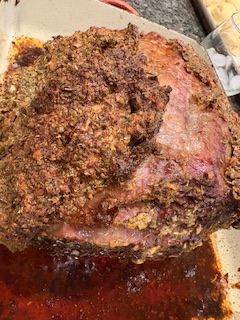
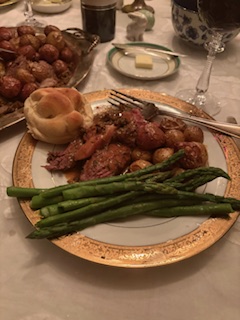
We decided on a Ribeye roast, asparagus and roasted potatoes.

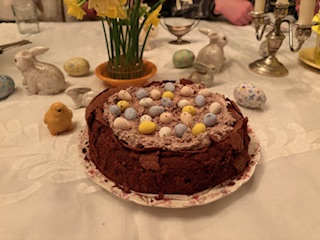
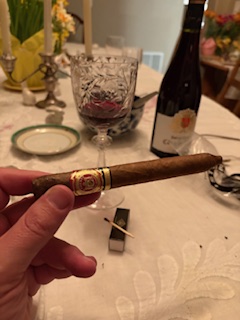
Finally, a very chewey chocolatey cake and cigar!

Happy Easter!

Posted in Easter, Feasts, The Passion, Uncategorized | Tagged , , , , , , | Leave a comment

Completing the Catechism Podcast Series: A Christmas Gift

LionandOx has finally completed the enormous podcast project of reading and discussing the entire Catechism of the Council of Trent! All of us here would like to bequeath this priceless podcast series in its entirety to all of you and the world (Urbi et Orbi!) as a Christmas gift, and are grateful that this gift was still within the twelve days of Christmas!

Merry Christmas!

Given that the name of the series is “The Catechism of the Council of Trent (in less than a year)” there might be some who would argue that the title was a bit of a misnomer since the podcast series was actually begun back on January 9, 2023. How can it be called TCCT (in less than a year) when it took just over two years to complete!?

Now, anyone can see that this superficial objection appears valid on the surface! (as is the nature of every superficial objection)

But the objection easily falls flat on its face when one simple fact is considered … Podcast Time is NOT Solar Time!

No! There are 365 solar days in a solar year whereas the entire podcast was finished in 129 Podcast Days. And 129 Pod Cast days are less than half of a Podcast Year!

Q.E.D. (see how easily classical education dispels these specious objections!)

Below are the links to the remaining podcasts in the series!

Posted in Augustine, Catechism, catholic education, Council of Trent, Podcast | Tagged , , , , , , , , | Leave a comment

The First Two Words of The Lord’s Prayer

Posted in Catechism, catholic education, Council of Trent, Lord's Prayer, Podcast | Tagged , | Leave a comment

Discussion with Dr. Jason Fugikawa about The Catechism of the Council of Trent

An old friend of mine, Dr. Jason Fugikawa, is doing more than his fair share to foster classical learning for those who have just commenced the pursuit of wisdom or have been struggling down that path for a long time. Among the projects he has undertaken is a growing archive of podcast discussions that looks one day to cover the whole canon of the great books of the Western World.

Each discussion, less than an hour, promotes a specific work of antiquity with a guest- a champion of the work – and in his questions Jason knows how to squeeze fruit out of each of his guests. Indeed his site is called better pears – a marvelously clever reference (the usual way with Dr. Fugikawa) to a remark of St Augustine in his Confessions.

I encourage you to visit his site and listen to his podcast series – you may find it over there at betterpears.com!

In the mean time here is the latest episode!

Posted in Augustine, Catechism, discussion, Podcast, Sacred Doctrine | Tagged , , , , | 2 Comments

Days 116-118: Ninth and Tenth Commandments and Part IV: Prayer- the necessity, fruits and parts of prayer

Posted in Catechism, Lord's Prayer, Uncategorized | Tagged , | Leave a comment

Liberal Arts and Fine Arts: Understanding the Trivium, Quadrivium, and the Place of Music in Catholic Education

What better way to commence the new academic year than to reflect on the significance of sacred music in the education of our students!

Some months back, we were humbled by Dr. Donelson-Nowicka’s invitation to join her on her excellent podcast series over at Square Notes. “Jennifer Donelson-Nowicka is an Associate Professor and the Director of Sacred Music at St. Patrick’s Seminary in Menlo Park, California, where she holds the William P. Mahrt Chair in Sacred Music and serves as the founding Director of the Catholic Institute of Sacred Music.”

Here is that podcast!

Posted in liberal education, Music, Sacred Music, Sacrosanctum Consilium | Tagged , , , , , | 1 Comment

On False Humility and the Missing Episodes of The Catechism of the Council of Trent in a Year!

To my horror, I have been told by several readers that they were under the impression that Lion and Ox had simply abandoned the “Catechism of the Council of Trent in a Year” project after day 86 which was posted here on September 10, 2023!

Not so! (non sic) Lionandox has been very busy in completing the project – but I hate to say it- it was overcome by a false sense of humility in not wishing to post every episode so as to beleaguer the already overstuffed inboxes of its many readers! Lionandox had assumed that the thousands of fans of “The Catechism of The Council of Trent in a Year” project would have, of course, signed up to receive each episode directly at Spotify or Apple podcasts!

Upon reflection, lionandox should not have suffered from this sort of scruple, and setting aside the veneer of humility, apologizes for not posting each episode seriatim! Why should not we too, have a place among the many solicitous, bothersome, and sometimes downright objectionable emails that you, our readers, receive by the thousands each week?!?

To make up for this mistake and by way of recompense and restitution we post the missing episodes following Day 86! Now that the project is reaching the last part of the Catechism lionandox.com will post each of the final days for our reader’s pleasure.

Posted in Common Good, Council of Trent, Decalogue, education, Podcast, Sacraments, Sacred Doctrine | Tagged , , , | Leave a comment