Where And When Was Catholic Classical Education Revived?

Lionandox noticed this recent article put out by the folks at CNN.

I think it is a pretty good report generally. It is about as good a description as one could expect from a secular standpoint. Especially since the article embraces both evangelical Protestants, Catholic and public charter school varieties of the classical school.

For example,

“Classical schools are less concerned about whether students can handle iPads than if they grasp Plato. They generally aim to cultivate wisdom and virtue through teaching students Latin, exposing them to great books of Western civilization and focusing on appreciation of “truth, goodness and beauty.”

and I thought this was pretty good as well

“Classical schools are committed – to some degree – to the importance of the classical languages,” said Brad Green, co-founder of Augustine School. “Students will take several years of Latin and possibly some Greek as these are the languages of Western Christendom.”

Overall the article portrays classical education in a positive light – good test scores- college acceptances.

The only thing that irked me was this passage,

“Four years ago in the Archdiocese of Washington, D.C., officials were looking for ways to save St. Jerome, a failing school for students pre-kindergarten through eighth grade.  St. Jerome had to come up with a solution or be one of hundreds of parochial schools across the nation to be closed. Thus, a group of parents, parishioners, scholars and homeschoolers came up with the country’s first-ever Catholic version of the classical curriculum.”

Hello?….Helloooooo?? Salveeeeeeeh???….Hellooooooo????

The Lyceum Founded in 2003

The Lyceum Founded in 2003

Trivium School

The Lyceum was founded in 2003! (not to mention Trivium School which was founded in 1979!!!)

And over the years I have seen dozens of “future classical school founders” who have since founded schools of their own in various places like …just to name a few….New Jersey, Massachusetts, Arizona, Texas, New Hampshire, Maine, Michigan, Oklahoma and even ….Argentina!

So pleeeeeze… don’t tell me that “four years ago” some group in Washington, D.C. came up with the country’s first ever Catholic version of the classical curriculum.”

That is just not right.

The article should have read,

“It was the year nineteen hundred and seventy-eight when two Catholic visionary educators and their wives met in the sleepy town of Lancaster Massachusetts. In that unlikely place, thirty-five years ago Catholic classical secondary education was revived! …or perhaps even birthed for the first time in this country!”

Not that I care or anything… really doesn’t matter… doesn’t bother me much!

For all I know there might have been another Catholic classical curriculum in this country before 1978. I don’t know of one.

We at Li0nandox, despite our assertion that history is not a science and that it holds a secondary place in a liberal education, do at least have enough respect for the subject to make some effort at correcting the historical record wherever possible!

Posted in classical education, education, History, Liberal Arts | Tagged , , , | 1 Comment

The Lost Art of Education and The Lion and Ox

“The Lion and Ox” was very pleased to be quoted by Ken Connor who is a co-author of “Sinful Silence: When Christians Neglect Their Civic Duty.”  He is also Chairman of the Center for a Just Society.

Mr. Connor apparently enjoyed our post “Liberal Education… Why bother?” and quoted our description of liberal education when we said…

Liberal education is about reading and discussing the canon of authors to whom Western Civilization owes its origins. It is about immersing oneself in the very sources of civilization holding fast to its elements and principles, to time honored truths and traditions; to the vision of all those who contributed to civilization. . . .

The end of liberal education is not first ‘to think for oneself,’ but to know the truth. To know the truth that makes one free, this is the end of liberal education. Liber and libertas, in Latin, denote freedom, as opposed to servility and the servile. Liberal education is the education appropriate to free men and is a source of that freedom. Liberal education, this encounter with and conformity to the truth, frees man from enslavement to unruly passions, ignorance, current intellectual trends and public opinion. Once freed from these bonds, a man may choose to live a good life, hold to the truth, and delight in beauty – not to please others or gain some practical reward, but simply because these things are good, or true, or beautiful.

Mr. Connor then writes:

In rejecting the objective truth of the classical model in favor of a subjectively defined, instrumentally-oriented model, we’re undercutting our ability to flourish as a society. We no longer care for the answers to the big questions, heck, we no longer feel compelled to ask the big questions!

and further

Education is seen as merely a means to individual ends, whether those ends are monetary, ideological, political or otherwise. The idea that education should be more than a tool for individualistic self-actualization may sound blasphemous to the modern ear, but it’s an idea we’d better reacquaint ourselves with if we care about the future of our nation and the souls of our children and grandchildren.

A nation of pragmatic narcissists will not long endure, for when there is no thirst for truth and no one to guard and transmit the things that make us human, we’ll quickly give ourselves over to our baser impulses, social cohesion will unravel, and culture will crumble.

We are amazed at the power of internet propagation. Mr. Connor’s article-and therefore A link to The Lion and Ox may be found at the following websites.

Thanks Mr. Connor!

Anyone who enjoyed “The Lost Art of Education” will also enjoy perusing the website for The Lyceum. The art of education has been found! And I think it should be franchised immediately!!


Posted in education, Liberal Arts, truth for its own sake | Tagged , , , | Leave a comment

The Vision of Beauty

It’s tough to claim that I am totally unbiased here, but I really do think that the American artist Carl Schmitt is someone that has provided all of us with something with which to feast our weary souls… souls starving for the beautiful. 

Check out the new blog in my “blogroll” http://carlschmittvisionofbeauty.wordpress.com/  and read about the Epic, Lyric and Dramatic!

Incidentally, the beautiful woman in the “header” is my wife’s grandmother.

Posted in Carl Schmitt, Fine Arts | Tagged , | 3 Comments

Inagua Sharpie Update…Liberal Education Works?

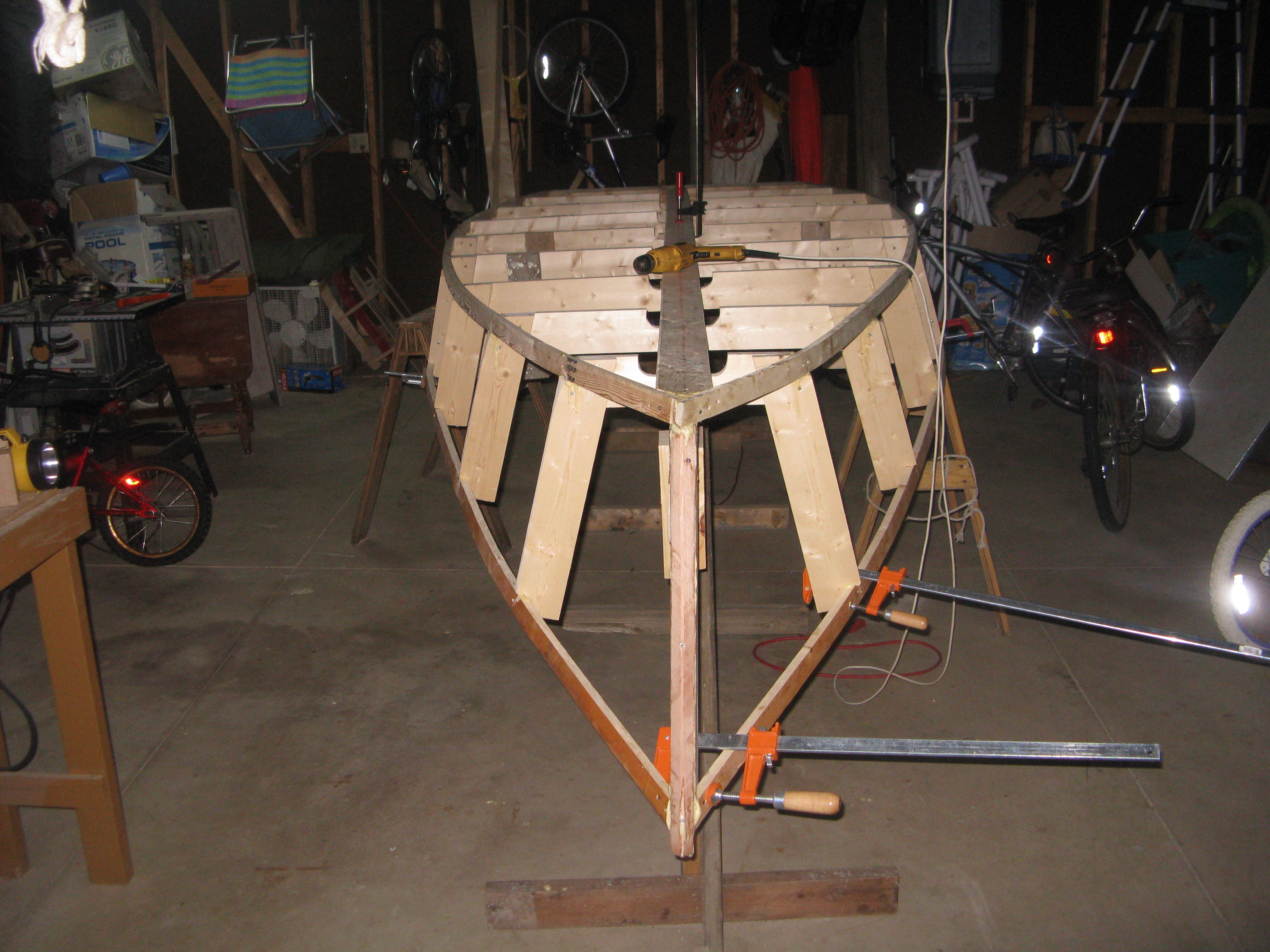
Well, the Inagua is coming along slowly. We (i.e. my son and I) were hoping to have it done already but that just goes to show how little we (well I should say “I”) know about all those little details that go into sailboat fabrication.

I suppose a liberally educated person would have thought this all through in advance. But let’s not forget that even Aristotle mentions that the man of practical experience has a wisdom that can’t just be obtained from thinking!

Right up front in his Metaphysics…the very culmination of his works…he praises men of experience!

 …and men of experience succeed even better than those who have theory without experience. (The reason is that  experience is knowledge of individuals, art of universals, and actions  and productions are all concerned with the individual…

Maybe someday we will have both the theory and experience. At this point I would say that we are still struggling even with the theory of boat building.

I mean we don’t even have the spars and rigging yet! We don’t have the centerboard…We don’t have pintels… We don’t have the sails!


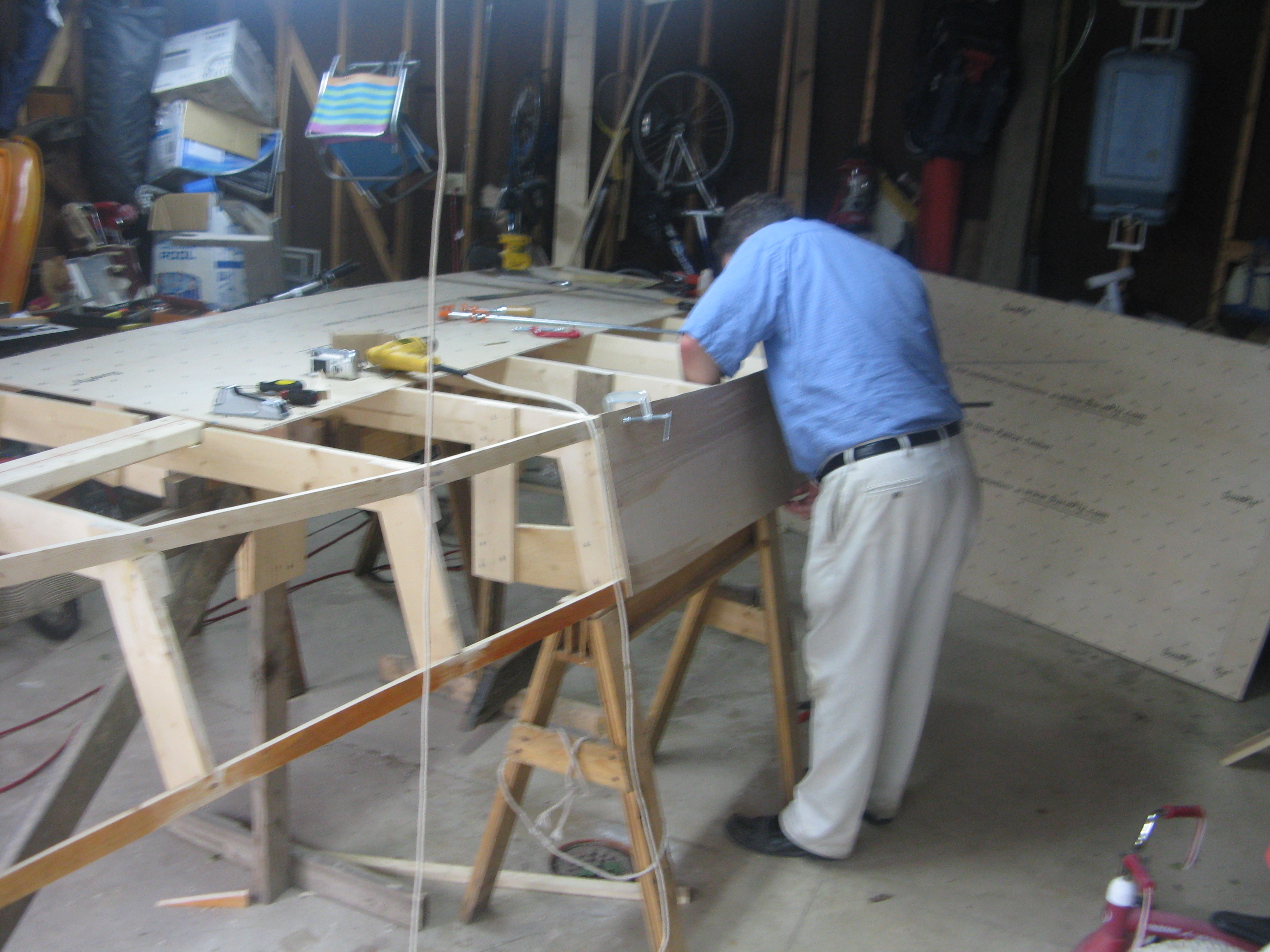
I need to sand this down and clean it up. Note the recycled lumber.

I need to sand this down and clean it up. Note the recycled lumber.


Applying the 1/4" ply to the sides. I know that is a little thin...but neither Home Depot or Lowes sells 3/8"

Applying the 1/4″ ply to the sides. I know that is a little thin…but neither Home Depot or Lowes sells 3/8″


The key is to try to keep those graceful lines. But wood has a peculiar way of snapping when one tries to bend it too quickly!

The key is to try to keep those graceful lines. But wood has a peculiar way of snapping when one tries to bend it too quickly!


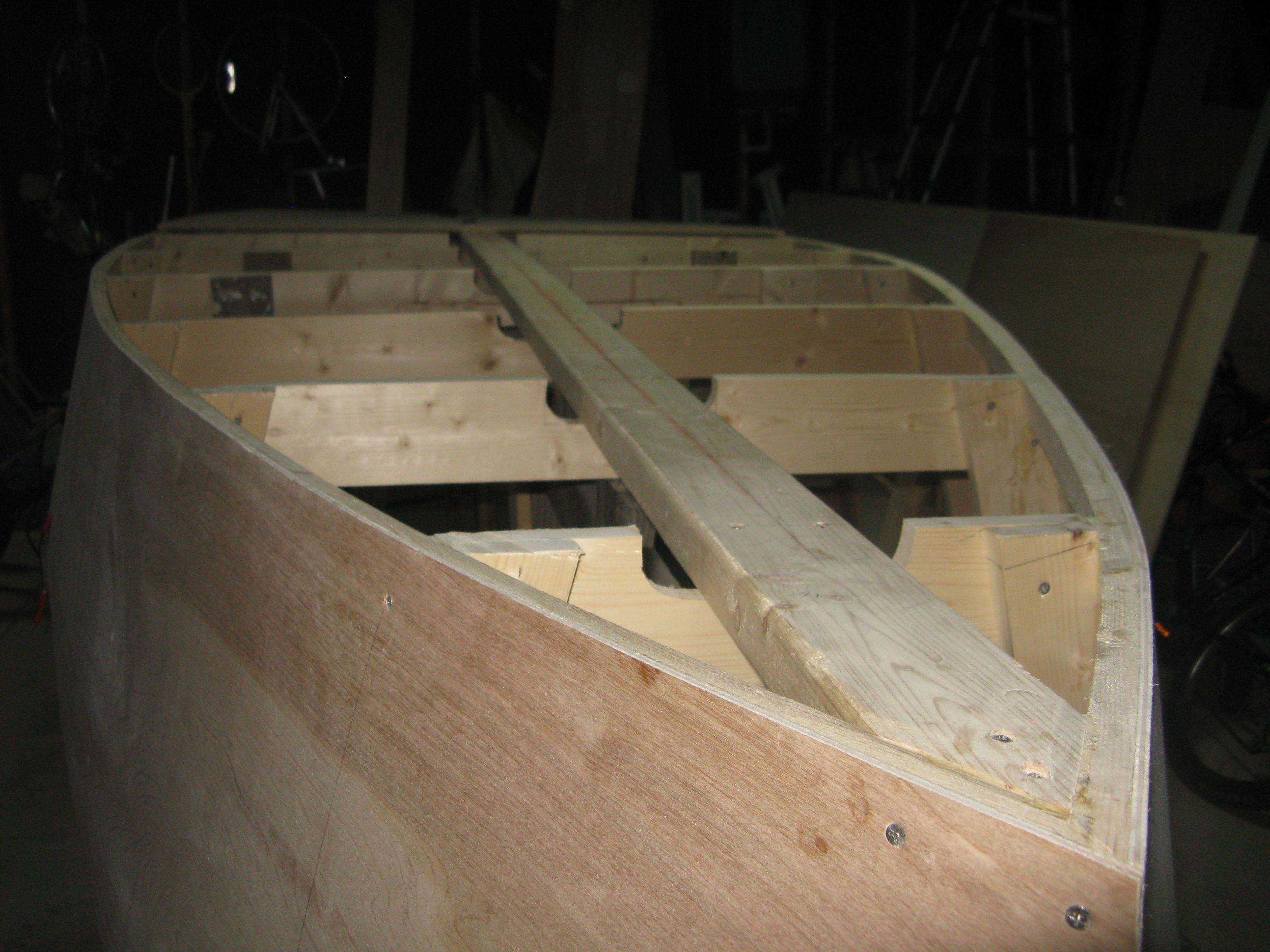
Here is the stem of the Inagua. Its beginning to look like a boat!

Here is the stem of the Inagua. Its beginning to look like a boat!

Now I am attaching the plywood to the bottom. You will be happy to know that it is 1/2" ply. Thankfully the bottom of this boat is FLAT!

Now I am attaching the plywood to the bottom. You will be happy to know that it is 1/2″ ply. Thankfully the bottom of this boat is FLAT!

After we finish attaching the plywood to the bottom we need to do a little fiber glassing- of the seams especially.


Posted in classical education, liberal education works, Metaphysics | Tagged , , , , | 2 Comments

Berkeley… Here We Go Again!

Well, what is summer for except for dabbling in the writings of “Enlightenment Thinkers?” I enjoy this particularly because it is kind of like investigating a crime scene…”Who Killed Liberal education?”

For the past several years I have been heaping blame on Sir Francis Bacon, and I think this accusation sticks fairly well. He was pretty bad!

Given that we live in a time where enlightenment philosophy appears to be the atmosphere we breathe (e.g. “knowledge is power,” “Ideas don’t matter” “Aristotle held back the progress of science for almost two thousand years”,  “Philosophy is a waste of time”) it is probably a good thing for us think about the origin of these ideas and the people involved with them. Might as well know why we all think the way we do… eh?

After having discussed Locke’s apparent denial of the universal  (about which there has been a spirited debate over in the “combox”)

I thought I would refresh myself with Bishop George Berkeley (1685-1753) who appears on the intellectual scene at the end of Lock’s career. Although he seems to disagree with Locke (I think he maintains that Locke didn’t go far enough in denying the existence of universals…he really should have denied the existence of the very things from which universals are purportedly abstracted….but don’t quote me.)

But take a look at this little paragraph where Berkeley appears to manifest how much of a disciple of Locke he really is.

Whether others have this wonderful faculty of ABSTRACTING THEIR IDEAS, they best can tell: for myself, I find indeed I have a faculty of imagining, or representing to myself, the ideas of those particular things I have perceived, and of variously compounding and dividing them. I can imagine a man with two heads, or the upper parts of a man joined to the body of a horse. I can consider the hand, the eye, the nose, each by itself abstracted or separated from the rest of the body. But then whatever hand or eye I imagine, it must have some particular shape and colour. Likewise the idea of man that I frame to myself must be either of a white, or a black, or a tawny, a straight, or a crooked, a tall, or a low, or a middle-sized man. I cannot by any effort of thought conceive the abstract idea above described. And it is equally impossible for me to form the abstract idea of motion distinct from the body moving, and which is neither swift nor slow, curvilinear nor rectilinear; and the like may be said of all other abstract general ideas whatsoever. (A Treatise Concerning the Principles of Human Knowledge)

I think it is noteworthy that Berkeley mentions the “imagination” with regard to abstraction. As Werner Heisenberg points out somewhere (and I am still looking for this text!) when we imagine things we can’t help but to make the things that we imagine “actual.”

And so we might point out that the power of abstraction (which is sort of important when it comes to hatching “ideas”) is something different from the power of imagination.

Don’t get me wrong here…I think the imagination is great…but no wonder St. Thomas identifies the imagination as a chief source of error.

Posted in enlightenment, Modernists | Tagged , , | 1 Comment

Major In Business or Philosophy?

I am by no means an expert in the history of philosophy (although I feel pretty comfortable with what happened between the three hundred years, say… between 624 B.C. and 322 B.C.)

But just what happened afterwards begins to get slightly blurry for about 1500 years. (Of course Our Lord comes along and basically speaks all truth, but I shy away from calling our Lord a “philosopher” as we sometimes hear people speak about Mahatma Gandhi. I refuse to participate in this sort of insidious comparison.)

And then Shazam! For about fifty years between 1225-1274 there was this huge philosophical and Theological fireworks show. And then things appeared to go dark again and appear to have remained dark or dim ever since (although granted here and there the light continues to twinkle continuously as it always has.)

As an example of its dimness we present our good friend Bishop George Berkeley 1685-1753. And I don’t mean to be facetious here, because I do think that we owe a debt of gratitude for the thinking of Berkeley, but mostly as to someone who provides us with a foil for right thinking.

I love this opening paragraph to his treatise “The Principles of Human Knowledge” (and I am going to use a Fr. Z technique here to make some appropriate comments in bold)

Philosophy is just the study of wisdom and truth, so one might reasonably expect that those who have spent most time and care on it would enjoy a greater calm and serenity of mind, know things more clearly and certainly, and be less disturbed with doubts and difficulties than other men. (Bravo! This seems totally true to me! Go liberal education!!) But what we find is quite different, namely that the illiterate majority of people, who walk the high road of plain common sense and are governed by the dictates of nature, are mostly comfortable and undisturbed. (Alas too true. This really bugs me. Ignorance is bliss!) To them nothing that is familiar appears hard to explain or to understand. (I know, I know…Liberal education, as I can attest,  definitely makes it difficult to get out complete sentences!) They don’t complain of any lack of certainty in their senses, and are in no danger of becoming skeptics. But as soon as we depart from sense and instinct to follow the light of a higher principle—i.e. to reason, meditate, and reflect on the nature of things—a thousand doubts spring up in our minds concerning things that we previously seemed to understand fully. We encounter many prejudices and errors of the senses; and when we try to correct these by reason, we are gradually drawn into crude paradoxes,  difficulties, and inconsistencies that multiply and grow on us as our thoughts progress; until finally, having wandered through many intricate mazes, we find ourselves back where we started or—which is worse—we sit down in a forlorn skepticism. (All that college money down the drain…we should have majored in business!)

With that opening paragraph Berkeley does a great job summing up, perhaps, the average experience of most students of philosophy. He describes the intellectual Weltanschauung of our day.

I think he intends to solve the inconsistencies and lead us out of the maze in the rest of his treatise.

Unfortunately, arguably, he accomplishes just the reverse.


Posted in college, Custom, enlightenment | Tagged | Leave a comment

The Lyceum: Making the Extraordinary Ordinary

Yesterday The Lyceum celebrated its Ninth Annual Commencement Exercises and as is now traditional the day began with Holy Mass.

I think an alternate motto for The Lyceum should be “making the extraordinary ordinary” because that is what happens just about every day at the school.

Ok, Ok… I know what you are thinking … you have misinterpreted what I meant!

I don’t mean that Lyceum students take extraordinary things – and then turn them into base commonplace and ordinary things though some sort of abuse. They don’t wear out the extraordinary and make it undesirable!

What I mean is that Lyceum students do extraordinary things in an extraordinary manner on an ordinary basis!

They become so habituated to doing extraordinary things that it all seems very normal to them to do them.

Sometimes I look at the students when they are doing something extraordinary- like having a discussion about the “Melian Dialogue” in Thucydides…and of course they have no idea that this is one of the very famous passages in Western literature…and they talk about it as if they were thinking “of course…everyone does this sort of thing all the time.”

Or saying lauds every morning…singing the Canticle of Zechariah (i.e. “Benedictus”) …participating in the millennial traditions of Western Civilization… demonstrating Euclidean propositions… writing theses… not realizing that there is anything unusual about it because young people quickly adapt and take things as they come and quickly rise to the occasion to perform wondrous feats.

Another example. On Friday night the students put on a brilliant performance of “A Midsummer’s Night’s Dream.

The play was exceptional (even if staged and produced for under $50!) And unlike other schools, where a certain segment of talented students are chosen in a competitive process to act in their usual plays (e.g. The Phantom, “Les Mis” and CATS!), at The Lyceum we eschew the whole idea that acting in a Shakespeare play is something that should only be reserved for the talented. No! Everyone must act in a Shakespeare play at least once in a lifetime! Everyone ultimately gets the big part! (This seems self-evident to me. Besides it’s far more democratic way of doing things.)

And the students demonstrated for the umpteenth time that every student has acting talent. The crowd loved it. Everyone was edified and delighted. We laughed for two hours and enjoyed spectacular lines coming from the mouths of ordinary students turned into extraordinary actors.

Making the extraordinary ordinary!

The following morning the students woke up and sang Palestrina’s “Missa Brevis” almost in toto! The Mass was celebrated in the “Extraordinary Form” of the Roman Rite (which the Church has clearly been promoting and encouraging recently… Think “July 7 2007!”).

Here was the menu:

  • Prelude: “Dixit Archangelis” (a sweet Traditional Austrian variation on the Ave Maria- with descant)
  • Processional Hymn: All Creature of our God and King (always nice to belt out a hymn)
  • Introit” Adeamus (Chant Propers from the Mass in honor of the Immaculate Heart of Mary)
  • Kyrie: Palestrina 1525-1594  Missa Brevis

  • Gloria: Palestrina 1525-1594 Missa Brevis
  • Graduale : “Exultabit cor meum” (Chant Propers from the Mass in honor of the Immaculate Heart of Mary)
  • Alleluia- Magnificat Anima Mea (Chant Propers from the Mass in honor of the Immaculate Heart of Mary)
  •  Offertory: Exultavit spiritus meus (Chant Propers from the Mass in honor of the Immaculate Heart of Mary)
  • Offertory Motet: Cibavit Eos (Chistopher Tye 1505-1572)
  • Sanctus: Palestrina 1525-1594 Missa Brevis
  • Benedictus: Palestrina 1525-1594 Missa Brevis
  • Agnus Dei: Palestrina 1525-1594 Missa Brevis (as well as a section from the Gregorian Mass XVII)
  •  Communio: Dixit Jesus Matri Suo  (Chant Propers from the Mass in honor of the Immaculate Heart of Mary)
  • Communion Motet 1: Ave Verum William Byrd ca. 1540-1623 (The other old chestnut- not the Mozart)

  • Communion Motet 2: Palestrina 1525-1594 Sicut Cervus (everyone loves this one)
  •  Recessional Hymn: Holy God (who doesn’t love this with full organ?)
  • Postlude: Handel 1685-1759 Halleluia Chorus with Organ….Wow!

They were spectacular. They were in tune. They sang in a prayerful way.

It was absolutely beautiful.

But….Lyceum students do this kind of thing all the time….I mean all year long…and rarely with an audience. For them it is no big deal!

Except that it really is a big deal.

Making the extraordinary ordinary.

Posted in classical education, Fine Arts, Music, Shakespeare | Tagged , , , , , , | 8 Comments

Inagua Sharpie Update

Huzzah!

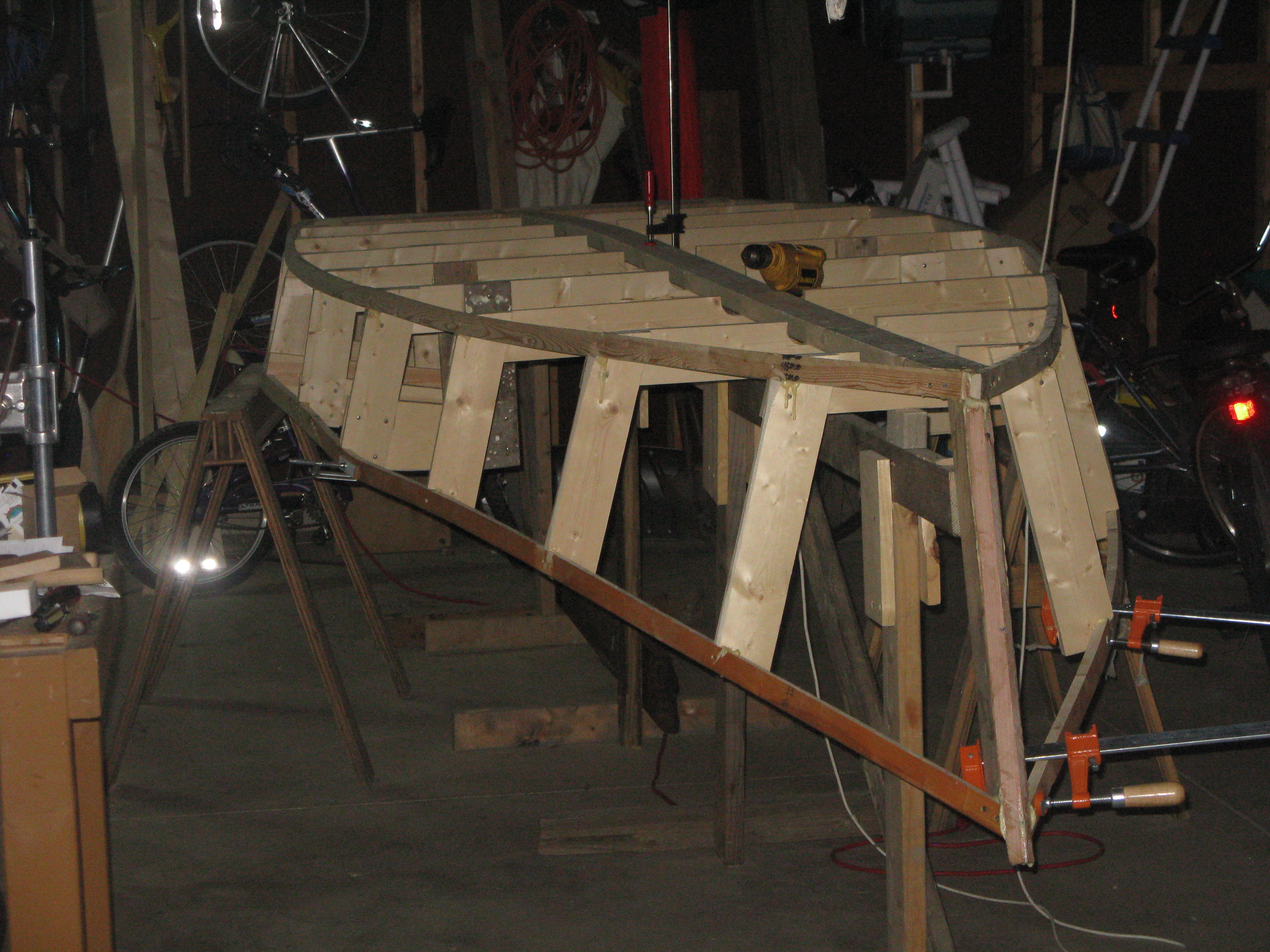
The framing is complete!

Now I need to “fair” the boat. This is of course the term that professional boat builders use. What they mean is that one has to sand the  frame down so that the exterior wood can be applied to even surfaces.

This plan is of course based upon plywood construction, so I am going to do my best to purchase some extra nice 1/4″ or 3/8″ finished plywood (I cant remember which) But I would like the exterior of the Inagua looking sharp (no pun intended).

This is an exciting point in the construction – After this it is going to look like something that could actually float!

IMG_7749 IMG_7750 IMG_7751

IMG_7748

That bottle of Gorrila Glue is a little unsettling


What does this have to do with liberal education?

I refuse to respond!

Posted in Uncategorized | Leave a comment

On Writing Letters of Recommendation


I have only met one person that really expressed true regret about a specific educational decision – and that was his decision to attend a fairly prestigious Catholic college somewhere in Massachusetts.

He said that the experience almost drove him crazy and that he nearly lost his faith because of this decision. He said that he took his studies very seriously and that consequently he became enmeshed in a soul killing spiritual crisis for years even after he graduated. Fortunately for him he recovered though some miraculous intervention of a holy priest (I think) that God placed in his path- and then he embarked on a sort of “self re-education” program in which he is still engaged.

He was very angry about his decision to attend this college. He was angry with his parents for allowing him to attend. He was also angry with the encouragement that he received from friends and relatives.

He was so angry about his experience that he even wrote a letter of complaint to his former teacher who suggested that he attend the college.

I think the letter said something like,

“Dear Former Admired Teacher,

I respected you as a teacher and enjoyed your class very much. I also admired you because of your strongly held philosophical convictions. When I asked you for a recommendation to college, you enthusiastically encouraged me, and I listened to you as to someone with more wisdom than me. You were thrilled that I wanted to attend a prestigious Catholic college. Being inexperienced, un-knowledgeable and very impressionable, I trusted you and followed your advice. What else can a young person do but listen to those he admires?

Please do not be offended when I tell you that your advice nearly caused me to lose my soul. The college that you so warmly endorsed must not be the college that you thought it was, or perhaps not the college that it was 50 years ago when you attended.

The professors are no longer Catholic for the most part and the curriculum is no longer an integrated program of studies with truth and wisdom as the goal. The vast majority of the student body does not takes the faith seriously. Most do not even attend Sunday Mass. The student life, in general, can only be described as licentious.

Aside from this, the intellectual atmosphere at the college is steeped through and through with an intellectually paralyzing and deep skepticism. The only value held in common on the campus, with a sort of dogmatic absolutism, is that there is no absolute truth and that ultimately… matter is what matters!

I just wanted to tell you this so that you have more information about this college. I thought that perhaps you might think twice before you encourage other students to attend this college. On the one hand I appreciated your willingness to recommend me, but on the other I am now very angry that I listened to you.

I hope that this letter does not offend you. I thought that you should know since you are in position that requires you to give students direction.

Sincerely……

I have always wondered about whether this was the right approach. His former teacher must have felt pretty lousy. I have similarly written recommendations for students and have always wondered if I would ever get a letter like the one above.

I hope not

Posted in college | Tagged , , | Leave a comment

The Good Student is Like Earth

In his Commendation and Division of Sacred Scripture (which I, for one, plan to spend more time upon!) St Thomas quotes psalm 103

“You water the hills from your upper rooms, the earth is sated with the fruit of your works.”

St Thomas then explains that he is going to examine four things in order

“the height of spiritual doctrine; the dignity of those who teach it; the condition of the listeners; and the order of communicating.”

I was particularly interested in the third thing, namely, “the condition of the listeners” which I take to be the same thing as “the condition of the students” or more bluntly “the way students should be.”

And guess with what he compares a student?

“Earth”

Students should be like earth!

Why?

Three reasons: Humility, Stability and Fruitfulness!

‘the earth is sated’. This is because the earth is lowest. Proverbs 25:3: ‘The heaven above, and the earth beneath.’ Again, it is stable and firm. Ecclesiastes 1:4: ‘One generation passes away, and another generation comes, but the earth stands for ever.’ Again, it is fruitful. Genesis 1:11: ‘Let the earth bring forth the green herb, and such as may seed, and the fruit tree yielding fruit after its kind.’

As always St. Thomas is not just making this stuff up. He actually finds fantastic scriptural support even when making points with which I was already inclined to agree.

So he continues.

Similarly, they (ED. “students”) should be low as the earth in humility. Proverbs 11:2: ‘Where humility is, there , also is wisdom.’ Again, firm with the sense of rectitude; Ephesians 4:14: ‘That we may be now no longer children, tossed to and fro and carried about by every wind of doctrine.’ And fruitful, as the precepts of wisdom bear fruit in them, Luke 8:15: ‘Having heard the word, hold it fast and bear fruit in patience.’

And he winds the whole argument up thus (as if he could be any clearer!)

Therefore humility is required of them with respect to the learning that comes from listening, Sirach 6:34: ‘If you wilt incline your ear, you shalt receive instruction: and if you love to hear, you shalt be wise.’ Rectitude of the senses with respect to the judgment of what is heard; Job 12.11: ‘Doth not the ear discern words?’ But fruitfulness in discovery, by which from a few things heard, the good listener pronounces many things; Proverbs 9.9: ‘Give an occasion to a wise man, and wisdom shall be added to him.’

I think we are all able to easily see that a student needs to be humble. A person has got to listen and submit his mind to some extent to the words of another.

What I find illuminating is that the student must be firm or stable- which St Thomas also appears to be naming “Rectitude of the senses with respect to the judgment of what is heard.

St Paul’s exhortation teaches the point well

“That we may be now no longer children, tossed to and fro and carried about by every wind of doctrine.”

In other words I suppose an excess of humble disciple-ship might produce the kind of students that they used to call “ipse dixit” men. In other words, especially in the case of someone like Aristotle (Ipse), it is not a virtue to simply believe whatever is heard from a teacher even if one has a vague suspicion that the teacher might be speaking a little out of his sphere.

Would-be Aristotelians, like me I suppose, might suffer a little from a criticism in this regard. I admit it. My tendency is to immediately accept as true anything that Aristotle says even if that means suspending other things that appear to have been demonstrated pretty squarely.

For example, it does appear that there is something called light which in fact does appear to move. Yet Aristotle definitely excludes the movement of light by a pretty good argument. I think his argument is basically something like this: If light moved then, one standing on a high mountain at the crack of dawn should be able to see it move. But guess what? A person standing on a high mountain at the crack of dawn does not see it move. So therefore light does not move!

I think that is a great argument. Nonetheless one does have to admit that modern science has enabled us to detect movement at greater speeds than perhaps even the great Aristotle dreamt was possible-although it pains me to say this.

Not that he was wrong about what light is mind you. I mean so what if it moves. The real question is what is it!?!

At any rate, we shouldn’t be tossed to and fro like children by every passing doctrine- and so firmness, like the earth, is what a good student needs.

But don’t let anyone confuse this with granite or marble headed stubbornness!

Posted in classical education, Science | Tagged , , , | 5 Comments