Wisely and Slow: Salutary Advice For Students in the New Year II

Today is an excellent day for me to post the salutary advice that I have gathered from the wisest man in the world, with whom, as I have mentioned before, I have a direct (but carefully guarded) line of communication.

Now I know that this is bound to cause jealousy, but allow me to remind you, gentle reader, that we can’t all know the wisest man in the world. It simply isn’t possible.

And why not me? Everyone deserves a lucky break in life. Some glory in their birth, some in their skill,

some in their wealth, some in the body’s force,

some in their garments though new-fangled ill;

Some in their hawks and hounds, some in their horse!

But in my case I happen to have been fortunate in the wisdom of my connections.

Now if I was the wisest man in the world, then I am quite certain I would be very proud. I would be intolerably puffed up. I would be unbearably overbearing.

But here again I have been blessed. Because the BIG advantage of knowing the wisest man is that while having access to his wisdom, one is not prone to pride because one knows that his wisdom is borrowed.

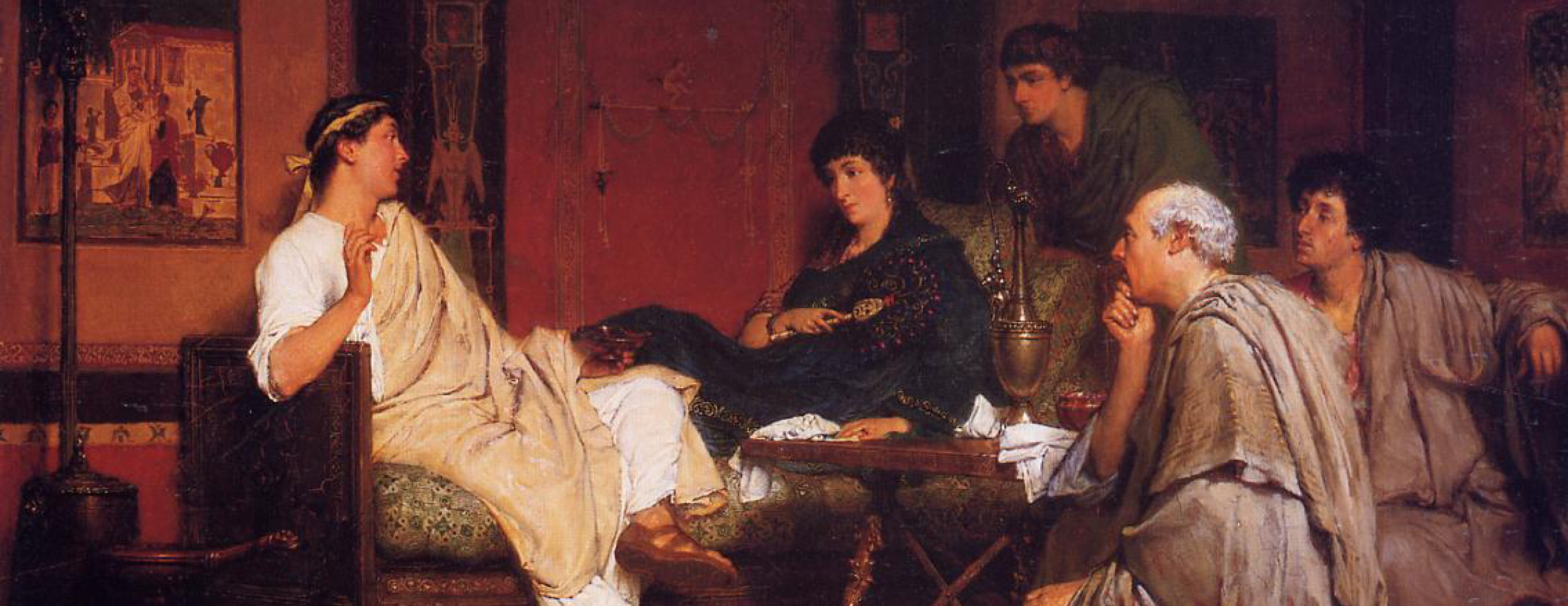
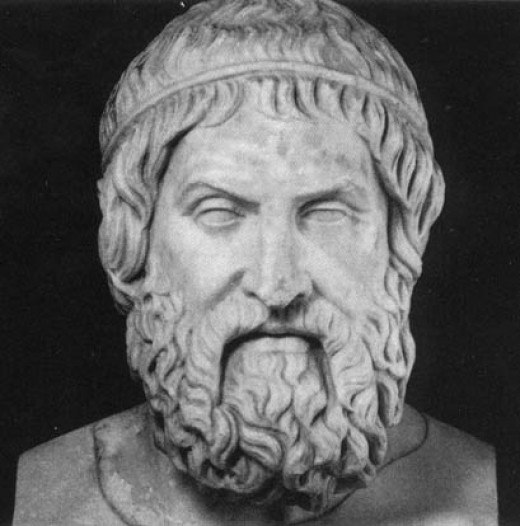
In other words I do not expect Socrates, in obedience to the oracle, to come knocking on my door testing me to see if I am wise. He will not accuse me of claiming to be something that I am not.

No, he will simply come and ask for contact information which I will gladly give him in return for all the things that he has given me.

Gentle Reader: Well let’s get on with it Langley! What is it that you would like to share?

Langley: I am getting to  it. you need to be patient. As a matter of fact, ironically, it has to do with going slow. We need to slow down sometimes.

Gentle Reader: Good grief!

Langley: Well, as I said in a previous post , there are times that we need to go wisely and slow. Seven times, as a matter of fact! And I now intend to share them with you.

Gentle Reader: Well its about time! Please just list them and spare us the usual pedantry and mindless pablum which constitutes the ordinary fare that is your specialty.

Langley: This makes me uncomfortable. I don’t think I can just give you a list. You may not understand how very wise it is and peremptorily dismiss it. That would be a shame.  Very often people refuse to think twice about something when it appears either too simple or even too profound.

Gentle Reader: Langley, just give us the list.

Langley: I don’t know if I should. After all, the list is about how we need to sometimes go wisely and slow…and I think this is precisely one of those times.

Gentle Reader: You don’t realize how close I am to clicking myself out of your trivial little blog. I have my finger on the left clicker right now,

Langley: Ok… Ok. Here is the list. But don’t blame me if you don’t understand it completely. Don’t blame me for not mentioning to you why it is appropriate that there are in fact seven times that we should go wisely and slow… and not eight for instance.  You do know that seven is a number signifying wisdom don’t you?

Gentle Reader: The list! The List!!

Langley: Very well. Here it is.

“Wisely and slow; they stumble that run fast”

Seven times that we should proceed wisely and slow in the discourse of reason:

  1. where many things must be considered before a judgment can be made
  2. where a thing is difficult to understand
  3. where there is a beginning small in size, but great in its power
  4. where there is knowledge over a road and knowledge of the road to follow
  5. where there is general knowledge and particular knowledge
  6. where there is a word equivocal by reason
  7. where there are the words of a wise man


Gentle Reader: Langley, some of these are obvious. Simple, in fact.

Langley: Yes, but what did you think wisdom was anyway? You probably think that wisdom always means saying something incomprehensible! Wisdom is often just the simple truth…

And right perfection wrongfully disgraced,
And strength by limping sway disabled
And art made tongue-tied by authority,
And folly, doctor-like, controlling skill,
And simple truth miscalled simplicity,
And captive good attending captain ill:

Gentle Reader: And #3, #4, #5 and #6 make no sense.

Langley: What? They make no sense? Why that is more than half of them! Let me try to explain.

Gentle Reader: No I haven’t the time. I need to run.

Posted in Shakespeare, Socrates, Wisdom | Tagged , , , , | Leave a comment

Learning Latin

Now I admit that the last post was on the silly side.

I am still kind of embarrassed about it. The Latin itself would probably best be described as some kind of Latin doggerel.

You will be relieved to know that I did dash it off rather quickly. So no one can accuse me of a too gross neglect of time in composing such a ludicrous work.

Nonetheless, I am willing to say that the central point of “Speaking Latin? Humbug!” is still something that I am doggedly willing to defend. Namely that,

The chief reason for learning Latin does not consist in learning Latin.

It does not consist in learning to speak Latin or read Latin or write Latin. All of those things are secondary to the chief reason.

And what, you ask, is the chief reason for learning Latin?

The chief reason to learn Latin is to learn English. (as we said before right here )

Or more universally, the chief reason for learning Latin is that through it we learn the liberal art of grammar; through the study of Latin, we learn language itself!

Now that is a provocative statement, isn’t it?

For example, if we asked one who was taking Spanish “Why are you taking Spanish?”

We would expect him to reply

Why, obviously to learn Spanish, you dolt! El burro sabe mas que tu!

And if another was spending years taking German classes we would not dare ask

Why are you learning German?

He would surely reply

“I am learning German in order to speak German, Du blöde Kuh!”

Image result for cow

And similarly suppose one were attempting to learn Chinese. Would we not expect that such a one was learning Chinese in order to read Chinese?

Why else would one learn Chinese with all those intriguing and mysterious characters?

When is the last time that you said to someone:

“Oh, so you are learning French eh? Can you say something in French for me? For example, how does one say ‘where is the nearest lavatory?'”

And if he is not even able to say that, after taking two or three years of the subject, we remark silently to ourselves “This fellow doesn’t know French- what a waste of time! He is either not a very good student, or he has a lousy teacher!”

The conventional measure of whether language study has been fruitful and profitable is the extent to which the student is able to speak, read and write the language he is studying.

Now, what do we mean when we say that the purpose of learning Latin is not really to learn Latin, but is rather to learn English?

I mean quite simply this. The study of Latin has the unique capability of revealing what language itself (or Language qua language, or if you like language as such) is to anyone who spends even the smallest amount of time studying it.

Latin is, for all intents and purposes, the embodiment of language in its formal aspects. That is to say, that Grammar, which is more or less hidden in this language or that language, is something delightfully manifest and accessible to the student in Latin.

The Grammar and principle of language inherent in every language are marvelously manifest in Latin.

Latin is such an effective vehicle for learning Grammar that one is almost inclined to think that the language itself is nothing other than a grammar manifesto; the culminating document achieved by the first Grammar Convention back around 700 B.C.

Every Language has something in common, namely some manner of predicating. Every language is called a language because each involves a specific manner of saying some thing about something; each involves its own mode of making statements or asking questions; each involves its own way of asserting this or denying that.

In every language, however primitive, there must needs be nouns and verbs and adjectives. There might even be pronouns and conjunctions and adverbs as well!

But what these various parts of speech are might in fact be quite mysterious in this or that language. The fact that a verb has time and voice and mood and number may or may not be clear in this or that language. The fact that a noun may have gender and case may be unclear in some specific language.

What is a noun? What is a verb? What is an adjective?

And don’t tell me that “a noun is a person place or thing” either! We have already spoken about this embarrassing confusion elsewhere.

And is Grammar really necessary? Does a precise and refined knowledge of Grammar aid us in any other important endeavor? Or is it only an art that is helpful for those who would like to conduct themselves courteously?; is it only an art that might help one to avoid committing an embarrassing verbal faux pas at tea a party?

Think about Grammar like this:

Just as that great general and master of armies and strategy, Julius Caesar, knew how to organize and martial his forces in such a coordinated and ordered manner that he was able to conquer all of Gaul, Greece and Egypt, so too is one, who has learned to martial his words through the art of grammar, able to be an effective thinker.

Just think of all those Latin paradigms as so many phalanxes and cohorts. Words ready for battle. Words arranged for effective thought and communication!

When a student memorizes all those Latin paradigmns he becomes a veritable linguistic general. He becomes a Martial of effective speech!

No other language is capable of making a student a master of language and of grammar so effectively. No other language is so accessible to the ordinary student!

Posted in classical education, Grammar, Latin, Liberal Arts | Tagged , , | 5 Comments

Speaking Latin? Humbug!

The Persistent Perks of Speaking Latin | by Justin Slocum Bailey | EIDOLON


Tu Interrogas:

“O Marce de Campo Longo, Potesne dicere aut loqui Latine?

Respondeo (iocose et cum levitate):

“Primo, interroga me utrum cura mihi sit”

vel

“Primum, me interroga si mihi curare debet

Tunc graviter Interrogas:

“O Marce de Longo Campo, estne curam tibi de loquente Linguam Latinam?”

Respondeo innocente:

“Quid?”

Tu Rursus Interrogas In Aliis Verbis (Cum Gravitate):

“Despicisne illos qui Linguam Latinam loqui possunt?”

Serene Respondeo:

“Minime, est peccatum quemquam despicere!”

Tu Iterum Interrogas:

“cur numquam laudas potestatem Linguam Latinam dicendi?”

Respondeo (Cum Placiditate):

 intentus primus et verus docendi Linguam Latinam, vel potius, vel propositum linguam Latinam docendi non est discipulos facere, qui potestas vel capacitas Linguam Latinam loquendi.

Tu Postulas:

Tunc quid est intentus linguam Latinam docendi. Quid propositum est? Certe aliquis qui tam stultus est ut longissimum tempus consumere in discenda lingua mortua….certe quidem debet huic capacitas parvas legere et loquere in hac lingua! Certe saltem debet huic scribere et componere versos dignos et aptos!

Graviter Respondeo :

Propositum verum, immo intentus optissimus ad discendam Linguam Latinam non loqui, non scribere, non legere est,

sed

Linguam ipsam intellegere! (id est Linguam universaliter intellegere)

Tu, Capito Scalpto, Respondis:

Quid? Intellegere? Quid dicis?

Gravissime Respondeo:

Primum de eo cogita, tunc huc reveni et cras vel in alio die dicemus de hac materia in Anglice!

Posted in classical education, Latin, Liberal Arts | Tagged , , , | Leave a comment

In Which the Lion and Ox Discuss the Furies

Lion:  That last post about Aeschylus’ Eumenides was too long – and frankly Langley began to lose me when he started talking about conscience. The lengthy citations were no help either.

Ox: Yes, the post was rather long-winded. Langley talks too much in general.

Lion: Indeed, and long passages from The Eumenides are one thing, but long passages from Newman are quite another.

Ox: Especially if the citations are not precisely to the point.

Lion: Right!
Ox: But citations do break the monotony of the page and add some visual variety for the reader.

Lion: Yes they do- and that is important especially when reading long and abstruse discussions about ancient Greek literature! One suspects that he includes citations simply for the visual effect. I don’t blame him for that. Anything he can do to spruce up the visual effect of his blog would help.

Ox: Either that, or perhaps he is just trying to appear like an authentic intellectual. Any nitwit with access to the internet can masquerade as an intellectual nowadays. But the veil is thin indeed.

The real thinker, the quality mind, demonstrates worth not through the number and variety of lengthy citations, but rather through coherency of thought.

Lion: Yes indeed- and speaking of the coherence of Langley’s thought. What did you think about his interpretation of the Furies?

Ox: You mean that the Furies represent man’s conscience?

Lion: Yes, what did you think of that? Did you agree?

Ox: Well I thought it an obvious interpretation. A superficial interpretation. He probably found it on the internet.

Lion: Indubitably. But, if truth be told,  I am tired of this interpretation and actually just a little annoyed by it.

Ox: How so? Despite the obstacles in reading his stilted prose, despite the trouble in keeping oneself awake through his long winded speeches, despite his tendency towards exaggeration and circumlocution, I thought Langley’s general point was still valid-namely, that the plays of Aeschylus, contain compelling and beautiful teaching about man’s nature; we find insight into the nature of man with respect to his soul and his conscience.

Lion: I don’t remember Langley saying that.

Ox: No?

Lion: No. Not that I disagree with you. In fact I think you are entirely correct. If Langley had said that, I would have been content.

The works of Aeschylus are powerful in their testimony about the nature of man, his soul, his passions, his conscience, the natural law….and I would add with respect to the Eumenides…the natural horror that man feels when he transgresses his own conscience, especially when he commits grievous unnatural acts.

Ox: Wasn’t that what he said?

Lion: No! Langley was maintaining a direct comparison between the Furies and man’s conscience. Just as the Furies relentlessly pursued Orestes and gave him no rest, so does the conscience pursue and give no rest to a man who has committed sin.

Ox: Well that seems like an obvious comparison.

Lion: Yes it is obvious. But it is also wrong.

Ox: Wrong?

Lion: Yes quite wrong, and I’ll tell you why.

Ox: I would be more than obliged if you did.

Lion: Yes, I will be more than pleased to explain.

Ox: I would be thrilled to hear the explanation.

Lion: Well then listen to me just a little longer. Will you do that?

Ox: I am prepared to listen to you forever as long as it doesn’t take much longer.

Lion: Well good! Then let us proceed….Incidentally, Did you borrow that line from Oscar Wilde?

Ox: Well not precisely, but I did take the central idea from him.

Lion: Yes no doubt from The Importance of Being Earnest.

Ox: Precisely! As I remember it, the sentiment came at the end of the play directly before the final revelation of identities which ushered the story to a peaceful and happy conclusion.

JACK I must retire to my room for a moment. Gwendolen, wait here for me.
GWENDOLEN If you are not too long, I will wait here for you all my life.

Lion: Yes, now I remember it vividly. This is the precise point when Jack found the handbag.

Ox: Yes indeed the very climax of the play.

Lion: I had a major role in that play in high school.

Ox: Did you really?

Lion: Yes I did.

Ox: What part did you play?

Lion: I was Jack, in fact.

Ox: Jack?

Lion: Yes, I was Jack.

Ox: Jack. Well that is practically the lead role.

Lion: Algernon has a very large part as well- as do Cecily and Gwendolyn. I am not certain which role is the largest. But Jack did get the last line- here is how the play wrapped up:

GWENDOLEN Ernest! My own Ernest! I felt from the first that you could have no other name!
JACK Gwendolen, it is a terrible thing for a man to find out suddenly that all his life he has been speaking nothing but the truth. Can you forgive me?
GWENDOLEN I can. For I feel that you are sure to change.
JACK My own one!
CHASUBLE [To MISS PRISM.]
Laetitia!
[Embraces her]
MISS PRISM [Enthusiastically.]
Frederick! At last!
ALGERNON Cecily!
[Embraces her.]
At last!
JACK Gwendolen!
[Embraces her.]
At last!
LADY BRACKNELL My nephew, you seem to be displaying signs of triviality.
JACK On the contrary, Aunt Augusta, I’ve now realised for the first time in my life the vital Importance of Being Earnest.

Ox: Yes I remember now. Thank you. A terrific play! Though not on the same scale as Aeschylus’ Eumenides.

Lion: I agree. One would not want to confuse the works of Oscar Wilde, as delightfully funny as they are, with the timeless works of Aeschylus. I don’t suppose Oscar Wilde fancied himself on the same plane either. I have a sneaking suspicion that Wilde’s works are already beginning to suffer the slow slide into oblivion, as is the doom of every inferior work, whereas the works of Aeschylus have a demonstrated immortality.

Ox: Devouring time.

Lion: Quite!

Ox: But you were going to explain why the Furies in The Eumenides should not be compared directly to man’s conscience.

Lion: Ah yes!  Thank you for reminding me. I would be more than happy to explain if you feel ready.

Ox: I do feel ready.

Lion: Then let me proceed.

Ox: Proceed then at once with all speed!

Lion: The Furies are ugly are they not?

Ox: Ugly? The Furies are perhaps the ugliest beings invented by the human imagination. What with their hair and waists encircled by serpents, their continual hissing and shrieking and yelling…their bloody, bristling, gory appearance. Ughhh! I shudder to think of them.

Lion: Yes, the Furies, goddess of the night…born from blood! Ugly indeed!

Ox: Horrible.

Lion: And are the Furies cool and deliberate in their activity or do they appear more as bloodhounds and passionate avengers?

Ox: They seem anything but cool in their deliberations.

Lion: I agree. The Furies with their shrieking and horrid appearance are not pleasant to think about, and it is no wonder that Apollo wants no part of them in his Temple.

Ox: I agree, but what does this have to do with conscience?

Lion: Well– is not the conscience a judgement of reason on the moral quality of our actions?

Ox: Quite so.

Lion: Yes, and conscience is something which is more on the side of reason than the passions, correct?

Ox: Correct.

Lion: But the Furies seem to be more on the side of man’s passions; on the side of such things in man as  his horror, his fear.

Ox: Well, yes they do. I see what you mean now.

Lion: Good, I am glad. Conscience is not an ugly thing is it?

Ox: No, it isn’t.

Lion: Does conscience shriek and yell and hiss?

Ox: No. Conscience seems almost synonymous with cool deliberate reason.

Lion: Conscience is not some gory, black, snaky thing is it?

Ox: No, it isn’t

Lion: Surely a god like Apollo would not bid us leave our conscience outside his temple.

Ox: No, he would not.

Lion: Then I think it is settled. The Furies do not represent conscience.

Ox: Settled! The Furies do not represent man’s conscience.

Lion: We might rather say that The Furies represent the horror, the shock of emotion that a man feels when he recognizes that he has transgressed his own conscience.

Ox: Well, that makes sense.

Lion: Yes, the internal horror and shame and fear and self loathing that naturally attends a man when condemned by his own conscience might be aptly represented by those ugly Furies.

Ox: Snakes and all!

Lion: Yes- the relentless pursuing of those internal feelings have the power to unnerve even the most steely-hearted man.

Ox: I have heard of such cases. The seemingly cold-hearted criminal who is relieved when finally discovered to be the rascal that he is. Some will even turn themselves in after years of trying to escape the law!

Lion: Yes, just such are they whom the Furies hound!

Ox: Lion?

Lion: Yes, Ox.

Ox: I like your distinction between a man’s conscience and the emotions that he is prone to feel when he goes against his conscience.

Lion: I am glad.

Ox: But perhaps Langley was speaking more generally. Perhaps he only meant to touch on the general fact of the existence of a conscience in all men which acts as a sort of emissary of the gods so to speak.

Perhaps Langley only meant to point out the fact that we find ample testimony to the reality of man’s conscience in Aeschylus. And Langley thinks that modern ears would benefit from this testimony.

Lion: What do you mean by referring to the conscience as an “emissary of the gods?

Ox: I only mean this. A good functioning conscience admonishes us about the Eternal Law or, if you please, more precisely about the natural law. This is why he cited Newman’s famous words describing the conscience as

“The aboriginal Vicar of Christ”

Lion: Well that’s true.

Ox: And I think  it is certainly the case that the works of Aeschylus do in fact bear powerful testimony to the existence of the Natural Law, don’t you agree?

Lion: I do.

Ox: And for men in all ages this is an absolutely crucial doctrine taught by nature herself.

Lion: Very true.

Ox: An important doctrine especially for those who do not have the benefit of sound Christian doctrine.

Lion: True.

Ox: And so this is why I don’t take too much exception with Langley’s thesis that the Furies may be interpreted as giving testimony to the existence of man’s conscience.

After all, to feel horror and shame and fear at transgressing one’s conscience presumes that one has a conscience.

Lion: Yes, but…

Ox: And it was really just this idea that Langley was all excited about. I think he deserves more credit.

Lion: But, his interpretation was not…

Ox: Lion, sometimes we need to see things in general first before we work out all the particulars.

And further, I don’t think Langley is all that long-winded. Actually I quite enjoy reading him. You may be even surprised that I even find his tangents instructive from time to time.

Lion: Ox, if you want to read instructive tangential-ism read more Chesterton!

Ox: Bah!

Posted in classical education, discussion, Literature | Tagged , , , | Leave a comment

Aeschylus on Conscience: Why We Read Aeschylus Part II

Aside from its immense-attention grabbing power, the title of this post also serves as an effective reminder to those skeptics among you (you doubters, ye of little faith!) that when we, (i.e. we over here at Lionandox.com) make promises, we sometimes do deliver on our  promises!

We take our responsibilities seriously.

“What responsibilities?” you ask.

What responsibilities…Why, the very serious responsibilities that devolve upon those engaged in the daily defense of classical education!

It is one of those cruel ironies in life that classical education even needs defending!

Surely an education which aims at the perfection of the human being qua human being would seem on the face of it to need no defense. In fact it is precisely every other kind of education that needs defending.

How is it defensible that anyone would not seek a classical education? Don’t ask me. Doesn’t our human nature demand it?

But this is a discussion for another day. Presently we are engaged in discussing why we read Aeschylus!

Now I should point out that I haven’t read the Oresteia as a whole for at least a year, but I did have the good fortune of seeing the third play in the trilogy, to wit The Eumenides, acted on stage by a talented cast of seventh-ninth grade students that happen to attend the prestigious little school where it is my honor to teach.

I was reminded that God surely must have inspired Aeschylus with an understanding of man’s fallen state, his life, and his condition, specifically to instruct the world about man. And not only that, Aeschylus makes us feel the right way about these things as should be the aim of any good poet.

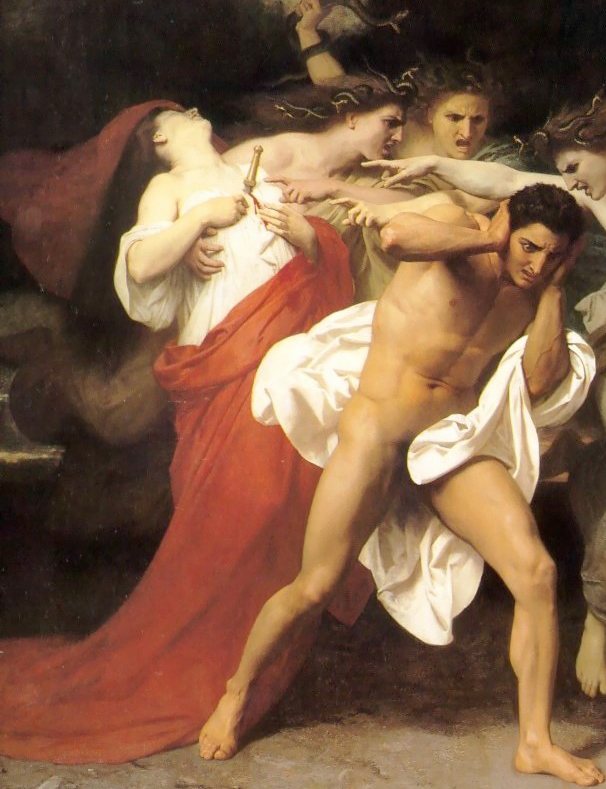
For example where is there a better and more vivid testament  about the reality of man’s conscience than that which is portrayed by the Furies in the Eumenides? Where is there a more vivid image, evocative of an unclean conscience, than those frightful terror-inspiring relentless goddesses whose duty it is to hunt down and take vengeance upon those who have not paid for their crimes – and especially upon those who have committed crimes against nature!

When stirred up towards the prosecution of sin they are horrid to behold as doth attest the Pythian Priestess!

Of women slumbers-not like women they, But Gorgons rather; nay, that word is weak,
Nor may I match the Gorgons’ shape with theirs!
Such have I seen in painted semblance erst-
Winged Harpies, snatching food from Phineus’ board,-
But these are wingless, black, and all their shape
The eye’s abomination to behold.

Fell is the breath-let none draw nigh to it-
Exude the damned drops of poisonous ire:
And such their garb as none should dare to bring
To statues of the gods or homes of men.

D&D 5E in Ancient Greece: The Furies (Greek Erinyes) – Blog of Characters &  Campaign Settings

Conscience never really sleeps and will pursue the sinner even in his own sleep, as the Furies pursue their prey. Thus spoke Clytemnestra’s Ghost:

In dreams ye chase a prey, and like some hound,
That even in sleep doth ply woodland toil,
Ye bell and bay.

So powerful is conscience that even were a god to hide him who has committed an unrighteous act, yea, even if he were to hide him in the very depths of hell, he cannot escape his conscience!

Scornful to me thou art, yet shalt not fend
My wrath from him; though unto hell he flee,
There too are we!
And he the blood-defiled, should feel and rue,
Though I were not, fiend-wrath that shall not end,
Descending on his head who foully slew.

Aeschylus powerfully teaches us that no crime goes unnoticed by God.

Nor does the sinner escape his own conscience but that according to our very nature no crime goes unavenged and every sin must be expiated.

Follow, seek him-round and round
Scent and snuff and scan the ground,
Lest unharmed he slip away,
He who did his mother slay!
Hist-he is there! See him his arms entwine
Around the image of the maid divine-
Thus aided, for the deed he wrought
Unto the judgment wills he to be brought.

It may not be! a mother’s blood, poured forth
Upon the stained earth,
None gathers up: it lies-bear witness, Hell!-
For aye indelible
And thou who sheddest it shalt give thine own
That shedding to atone!
Yea, from thy living limbs I suck it out,
Red, clotted, gout by gout,-
A draught abhorred of men and gods; but
Will drain it, suck thee dry;
Yea, I will waste thee living, nerve and vein;
Yea, for thy mother slain,
Will drag thee downward, there where thou shalt dree
The weird of agony!
And thou and whosoe’er of men hath sinned-

Hath wronged or God, or friend,
Or parent,-learn ye how to all and each

The arm of doom can reach!
Sternly requiteth, in the world beneath,
The judgment-seat of Death;
Yea, Death, beholding every man’s endeavour,
Recordeth it for ever.

Conscience, just like the Furies, will never let the sinner rest and will ultimately drive him to despair or conversion.

William-Adolphe_Bouguereau_(1825-1905)_-_The_Remorse_of_Orestes_(1862)

Reading Aeschylus is an excellent preparation for reading Augustine and Aquinas. For even through his darkened pre-Christian sixth century BC understanding, Aeschylus seems to have a preternatural grasp of human nature and the ghastly effects of sin upon it. Aeschylus saw that there is a law written in the heart of man which he must not transgress; there is a law which should we transgress, our conscience will cry foul. With the benefit of two and half millennia, the Blessed John Henry Cardinal Newman teaches us about conscience in much the same way:

I say, then, that the Supreme Being…implanted this Law, which is Himself, in the intelligence of all His rational creatures. The Divine Law, then, is the rule of ethical truth, the standard of right and wrong, a sovereign, irreversible, absolute authority in the presence of men and Angels.

And in Orestes’ case in the presence of the Furies! Newman continues:

“The eternal law,” says St. Augustine, “is the Divine Reason or Will of God, commanding the observance, forbidding the disturbance, of the natural order of things.”

Every sin is a disturbance of the natural order of things-but lest their be any doubt, Aeschylus illustrates the unnaturalness of sin through matricide, which even the most hardened of hearts must certainly recognize as unnatural.

Newman then introduces conscience:

“The natural law,” says St. Thomas, “is an impression of the Divine Light in us, a participation of the eternal law in the rational creature.” (Gousset, Theol. Moral., t. i. pp. 24, &c.) This law, as apprehended in the minds of individual men, is called “conscience;” and …”The Divine Law,” says Cardinal Gousset, “is the supreme rule of actions; our thoughts, desires, words, acts, all that man is, is subject to the domain of the law of God; and this law is the rule of our conduct by means of our conscience. Hence it is never lawful to go against our conscience; as the fourth Lateran Council says, ‘Quidquid fit contra conscientiam, ædificat ad gehennam.'”

This view of conscience…is founded on the doctrine that conscience is the voice of God, whereas it is fashionable on all hands now to consider it in one way or another a creation of man…The rule and measure of duty is not utility, nor expedience, nor the happiness of the greatest number, nor State convenience, nor fitness, order, and the pulchrum. Conscience is not a long-sighted selfishness, nor a desire to be consistent with oneself; but it is a messenger from Him, who, both in nature and in grace, speaks to us behind a veil, and teaches and rules us by His representatives. Conscience is the aboriginal Vicar of Christ, a prophet in its informations, a monarch in its peremptoriness, a priest in its blessings and anathemas, and, even though the eternal priesthood throughout the Church could cease to be, in it the sacerdotal principle would remain and would have a sway.

To those who read the literature of the Greeks, to the reader of Aeschylus, Newman’s discourse on the Divine Law, the Natural Law and Conscience will come very naturally. Such reading is propaedeutic to the teaching of the Gospel.

No wonder Newman praises Aeschylus and the Greek tragedians when he says

The majestic lessons concerning duty and religion, justice and providence, which occur in Æschylus and Sophocles, belong to a higher school than that of Homer…

Knowing his reverence for Homer, that is high praise indeed!

Posted in classical education, education, Newman | Tagged , , , , , | 1 Comment

The “Scandal” of Liberal Education

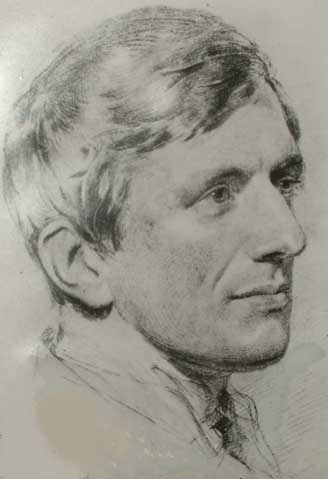
Saint John Henry Newman, speaking of the unique status of Western Civilization in the history of the world, emphatically asserts,

I think it has a claim to be considered as the representative Society and Civilization of the human race, as its perfect result and limit…I call then this commonwealth preeminently and emphatically Human Society, and its intellect the Human mind, and its decisions the sense of mankind, and its disciplined and cultivated state Civilization in the abstract, and the territory on which it lies the Orbis Terrarum, or the World.

Now if it wasn’t for the fact that this Cardinal was just canonized, I think we could all brush this statement off  as an overly zealous defense of Western Civilization. After all, sometimes people get carried away and say things that they don’t really mean. For example I will often say things like,

I think 100% arabica coffee beans may be considered as the representative coffee bean of civilization and of the human race. Nay even the preeminent coffee bean and even the bean in virtue of which all other beans merit the name “coffee bean.” To the extent that other beans measure up or fall away from the arabica bean, that is the exact measure in which each bean may be called a coffee bean.

Or perhaps about the music of Mozart,

I think it has a claim to be considered as the representative music of the human race, as its perfect result and limit…I call then this music preeminently and emphatically Human Music, and the mind of Mozart is par-excellence the musical mind! Mozart’s music is the music of mankind and in the abstract, his music and the territory in which it is heard is the Orbis Terrarum, or the World.

Ha! That is a wonderful statement. Nay even more…that is a manly statement!

I love the bravado. And what’s more I completely agree with it.

As a matter of fact- with apologies to Newman, I think I will lay claim to this statement as being perhaps the very clearest statement ever made about the worth and value of Mozart’s musical contributions.

Did you ever hear him praised more highly?

I think not!

In the future I plan on making a similar statement about Shakespeare so prepare yourselves.

But in the meantime let me return to the Blessed John Henry Cardinal Newman and his statement about Western Civilization.

Can there be a clearer or more forceful statement about the value of Western Civilization that flies more in the face of the current attitude of cultural relativism?

No. Again, I think not!

My old teacher Dr Jack Neumayr, a philosopher and professor at Thomas Aquinas College, commenting on Newman’s statement writes:

Some who regard all culture as empirical, as we have seen, will defend liberal education because it is good to know our origins; not that our culture is normative, but it is ours. Others will insist on the utility of knowing the roots of the good and evil in our society. Still others, thinking it well to know the works of man, urge us to scan the achievements of western thought. None, however, under the pressures of egalitarianism and skepticism, dares assert it is the measure of the human mind.

Indeed, few in our day see the value of liberal education so clearly. This education, which arises from western society, is none other than the education which is the measure of the human mind. It is the education that fulfills the nature of man; it is the education that disposes man for the life of grace.

Liberal education is a scandal to the modern world. Liberal education is a scandal because it presents itself in direct opposition to the prevalent educational philosophy of our day; it is a stumbling block to the aspirations and goals of modern education. Those goals include no more than what is thought necessary to equip the student with the particular knowledge that will further a specific career.

Liberal education …a boulder in the road of establishment educational philosophy!

Thus liberal education is a scandal to modern ears for at least two reasons. It is a scandal to those who are themselves ‘proponents of liberal education’ for the wrong reasons; reasons that amount to no more than a sort of cultural relativism and ultimately deny that liberal education is the education for the human mind.

It is also a scandal to those who propose the purpose of education is to equip man for this world; for some career.

As Cardinal Newman writes elsewhere,

“This process of training, by which the intellect, instead of being formed or sacrificed to some particular or accidental purpose, some specific trade or profession, or study or science, is disciplined for its own sake, for the perception of its own proper object, and for its own highest culture, is called Liberal Education…”

Posted in classical education, education, Liberal Arts, Music, Newman | Tagged , , , | 3 Comments

Inagua Sharpie Finished!

Imagine my pleasure to be featured on Jeff Spira’s blog!

Thanks Jeff for all your help. Thanks for the design and the continual support you gave answering dozens of questions along the way. All this for about 75 bucks!

I remember the days when the Sharpie was a dream and looked like this,

Just a bunch of form and matter.

Just a bunch of form and matter.

Then it began to get more form.

I maintain that the gorilla glue is going to hold just fine. But admittedly epoxy would be a little more reassuring. Just too expensive for me.

Front view. Sheer clamps attached!

Front view. Sheer clamps attached!

That was a long time ago.

Then with the addition of finished plywood, it looked like this for a considerable length of time:

I like the rudder- laminate oak

I like the rudder- laminate oak

Then the sails (made out of a quality drop cloth from Sherwin Williams), the trailer from Craigslist, some rope, eye hooks, pulleys, cleats,  and Voila!

The Inagua!

Two boat builders!

Now we need to learn how to sail!

Now we need to learn how to sail!


At last!

We decided to name her the Stephanie Anne for two reasons. the first is that we thought the name was so lovely and appropriate. The second was to express our gratitude for the lovely woman, her namesake, who patiently endured this two-year project.

Posted in ad libitum, beauty, liberal education works | Tagged , , , | 4 Comments

Reading Dickens

Every summer I have made it my habit to read a Dickens novel.

“Yes,” you say “I have heard that before. The fact is that you have not read a Dickens novel for the past two-if not three summers!”

Well I admit this. But I still feel like it is a habit, and I am going to go ahead and read one all the same. And by the way, although I can’t remember reading a Dickens’ novel during the past two or three summers-I did read one-A Tale of Two Cities-with my literature class two years ago!

As a matter of fact just this evening I commenced Little Dorrit, which is by all accounts perhaps Dickens’s greatest novel!

“But,” you say, “that’s what they said about Bleak House and even David Copperfield!”

Well, that’s why I said “perhaps” and so far so good. I am enjoying it immensely. Take this for example,

Thirty years ago, Marseilles lay burning in the sun, one day.

“Yes,” you say “everyone knows that one. That is the very first line of the book! Did you get any further?”

I did get further. And perhaps I am a slow reader, but that is precisely the way Dickens or any great author should be read!

It turns out that the first four paragraphs of Little Dorrit are the ideal paragraphs to read during one’s summer break because they describe man’s universal experience of an almost unbearable hot summer day perfectly. For example,

Far away the dusty vines overhanging wayside cottages, and the monotonous wayside avenues of parched trees without shade, drooped beneath the stare of earth and sky. So did the horses with drowsy bells, in long files of carts, creeping slowly towards the interior; so did their recumbent drivers, when they were awake, which rarely happened, so did the exhausted laborers in the fields. Everything that lived or grew, was oppressed by the glare; except the lizard, passing swiftly over rough stone walls, and the cicala (Ed. as distinguished from the cicada), chirping his dry hot chirp, like a rattle. The very dust was scorched brown, and something quivered in the atmosphere as if the air itself were panting.

Image result for lizard stone wall

Dickens the master.

He adeptly expresses with vivid imagery and poignant language our universal experience of this kind of day.

This of course is the pride of Poetry, or Imaginative Literature.

As the scholarly Harvey Peter Sucksmith (who wrote the introduction and notes to the Oxford University Press edition that I am reading) so brilliantly said

One sign of a great work of fiction is its marvelous fusion of the general with the specific, and Little Dorrit demonstrates, in a most remarkable manner, the incarnation of universal truth in particular fact.

I wish I had said that.

I am sure I have said something very much like that before.

As a matter of fact I think I have said those very words on countless occasions– right down to the phrase “incarnation of a universal truth in a particular fact.” Such a great phrase could not have escaped my far-ranging mind, which being almost completely barren of any kind of clever metaphor, simile, synecdoche, metonymy, analogy, proportion or really just any intelligent figure or construction of speech, is, consequently, always alert for intelligent or witty phrases that I can borrow, pinch, steal, or otherwise and pass off as my own in as undetected manner as possible.

But as H.P.S. so brilliantly said, great fiction has the power to universalize the particular or particularize the universal, if you prefer, and it is precisely in that power that we take joy in it.

Posted in beauty, classical education, Fine Arts, Literature, Seven Fine Arts | Tagged , , , , | Leave a comment

Classical Education and the Common Core

“Therefore, we ought to follow what is common”.

Thus exhorted the philosopher Heraclitus in the seventh century B.C., and in our own time the governors and education commissioners of 45 states, as well as over 100 Catholic diocesan school systems have seemingly hearkened to his exhortation. How?  By embracing the Common Core State Standards.

For those who have worked to promote classical education at the primary and secondary level, the Common Core State Standards (CCSS) have a prima facie appeal. If there is such a thing as one human nature shared in common, then, says the classical educator, there must be an education which is common to all. For the classical educator, liberal education is for everyone. As Robert M. Hutchins, the former president of The University of Chicago, said,

“The best education for the best, is the best education for all.”

And so the two words common core make the heart of the classical educator beat a little more quickly. By “common” the classical educator immediately thinks of all those things which are true, just and lovely that the apostle Paul speaks about. The wisdom of the ancients, the patrimony of beautiful art and music, the examples of heroism and greatness bequeathed by history, these are all to be shared. These are all a common inheritance. These things are meant to enrich the lives of all.

Euclid, the father of Geometry, begins his Elements with “common notions” or axioms, the foundations of all science and learning.

Plato, Aristotle, and Cicero used the word “common” to speak about the good that politicians should consider when they enact laws. Echoing this in the thirteenth century, St. Thomas Aquinas taught that every law must be ordered to the common good.

Eighteenth century political thinkers asserted that there are still other things that are common- even metaphysical realities- the rights of life, liberty, and the pursuit of happiness. These are rights reserved not just for the privileged few but are rights held in common, and are the basis of a just society.

In short, things that are common transcend the narrow interests of this or that person. Things that are common transcend current fashions and customs, they transcend fleeting passions; they transcend the specific circumstances of time and place.

The proponents of the CCSS have a different view about the common. According to their mission statement,

“The standards are designed to be robust and relevant to the real world, reflecting the knowledge and skills that our young people need for success in college and careers. With American students fully prepared for the future, our communities will be best positioned to compete successfully in the global economy.”

Perhaps it is a question of semantics, but have the proponents of the CCSS correctly identified what is common? Or have they followed the myriad educators since time immemorial who, in disagreement with Heraclitus, propose that the education for all is that which concerns itself with the mundane mastery and manipulation of the changing material conditions of time and place in which each of us lives?

It is quite clear that the emphasis of the CCSS is pragmatic. They appear to be 

“a recipe for standardized workforce preparation”

as University of Notre Dame Professor of Law Gerard V. Bradley said in a letter addressed to each of the nation’s Catholic bishops and cosigned by 132 Catholic scholars.

Whatever else the intent of the Common Core Standards may be, it is certainly clear that its authors stand with the witty Thracian handmaid that Socrates describes in his Theaetetus. She jeered at Thales

when he fell into a well as he was looking up at the stars. She said, that he was so eager to know what was going on in heaven, that he could not see what was before his feet.”

The Common Core State Standards propose that students consider only what is at their feet.

Should our youth be educated in a way that treats them fundamentally as a means to an end, an end such as a successful global economy? Should we focus on making students “career ready” at a time in their lives when most in fact have no clear conception about what career they would like to pursue?

Ironically, even supposing that the purpose of the education of the young was to make them successful competitors in the global economy, it is precisely classical education that accomplishes this end. Robert Maynard Hutchins asserts,

“The liberally educated man has a mind that can operate well in all fields. He may be a specialist in one field. But he can understand anything important that is said in any held and can see and use the light that it sheds upon his own. The liberally educated man is at home in the world of ideas and in the world of practical affairs, too, because he understands the relation of the two…He may even derive from his liberal education some conception of the difference between a bad world and a good one and some notion of the ways in which one might be turned into the other.”

In other words, it is Thales who has the last laugh when it comes to competing successfully in the global economy. Aristotle relates in his Politics that it was Thales who obtained the first monopoly.

“Thales, so the story goes, because of his poverty was taunted with the uselessness of philosophy; but from his knowledge of astronomy he had observed while it was still winter that there was going to be a large crop of olives, so he raised a small sum of money and paid round deposits for the whole of the olive-presses in Miletus and Chios, which he hired at a low rent as nobody was running him up; and when the season arrived, there was a sudden demand for a number of presses at the same time, and by letting them out on what terms he liked he realized a large sum of money, so proving that it is easy for philosophers to be rich if they choose, but this is not what they care about.”

In contrast, those who aim to train themselves to handle the specific challenges of the moment and the here and now, find themselves out-moded and obsolete once those circumstances change.

Classical educators have always proposed a common core. They propose that the education that belongs to everyone by right of their human nature will consist of something as unchanging as human nature. And such an education has the nature of a core because a core is by definition something relatively firm, stable and unchanging.

And what do proponents of a classical education propose instead?  In answer, Hutchins writes,

“Until lately the West has regarded it as self-evident that the road to education lay through great books. No man was educated unless he was acquainted with the masterpieces of his tradition. There never was very much doubt in anybody’s mind about which the masterpieces were. They were the books that had endured and that the common voice of mankind called the finest creations, in writing, of the Western mind.”

And in an essay entitled The Tradition of The West Hutchins says,

“The liberal arts are not merely indispensable; they are unavoidable. Nobody can decide for himself whether he is going to be a human being. The only question open to him is whether he will be an ignorant, undeveloped one or one who has sought to reach the highest point he is capable of attaining. The question, in short, is whether he will be a poor liberal artist or a good one.”

Classical educators assume that every student has the right to a liberal education. They propose that the development of the human mind is worth treating as an end, and not merely as a means. The classical educator proposes a common core that is exceedingly common and, ironically, although it directs the minds of students towards the stars, it nonetheless is the best preparation for those who wish to consider things at their feet.

Posted in classical education, education, Liberal Arts | Tagged , , , , | 1 Comment

Rebuilding LionandOx

The lionandox has been rather inactive for the past month.

One day the site just appeared to have become unusable.

So we thought we would take advantage of that minor catastrophe to rebuild the whole site over here at http://www.lionandox.com.

That is a change for the better. Now you don’t need to type in that old incomprehensible and impossible to memorize address, but can now simply type lionandox.com!

Unfortunately, this means rebuilding the vast subscription list which must be done subscriber by subscriber.

That is each of you must re-subscribe by entering your email address at the top right menu.


Posted in ad libitum, Uncategorized | Tagged , , | Leave a comment