Well… I tried explaining this very thing back in 2017 but as a seasoned teacher, I know the importance of repetition.
More than most, I know that,
“Repetitio est mater memoriae!”
Additionally, (and thankfully!) we classical teachers are an extremely patient sort of people. We relish challenges! In fact we relish the opportunity to engage in contests (“tentationes” in Latin “temptations” in English). We relish opportunities that lead us into discussions of perennial ideas.
Why?
Because they come back every year and are worth discussing!
Now among the perennial ideas worth discussing every year stands The Lord’s Prayer.
The Lord’s Prayer is, of course, the perfect prayer. I don’t know that we have to offer any sort of proof for this other than the fact that it is the prayer given by Our Lord Himself. In St. Luke’s Gospel we read,
And it came to pass, that as he was in a certain place praying, when he ceased, one of his disciples said to him: Lord, teach us to pray, as John also taught his disciples.
2 And he said to them: When you pray, say: Father, hallowed be thy name. Thy kingdom come.
3 Give us this day our daily bread.
4 And forgive us our sins, for we also forgive every one that is indebted to us. And lead us not into temptation.

St Luke’s version seems just a little scaled down, and I’m sure there is a good reason for this. Fortunately, though, we have more than one Gospel from which to get the whole story!
St. Matthew records the words of the prayer at greater length!
Thus therefore shall you pray: Our Father who art in heaven, hallowed be thy name.
Thy kingdom come. Thy will be done on earth as it is in heaven.
Give us this day our supersubstantial bread.
And forgive us our debts, as we also forgive our debtors.
And lead us not into temptation. But deliver us from evil. Amen.

That this is the perfect prayer is attested to by St Augustine, who said,
if we pray rightly and fittingly, we can say nothing else but what is contained in this prayer of Our Lord.

Since it has come up in the news recently, I have been thinking particularly of the sixth petition in the prayer: “And lead us not into temptation.”
It has been suggested that perhaps this particular formation of words in English is the result of a bad or faulty translation.
Well, I suppose those of us who don’t know any Greek or Latin will just have to let the experts tell us what to think when it comes to the translation. Ignorance of the classic languages often results in one having to simply bow in deference to the experts.
Now, I happen to know just enough Greek to make my way around a first or second year Greek textbook, and even to read bits and pieces, fragments, of classical literature. Perhaps a little Xenophon, snippets of Aristotle, a little Herodotus – but better than any of these, I am able to make my way through the New Testament in Greek – although slowly. Especially when I am reading from a Greek – English interlinear translation!

When it comes to the Lord’s Prayer, I suppose we have to consider the fact that Our Lord spoke Aramaic. Nonetheless, I think we have to also accept the fact that the only authoritative versions of the prayer were written by the Evangelists in Greek.
As far as I know, there is no official Aramaic text of The Lord’s Prayer.
The sixth petition of the Lord’s prayer, “Lead us not into temptation,” is written,
“καὶ μὴ εἰσενέγκῃς ἡμᾶς εἰς πειρασμόν”
and in CAPS,
“ΚΑΙ ΜΗ ΕΙΣΕΝΕΓΚΗΣ ΗΜΑΣ ΕΙΣ ΠΕΙΡΑΣΜΟΝ”
Now if I were to translate this I would render it thus:
and (καὶ) do not (μὴ) lead in (εἰσενέγκῃς) us (ἡμᾶς) into (εἰς) the trial/temptation (πειρασμόν)
The word “εἰσενέγκῃς” is the aorist subjunctive active of the verb “εἰσφέρω“. Which means “I lead into, bring in, announce.”
So to translate εἰσενέγκῃς as Do not lead us into is an excellent translation of the Greek -speaking as a tertiary level Greek teacher. And the word “Πειρασμοσ” (peirasmos) is rendered by “experiment,” “trial,” or “temptation.”
Thus the sixth petition of the Lord’s Prayer seems to be excellently translated as Do not lead us into temptation or Lead us not into temptation.
What does this mean?
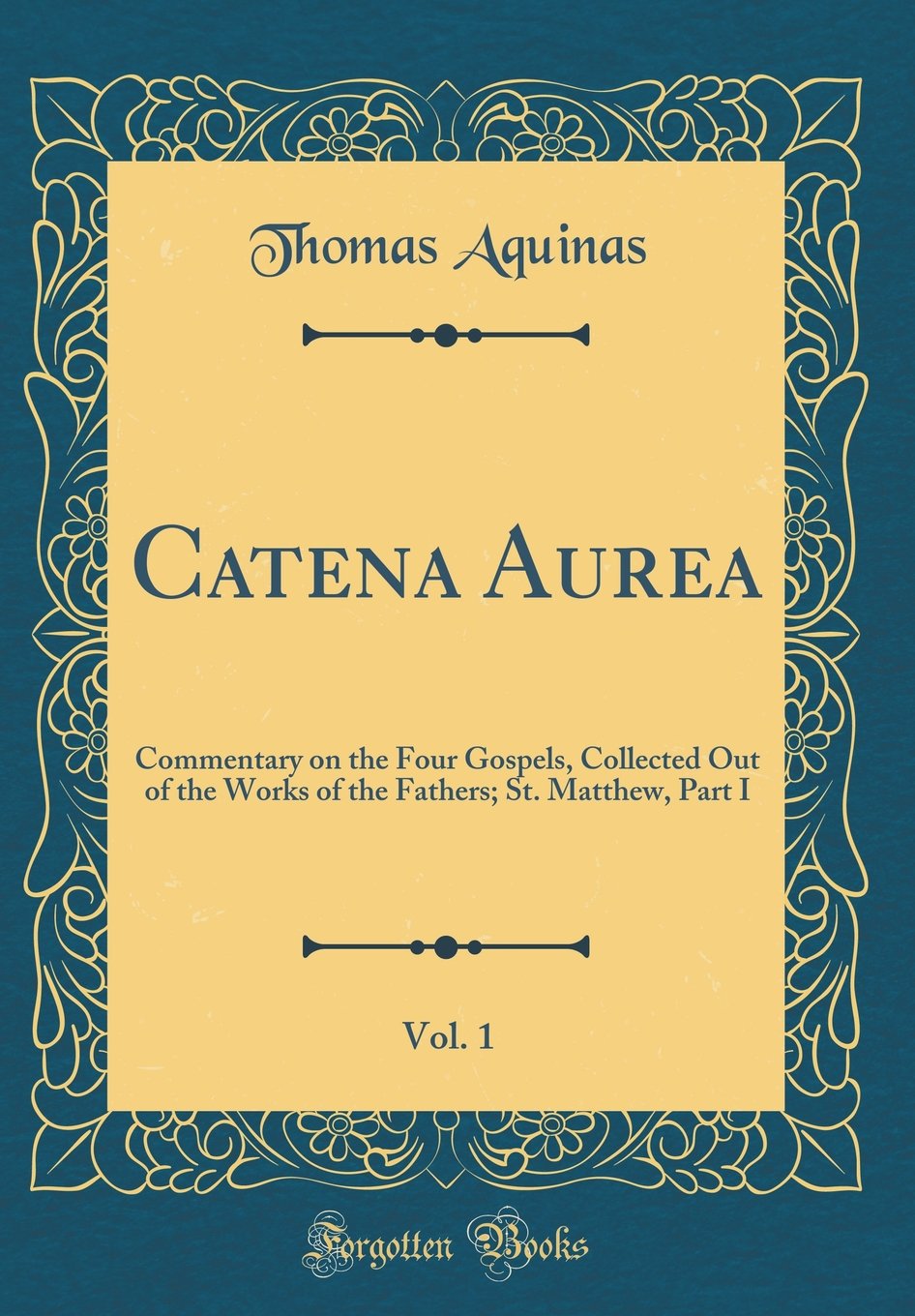
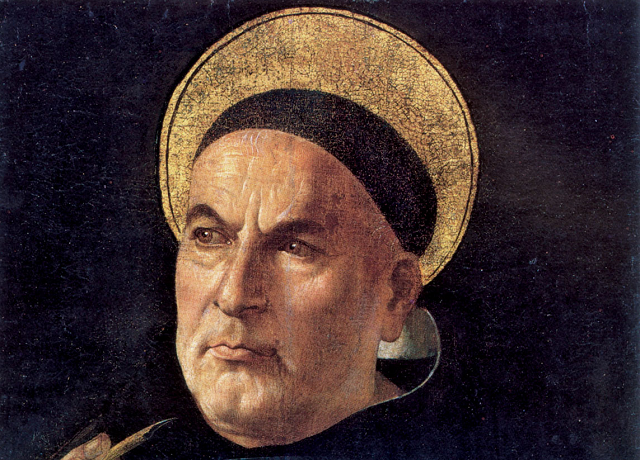
Well, here we must go to St. Thomas just as the ancient Israelites went to Joseph in Egypt. And,of course, St. Thomas never disappoints. Speaking about the last three petitions of the Lord’s Prayer he says,
We are directed to beatitude accidentally by the removal of obstacles. Now there are three obstacles to our attainment of beatitude. First, there is sin, which directly excludes a man from the kingdom, according to 1 Corinthians 6:9-10, “Neither fornicators, nor idolaters, etc., shall possess the kingdom of God“; and to this refer the words, “Forgive us our trespasses.”
And here is the crux!
Secondly, there is temptation which hinders us from keeping God’s will, and to this we refer when we say: “And lead us not into temptation,” whereby we do not ask not to be tempted, but not to be conquered by temptation, which is to be led into temptation.
He finishes,
Thirdly, there is the present penal state which is a kind of obstacle to a sufficiency of life, and to this we refer in the words, “Deliver us from evil.”
I must confess that I found it revealing when St Thomas said that when we say lead us not into temptation, “we do not ask not to be tempted.”
That is precisely what I used to think the prayer meant. Don’t let me be tempted.
Whether Oscar Wilde actually said “I can resist anything but temptation,” I think the sentiment is shared by many. And so we might pray lead us not into temptation!
But, if we reflect further on the word temptation (πειρασμόν- peirasmon) we see that it appears first to mean experiment or attempt or trial and then temptation. In other words suppose we compared ourselves to olympic athletes- what is it that we are practicing for? What are all those long training sessions for? Why all the painstaking exercise and long hours spent listening to coaches? Isn’t it all so that we can compete in a trial? Doesn’t every Olympic athlete want to have an opportunity to prove himself?
In other words the contest or competition is the trial.
The actual race is the trial or experiment of strength and endurance. And such is a temptation.

Christians are just like athletes. St. Paul is thinking along the same lines when he addresses Timothy,
But be thou vigilant, labour in all things, do the work of an evangelist, fulfil thy ministry. Be sober.
For I am even now ready to be sacrificed: and the time of my dissolution is at hand. I have fought a good fight, I have finished my course, I have kept the faith. As to the rest, there is laid up for me a crown of justice, which the Lord the just judge will render to me in that day: and not only to me, but to them also that love his coming. Make haste to come to me quickly.
Perhaps the Christian will always avoid the near occasion of sin. But this does not mean that the Christian will pray that God will remove every trial of his strength, every temptation. As a matter of fact, it could be that this is God’s very plan by which he helps souls to gain strength and merit- that is, by allowing for temptations to enter into our paths that, with His grace, we can overcome.

“Lead us not into temptation” is an excellent way to express these things. Of course God is not the cause of evil. Nonetheless, don’t we pray that God will provide for our spiritual growth in holiness by allowing us to undergo trials that are within our power to overcome?
So how can we express all of these things? What words can we come up with that say:
- “Please God, provide us with the contests, trials, and temptations that by your grace we will overcome and grow in your love.”
- “Do not let us go untried”
- “Let us not fall when we are tempted”
If we were to say, “Do not let us be tempted,” this would be against our own spiritual good. If we were to say “Let us not fall in temptation,” this would exclude the notion that we ought, as “Christian Athletes” pray for contests of our strength that are proportionate to our ability.
Thus, by the words Lead us not into temptation”, we should understand, “O Lord, let us be tested in the contests of life that You, O Lord, mercifully and lovingly allow to be placed in our paths. But we beg you, Gracious Lord, to not let us perish or fall in those trials.”







































 Classical Catholic Education