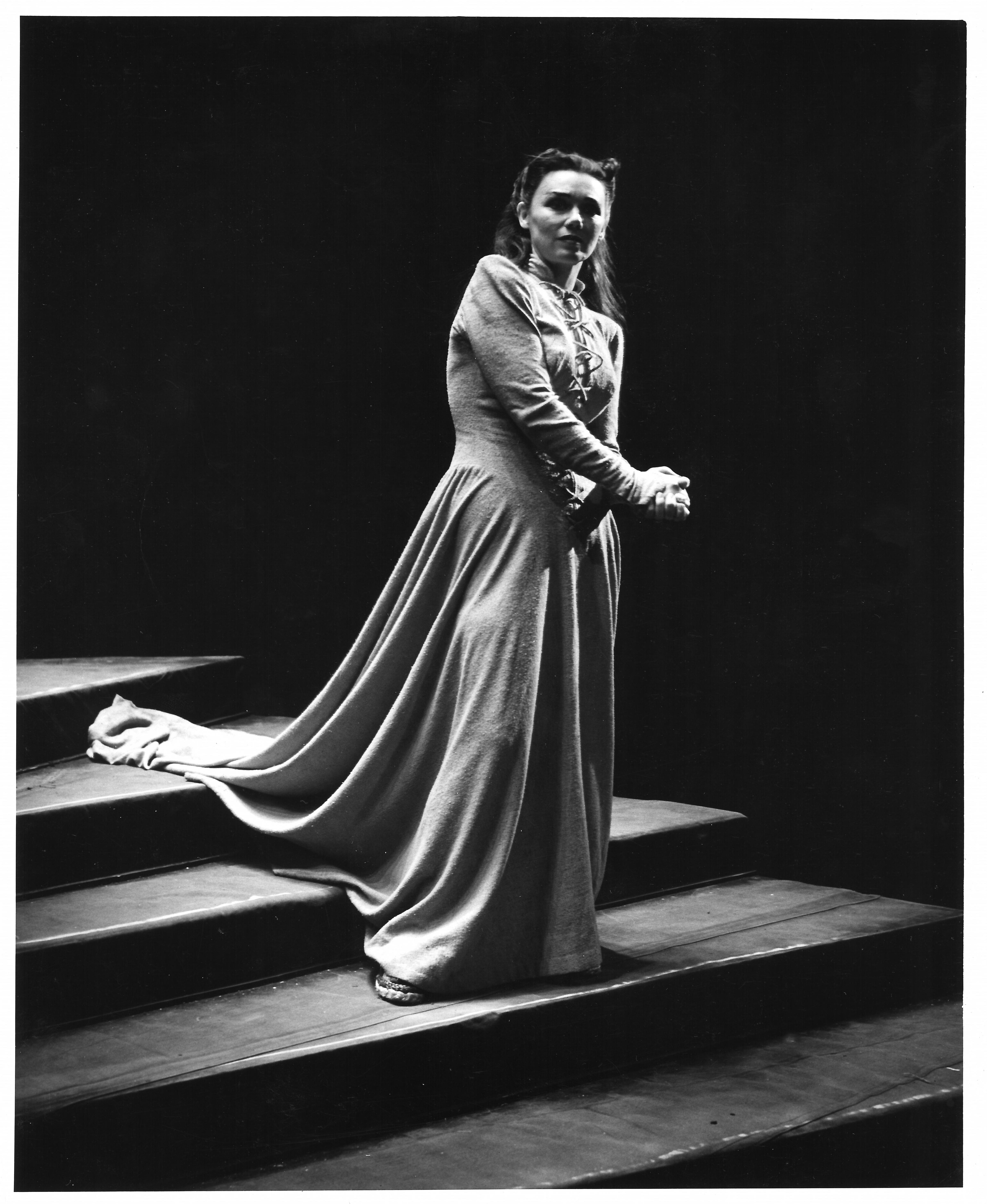
Learning in Virus Time

Image result for coronavirus students classrooms

In a sermon delivered in the Fall of 1939 titled Learning in Wartime, C.S. Lewis asserts,

every Christian who comes to a university must at all times face a question compared with which the questions raised by the war are relatively unimportant. He must ask himself how it is right, or even psychologically possible, for creatures who are every moment advancing either to Heaven or to hell to spend any fraction of the little time allowed them in this world on such comparative trivialities as literature or art, mathematics or biology

Now I can only guess about the anxiety and feelings of dread that Lewis was addressing among the student body at Oxford at that time. Bombs had not yet dropped on London as they would a year later during the German Blitzkrieg of 1940. I don’t know how his sermon was received at St Mary’s Church that particular evening in the Fall of ’39,  but I regret to say that my own sense for self-preservation would probably have precluded me from sticking around to the end of it should the bombs have started dropping a little earlier.

Image result for cs lewis learning in wartime

Nonetheless, I wonder if he might have delivered the same sermon during the virus of 2020?

Granted there must be a difference between the feelings of those who faced possible enlistment, and consequently imminent death, and the feelings of a people whose confrontation with death and mortality is largely based on screen-induced fear and media-driven panic. Nonetheless, I think it is safe to say that C.S. Lewis would surely be empathetic with the terrible dread and anxiety of present-day thinking Americans, even despite its irrational basis.

I admit it. When the financial markets plunge, when nations quarantine their citizens, when the diocese of Rome cancels all public Masses, when hand sanitizer and Kleenex are flying off the shelves, I can’t think of a time when the study of Latin and Greek and Euclidean geometry seemed more insignificant (except for maybe here). I can’t remember a time when teaching the liberal arts, the seven arts of the Quadrivium and the Trivium seemed, well…more trivial.

As Lewis asks his students,

why should we – indeed how can we – continue to take an interest in these placid occupations when the lives of our friends and the liberties of Europe are in the balance? Is it not like fiddling while Rome burns?

Yea, learning the liberal arts at the present time is in fact quite like fiddling while Rome burns! No, even more, it is not like fiddling… it is fiddling.

Thirty years ago I suppose I was thinking there was still enough time to spread liberal education throughout the land. There was still enough time, that is, to stop and put to rout the forces of modern barbarism.

I told myself that even a handful of classically minded teachers could affect the entire nation. If 12 apostles could spread Christ’s gospel throughout the world, then certainly several hundred liberally educated teachers could transform a single nation!

Student by student, family by family, what with the laws of exponential expansion and the magic of liberal education, I would participate in making small ripples which, though parochial as they were, would in a matter of a decade or so increase to a tsunami-sized deluge, transforming and disposing the hearts and minds of thousands and even millions towards an enthusiastic embrace of  Western Civilization!

Oh well, thirty years later here we are. Standing on the brink of collapse. Brought to this pathetic state by a mere virus. Reduced by something akin to the common cold! So much for hic, haec, hoc and qui, quae, quod!

What is the point of learning now? My efforts and those of a great many others do not appear to have transformed the culture. What a colossal waste of time to teach students how to conjugate a verb and decline a noun.

Arma virumque cano….whatever!

Image result for virgils tomb

But I ask myself “What would C.S. Lewis do?” “How would he respond to my despair?”

C.S. Lewis: Pipe-Smoking Biography | Smokingpipes.com


Well, I think I know. He would say,  No! This way of thinking is nothing but Tomfoolery!  As if the primary purpose of pursuing a liberal education was to transform the culture in the first place! Hogwash! Yes, maybe liberal education is part of a solution for those who wish to transform the culture, but how insulting it is to assert that this is the purpose of such an education.

He would go on to point out that the present calamity that is the virus of 2020 “creates no absolutely new situation,” as neither did World War II.

The war creates no absolutely new situation: it simply aggravates the permanent human situation so that we can no longer ignore it. Human life has always been lived on the edge of a precipice. Human culture has always had to exist under the shadow of something infinitely more important than itself. If men had postponed the search for knowledge and beauty until they were secure the search would never have begun. We are mistaken when we compare war with “normal life”. Life has never been normal.

When precisely, I ask, is a person supposed to pursue the excellence of soul for which he was created? We are not like the insects who as Lewis says, first seek

the material welfare and security of the hive, and presumably they have their reward. Men are different. They propound mathematical theorems in beleaguered cities, conduct metaphysical arguments in condemned cells, make jokes on the scaffold, discuss the last new poem while advancing to the walls of Quebec, and comb their hair at Thermopylae.

Like Archimedes in his beleaguered Syracuse and Boethius in his cell and Thomas More on the scaffold and James Wolfe on the Plains of Abraham and the noble Spartans who resisted the Barbarian at Thermopylae, we should not cease from the practice of truth, beauty, and goodness just because our own civilization appears to be collapsing.

Posted in catholic education, Christendom, classical education, education, Latin, Liberal Arts, liberal education | Tagged , , , , , | 3 Comments

Why I do not want to be the King of Scotland

I’m not so certain that I want to be king of Scotland anymore.

After reading The Tragedy of Macbeth with my students, I am having a difficult time shaking off a sense that life is meaningless when worldly ambition is the governing principle.

In Act II, King Duncan has been dispatched “to heaven or to hell,” by his own kith and kin- nay more even by his host and hostess who are now able to supplant him as king and Queen of Scotland. One would think that this would be enough to bring some kind of pleasure even if we grant it a guilty one. But Lady Macbeth dispels any doubt about this pleasure in Act III,

LADY MACBETH
Nought’s had, all’s spent,
Where our desire is got without content:
Tis safer to be that which we destroy
Than by destruction dwell in doubtful joy…


And then Macbeth himself confirms the sentiment saying,


MACBETH
…better be with the dead,
Whom we, to gain our peace, have sent to peace,
Than on the torture of the mind to lie
In restless ecstasy. Duncan is in his grave;
After life’s fitful fever he sleeps well;
Treason has done his worst: nor steel, nor poison,
Malice domestic, foreign levy, nothing,
Can touch him further.


But you might say


You
Langley, you are mistaken about the intent of the author here. Of course Macbeth and Lady Macbeth are not content, of course they are miserable. They have guilty consciences! This is another play about guilty consciences…just like that other one…what was it…er…


Do you mean Aeschylus’ The Eumenides?  I spoke about that play here if you’re interested.


You
Yes that’s it. You are simply repeating now what you said then. Shakespeare and Aeschylus both attest to the reality of conscience. They both attest to the reality of the natural law. They both attest that crimes against nature will not go unpunished….especially regicide!


Well, that’s a good point. I had failed to make that connection. I suppose Shakespeare’s Lady Macbeth does remind me a bit of Lady Agamemnon or rather Clytemnestra.

But Clytemnestra was far more certain of herself and less remorseful. I could never see Clytemnestra walking in her sleep uttering things like,
LADY MACBETH
Yet here’s a spot.

Doctor
Hark! she speaks. I will set down what comes
from her, to satisfy my remembrance the more
strongly.

LADY MACBETH
Out, damned spot! out, I say!—One: two: why,
then, ’tis time to do’t.—Hell is murky!—Fie, my
lord, fie! a soldier, and afeard? What need we
fear who knows it, when none can call our power
to account?—Yet who would have thought the old
man to have had so much blood in him?

Doctor
Do you mark that?

LADY MACBETH
The thane of Fife had a wife; where is she now?—
What, will these hands ne’er be clean?—No more o’
that, my lord, no more o’ that: you mar all with
this starting.

She’s on the verge of a mental breakdown. Lady Macbeth is not so tough after all, even though she made herself appear so in the first act, when she said:
LADY MACBETH
…Come, you spirits
That tend on mortal thoughts, unsex me here,
And fill me from the crown to the toe top-full
Of direst cruelty! make thick my blood;
Stop up the access and passage to remorse,
That no compunctious visitings of nature
Shake my fell purpose, nor keep peace between
The effect and it! Come to my woman’s breasts,
And take my milk for gall, you murdering ministers,
Wherever in your sightless substances
You wait on nature’s mischief! Come, thick night,
And pall thee in the dunnest smoke of hell,
That my keen knife see not the wound it makes,
Nor heaven peep through the blanket of the dark,
To cry ‘Hold, hold!’

Clytemnestra would not have said that. I suppose she had ten years to brood and plan her husband’s murder. Perhaps over the decade while Agamemnon was fighting in Troy her blood had the time it needed to congeal making any such speech unnecessary.

Nonetheless, aside from the teaching about conscience and crimes against nature that we find in Macbeth, aside from his poignant portrayals of a man and a woman who are driven deeper and deeper into acts of deception and violence- and ultimately even to madness in the case of Lady Macbeth- Shakespeare is adding a lesson for us about worldly ambition.

If success in this world is the principal objective of a person’s life then “life is but a walking shadow, a poor player, that frets and struts his hour upon the stage, and then is heard no more.”

The ambitious man is a “walking shadow,” that is, his life is dim, empty and insubstantial.

Why?


Because, after a while the ambitious man will undoubtedly consider himself as a “poor player” on the stage; he will consider himself as one who has the appearance of being something that he is not. He will see that his life is that of one fretting and strutting for an hour upon the stage but soon he will be heard from no more. Other actors will soon take his place.

Time itself reminds us all of the potential meaninglessness of life. Each day passes much like the day before in the endless succession of tomorrows. All of our yesterdays are non-existent except in memory. And fools, those who esteemed themselves as something they were not, have simply returned unto the dust from which they came. For the ambitious life sometimes, if not often, is suddenly cut short without a proper ending – like a story told by an idiot.

Tomorrow, and tomorrow, and tomorrow,
Creeps in this petty pace from day to day,
To the last syllable of recorded time;
And all our yesterdays have lighted fools
The way to dusty death. Out, out, brief candle!
Life’s but a walking shadow, a poor player,
That struts and frets his hour upon the stage,
And then is heard no more. It is a tale
Told by an idiot, full of sound and fury,
Signifying nothing.
Posted in classical education, Literature, Shakespeare, Temptation, truth for its own sake | Tagged , , , , , , | Leave a comment

Sin is first in the will: a brief lesson in morality from Lady Macbeth

Of all the authors we should compel our students to read, surely no one is so foolhardy as to demand a reason for reading Shakespeare.

I can forgive the one who asks,

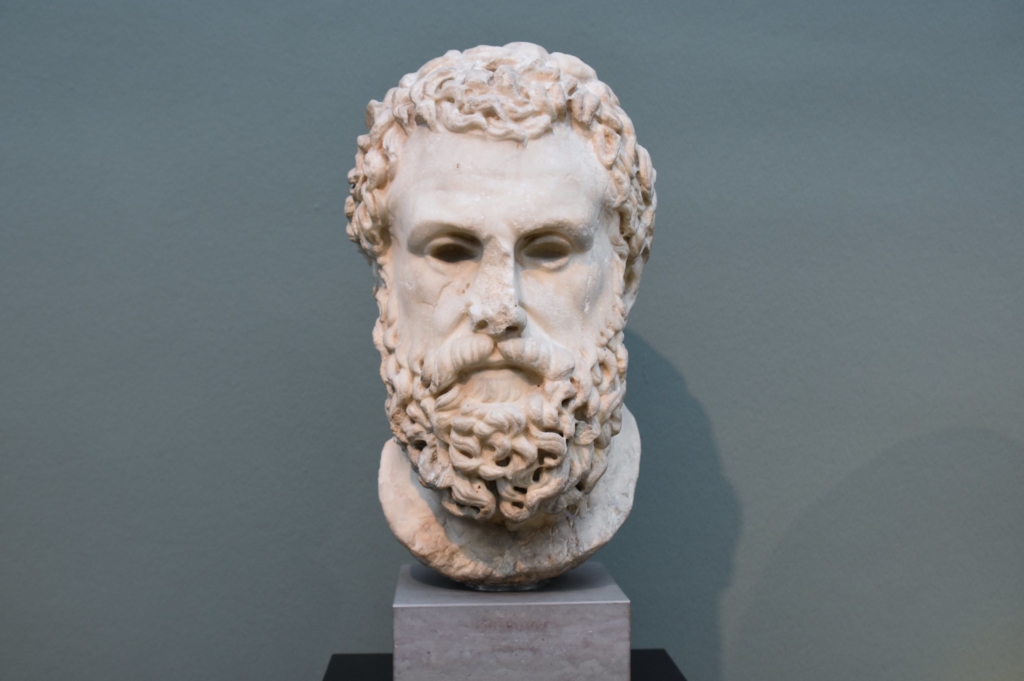
Why should students read Aeschylus?

Image result for aeschylus

Or

Why do you force them to read Thucydides?

But this is only because these authors are ancient Greeks and therefore might appear (at first glance) to be so remote, so out-dated and outmoded that perhaps devouring time has blunted their relevance.

Of course, nothing could be further from the truth!

Thankfully, Shakespeare still appears to be among the authors with whose works a more than passing familiarity is still deemed a sine qua non for the one who dares to think himself educated.

Notice the phrase “passing familiarity.” I chose those words very carefully because that is an exact characterization of my own knowledge of Shakespeare. Embarrassing, but no matter how many times I read his plays, I am only able to tell you about the very one that I happen to be reading at the moment. Sadly this disqualifies me from the prestigious ranks of Shakespeare scholars- a group I admire beyond words.

Nonetheless, as I am currently reading The Tragedy of Macbeth, I can’t help thinking that reading Shakespeare is a fantastic way to introduce high school students to the subtleties of the moral act.

Take this for example. In Act I Scene VII, Lady Macbeth has managed to cajole and persuade Macbeth to “screw up his courage to the sticking-place” and resolve to kill his kinsman and his king, the unfortunate and doomed Duncan.

Image result for macbeth

Macbeth says, betokening his interior resolution and interior purpose,

I am settled, and bend up each corporal agent to this terrible feat. Away and mock the time with fairest show: False face must hide what the false heart doth know.

Shakespeare teaches us with poignancy about the difference between the internal and the external; the inner act and the outer act. He teaches us that sin is first in the will as Saint Augustine taught in the fourth century.

Saint Thomas Aquinas quotes Augustine in his Summa,

Augustine says that “it is by the will that we sin, and that we behave aright.” Therefore moral good and evil are first in the will.

This is a profound teaching. It is not the external act that condemns us. It is not the outer sin that confounds us so much as the act of the will whereby we resolve to commit the outer sin. And this Lady Macbeth affirms in Act II. After having drugged Duncan’s guards, she fails to commit the murder herself,

Macbeth. [Within] Who’s there? what, ho!

Lady Macbeth. Alack, I am afraid they have awaked,
And ’tis not done. The attempt and not the deed
Confounds us. Hark! I laid their daggers ready;
He could not miss ’em. Had he not resembled
My father as he slept, I had done’t.
[Enter MACBETH]
My husband!

Frightened by every noise, Lady Macbeth gives evidence of a guilty conscience even though she had not the strength to carry out the ghastly deed outwardly that she had already committed inwardly. It doesn’t matter. She is a murderess.

Image result for lady macbeth

The attempt and not the deed Confounds us.

It is the attempt, the intention, the will settled on evil that condemns us.

This is not to say that the outward act doesn’t matter. No, in fact, the external action adds and increases the evil – but seemingly only in degree, not in kind. Thus St. Thomas explains,

… every inclination or movement is perfected by attaining its end or reaching its term. Wherefore the will is not perfect, unless it be such that, given the opportunity, it realizes the operation. But if this prove impossible, as long as the will is perfect, so as to realize the operation if it could; the lack of perfection derived from the external action, is simply involuntary.

Shakespeare helps us to understand what our Lord is speaking about when he says in Matthew,

You have heard that it was said to them of old: Thou shalt not kill. And whosoever shall kill shall be in danger of the judgment. But I say to you, that whosoever is angry with his brother, shall be in danger of the judgment….You have heard that it was said to them of old: Thou shalt not commit adultery. But I say to you, that whosoever shall look on a woman to lust after her, hath already committed adultery with her in his heart.

If anything, Christ came not to overturn the law with regard to the exterior act, the outward man. Our external actions and behavior are important, and there were roughly two thousand years of Old Testament history to prove that.

But Our Lord appears to be even more interested in the interior man than the exterior man. He is interested more in what is on the inside than what is on the outside; Perhaps the external is really for the sake of the internal?

Could it be that Our Lord is really after our souls?

Image result for good shepherd

Posted in aeschylus, Augustine, catholic education, classical education, Literature, Shakespeare, Temptation | Tagged , , , , | 1 Comment

The Priest: Privileged Witness of the Reality of Grace Present in the World

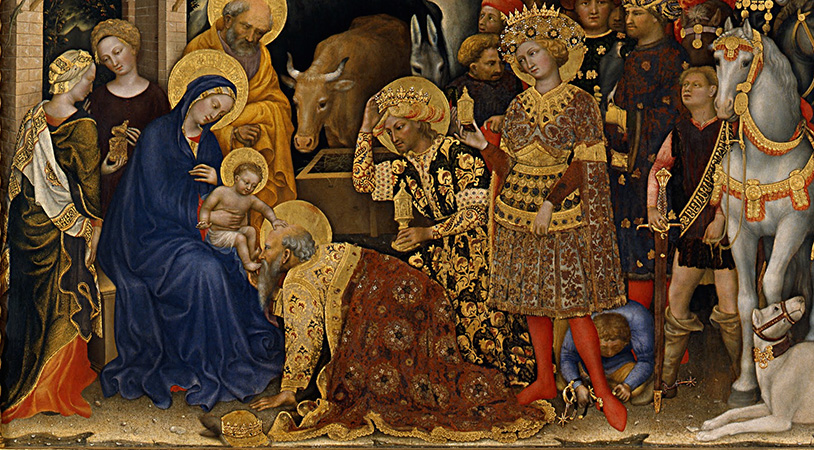
On this, the eve of the Epiphany, with the Christ Child still lying in the manger, a great many Catholics everywhere are hoping and praying for a year of renewed grace. And, of course, with the turn of the secular calendar, the dawn of 2020, who is there that doesn’t share in a renewed sense of hopeful optimism that our beloved Church is in for better times?

Image result for wise men nativity painting"

But what is the core of our hope? In light of the last couple of seasons that have left many of the faithful more than a little perplexed, and certainly more than a little dispirited, where is the grace of God?

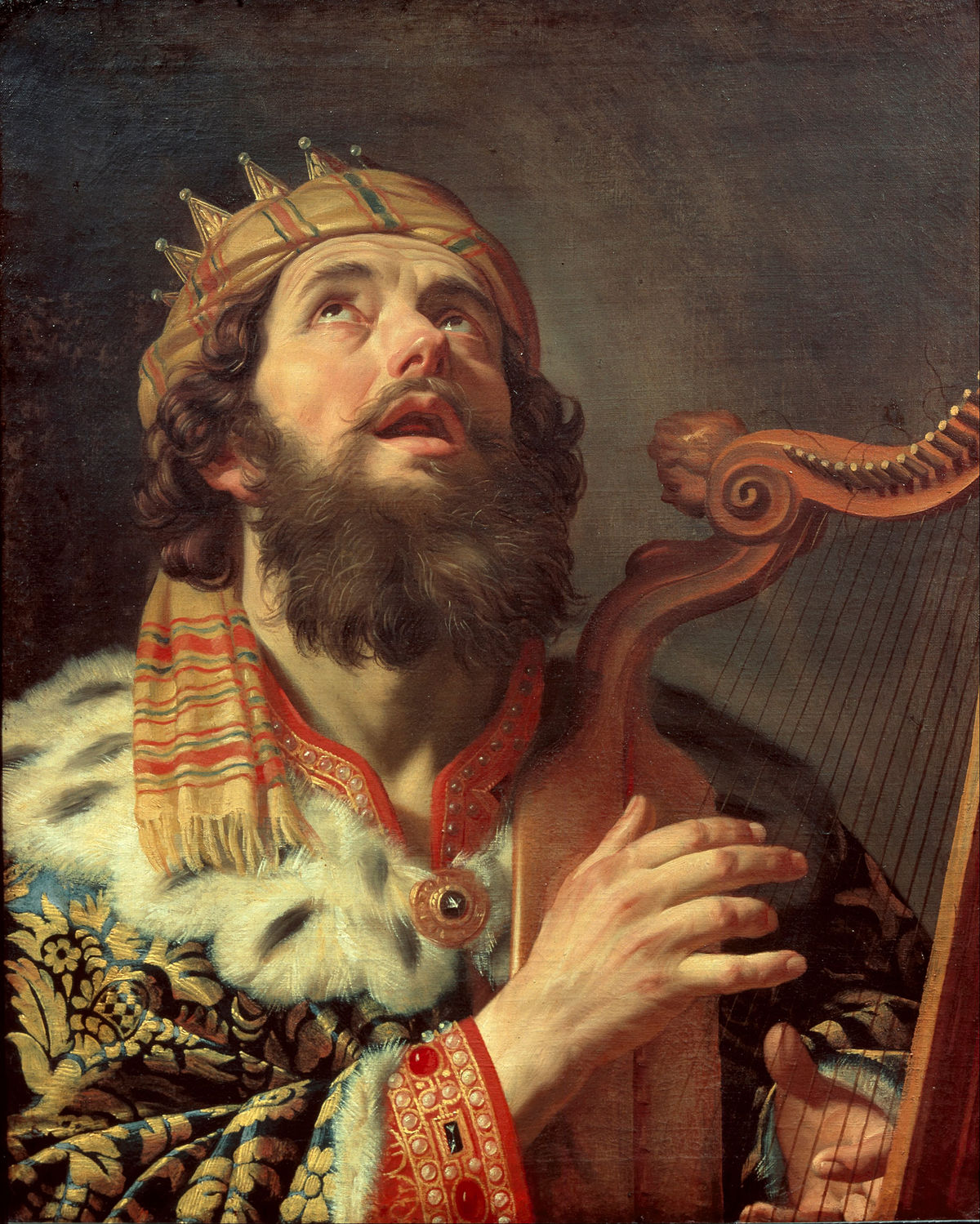
My wife and I received a Christmas letter from a dear friend, a priest, that, though somewhat somber in tone, is reminiscent of the plaintive cry of the psalmist, and it beautifully reminded us that God’s grace is ubiquitous and at work everywhere if we only have the eyes to see.

Image result for psalmist"

With his permission, I have published his letter here, with minimal redactions, not wishing to make any problems for him should his identity be known. I think readers of this blog will be similarly moved, if not to tears, at least moved to a deeper vision of the actions of God’s grace among the faithful. His letter inspired me with more profound reasons for hope!

Last year I did not send out a Christmas letter and one correspondent complained. So this year I will do my best. It will not be easy. Last year was the year of Theodore McCarrick and Archbishop Viganó, but this year has been the year of the Amazon Synod and Pachamama. Evidently, things are not getting any better.

I am left wondering sometimes if ignorance is not indeed bliss. One day, during the Amazon Synod, at daily Mass I asked for a show of hands of those who had even heard of the Amazon Synod. One lady raised her hand. There was another occasion on which I made mention of the Amazon Synod and my interlocutor thought I was referring to Amazon.com. Maybe he thought that ‘synod’ referred to some new electronic gadget.

Image result for amazon synod"

In the past, I wrote about my life of the priesthood. … In any case, sometimes I think I am preaching to those who are “distracted from distraction by distraction,” if they are even present in the church at Mass. Meanwhile up above, madmen seem intent upon burning down the house and nobody pays attention.

In times of such darkness and confusion Advent makes too much sense. “Come, Lord Jesus, do not delay.” In the words of the Didache, “Let grace come, and let this world pass away.” My apologies to all of you who have children, but I actually have many more than you, of all ages, some older than myself. Age doesn’t matter, they are still capable of sobbing uncontrollably.

“Let grace come” and it does. That is the inexpressible privilege of the priest, to stand at the altar when grace comes down from heaven, every time, and to sit in the confessional where grace touches the soul of man. The priest, if he has eyes to see, is the privileged witness of the reality of grace still present in the world, still trying to break through like the grass pushing through the cracks in the hard paving stones of city sidewalks, paving stones that reflect the hardness of human hearts. Grace is more powerful. Even if the new life is so fragile and delicate as a little baby lying in a manger it is always the sign of hope. Even though Herod rages, God has not abandoned his people.

Image result for nativity scene wise men painting"

So long as this world lasts, we rightly celebrate Christmas, even in the worst times, because grace is always born anew. When one person says ‘yes’ to the grace of God, that ‘yes’, which mirrors the ‘yes’ of Mary, weighs more in the balance than all the darkness and confusion combined. It is not about changing the world, doomed to destruction, one person at a time, it is about giving glory to God in the midst of the deepest darkness, like St. Maximillian Kolbe. After Christmas comes St. Stephen.

“Truth is sprung out of the earth: and justice looked down from heaven. For the Lord will give goodness: and our earth shall yield her fruit.”

Image result for grass breaking through concrete"

Posted in Augustine, beauty, Christmas, Feasts | Tagged , , , , | 5 Comments

As Long as Catholics Continue Feasting, Christendom Still Exists!

What is a perennial truth if nothing other than a truth which springs up every year?

We who are strangers and sojourners in the city of man, we who aspire towards citizenship in the city of God, we know that Christmas is all about celebrating Christ’s birth.

All of Christian literature, all of the literature that celebrates or dimly shadows Christendom stands in testimony that Christendom is the Feast! Search your Homer. Search your Virgil. Sit with Beowulf at the mead-benches in Hrothgar’s Heorot or with Gawain at the halls of Arthur or King Bertilak. All of us, pilgrims proceeding to Canterbury know that our pilgrimage begins and ends with feasting!

The culmination of Christendom is centered around the sacrum convivium, the sacred feast in which Christ Himself is ultimately consumed!

img_20191225_150007.jpg

Image result for medieval christ in the manger christmas

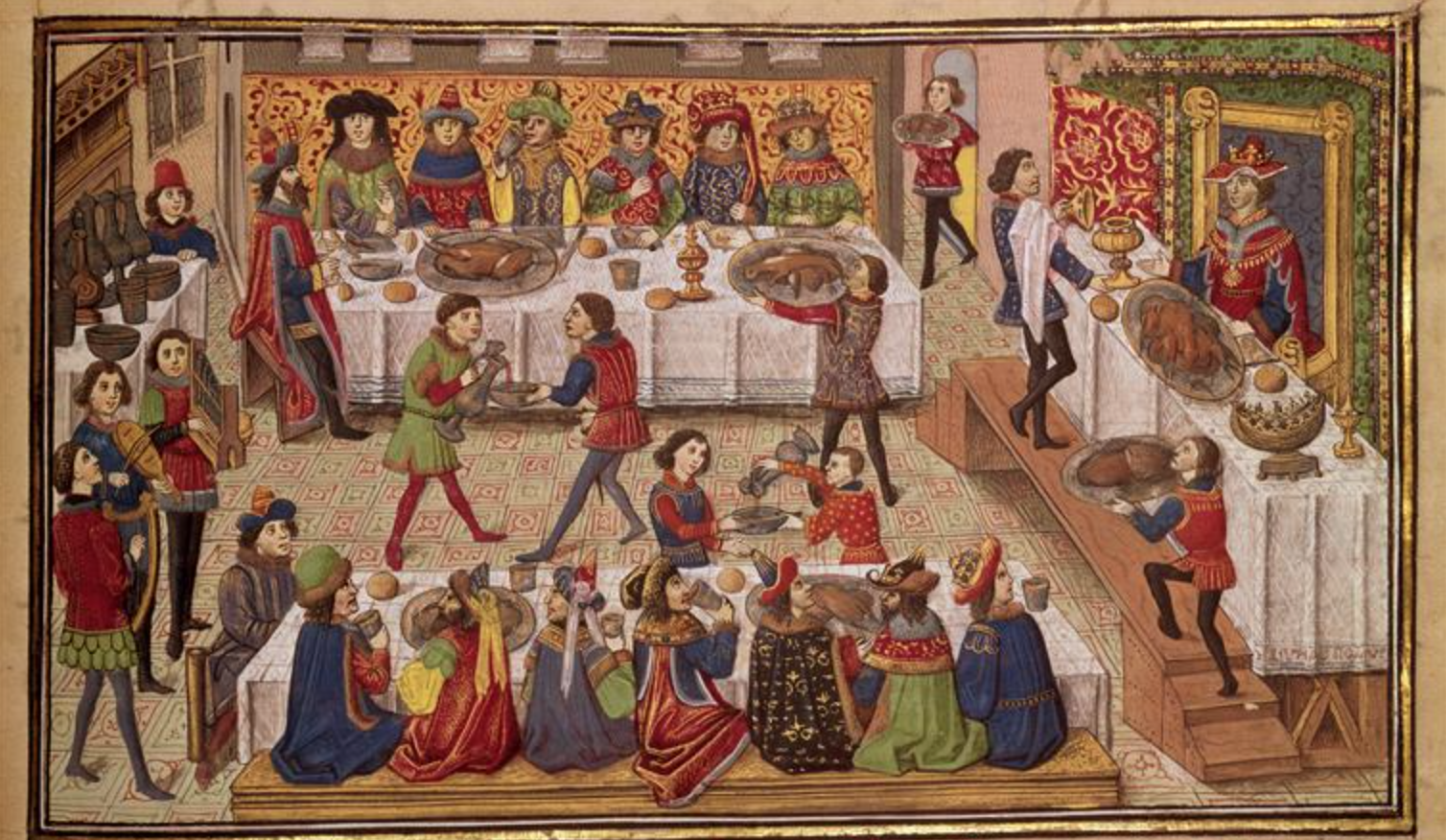
And when we feast we do everything we can to carry out and reproduce all the beautiful traditions that we have grown up with, the traditions of our parents and grandparents and those we have gathered from others through marriage or simply emulation.

Image result for christmas feast medieval

Catholic civilization, Christendom, is, among other things, a sort of fabric composed of all that is good, true, and beautiful-all these things woven into a single cloth- not a quilt-but an integral cloth, an exquisite tapestry!

img_1459.jpg

Of course, all the externals, all the things visible to the outward eye and senses are something just shy of sacramentals in that they betoken the inward realities of the exercise of Christ’s grace and His workings in our own minds and hearts.

Sure, at the present time,  Christendom might appear to have disappeared from view, nonetheless, it lives with vigor and vibrancy in the hearts of all those who celebrate Christmas with feasting!

Image result for midnight Mass

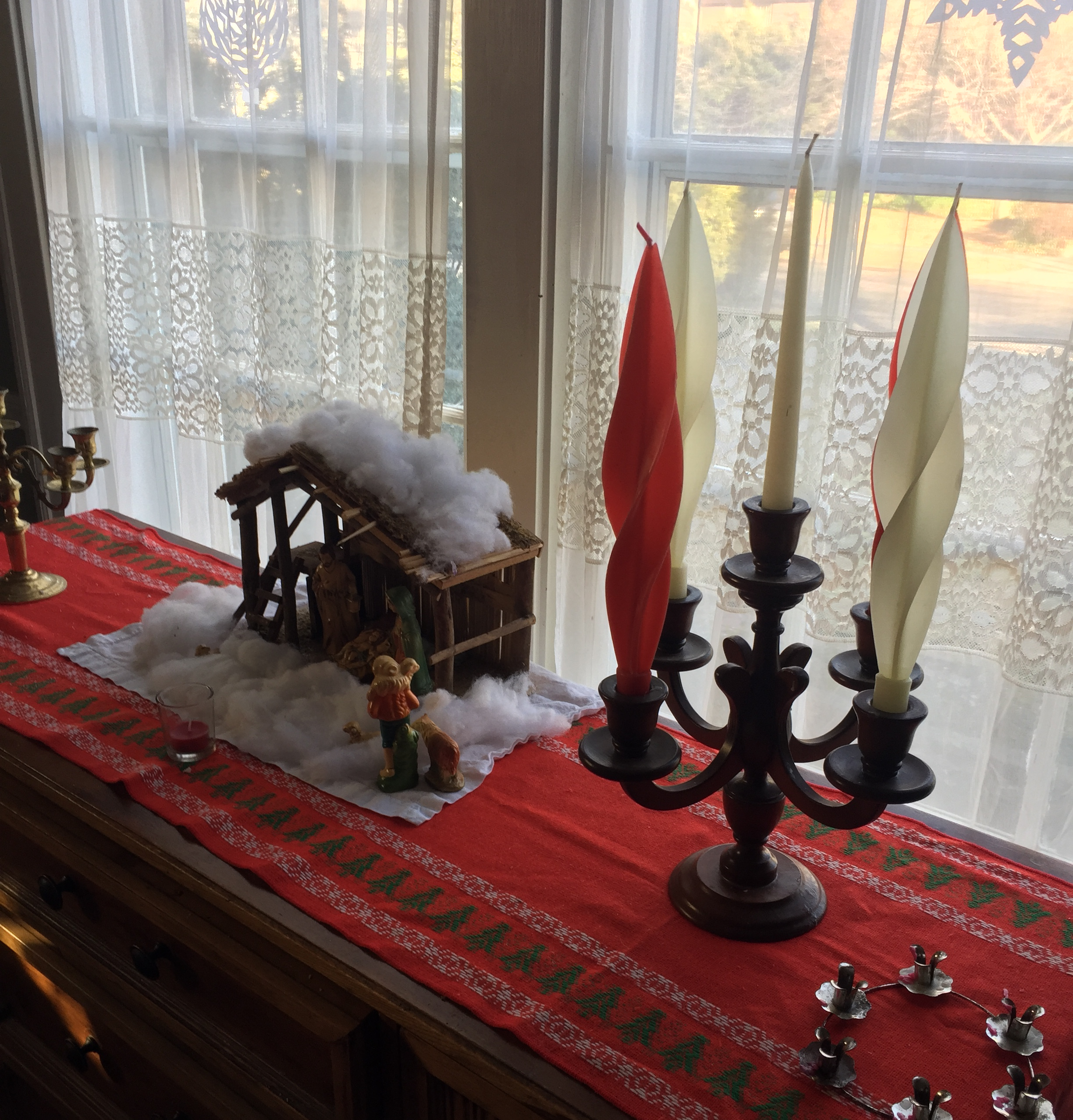
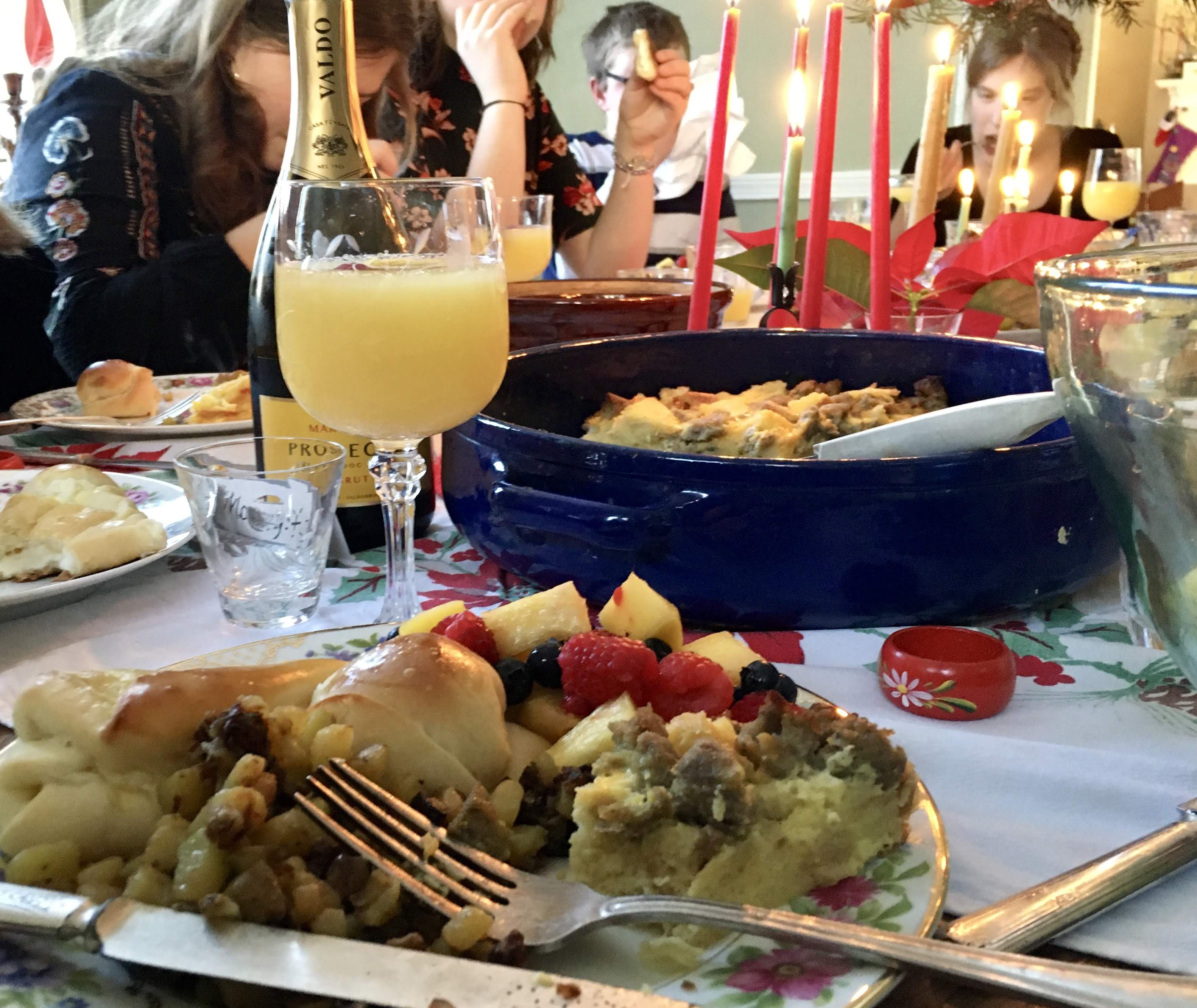
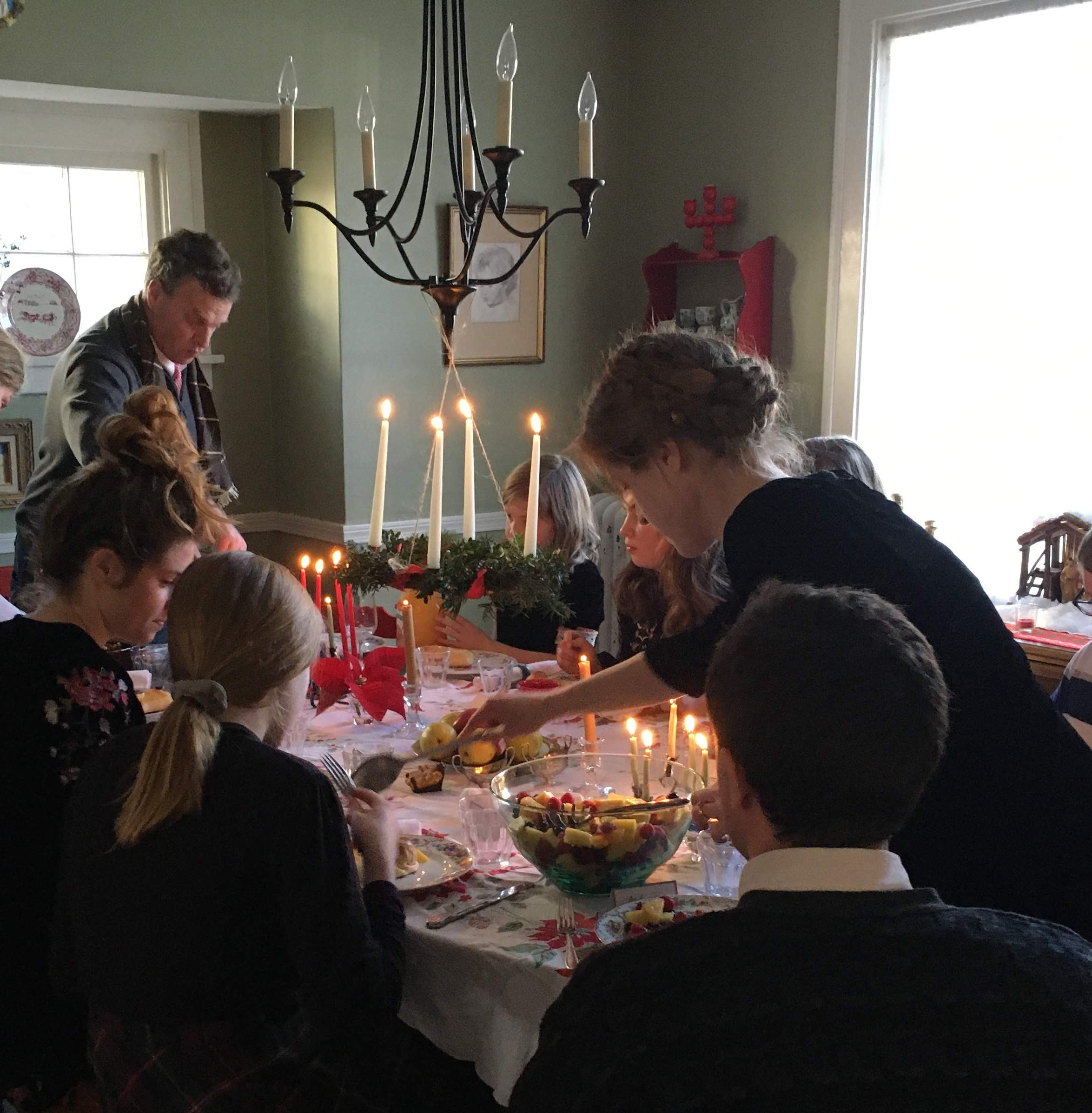
This year we commenced our Christmas Day celebration at about 2:30 pm with brunch.

Why so late?

Well – the late Christmas-day brunch is a common theme among Catholic clergy, organists, musicians, choristers, trumpet players, timpanists and anyone who volunteered his or her services at vigil Masses and Midnight Masses and early morning Masses and mid-morning Masses and noon Masses throughout the world.

And so it was with our family. Given that our last Mass was at noon on Christmas Day what a joy it was to return home and see the table set and ready for action!

bty

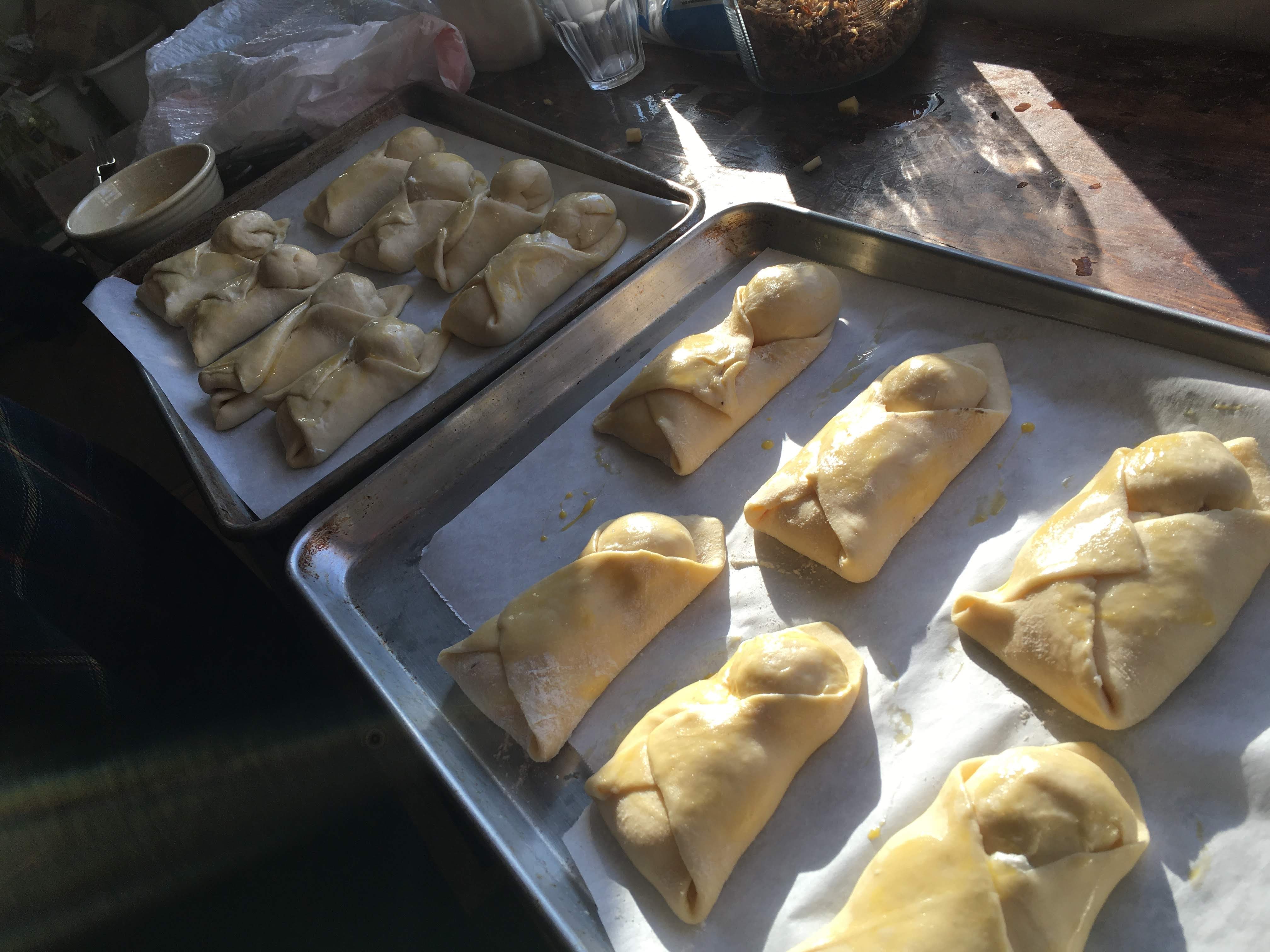
Every year we have an army of these little creamy baby Jesus buns

img_1467

baked to a golden brown!

img_1473bty

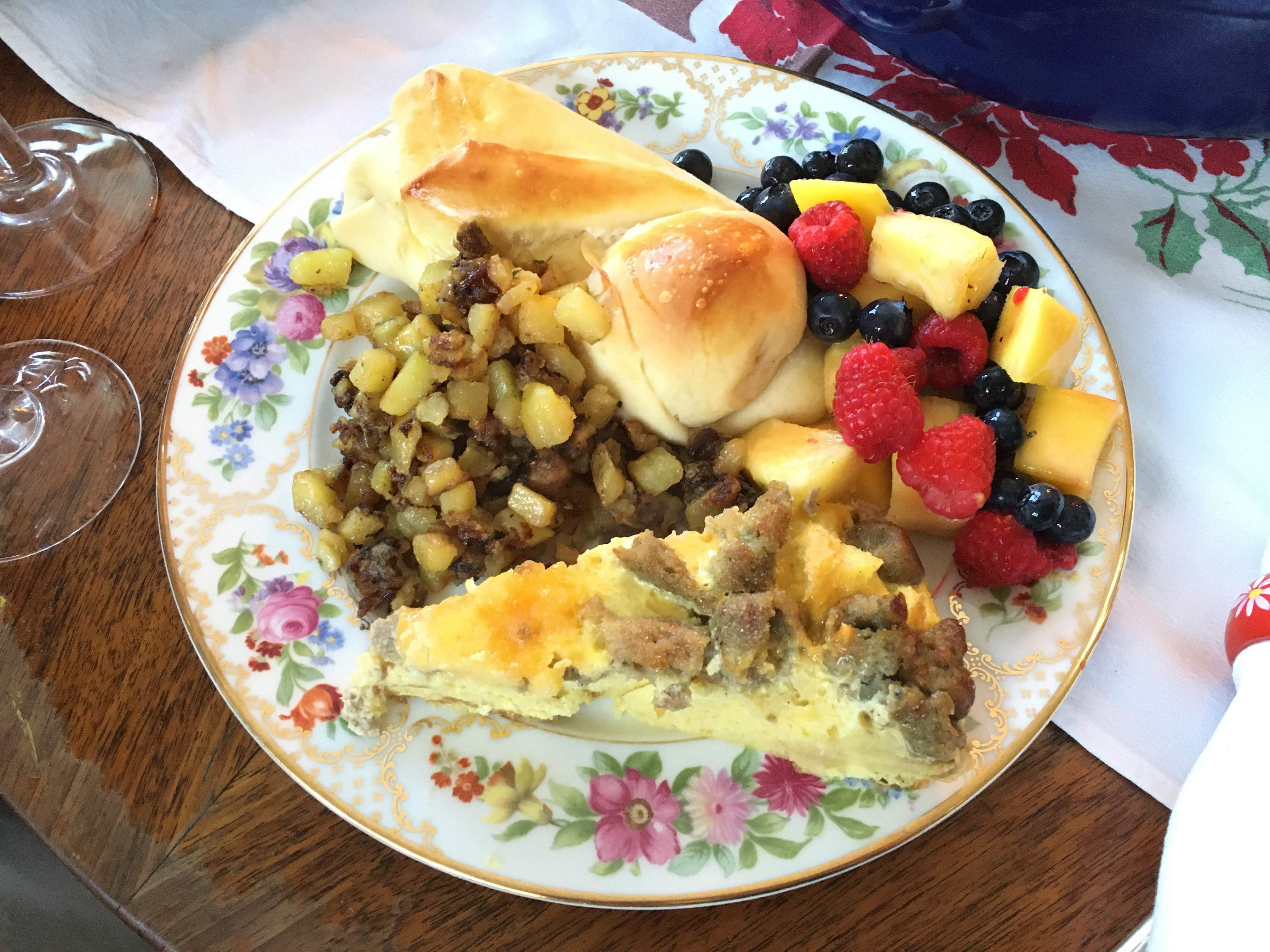
It could be that those of you who inhabit the warmer and more temperate climes of this country are used to the bright colors of a fresh fruit salad. But until you have lived in the colder northern regions of this earth, you cannot have experienced the full joy of bright ruby raspberries, sunny pineapple and mild mango in the winter!

btyimg-3521.jpg

Pears and pomegranates both of which symbolize eternal life make an appropriate centerpiece for any brunch table!

img-3522.jpg

I don’t know what mimosas symbolize if nothing other than the effervescent emotions that bubble over on Christmas day.

img_1490

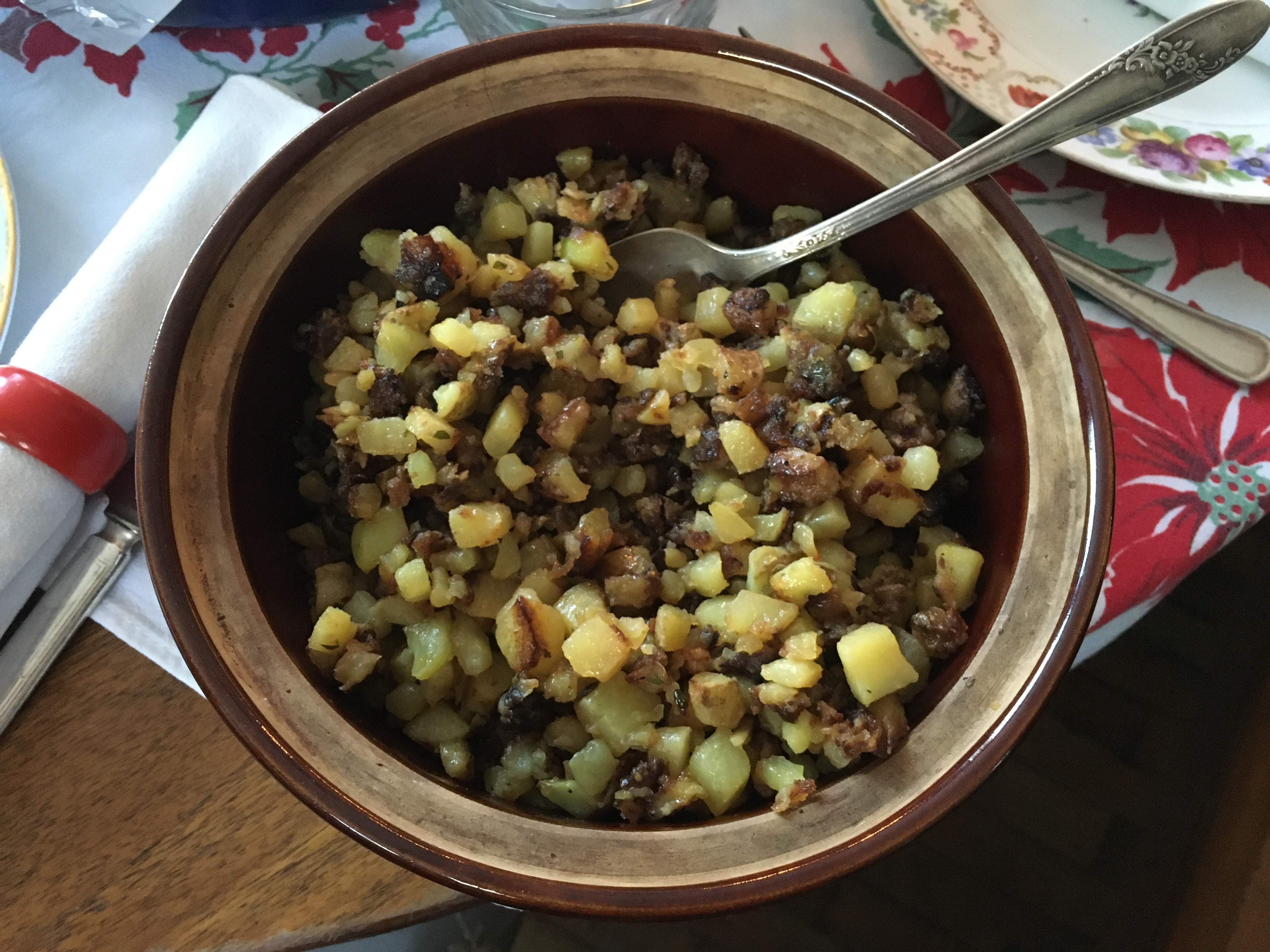
We needn’t look for symbolism in every food that is appropriate for Christmas Brunch. But I loved this dish of diced fried potatoes.

img_1474

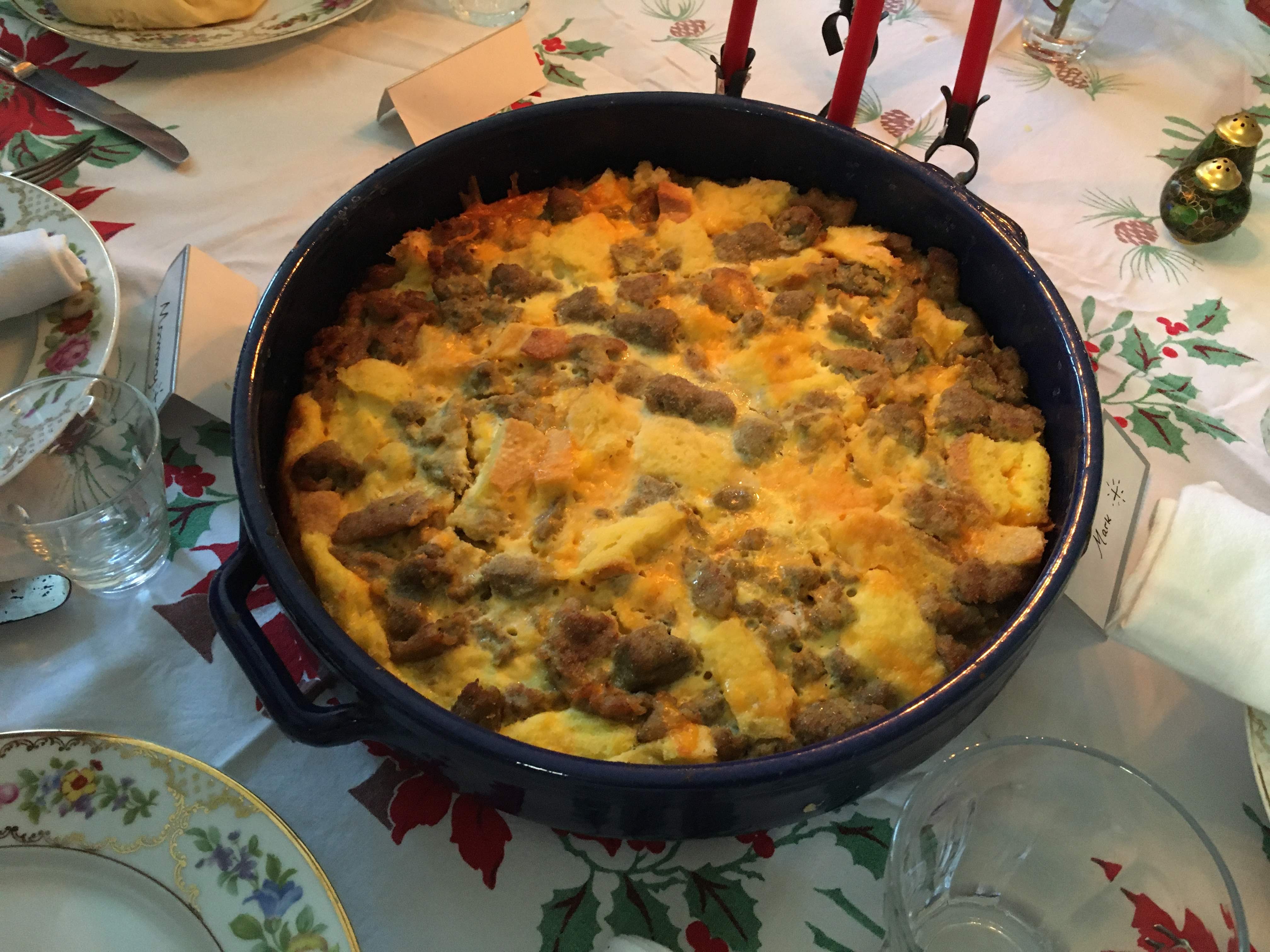
Though the cell phone camera is not able to catch the moist scrumptiousness of the cheesy egg sausage Strata, I can assure you that it was indeed cheesy moist and scrumptious.

img_1476img_1485

img_1486

img_1478-e1577420182758.jpg

I think the empty strata dish stands in testimony to my former statement. Q.E.D.!

img_1492

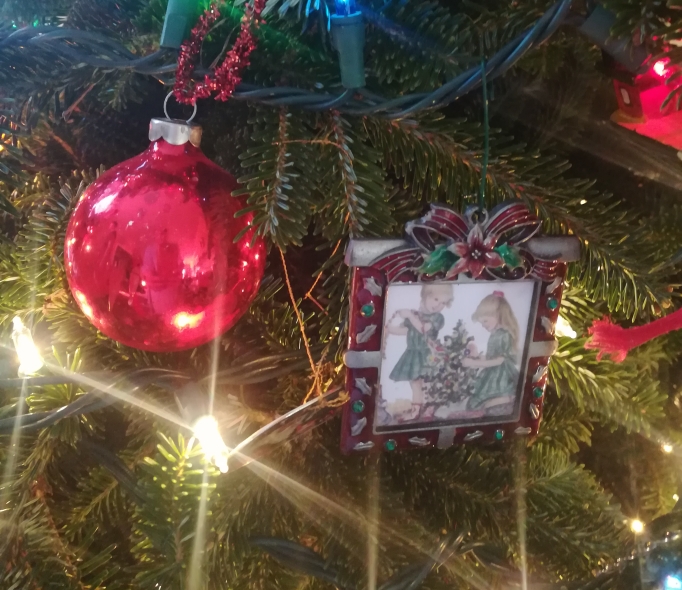
You might wonder how anyone who partakes of an afternoon brunch can think of a Christmas dinner! But there are roughly six hours between a 2:30 brunch and a 9pm dinner. While the chefs were at work the rest of us could spend our time gazing at the tree with a sort of misty gratitude for brunch as well as a joyful expectation of the future feast.

IMG-3510

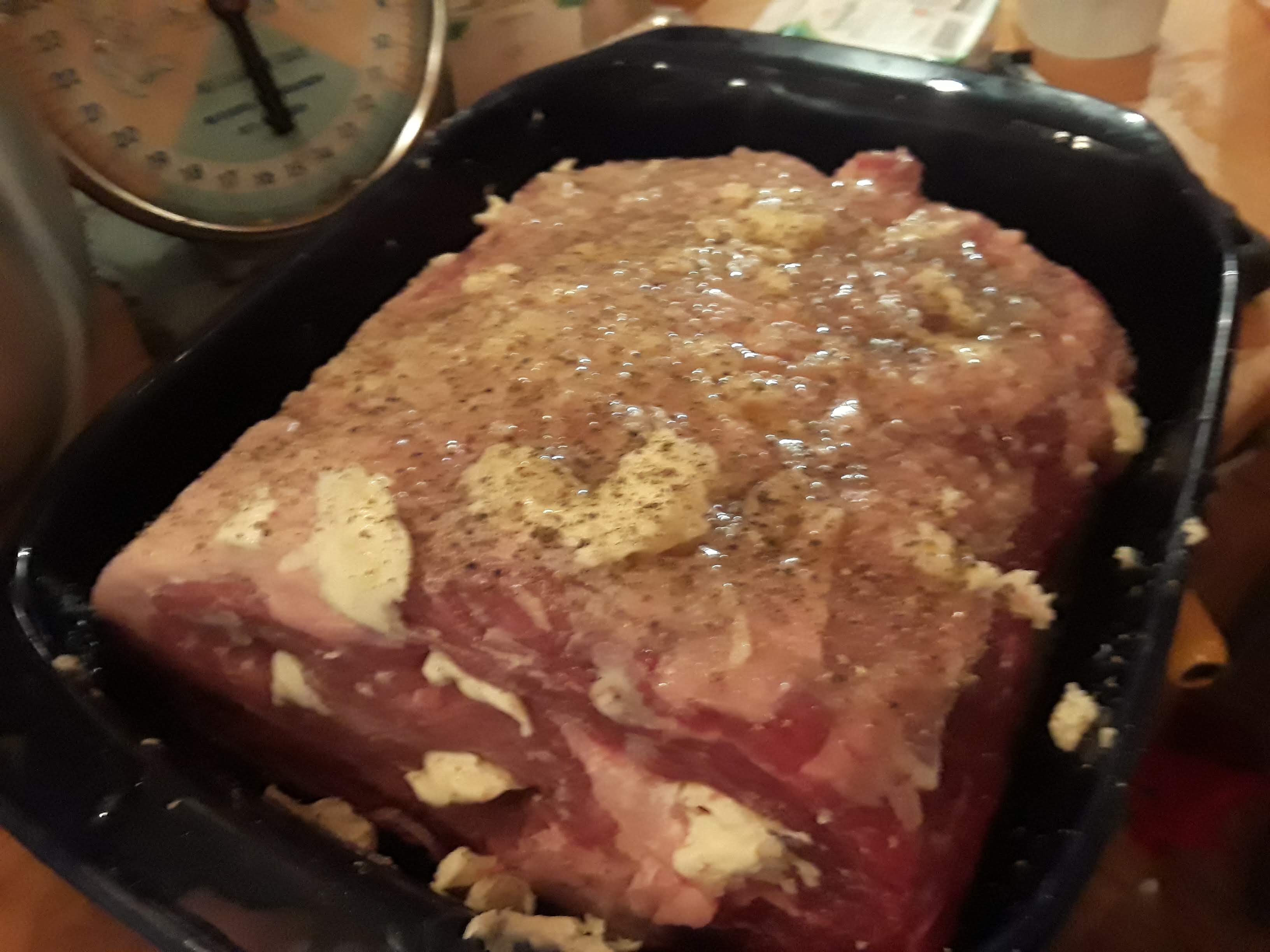
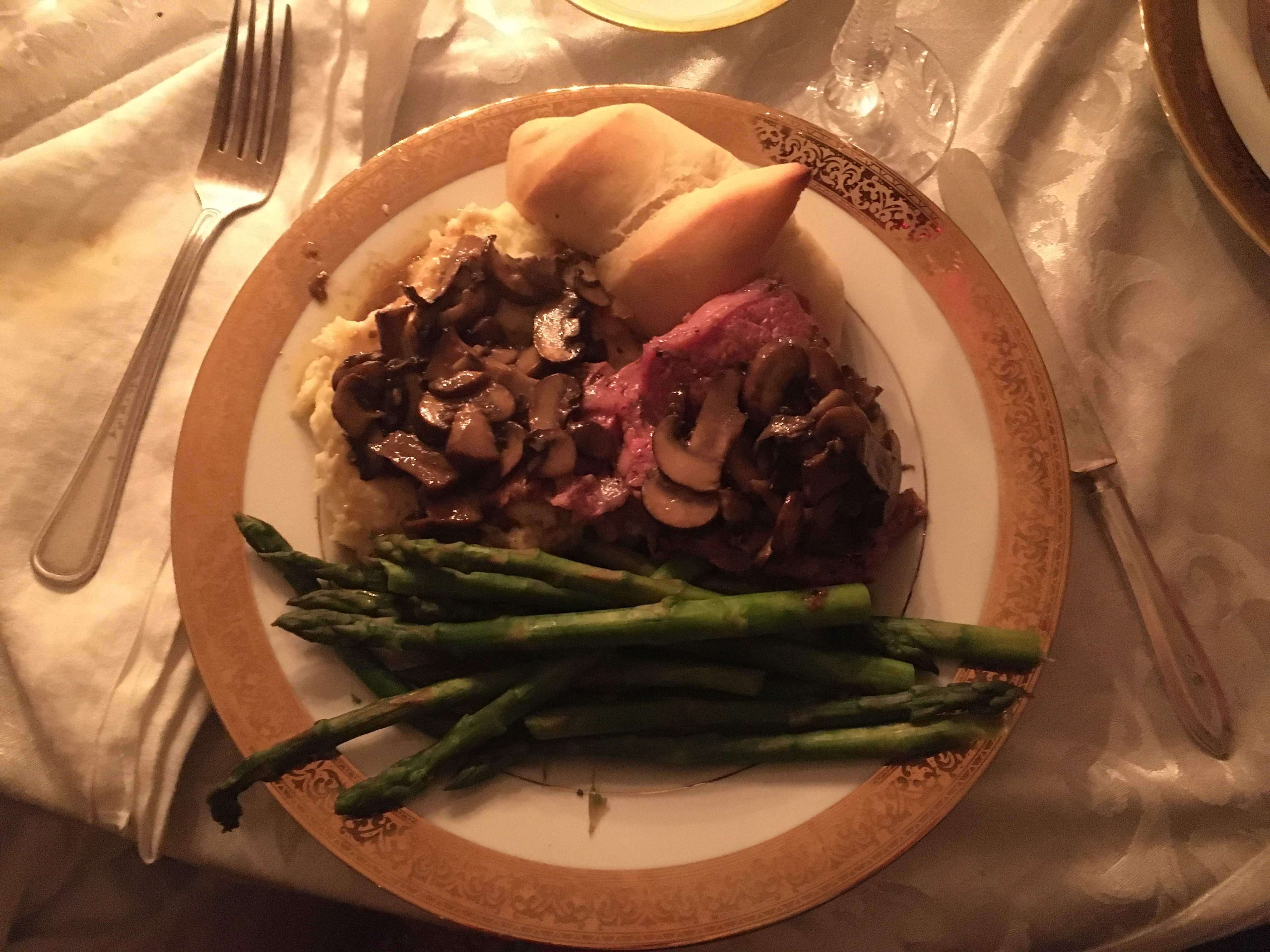
This year we opted for the boneless Ribeye USDA roast. Here she is ready to go into the 500-degree oven for 25 minutes marinated in a pound of butter and minced garlic

20191225_183327

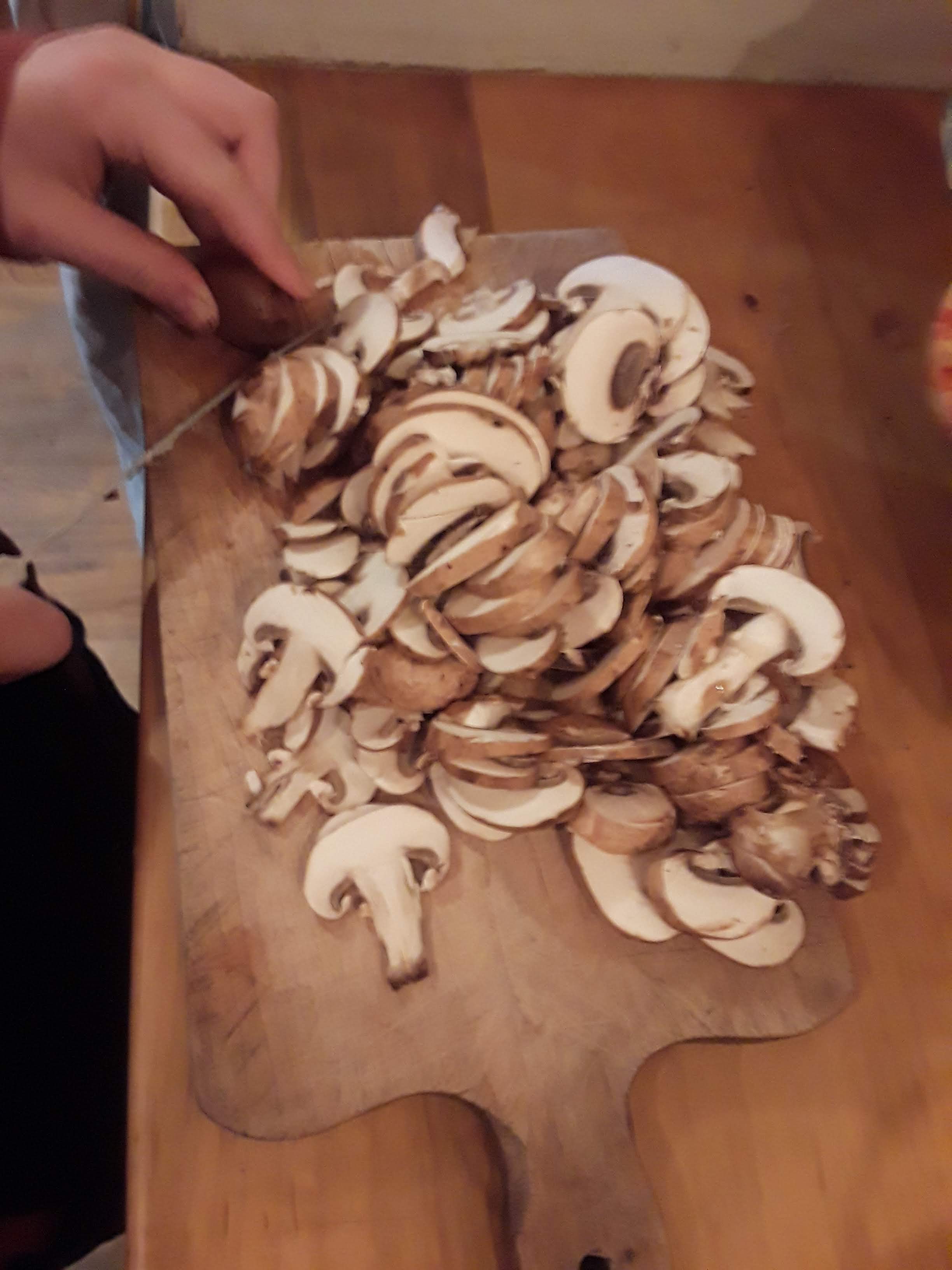
Meanwhile, Mary began preparing the mushroom sauce!

20191225_183149

The mushroom concoction consisted of the mushrooms mixed with wine, balsamic vinegar and the juices from the Ribeye.

As the dinner table was prepared, the chefs refreshed themselves with a chilled Riesling,

img_1498

while the bystanders had a small tasting of the Laphroaig Single Malt Scotch that one fortunate member of our company received in his stocking.

img_1495

Another army of soft yeasted dinner rolls magically prepared themselves to enter the oven while the roast was resting.

img_1500

img_1513-e1577420287271.jpgimg_1525

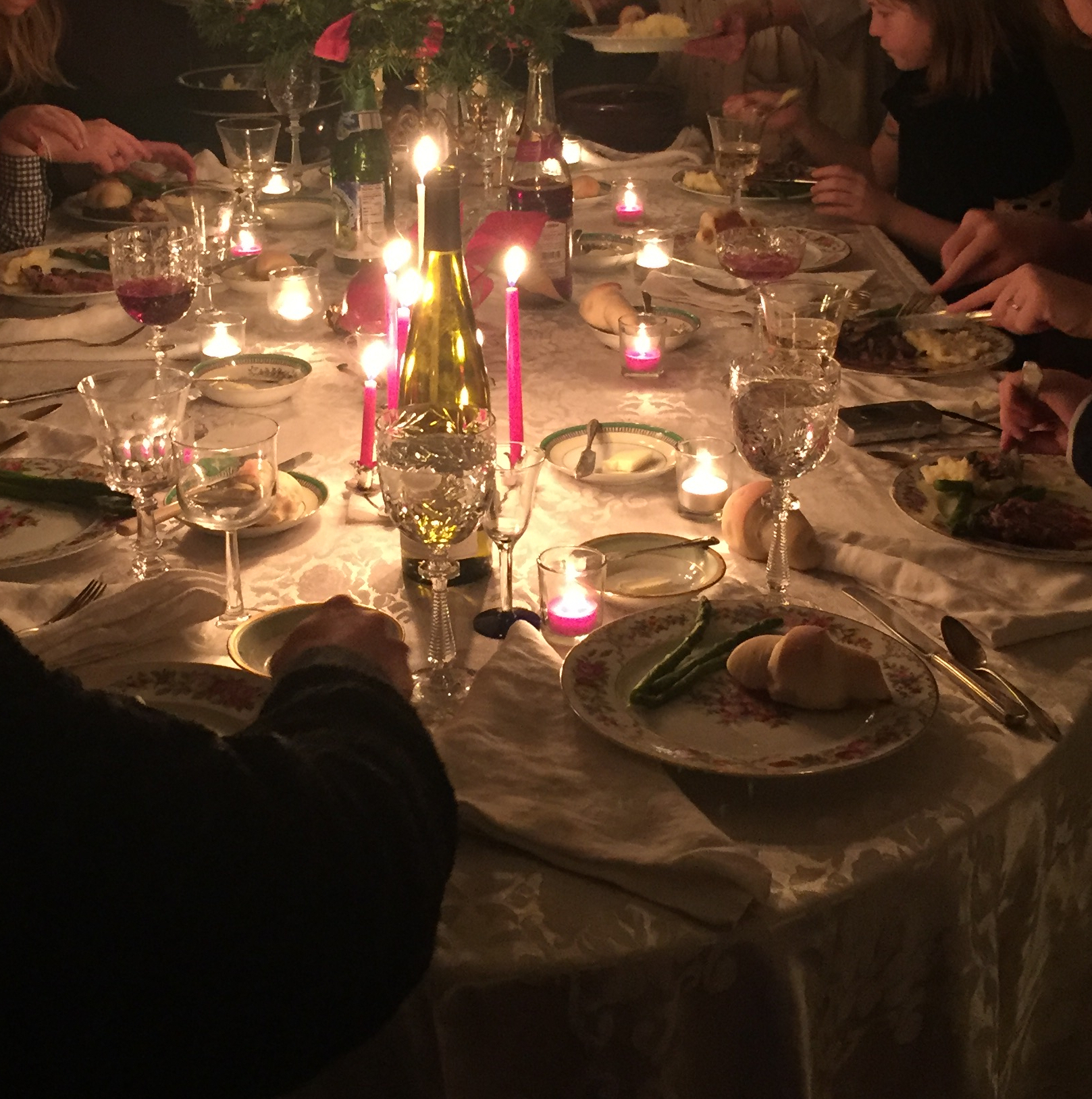
At last, with appetites rested and renewed for the attack, dinner is served.

img_1532

img-3541-e1577420000697.jpg

20191225_230135

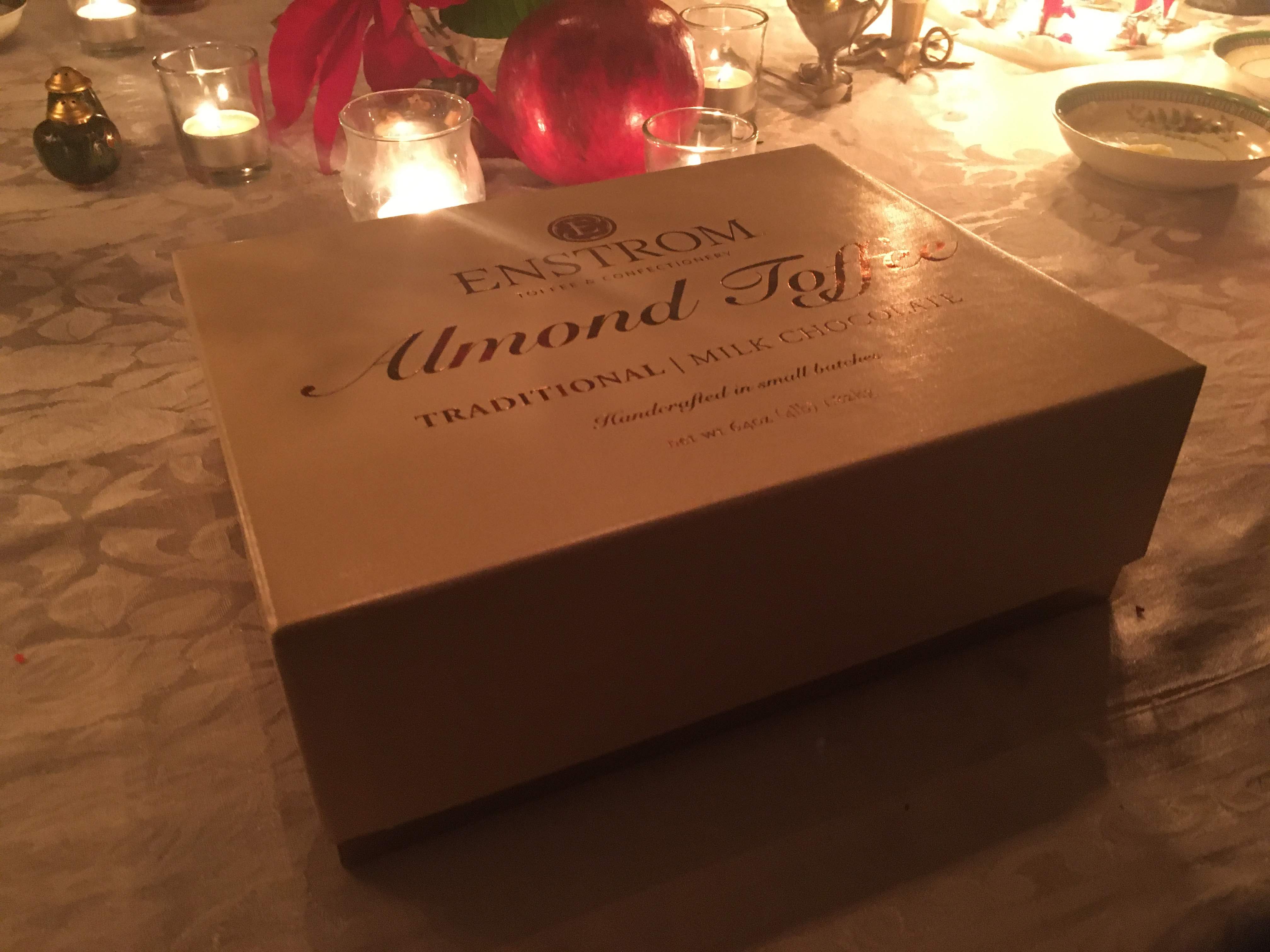
No Christmas is complete without the Enstrom Toffee that my father sends every year!

img_1551

Merry Christmas!

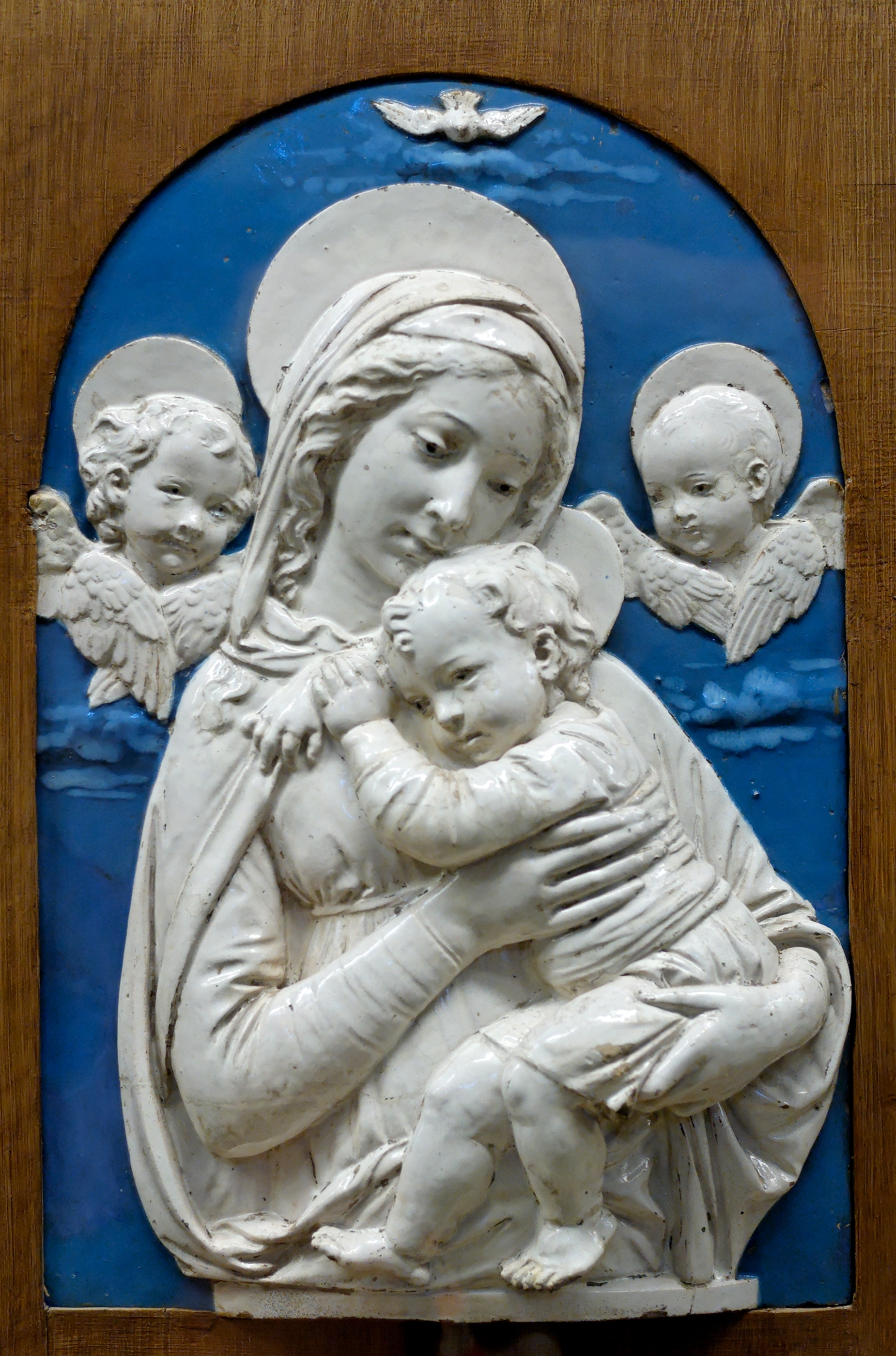
Image result for christ child medieval

Posted in breakfast, Christendom, Christmas, Dinner, Feasts, Virgil | Tagged , , , , | 5 Comments

Why Would Anyone Eat Locusts and Wild Honey?

Wearing a camel-hair garment and a leather belt is one thing but eating locusts and wild honey is another!

I don’t suppose John the Baptist was wearing the camel hair garment that I am familiar with – although I think it would certainly have given an ecumenical advantage with the Brooks Brothers crowd – of whom I have been a sometimes admirer!

Image result for camel hair jacket

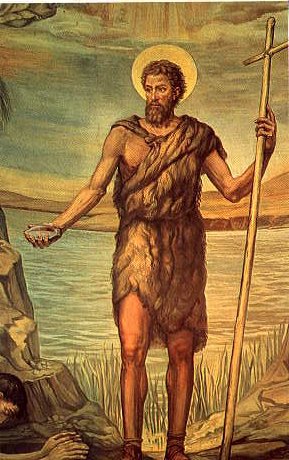
No, the intent of the gospel writers-particularly St. Matthew and Saint Mark-was clear. John was clearly eschewing the comfortable garments of the rich and was purposely wearing some incredibly uncomfortable garment like the one this artist imagined.

Image result for camel hair john baptist

But as if that wasn’t enough of a mortification let’s focus a little on his diet!

Here is what St Matthew wrote which, incidentally, my rudimentary knowledge from teaching elementary Greek to high school students has given me just enough facility to handle.

ἡ δὲ τροφὴ ἦν αὐτοῦ ἀκρίδες καὶ μέλι ἄγριον.

My translation:

And the food/nourishment/maintenance (τροφὴ) was of him (αὐτοῦ) locusts (ἀκρίς, ίδος, ἡ) and wild (ἄγριον) honey (μέλι, ιτος, τό)

Or I suppose one might say,

And his food was locusts and wild honey.

The Douay Rheims gets a little creative when it translates the same verse from Latin,

esca autem ejus erat locustæ, et mel silvestre

rendering it thusly,

and his meat was locusts and wild honey.

I suppose locusts or grasshoppers might be meaty underneath those brittle exoskeletons. Yuck!

Image result for locust close up

Now back to the question. We all know that scripture is the word of God and therefore we need to take every word seriously.

But remember! We need to start with the literal sense of the words (in scripture) before we proceed to any spiritual signification. So, the bottom line here-the literal sense is that- yes, John the Baptist actually appears to have eaten locusts and wild honey. The Greek and the Latin are just too clear. Besides, we also have this solid well-substantiated and irrefutable evidence from Wikipedia concerning the eating of locusts!

They are also edible insects; they have been eaten throughout history and are considered a delicacy in many countries.

Image result for locusts edible

Yum!

I am completely convinced.

So, let’s move on from the literal meaning. We need not entertain further any notion that the locusts that John the Baptist ate were really something else – like Locust Bean Gum extracted from the seeds of the carob tree!

Carob Tree, Ceratonia siliqua, Tree Seeds (Edible, Evergreen) - Picture 1 of 11

No! St. Matthew and St. Mark were perfectly aware that they were relating something that would shock their readers. They knew that anyone hearing about John’s diet would probably be impressed at the strength of his resolution- despite any considerations concerning just how scrumptious locusts might be. Besides, no reader is really interested in carob trees! Pshaw!

The literal meaning of the verse is clear. Let us proceed to the even meatier spiritual senses.

And to what source do we turn when we wish to plummet the depths of the Gospel a little more deeply?

Why – St. Thomas’ Catena Aurea of course!

As usual St. Thomas is too kind to satiate our appetites with locusts. Instead, like the intellectual bee he was, he gathered up all the honey from the various fathers and doctors of the church and has spread it all out for us his students! (note well! that in the ‘flight’ of my poetic simile I did not compare you, my dear reader, to the drones back in the hive!)

Image result for wild honey bee hive

Listen to what St. Gregory says about this passage commenting on St. Mark’s  account,

…by the kind itself of his food he pointed out the Lord, of whom he was the forerunner; for in that our Lord took to Himself the sweetness of the barren Gentiles, he ate wild honey. In that He in His own person partly converted the Jews, He received locusts for His food, which suddenly leaping up, at once fall to the ground. For the Jews leaped up when they promised to fulfil the precepts of the Lord; but they fell to the ground, when …they affirmed that they had not heard them. They made therefore a leap upwards in words, and fell down by their actions.

In other words, John points to the Lord who came to earth in order to draw everyone unto Himself. This has a comparison to eating in which food is drawn into the one who eats and is, in fact, made to become one with the one who eats.

Another commentator, the blessed Theophylactus, the eleventh-century Byzantine exegete has this to say,

The food also of John not only denotes abstinence, but also shews forth the intellectual food, which the people then were eating, without understanding any thing lofty, but continually raising themselves on high, and again sinking to the earth. For such is the nature of locusts, leaping on high and again falling.

This reminds me of Our Lord’s answer to his disciples when they asked Him why he taught in parables,

Why speakest thou to them in parables? Who answered and said to them: Because to you it is given to know the mysteries of the kingdom of heaven: but to them it is not given…because seeing they see not, and hearing they hear not, neither do they understand.

Blessed Theophylactus continues,

In the same way the people ate honey, which had come from bees, that is, from the prophets; it was not however domestic, but wild, for the Jews had the Scriptures, which are as honey, but did not rightly understand them.

It appears to me that Blessed Theophylactus is comparing the prophets to bees, which seems like an apt comparison. Bees go busily about, sometimes stinging people, but ultimately their work is to bring sweetness and honey!

Image result for honey bee

But insofar as the “honey” of the scriptures is not understood – it is foreign and therefore is wild. In other words, Theophylactus is saying that this wild honey- the scripture misunderstood by the Jews, was the food of John the Baptist.

So, of course, John the Baptist ate locusts and wild honey! What else would he eat?

Posted in Advent, Aquinas, Catena Aurea | Tagged , , , | 18 Comments

Still Thankful After All These Years

Grace builds upon nature. Or as we classically educated Latin teachers would construe,

Gratia Supponit Naturam

or even “Gratia aedificat super naturam”?

In any case, whether George Washington was stirred by the Holy Ghost, when he rendered his first Thanksgiving Proclamation, or whether he was simply following right reason and the natural law – none of this matters insofar as the effect is in profound sympathy with the spirit of Christianity.

Image result for washington thanksgiving proclamation

The central attitude of the Christian is one of thanksgiving. After all, isn’t that what the very word “Eucharist” means? Those who follow nature and show gratitude, by setting aside time from work for resting and for communal feasting, are essentially driven by a primordial impulse which has its ultimate completion in Holy Mass. As Saint Paul says,

For now we see now through a glass, darkly

And Thanksgiving Day is just such a glass- although I would include it among the clearer glasses through which we might gain a glimpse of the Divine.

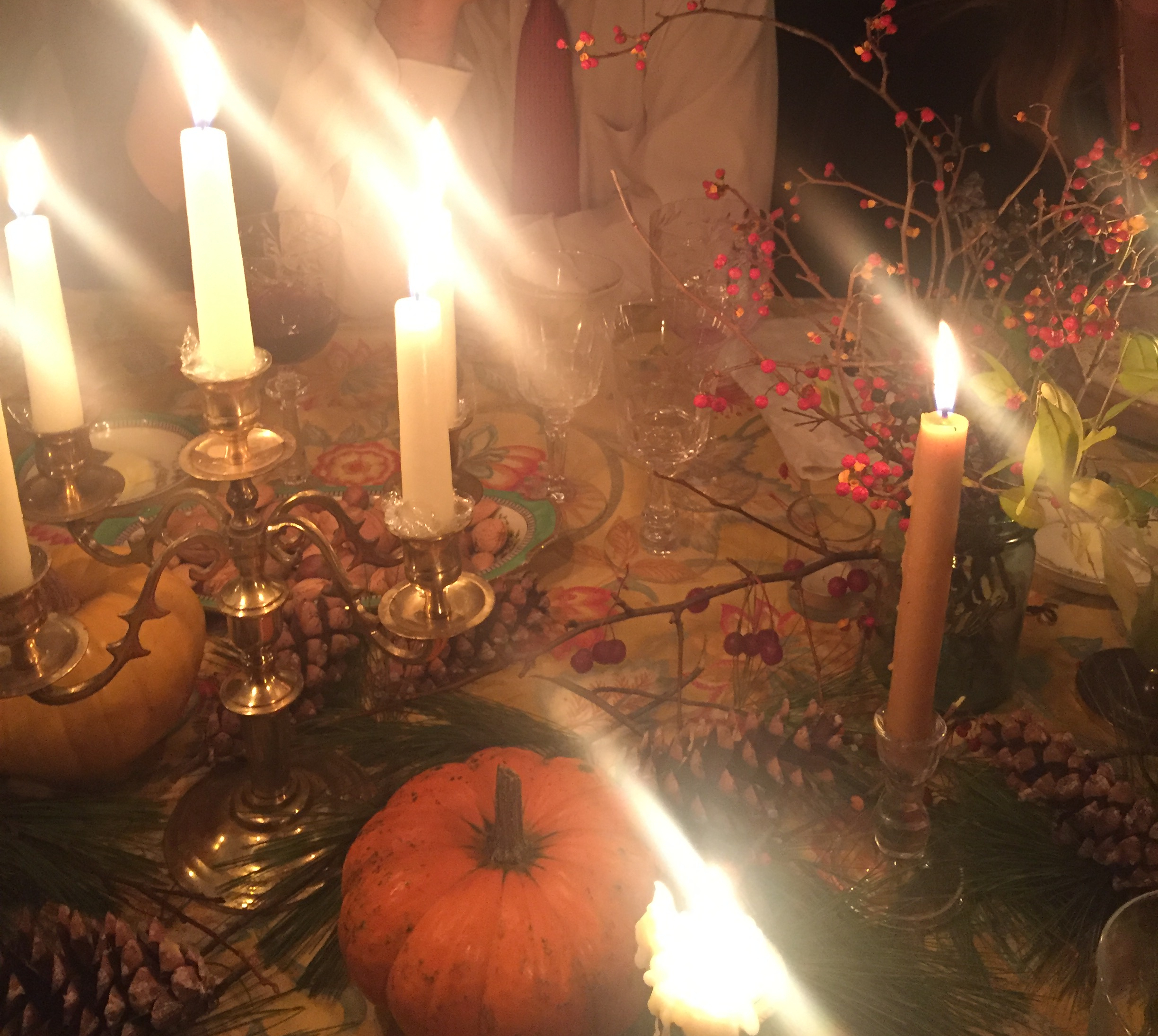
I certainly gained a glimpse of the divine when I beheld the morning preparations for the feast. We traditionally eat a bit later- about 7pm. This is a tradition that developed because of the limited capacity of our dual fuel oven.

For all its virtues, the problem with this oven is that the narrow electric side oven is incapable of holding any ordinary baking or roasting dish- except for perhaps those who cook lots of meatloaves. Consequently, the main gas oven is the only thing workable for cooking pies and of course the turkey. But with a 30lb Turkey roasting for at least 4.5-5 hours, the pies and anything else that needs to be baked necessarily monopolized the oven for the greater part of the morning. Hence, we generally eat on the later side.

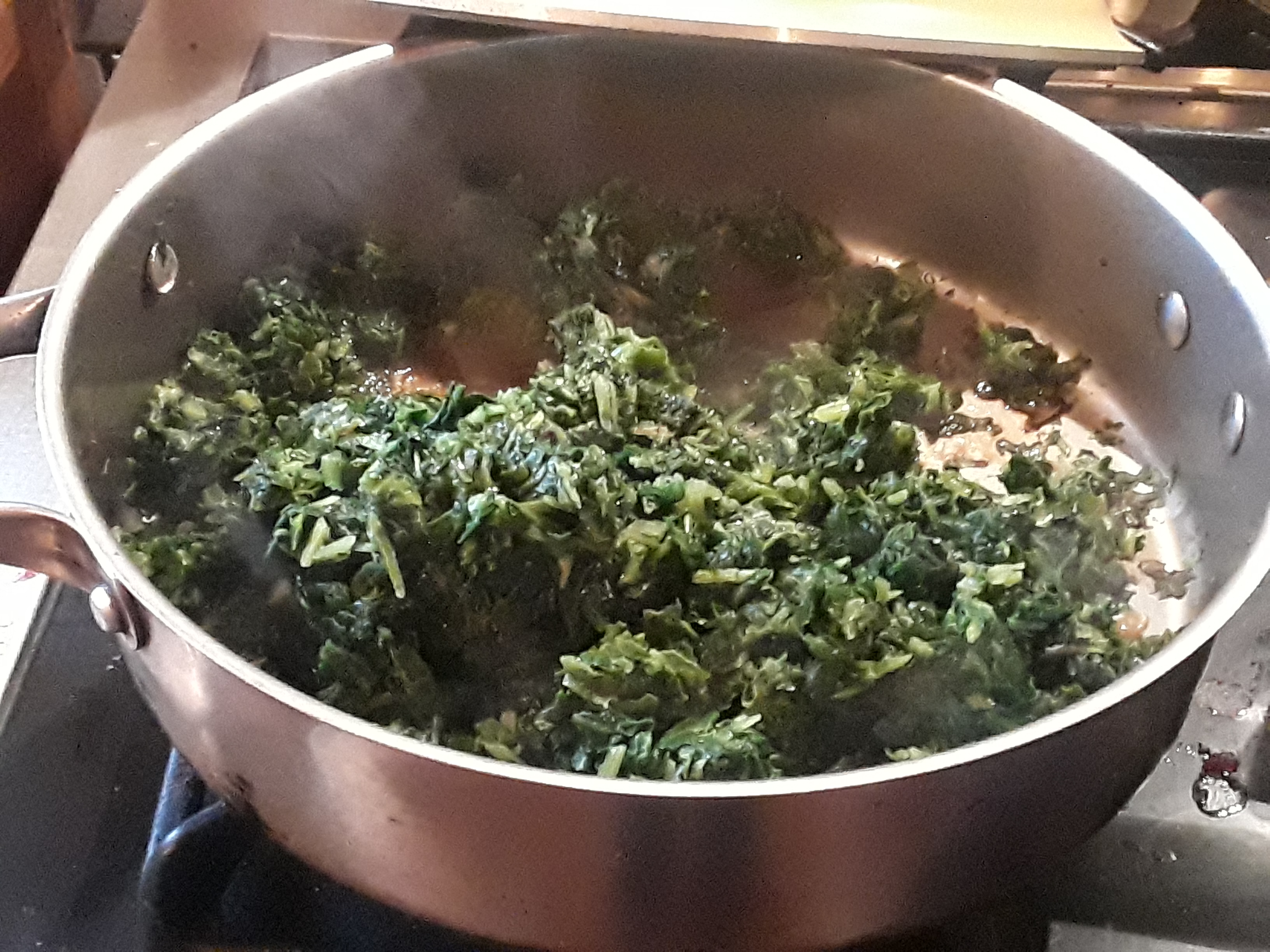
And so while the bakers inserted a succession of what turned out to be ten pies into the oven, the chefs commenced to build the assortment of necessary side dishes on the stovetop. First, they began with a spinach-beet-feta cheese concoction.

20191128_143627

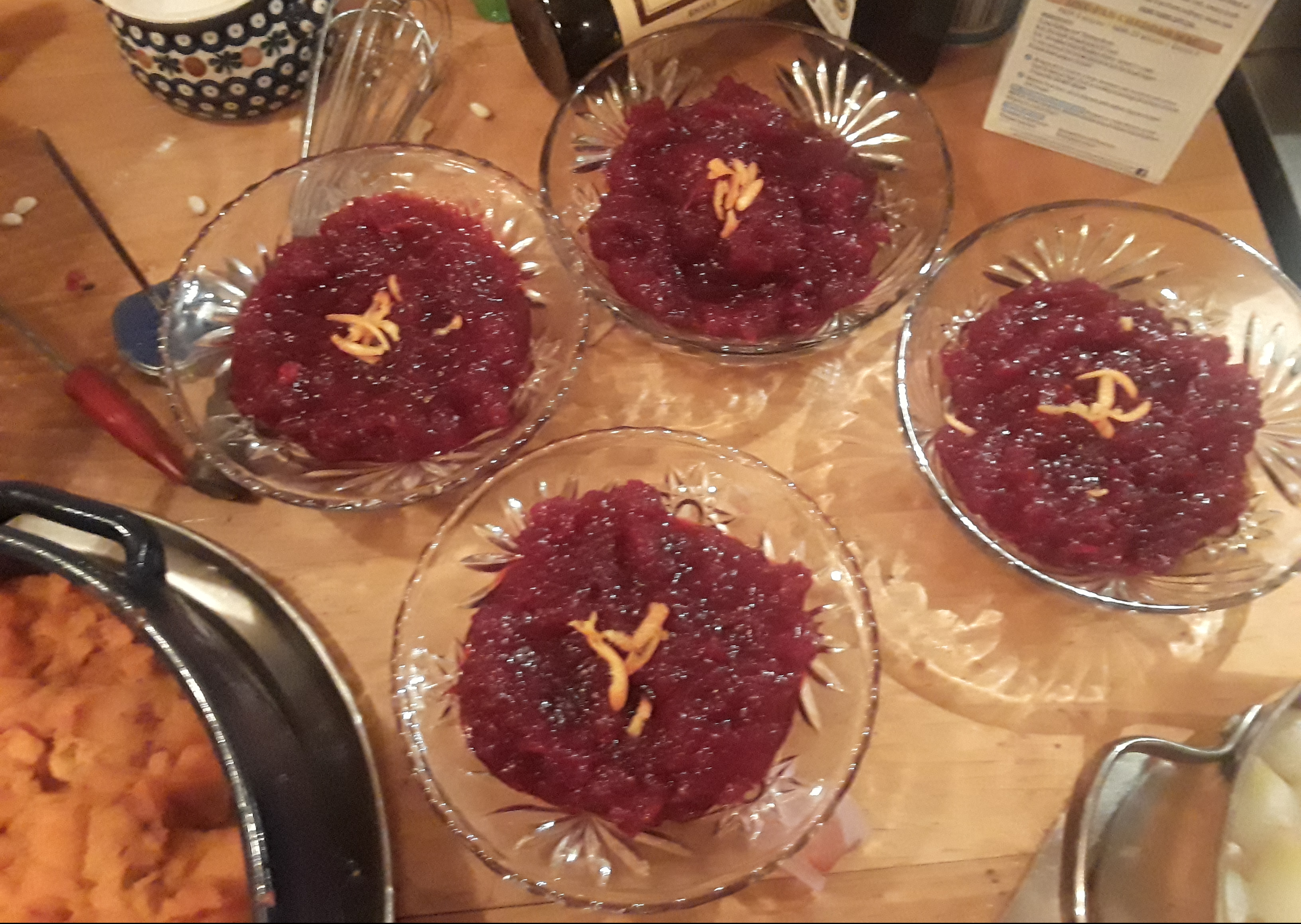
After the cranberries had simmered down to a jelly-like consistency they were cooled and garnished with orange shavings.

20191128_172027

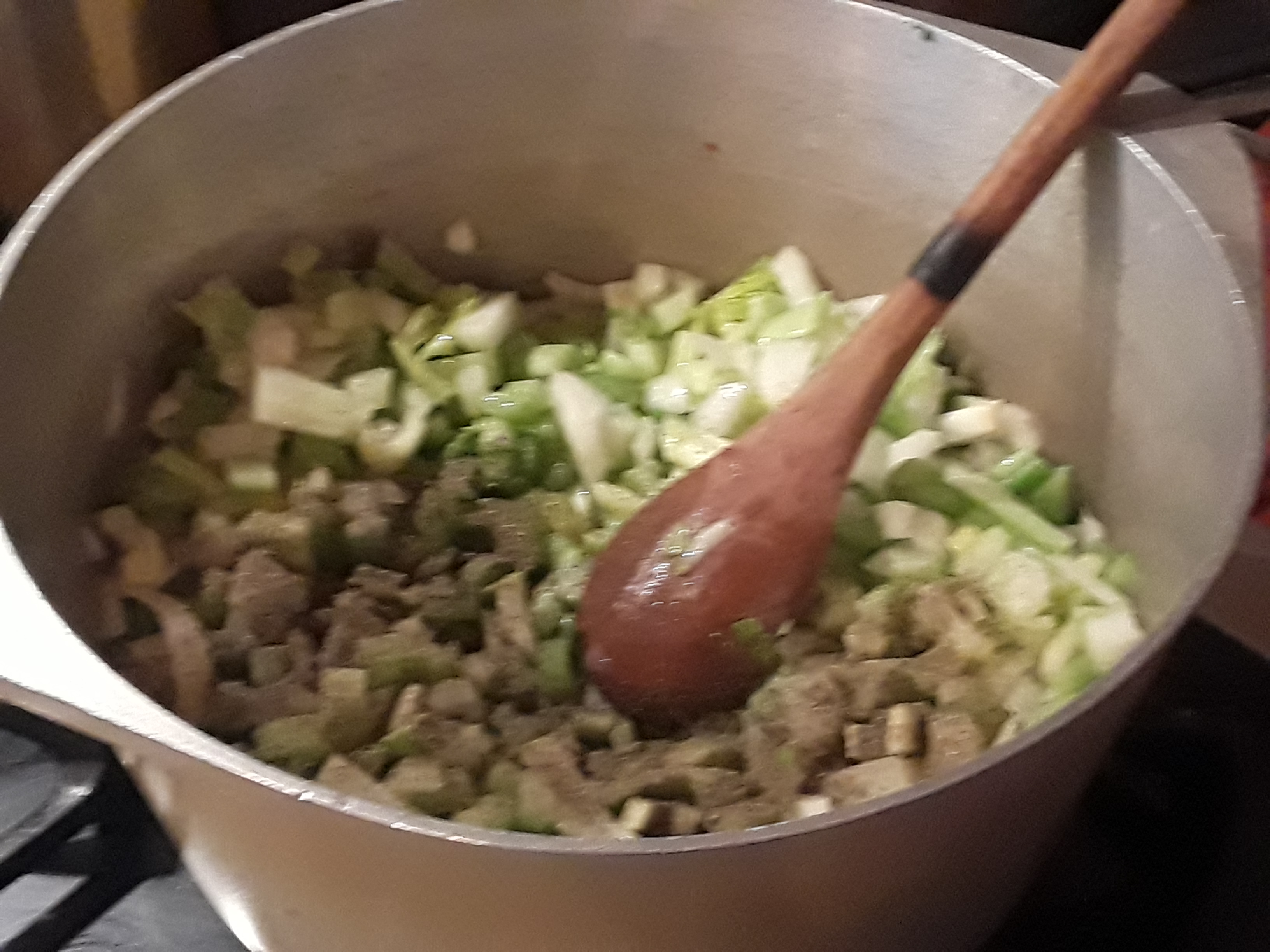
Third, the stuffing – an assortment of celery and onions were cooked until tender and subsequently mixed with sourdough bread crumbs and a special mix of savory herbs!

20191128_143642

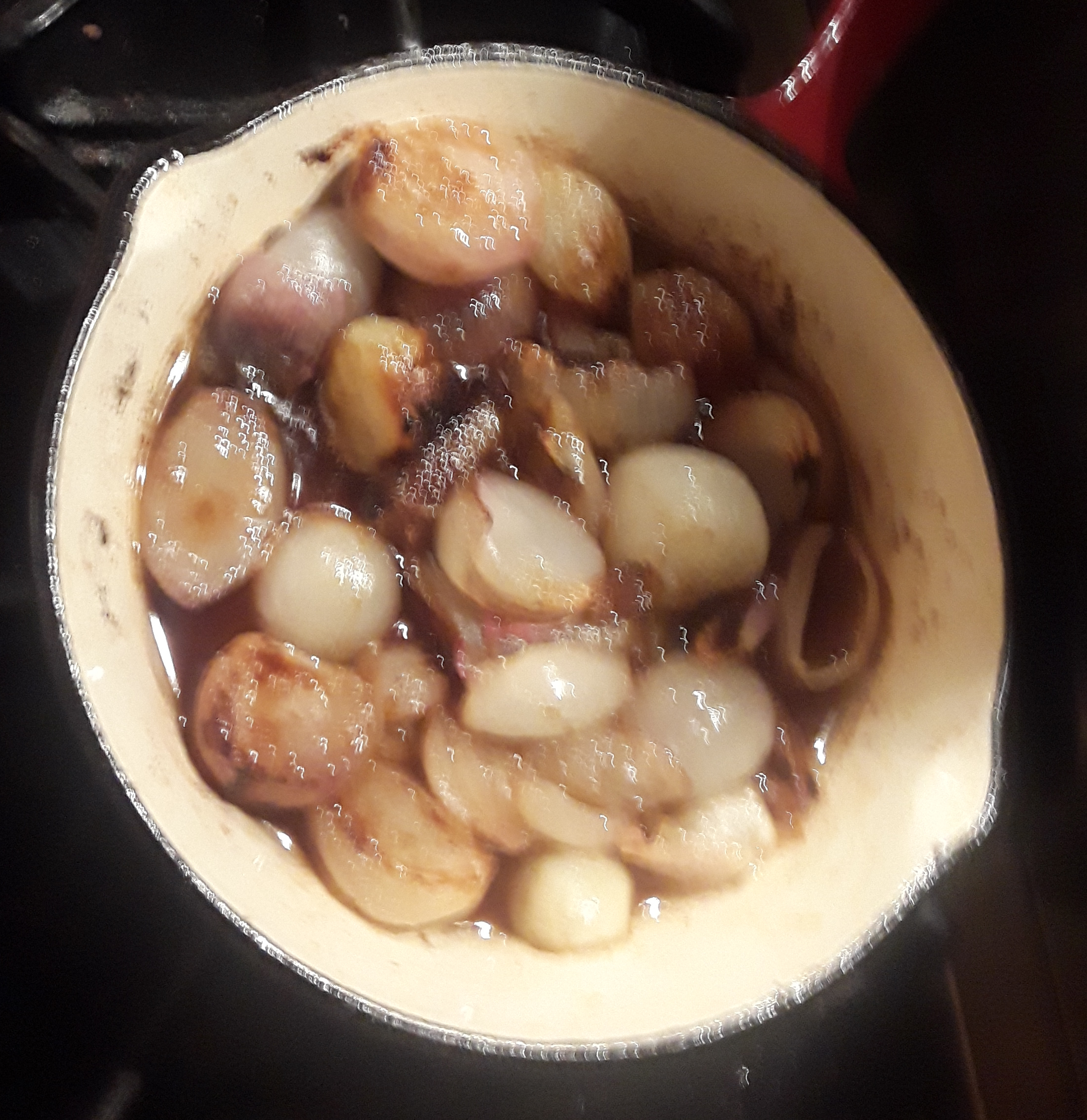
Even when a bit blurry, these buttery caramelized shallots are one of my favorites.

20191128_172056

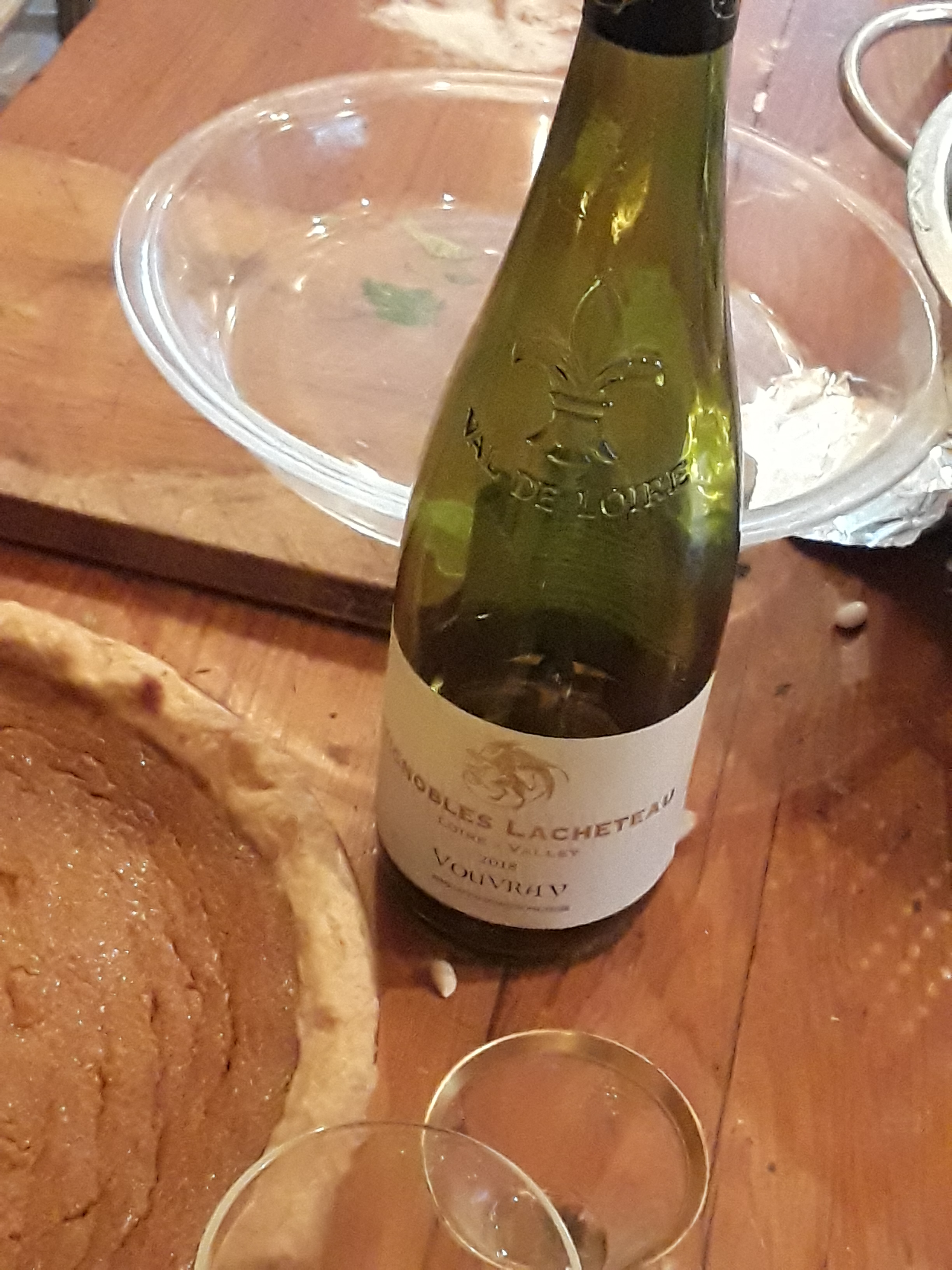
Meanwhile, as an aperitif, I uncorked a bottle of Vouvray and served it with a small army of cheeses to keep the chefs (and hangers-around) energized.

20191128_143733

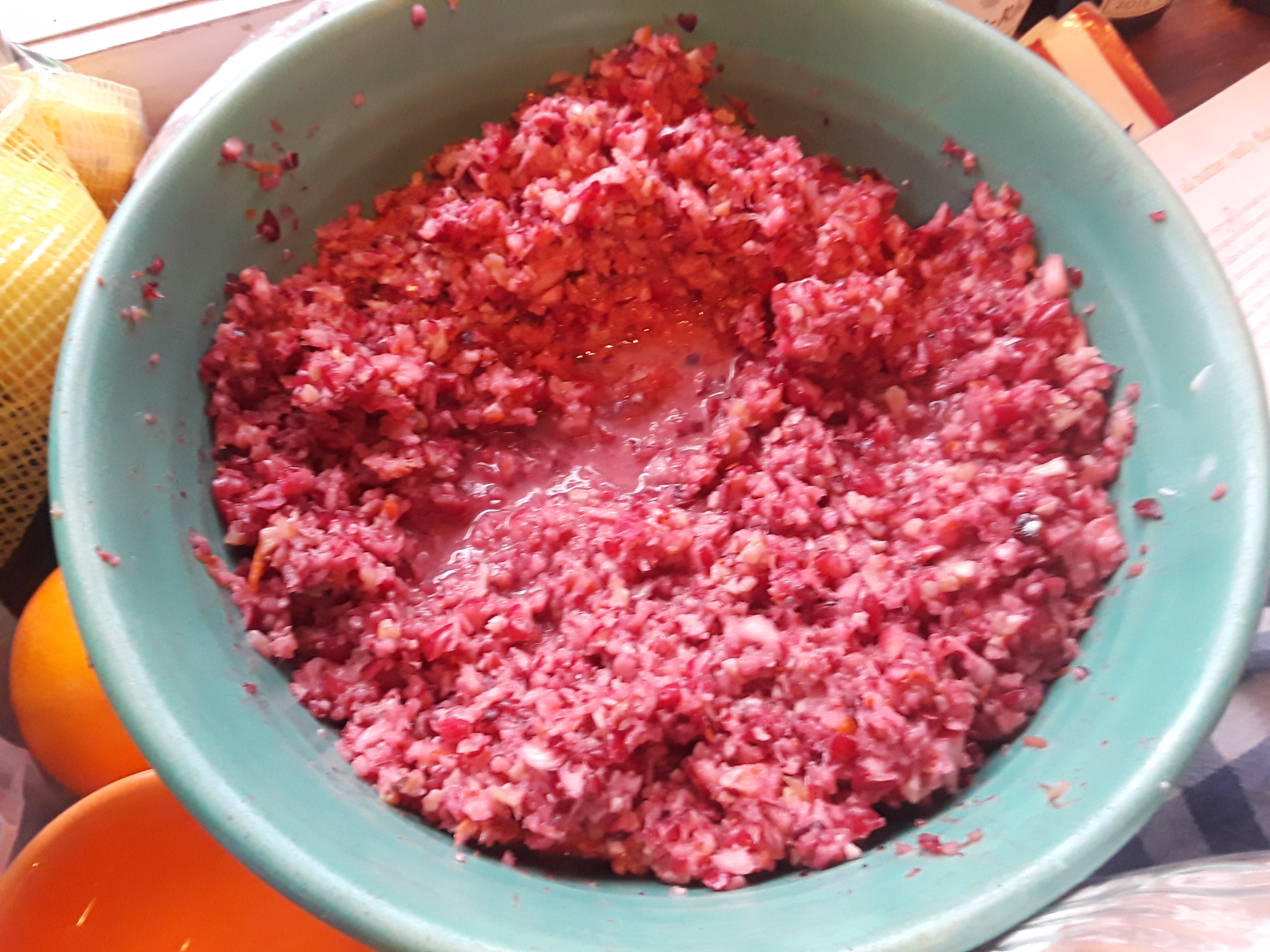
This little dish- cranberry, celery, and a little lemon zest provided a cold chutney of sorts to provide a cooling contrast to the other dishes.

20191128_144146

Not pictured are the creamed peas and pearl onions nor the beets and spinach inebriated with a balsamic reduction, not to mention the traditional sides of mashed potatoes, sweet potatoes, gravy, and, of course, the turkey!

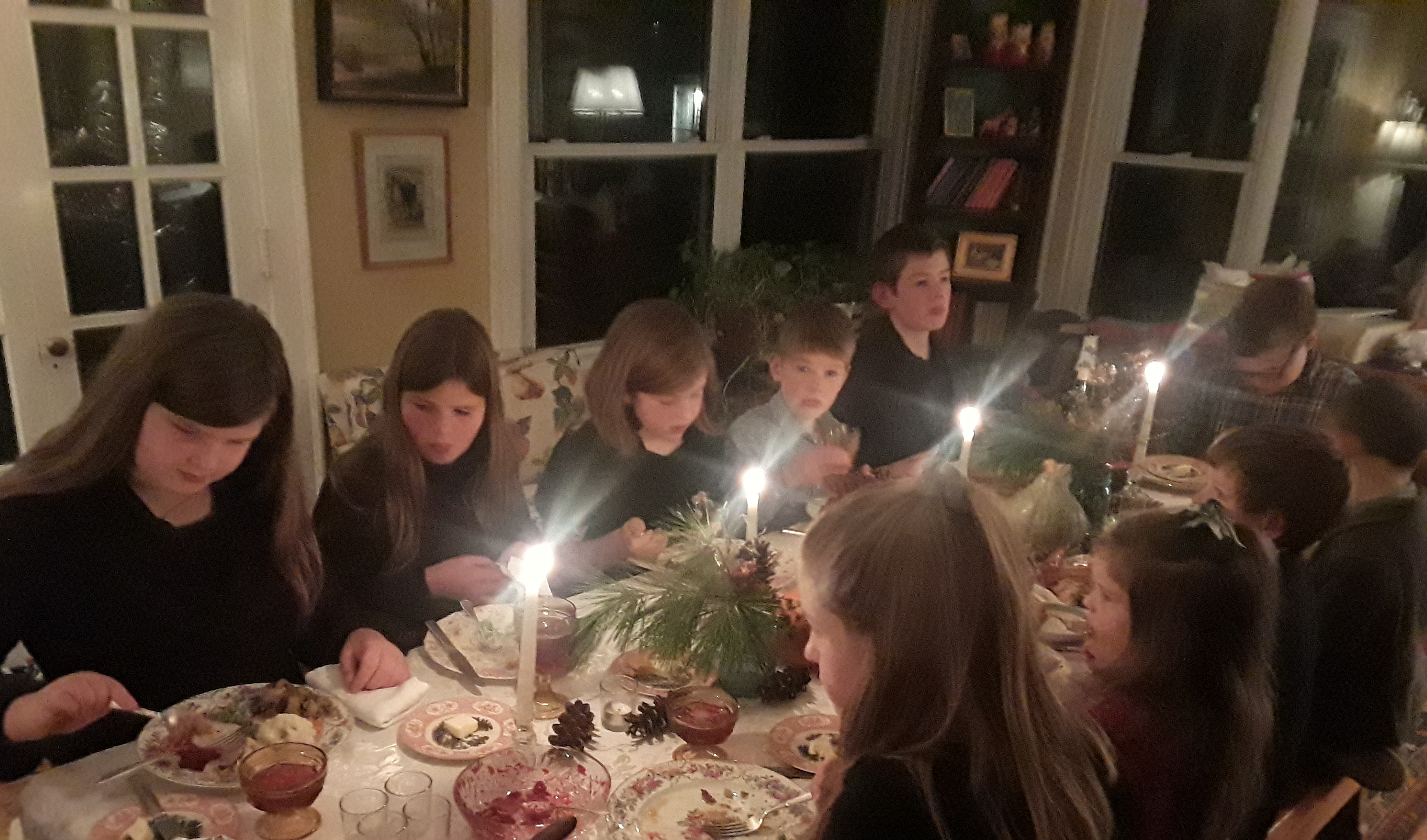
Finally, dinner was served…children and cousins first!

20191128_181445

Then the adults.

IMG-3202

In addition to other sparkling beverages, for the wine, we decided on a couple bottles of Cotes du Rhone thinking that these would make the best stand against the cranberry sauce.

img-3223-e1575133448397.jpg

img-3217-e1575132989272.jpg

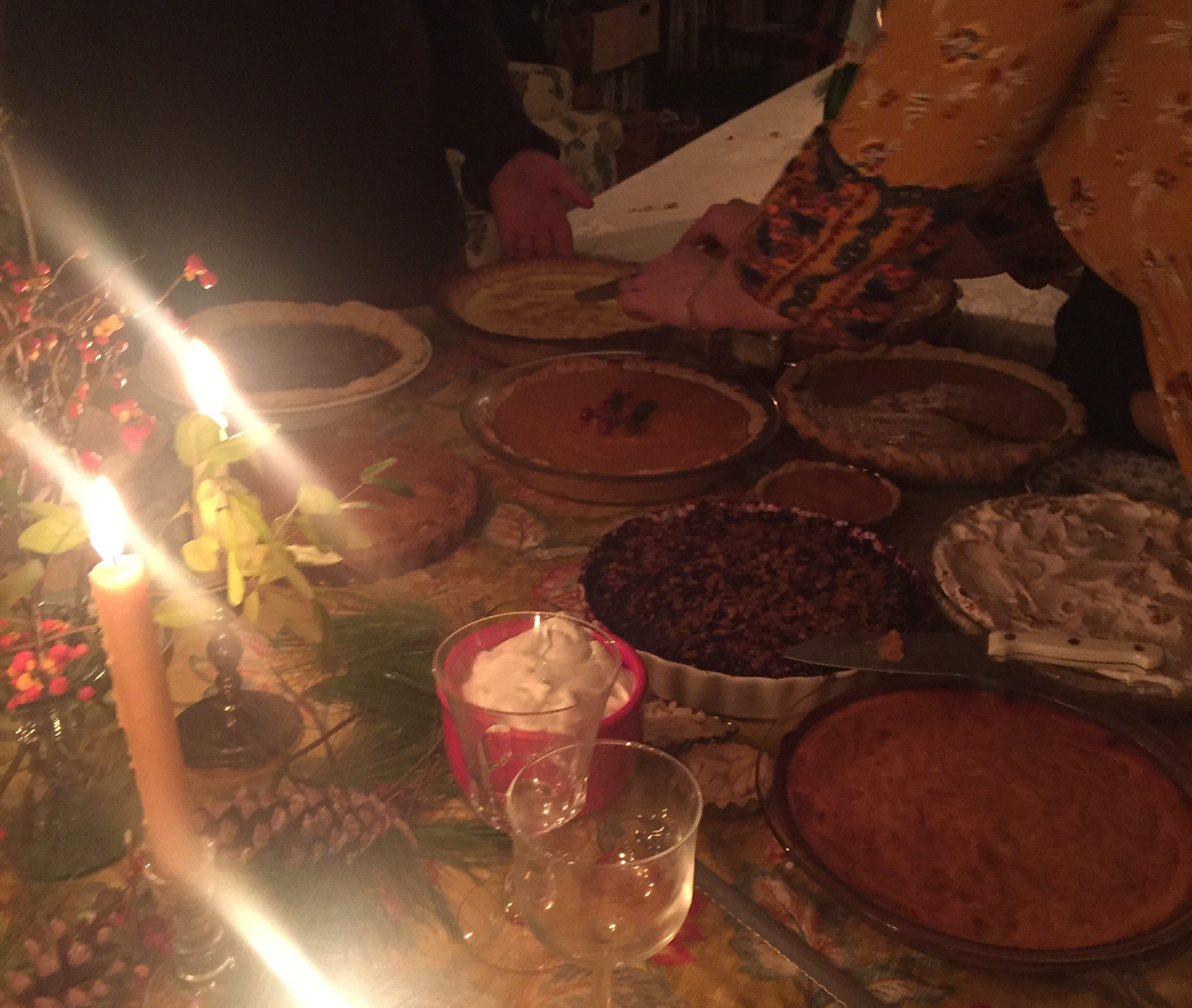
Finally the pies! My favorite-the pecan! But I always try to hide a piece of apple for breakfast.img-3200-e1575133515792.jpg

IMG-3227

Posted in Custom, Feasts, Fine Arts, Saint Paul, The Mass | Tagged , , , | 2 Comments

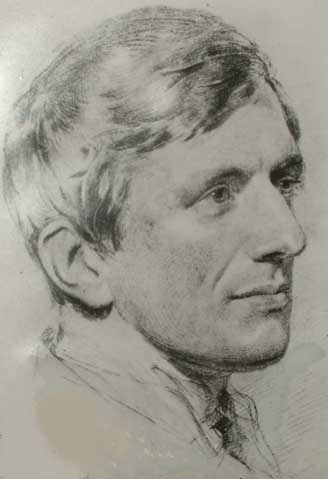
St. John Henry Newman and the Scandal of Catholic Classical Education

Saint John Henry Newman, speaking of the unique status of Western Civilization in the history of the world, emphatically asserts,

I think it has a claim to be considered as the representative Society and Civilization of the human race, as its perfect result and limit…I call then this commonwealth preeminently and emphatically Human Society, and its intellect the Human mind, and its decisions the sense of mankind, and its disciplined and cultivated state Civilization in the abstract, and the territory on which it lies the Orbis Terrarum, or the World.

Now if it wasn’t for the fact that this Cardinal was just canonized, I think we could all brush this statement off as an overly zealous defense of Western Civilization. After all, sometimes people get carried away and say things that they don’t really mean. For example, I will often say things like,

I think 100% arabica coffee beans may be considered as the representative coffee bean of civilization and of the human race. Nay even the preeminent coffee bean and even the bean in virtue of which all other beans merit the name “coffee bean.”

To the extent that other beans measure up or fall away from the arabica bean, that is the exact measure in which each bean may be called a coffee bean.

Or perhaps about the music of Mozart,

I think it has a claim to be considered as the representative music of the human race, as its perfect result and limit…I call then this music preeminently and emphatically Human Music, and the mind of Mozart is par-excellence the musical mind!

Mozart’s music is the music of mankind and in the abstract, his music and the territory in which it is heard is the Orbis Terrarum, or the World.

Ha! That is a wonderful statement.

Related image

I love the bravado. And what’s more, I completely agree with it.

As a matter of fact- with apologies to Newman, I think I will lay claim to this statement as being perhaps the very clearest statement ever made about the worth and value of Mozart’s musical contributions.

Did you ever hear him praised more highly?

I think not!

In the future, I plan on making a similar statement about Shakespeare so prepare yourselves.

But in the meantime let me return to the Blessed John Henry Cardinal Newman and his statement about Western Civilization.

Can there be a clearer or more forceful statement about the value of Western Civilization that flies more in the face of the current attitude of cultural relativism?

My old teacher Dr. Jack Neumayr, a philosopher and professor at Thomas Aquinas College, commenting on Newman’s statement writes:

Some who regard all culture as empirical, as we have seen, will defend liberal education because it is good to know our origins; not that our culture is normative, but it is ours. Others will insist on the utility of knowing the roots of the good and evil in our society. Still others, thinking it well to know the works of man, urge us to scan the achievements of western thought. None, however, under the pressures of egalitarianism and skepticism, dares assert it is the measure of the human mind.

John W. Neumayr | Thomas Aquinas College

Indeed, few in our day see the value of liberal education so clearly. This education, which arises from western society, is none other than the education which is the measure of the human mind. It is the education that fulfills the nature of man; it is the education that disposes man for the life of grace.

Liberal education is a scandal to the modern world. Liberal education is a scandal because it presents itself in direct opposition to the prevalent educational philosophy of our day; it is a stumbling block to the aspirations and goals of modern education. Those goals include no more than what is thought necessary to equip the student with the particular knowledge that will further a specific career.

Liberal education …a boulder in the road of establishment educational philosophy! (Admittedly, that boulder is a little more than a “scandal”)

Thus liberal education is a scandal to modern ears for at least two reasons. It is a scandal to those who are themselves ‘proponents of liberal education’ for the wrong reasons; reasons that amount to no more than a sort of cultural relativism and ultimately deny that liberal education is the education for the human mind.

It is also a scandal to those who propose the purpose of education is to equip man for this world; for some career.

As Cardinal Newman writes elsewhere,

“This process of training, by which the intellect, instead of being formed or sacrificed to some particular or accidental purpose, some specific trade or profession, or study or science, is disciplined for its own sake, for the perception of its own proper object, and for its own highest culture, is called Liberal Education…”

Posted in education, liberal education, Mozart, Newman, truth for its own sake | Tagged , , , , , | 12 Comments

The True Purpose of Catholic Education

Well, I wish this was an interview with Jordan Peterson about Pope Pius XI’s FANTASTIC encyclical on Christian education Divini Illius Magistri. But alas he was not available, so I was more than happy to fill in for him.

Posted in catholic education, classical education, education | Tagged , , , | Leave a comment

Socrates and Jesus: On dangerous teaching methods and the lack of published works

Jesus and Socrates are alike in two striking ways. Not that we are the first to compare the two. Actually, I am singularly unversed in what other thinkers like Montaigne and Mill, Kierkegaard and Nietzsche had to say about the matter, but I am confident that what I shall say will probably be more enjoyable and accessible to other simple souls like myself who are not quite so inclined for heavy reading in the evenings!

Image result for nietzsche

Now before we proceed, let us acknowledge that one of these men was also God.

So perhaps you might object, along Euclidean lines, that one should not make comparisons between things that are of different kinds. One should not compare apples to oranges.

But even my clever students can answer this silly objection – and they would do so with obliging and courteous finesse. And they will undoubtedly use the old scholastic ‘qua‘ technique! The three little letters QUA provide the fledgling debater with 80% of everything he will ever need to escape from difficult positions and answer tricky objections.

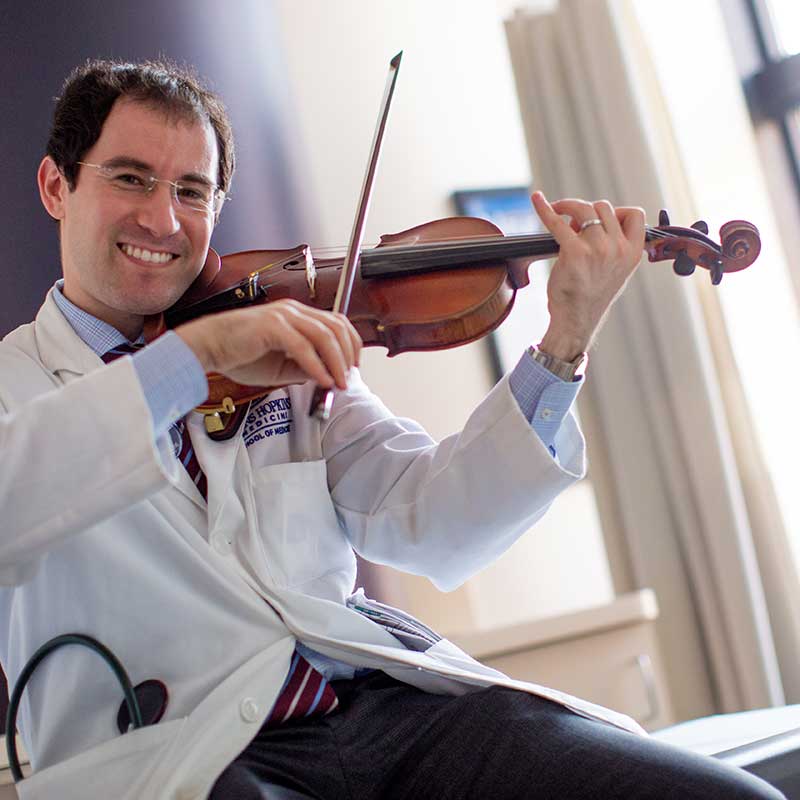
For example, when confronted with a situation in which a patient is healed by a doctor, named John, who happens to be a virtuoso on the violin, the patient is able to say ‘John healed me not QUA violinist but QUA doctor.’

Image result for violinist physician

Similarly, in the case of comparing Socrates to Our Lord and Savior, they will say,

“We do not mean to compare Socrates to Jesus qua God, but rather we mean to compare Socrates to Jesus qua man.”  

How was Socrates similar to Jesus as a man? This is our question.

Socrates on Age and the Progress of Study ~ The Imaginative Conservative

Image result for Jesus

Perhaps many similarities might suggest themselves at once. They were both men. They both had mothers. They each had one nose and two eyes.

But we are not concerned with such obvious comparisons – although let us stipulate that it should be of ENORMOUS interest to all of us that God became man and that he actually condescended to have such a lowly organ of sense as a nose!

69,511 Nose Illustrations & Clip Art - iStock

But right now we are more interested in drawing similarities between Socrates and Jesus insofar as each of these men were of paramount significance to western civilization as teachers.

Now, as we have repeatedly pointed out in the pages of this blog, strictly speaking, Jesus alone is the teacher. There is only one teacher. There is only one who has the ability to directly cause the agent intellect to grasp intelligible objects. Jesus is the only one who can directly cause intellectual illumination even without the cooperation of the student. Every other teacher can only act as a remote cause of knowledge insofar as he cooperates with nature- in large part by removing obstacles from a student’s mind that prevent him from learning.

7 Weeding Mistakes That Make Gardening Much Harder

So again- strictly speaking, Jesus alone is a teacher whereas Socrates is not. Actually, Socrates appears to be among the first to grasp this very fact. Socrates is famous for going around insisting that he did not have wisdom and was only on a  mission to examine others who claimed they did.

So now that we have stipulated these initial differences between Our Lord and Socrates, are we able to find some striking similarities?

Here are at least two.

The first is that both Socrates and Jesus employed a similar method in their teaching.

They both employed the method of asking questions in order to show others that they did not have the wisdom they claimed to have.

This is what makes reading the Platonic Dialogues so enjoyable. We ask ourselves, ‘how is Socrates going to show so-and-so that so-and-so doesn’t really know what so-and-so claims to know?’

Embarrassing his interlocutors was never the primary aim of Socrates. His primary aim was, rather, to help others to examine their own opinions with the view of ascertaining whether all of their thoughts held consistently together. Or did their opinions actually contradict one another? The underlying assumption is, of course, that truth is the sort of thing that hangs together. One thing cannot be true while contradicting another thing that is true.  The kind of discussion that Socrates pioneered is what we call ‘the examination conversation.‘ It is a conversation in which a person seeks out the coherency of his own ideas.

The danger, of course, with this method is that it is apt to shine a bright light on the fallacies and inconsistencies in a person’s thought. And should one happen to be the person whose thoughts are under scrutiny, then it can be painful to be brought to the realization that one’s thoughts- especially if they are long and firmly held convictions- are nothing more than idle and empty wind-bags! Instead of gratitude and joy at having one’s thoughts examined and found wanting, feelings of shame, and anger and perhaps even bitter hatred might arise against the unlucky one who examines us.

Take this delightful passage from Plato’s Republic. Socrates has just ‘finished off’ the ideas of the brash Thrasymachus who maintained that injustice is more advantageous than justice. He maintained that the unjust man is more likely to be happy and successful than the just man. But through his examination, Socrates compelled Thrasymachus to admit that the unjust man is really on the side of evil and ignorance.

When we had got to this point in the argument, and every one saw that the definition of justice had been completely upset, Thrasymachus, instead of replying to me, said: Tell me, Socrates, have you got a nurse?

Why do you ask such a question, I said, when you ought rather to be answering?

Because she leaves you to snivel, and never wipes your nose:

Clearly, Thrasymachus did not enjoy being ‘shown up’ for his false notions. He should have been thankful to Socrates for helping him because as long as we refuse to examine our ideas, none of us can obtain wisdom.

Jesus employed this same method in speaking to the chief priests and Pharisees.

And the Pharisees being gathered together, Jesus asked them, saying: What think you of Christ? whose son is he? They say to him: David’s. He saith to them: How then doth David in spirit call him Lord, saying: The Lord said to my Lord, Sit on my right hand, until I make thy enemies thy footstool?  If David then call him Lord, how is he his son?

And no man was able to answer him a word; neither durst any man from that day forth ask him any more questions.

One can infer at least two things about the use of this method of teaching that both Jesus and Socrates employed. The first thing is that it is an extremely effective method since Jesus and Socrates both used it. The second is that this method of teaching is quite dangerous. Given that the two chief exemplars of this method (aka the ‘Socratic method’) were both executed unjustly through the malignancy of the individuals that they examined, I think it is safe to say that effective teaching does have its perils.

Let us turn to a second striking similarity between Socrates and Jesus with respect to their teaching.

Neither Socrates nor Jesus appear to have written any books, articles, blog posts, or engaged in any medium that employs the written word.

They both displayed an exceptional preference for the spoken word as the single medium for their teaching. 

Neither Jesus nor Socrates was an author.

Image result for publish or perish

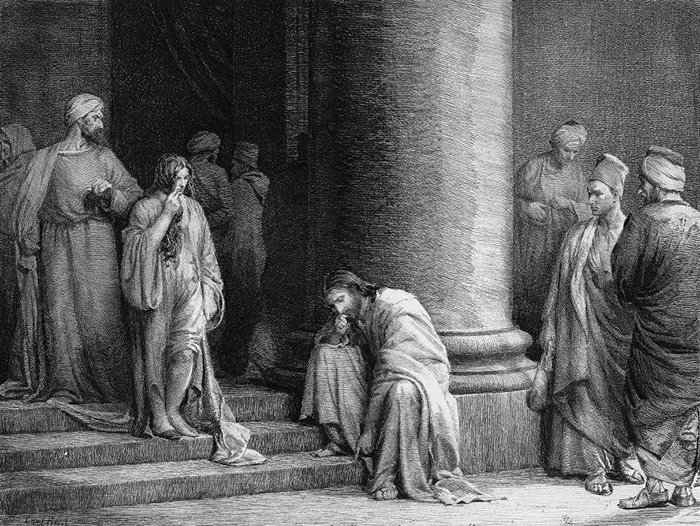
True, Jesus did write something in the sand that scared off a number of people. But the fact that he wrote in the sand is sort of an interesting thing in itself. He did not intend his writing to be preserved.

Writing in the Sand by Carl Bloch

If Jesus is the greatest teacher, then certainly he used the most effective method for teaching. But Jesus taught through the spoken word rather than the written word. Therefore it would appear that the spoken word is the most perfect method of teaching.

Certainly, we are thankful for the written word. Where would we be without the works of Aristotle and Aquinas? But Socrates and Jesus were men of the spoken word. The written word is, after all, merely a sign of the spoken word. The written word is a derivative word. The written word is only a word in a secondary sense.

Fortunately for the rest of us, Socrates’ words were chronicled brilliantly by his student Plato and Our Lord’s words recorded by no less than four evangelists through the inspiration of the Holy Spirit. Nonetheless, I still take it as a sign of their single-minded devotion to teaching and always expressing the truth in its fullest degree that neither Jesus nor Socrates bothered to write anything down themselves.

We are certainly not the first to compare Socrates to Jesus. Socrates lived a life motivated by a single-hearted love of truth for its own sake. He lived a life consumed with the love of wisdom. ” We are shaped and fashioned by what we love,” says Goethe. No wonder then that so many have found similarities between Socrates and the one who was the very fulfillment of his search.

Posted in discussion, Socrates, socratic dialogue | Tagged , , , | 2 Comments