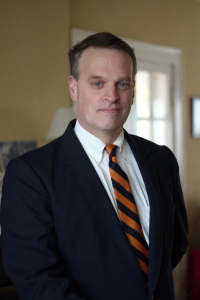
I am Mark Langley. In case you didn't notice, I am all about liberal education.
-
-
Subscribe to the Catechism of The Council of Trent in Less than a Year Podcast!
-

Support Lion and Ox!

-
Recent Posts
- Celebrating Christ The King Sunday In A Democratic Republic
- A Fitting Sentiment on the Feast Day of Leo the Great: Go away Barbarians
- Newman and the “Education of a Gentleman”
- Resurrexit 2025
- Completing the Catechism Podcast Series: A Christmas Gift
- The First Two Words of The Lord’s Prayer
- Discussion with Dr. Jason Fugikawa about The Catechism of the Council of Trent
- Days 116-118: Ninth and Tenth Commandments and Part IV: Prayer- the necessity, fruits and parts of prayer
- Liberal Arts and Fine Arts: Understanding the Trivium, Quadrivium, and the Place of Music in Catholic Education
- On False Humility and the Missing Episodes of The Catechism of the Council of Trent in a Year!
- Easter 2024 Resurrexit!
- Day 86 The Sacrament of Penance – Conclusion
- Day 85 The third integral part of Penance – Satisfaction
- Days 80-84 The sacrament of Penance: its form, the integral parts, the definition of contrition and the qualities of a good confession
- Day 79 Why Penance is a Sacrament
Recent Comments
- TVESDAY EARLY-MORNING EDITION - BIG PULPIT on Newman and the “Education of a Gentleman”
- Newman and the “Education of a Gentleman” | Classical Catholic Education on Homerus Omnes Docuit
- Wendy on Why Would Anyone Eat Locusts and Wild Honey?
- marklangley on Why Would Anyone Eat Locusts and Wild Honey?
- Wendy Frith on Why Would Anyone Eat Locusts and Wild Honey?
- Completing the Catechism Podcast Series: A Christmas Gift | Classical Catholic Education on New Podcast Announcement: Exploring The Catechism of the Council of Trent (in less than a year)
- VVEDNESDAY MORNING EDITION | BIG PULPIT on Discussion with Dr. Jason Fugikawa about The Catechism of the Council of Trent
- petranchmom on Easter 2024 Resurrexit!
- Jason Fugikawa, Ph.D. on Discussion with Dr. Jason Fugikawa about The Catechism of the Council of Trent
- marklangley on New Podcast Announcement: Exploring The Catechism of the Council of Trent (in less than a year)
- dianavredeveld5983 on New Podcast Announcement: Exploring The Catechism of the Council of Trent (in less than a year)
- THVRSDAY MORNING EDITION | BIG PULPIT on Liberal Arts and Fine Arts: Understanding the Trivium, Quadrivium, and the Place of Music in Catholic Education
- Alexander Gu on Why We Read Herodotus
- On False Humility and the Missing Episodes of The Catechism of the Council of Trent in a Year! | Classical Catholic Education on Day 86 The Sacrament of Penance – Conclusion
- Christ: Your Mediating and Conquering King - Jack Kilcrease on Celebrating Christ The King Sunday In A Democratic Republic
Archives
- November 2025
- August 2025
- April 2025
- December 2024
- October 2024
- September 2024
- August 2024
- April 2024
- September 2023
- August 2023
- July 2023
- June 2023
- May 2023
- April 2023
- March 2023
- February 2023
- January 2023
- December 2022
- September 2022
- August 2022
- April 2022
- February 2022
- December 2021
- July 2021
- June 2021
- April 2021
- November 2020
- October 2020
- August 2020
- July 2020
- June 2020
- May 2020
- April 2020
- March 2020
- February 2020
- January 2020
- December 2019
- November 2019
- October 2019
- September 2019
- August 2019
- July 2019
- June 2019
- April 2019
- March 2019
- February 2019
- January 2019
- December 2018
- November 2018
- September 2018
- August 2018
- June 2018
- May 2018
- April 2018
- March 2018
- February 2018
- December 2017
- November 2017
- October 2017
- September 2017
- August 2017
- July 2017
- June 2017
- May 2017
- April 2017
- March 2017
- February 2017
- January 2017
- December 2016
- October 2016
- August 2016
- July 2016
- June 2016
- March 2016
- February 2016
- December 2015
- August 2015
- July 2015
- May 2015
- April 2015
- March 2015
- February 2015
- January 2015
- December 2014
- November 2014
- June 2014
- May 2014
- April 2014
- March 2014
- January 2014
- December 2013
- November 2013
- October 2013
- September 2013
- August 2013
- July 2013
- June 2013
- May 2013
- April 2013
- March 2013
- February 2013
- January 2013
- December 2012
- November 2012
- October 2012
- September 2012
- August 2012
- July 2012
- June 2012
- April 2012
- March 2012
- February 2012
- January 2012
- December 2011
Categories
- 12 articles of faith
- ad libitum
- Advent
- aeschylus
- Ambrose
- America
- Aquinas
- Augustine
- Baptism
- bathroom restoration
- beauty
- breakfast
- Brewing
- Carl Schmitt
- Catechism
- Catena Aurea
- catholic education
- Christendom
- Christmas
- classical education
- college
- Common Good
- Confirmation
- Council of Trent
- Custom
- Decalogue
- Delphi
- Dickens
- Dinner
- discussion
- Easter
- education
- enlightenment
- Ex Umbris
- fashion
- Feasts
- Fine Arts
- Grammar
- Heraclitus
- Herodotus
- Hesiod
- History
- Homer
- Homer Sightings
- Latin
- Liberal Arts
- liberal education
- liberal education works
- Literature
- Lord's Prayer
- Mathematics
- Metaphysics
- Modernists
- Mozart
- Music
- Newman
- Origen
- Palestrina
- passions
- Penance
- philosophy
- Philosophy of Nature
- Podcast
- Religious Freedom
- Sacraments
- Sacred Doctrine
- Sacred Music
- Sacrosanctum Consilium
- Saint Paul
- Science
- Seven Fine Arts
- Shakespeare
- slavery
- Socrates
- socratic dialogue
- Solon
- soul
- summer vacation
- Temptation
- Textbooks
- Thales
- The Eucharist
- The Lord's Prayer
- The Mass
- The Passion
- truth for its own sake
- Uncategorized
- Virgil
- virtue
- William Byrd
- Wisdom
- Work
- Follow Classical Catholic Education on WordPress.com
Follow Us
Author Archives: marklangley

Learning in Virus Time
In a sermon delivered in the Fall of 1939 titled Learning in Wartime, C.S. Lewis asserts, every Christian who comes to a university must at all times face a question compared with which the questions raised by the war are … Continue reading
Why I do not want to be the King of Scotland
I’m not so certain that I want to be king of Scotland anymore. After reading The Tragedy of Macbeth with my students, I am having a difficult time shaking off a sense that life is meaningless when worldly ambition is the governing principle. … Continue reading
Sin is first in the will: a brief lesson in morality from Lady Macbeth
Of all the authors we should compel our students to read, surely no one is so foolhardy as to demand a reason for reading Shakespeare. I can forgive the one who asks, Why should students read Aeschylus? Or Why do you force them to … Continue reading
The Priest: Privileged Witness of the Reality of Grace Present in the World
On this, the eve of the Epiphany, with the Christ Child still lying in the manger, a great many Catholics everywhere are hoping and praying for a year of renewed grace. And, of course, with the turn of the secular … Continue reading
Posted in Augustine, beauty, Christmas, Feasts
Tagged amazon synod, didache, Epiphany, Maximilain Kolbe, St Stephen
5 Comments
As Long as Catholics Continue Feasting, Christendom Still Exists!
What is a perennial truth if nothing other than a truth which springs up every year? We who are strangers and sojourners in the city of man, we who aspire towards citizenship in the city of God, we know that … Continue reading
Posted in breakfast, Christendom, Christmas, Dinner, Feasts, Virgil
Tagged Beowulf, Christendom still exists, Enstroms Toffee, Gawain, Ribeye
5 Comments
Why Would Anyone Eat Locusts and Wild Honey?
Wearing a camel-hair garment and a leather belt is one thing but eating locusts and wild honey is another! I don’t suppose John the Baptist was wearing the camel hair garment that I am familiar with – although I think … Continue reading
Posted in Advent, Aquinas, Catena Aurea
Tagged John the Baptist, locusts and honey, St. Gregory, Theophylactus
18 Comments
Still Thankful After All These Years
Grace builds upon nature. Or as we classically educated Latin teachers would construe, Gratia Supponit Naturam or even “Gratia aedificat super naturam”? In any case, whether George Washington was stirred by the Holy Ghost, when he rendered his first Thanksgiving … Continue reading
Posted in Custom, Feasts, Fine Arts, Saint Paul, The Mass
Tagged Cotes du Rhone, George Washington, Grace and nature, Thanksgiving
2 Comments
St. John Henry Newman and the Scandal of Catholic Classical Education
Saint John Henry Newman, speaking of the unique status of Western Civilization in the history of the world, emphatically asserts, I think it has a claim to be considered as the representative Society and Civilization of the human race, as … Continue reading
The True Purpose of Catholic Education
Well, I wish this was an interview with Jordan Peterson about Pope Pius XI’s FANTASTIC encyclical on Christian education Divini Illius Magistri. But alas he was not available, so I was more than happy to fill in for him.
Socrates and Jesus: On dangerous teaching methods and the lack of published works
Jesus and Socrates are alike in two striking ways. Not that we are the first to compare the two. Actually, I am singularly unversed in what other thinkers like Montaigne and Mill, Kierkegaard and Nietzsche had to say about the … Continue reading
Posted in discussion, Socrates, socratic dialogue
Tagged Duane Berquist, Platonic Dialogues, Socrates, spoken word
2 Comments
 Classical Catholic Education