Finisque ab Origine Pendet

Incidentally, I haven’t read much of the Roman poet Manlius who “flourished” in the first century AD. But his famous line “Finisque ab origine pendet” from the fourth book of his Astronomicon appears to have been adopted by Phillips Exeter Academy as its motto. (even despite that scary snake which appears to be eating his own tail!)

John Phillips who founded the school wrote:

“Above all, it is expected that the attention of instructors to the disposition of the minds and morals of the youth under their charge will exceed every other care; well considering that though goodness without knowledge is weak and feeble, yet knowledge without goodness is dangerous, and that both united form the noblest character, and lay the surest foundation of usefulness to mankind.”

Phillips Exeter, founded in 1781, is now, I would say, a fairly prestigious Academy claiming everyone from Daniel Webster to Pierre S. du Pont to Joseph Coors to Mark Zuckerberg as alumni. And no one would argue that these gentlemen haven’t been very useful to mankind.
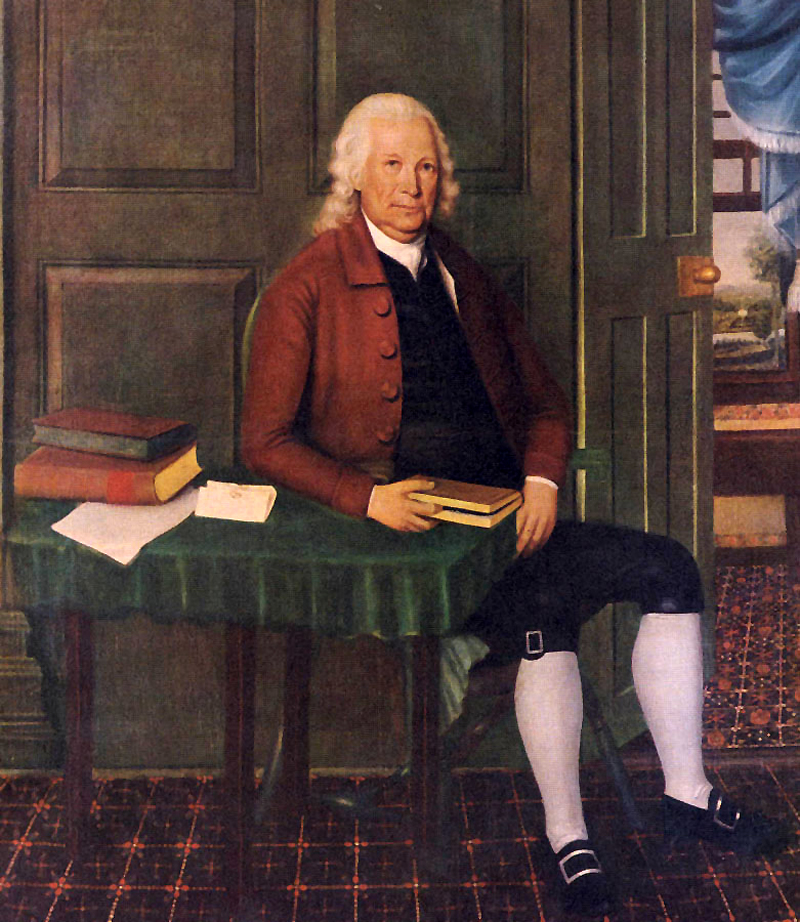
File:Portrait of John Phillips.jpeg

John Phillips, banker and merchant that he was, stresses knowledge and goodness as things to be pursued because of their “usefulness to mankind.” I suppose if knowledge and goodness were not useful then we would all be in big trouble. If knowledge and goodness were only valuable as things to be pursued for their own sake then would John Phillips have laid the foundations of his school? I doubt it. (N.B. I am not saying that I would have either…I am just saying that it’s fortunate for the alumni of Phillips Exeter that knowledge and goodness are in fact very useful in this world … well … at least sometimes.)

I suppose Phillips Exeter and its veritable “galaxy of names” of famous alumni is itself fulfilling its own motto “finis origine pendet.” The origins of the school are rooted in a fundamental utilitarian view of human life, and its entire 200 plus years of existence have born this philosophy out through the production of men whose names would supply almost a complete litany of worldly success. (I wonder if there is such a litany….hmmm? Maybe we need to compose one…)

But certainly, “the end does” in fact “hang from the beginning” to a great extent. Parents, schools, and in deed all who concern themselves with the formation of the young know the importance of a good beginning. The path of an arrow, its precise trajectory, velocity, and force can be determined by examining its beginning movement, so too, human life seems to have a trajectory that can almost be wholly predicted by what happens in the beginning.

But rather than fit man from the very beginning to be useful to himself and to others- (which at first glance appears like a very laudable goal!) Classical Catholic education seeks to dispose each person to be a fitting vessel for Divine Grace. Following the maxim that “grace builds on nature,” classical Catholic education proposes that by acquiring the intellectual habits of truth, the mind of the student is more apt for Divine Truth.

And further, by acquiring habits of goodness, students are more disposed to living a life of the Theological Virtues.

And by acquiring virtues that allow us to see and respond to beauty, students are disposed to the appreciation of Him who is Beauty itself!

Habits that enable us to see order, unity, symmetry, harmony, and proportion, enable the young to see and respond to beauty in the world.

Developing these habits are “the beginnings” that we all want for our children, for then they are disposed to see the beauty of the Creator.

St. Bonaventure writes,

“In beautiful things St. Francis saw Beauty itself, and through His vestiges imprinted on creation he followed his Beloved everywhere, making all things a ladder by which he could climb up and embrace Him who is utterly desirable.”

One would hope that after 12 years of schooling, every student would be well on his way to having acquired the habits of truth, goodness and beauty. We even ask him to start a somewhat more independent life in college supposing that he will then pursue goodness, truth, and beauty on his own. One would hope that a student entering college would have the internal motivation, the habits, or at least the beginnings of these habits, to pursue the things that lead to his highest end.

Finisque ab origine pendet.

Catholic classical education ought to focus on good beginnings; the formation of the intellectual, moral and aesthetic virtues .

In this way, we pray that our students will all someday find Him Who is the beginning and end of all Truth, Goodness and Beauty.

Posted in classical education, education, truth for its own sake | Tagged , , | 1 Comment

Anaxagoras on Liberal Education

“Other things have a part of everything, but mind is unlimited and self-ruling and is mixed with nothing, but is itself alone by itself….”

Anaxagoras, the great pre-Socratic philosopher who, Aristotle says, was like a sober man among drunkards was the first great philosopher of the mind. l don’t mean to extrapolate on his great fragment on the mind here but mean only to bring out a “plug” for liberal education that is easily deduced from his comment about the infinitude of the mind.

He said the mind is “unlimited.” The mind is infinite. The mind is boundless.

We ask “what does he mean? Is the mind unlimited in quantity? Is the mind unlimited in extension?”

Or “is the mind unlimited in it ability to consider and know all things to some degree?”

Well,  I suppose one can readily tell by the careful wording of this last question that this author believes that Anaxagoras was clearly speaking of the infinity of the mind in this sense.

The mind is indeed infinite in its ability to know all things. Be careful to note that we do not say that the mind is actually infinite. Certainly God’s mind is. But the human mind does appear to be in fact unlimited, or infinite in its ability to know.

One example of this is the fact that we are able to know universals. As Duane Berquist points out,

But the universal can be said of an unlimited multitude of singulars or particulars. The universal man, for example, can always be said of another man. It is not limited to any number of men. It contains in ability an unlimited multitude of men. Likewise, the universal triangle is not limited to any number of triangles. and the universal number can be said of two, three, four and so on-of that unlimited multitude of numbers. Number contains an infinity of species of number in ability.

 An outward sign of the infinitude of the human mind is the hand. Again Berquist,

Because man has an unlimited knowing power, his mind or reason, he needs a hand whereby he can make and use countless tools to make endless kinds of things.

So the point here is that the human mind is infinite, in a way, and Anaxagoras was among the first who saw this infinity way back between 510 and 428 BC!

But you are asking “what does any of this have to do with liberal education?”

Ahhhhhhhhh…..an excellent question, and I am thrilled that you asked because Anaxagoras’ point has everything to do with liberal education!

You see, it turns out that it is only a liberal education that respects this fact about the human mind. Of all the various kinds of mental acrobatics out there that take the name of “education” or “training” or whatever, it is only a liberal education that addresses the mind for what it is- infinite in capacity.

Is it clear now? specialization by its very name implies a course of studies that limits the mind to some specific area of knowledge. But a liberal education is specifically the education that is undertaken for the very reason that it proposes knowledge of all things as it end. And guess what- there appears to be a veritable infinitude of things to know!

Yet liberal education says to its suitor “follow me. Love me. For I will teach you all things!”

The human mind is alone among things in our experience which is capable of the sort of infinity about which I have been speaking. The human mind is capable of knowing everything to some extent (even God!). The human mind is even capable of building and “knowing”  worlds of knowledge that contain only fictional things like Hobbits and Dwarves and Elves. Nothing on the earth but the human mind is capable of this – all else is marked by limitations. Everything else is finite. Every other creature (angels excepted) are designed with various sorts of finitude.

And so Man should strive to be what he is by nature – and Anaxagoras was the first to see that by nature the mind of man is infinite in the way that we have carefully explained.

Now what would you say about an education that treats man as if he did not have a mind capable of this infinitude? What would you say if a man was to willingly defy the unlimited nature of his God-given mind, and was to, willingly and knowingly, force his mind into some narrow field of study- and forever deprive his mind of the sort of knowledge that truly respect the mind’s own special character?

There are such men that do this – and I think it is a crying shame!

Might there be a time to specialize? Might there be a time when a person ought to focus on a narrow field of knowledge? Sure! Certainly!

But certainly not before each person has demonstrated the sort of respect to his own mind that it is owed.

I would think that everyone would have a moral responsibility to honor the gift of the mind that God gave to each one of us. I would think that we would have a moral responsibility to treat our own mind (as responsible stewards) according to its own nature. I would think that if someone did not treat his own mind according to its nature…

then he would be guilty of abusing his own mind.

Posted in classical education, education, Liberal Arts, liberal education works, truth for its own sake | Tagged , , | Leave a comment

“This Pertains Most Of All To Human Nature”

Speaking of the Third Commandment and the relevance that it has to liberal education, we can do no better than to hear the Blessed John Henry Cardinal Newman defend the very notion of “knowledge for its own sake.” This is the fundamental truth that is at the heart of liberal education. Or to put it another way, if knowledge is only valuable insofar as it allows us to achieve something beyond it (e.g. wealth, power, pleasure), then the pursuit of liberal education is a fool’s enterprise.

Now, when I say that Knowledge is, not merely a means to something beyond it, or the preliminary of certain arts into which it naturally resolves, but an end sufficient to rest in and to pursue for its own sake, surely I am uttering no paradox, for I am stating what is both intelligible in itself, and has ever been the common judgment of philosophers and the ordinary feeling of mankind…I am but saying what whole volumes have been written to illustrate, by a “selection from the records of Philosophy, Literature, and Art, in all ages and countries, of a body of examples, to show how the most unpropitious circumstances have been unable to conquer an ardent desire for the acquisition of knowledge”. That further advantages accrue to us and redound to others, by its possession, over and above what it is in itself, I am very far indeed from denying; but, independent of these, we are satisfying a direct need of our nature in its very acquisition; and, whereas our nature, unlike that of the inferior creation, does not at once reach its perfection, but depends in order to it on a number of external aids and appliances, knowledge, as one of those principal gifts or accessories, by which it is completed, is valuable for what its very presence in us does for us by a sort of opus operatum, even though it be turned to no further account, nor subserve any direct end. Hence it is that Cicero, in enumerating the various heads of mental excellence, lays down the pursuit of knowledge for its own sake, as the first of them. “This pertains most of all to human nature” (Idea of a University Discourse V)

We owe a great debt of gratitude to Cicero and other pagan philosophers who were able to grasp so clearly the truth about human nature. Newman is referring to Cicero’s De Officiis chapter Book 1. 18 where Cicero says

Ex quattuor autem locis, in quos honesti naturam vimque divisimus, primus ille, qui in veri cognitione consistit, maxime naturam attingit humanam.

By which he means something like,

“From the four places (locis), however, in which we have divided the nature and strength of honesty (moral virtue- honestas), that is first, which consists in the knowledge of the truth, it most especially (maxime!) pertains to human nature.” (my translation so quote me at your peril!)

If the pursuit of knowledge most of all pertains to human nature, then it follows that knowledge is what human beings should most of all pursue.

For those of you who only accept assertions which come as the conclusion to a syllogism allow me to restate the argument

  1. Every creature should most of all strive to fulfill its own God-given nature. (I like to think of the gift of our nature as the “talent” that Christ speaks about in the parable of the talents in Matthew and Luke)
  2. The pursuit of knowledge most of all pertains to human nature. (we will accept the authority of the pagan Cicero for this. But you pagan-suspicious Christians out there might have to take Blessed John Henry’s word for this instead)

Therefore Every creature should most of all strive to pursue knowledge.

There. That appears to follow. I like it.

When a creature fulfills its nature we might say that it has achieved a state in which it is now able to rest. It is something like people who finally are able to do the work for which they have been training. When these actually do the work for which they have been training, they achieve the end for which they have been working  – and a feeling of satisfaction comes over them. They say “now I am doing the very thing for which I have been waiting.” They smile and feel peace. They laugh and clap their hands.

Shall we enumerate examples? Do we need to talk about olympic athletes in their hour of glory? Do we need to bring up multiple examples of musicians who finally find themselves on stage in front of a willing audience? Shall we speak of generals on the very eve of their great battle?

No I don’t think we need to bring any of these things up because the point is clear enough. Just as athletes, artists, musicians and generals find some rest and peace in the performance of their specific work, so do all men find rest and satisfaction in the performance of the work that most of all pertains to human nature – the pursuit of knowledge.

And therefore God is especially merciful to us when he says “Remember to Keep Holy the Sabbath,” because in addition to commanding us to find rest in the nature that we have by grace, He also bids us to find rest in fulfilling what we are by nature.

He is inviting us to do the very work in which our rest consists.


Posted in classical education, Liberal Arts, Newman, truth for its own sake | Tagged , , | Leave a comment

Third Commandment: Remember to Have Leisure!

I was noticing the emphasis on the word “leisure” in The Catechism of the Catholic Church in reference to the Third commandment: Remember To Keep Holy the Sabbath.

2184 Just as God “rested on the seventh day from all his work which he had done,”121 human life has a rhythm of work and rest. The institution of the Lord’s Day helps everyone enjoy adequate rest and leisure to cultivate their familial, cultural, social, and religious lives.122

“Leisure” is an important word and one that should figure very large in the life of every man- and especially in the life of every God fearing person since it now appears quite clearly as something commanded by God on Mount Sinai.

Leisure is precisely the time that we set aside in order to cultivate our souls. Because it is set aside we say that it is free time- but we really have to take great pains to distinguish the free time of leisure from the free time that we employ for recreation or sleep.

We might just go ahead and define leisure as the free time in which we might pursue the things that perfect the human soul.

Again it is a mistake to simply think of leisure as free time, as most dictionaries do.

My favorite book that I have never read is definitely Joseph Pieper’s important work Leisure the Basis of Culture.

Now, certainly it is embarrassing for me to admit that I have never read this book- maybe I still will- but I feel like I can talk about it to no end. As a matter of fact the title of his book alone has provided me with many classes of discussion with many seventh and eighth grade students.

One has merely to walk into an ancient history class and ask

“How does civilization begin?” or “Why do some societies appear to advance and contribute more than others?” or “Why is agriculture important to civilization?”

These are great questions that everyone should think about. And the answer of course to all three is the same, “Leisure!”

But the point is that we are to remember to have leisure.

God appears to be commanding this- so I think it is safe to say that the question about whether everyone is required to have leisure is really pretty much settled.

Again look at the CCC

2185 On Sundays and other holy days of obligation, the faithful are to refrain from engaging in work or activities that hinder the worship owed to God, the joy proper to the Lord’s Day, the performance of the works of mercy, and the appropriate relaxation of mind and body.123

The charity of truth seeks holy leisure– the necessity of charity accepts just work.124

and

2186 Those Christians who have leisure should be mindful of their brethren who have the same needs and the same rights, yet cannot rest from work because of poverty and misery…Sunday is a time for reflection, silence, cultivation of the mind, and meditation which furthers the growth of the Christian interior life.

2187 Sanctifying Sundays and holy days requires a common effort. Every Christian should avoid making unnecessary demands on others that would hinder them from observing the Lord’s Day…but everyone should still take care to set aside sufficient time for leisure

Posted in classical education | Tagged , , | Leave a comment

Thou Shalt Pursue a Liberal Education

Where did the Lord command man to pursue a liberal education?

Or maybe we might ask, what commandment do people break when they refuse to pursue a liberal education?

“That’s ridiculous!” you say, everyone is free to choose the kind of education that he wants” and “if someone does not want a liberal education then he is not obliged by any kind of moral obligation to pursue one.

Ahhhhhhh….but is this really so ridiculous? It’s not really intellectually honest to simply dismiss ideas out of hand that go in the face of one’s custom – is it?

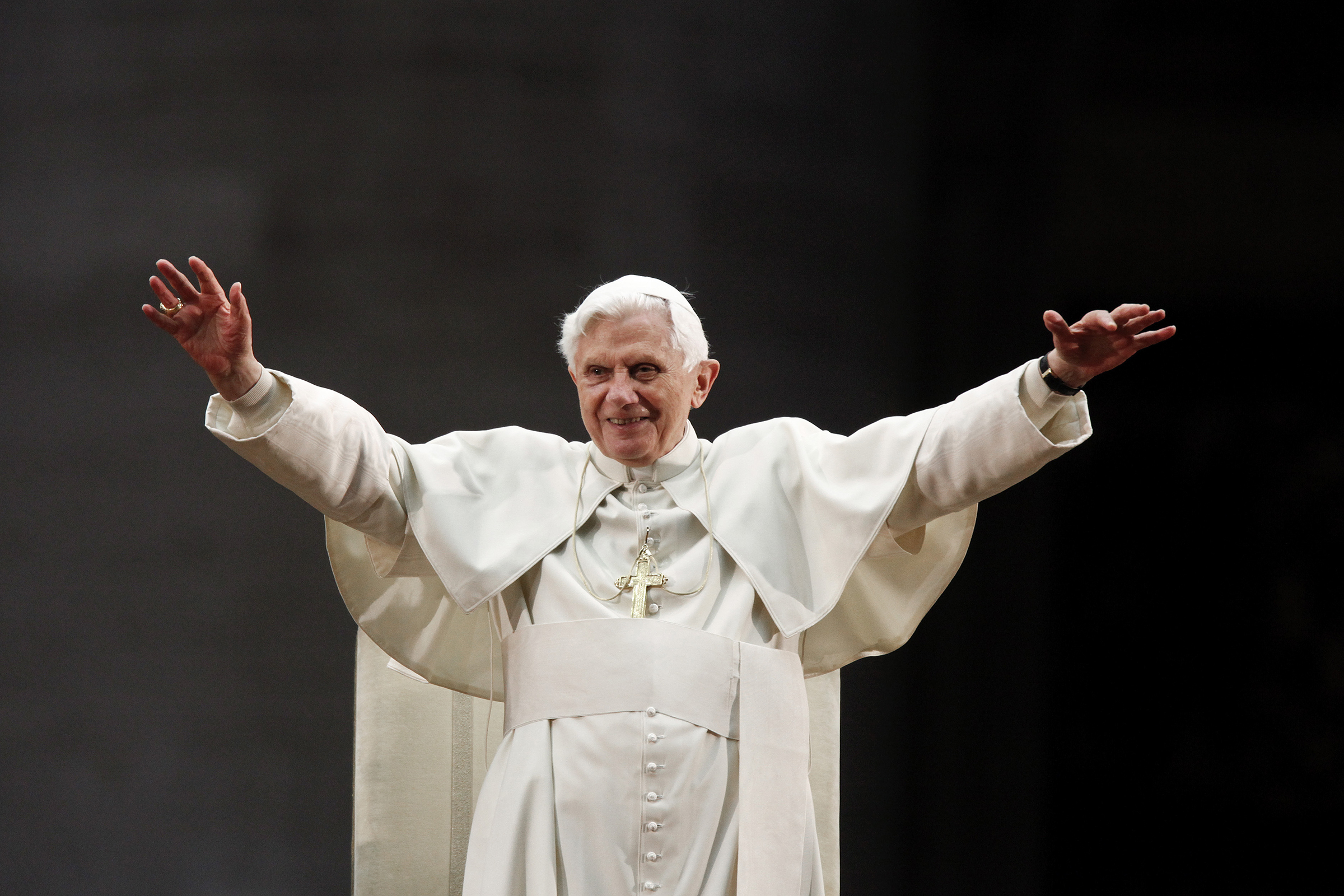
And certainly one should feel just a wee bit uncomfortable yelling out platitudes that smack of the dictatorship of relativism.  Didn’t some recent pope or cardinal say something against the dictatorship of relativism? Oh yea… I remember

We are building a dictatorship of relativism that does not recognize anything as definitive and whose ultimate goal consists solely of one’s own ego and desires.

The Diagnosis and the Cure: Benedict XVI and the Dictatorship of Relativism

Don’t tell me that you wont even consider the possibility that perhaps God wants everyone to obtain a liberal education at least to the extent possible according to the capacity of each.

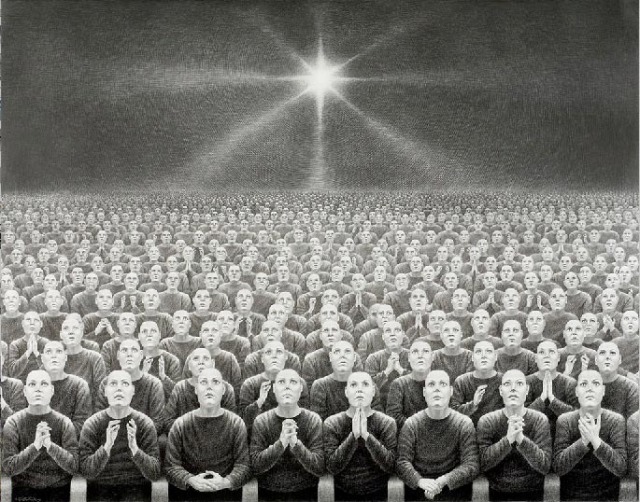
And, after all, we really ought to examine our lives like Socrates told us, otherwise we might never wake up and we will always be like these poor people.

Image result for cave dwellers socrates

(If you would like to know more about these poor cave dwellers you might enjoy this )

Maybe pursuing a liberal education is not only something that God has commanded, but perhaps it is also something that we must do because our very nature as human beings calls us to do this.

If liberal education is something that God commands, and is also something that our nature requires…woe to that man that refuses!

And if we are not true to our nature then we are not true to ourselves and therefore we are traitors. We are false to ourselves. This is just a terrible thing to be. Imagine waking up to this realization when it is too late to provide a remedy………ughhhh I shudder at the thought.

So where does God command us to pursue a liberal education?

Quite obviously he does so in the third commandment – when he says

Remember that thou keep holy the sabbath day. 9 Six days shalt thou labour, and shalt do all thy works. 10 But on the seventh day is the sabbath of the Lord thy God: thou shalt do no work on it, thou nor thy son, nor thy daughter, nor thy manservant, nor thy maidservant, nor thy beast, nor the stranger that is within thy gates. 11 For in six days the Lord made heaven and earth, and the sea, and all things that are in them, and rested on the seventh day: therefore the Lord blessed the seventh day, and sanctified it.

Now when St. Thomas Aquinas comments on this commandment he mentions right away that God clearly wants us to avoid servile work on the sabbath. This is quite clear. “Thou shalt do no work on it…”

Lest someone think that God wants us to be completely idle on the Sabbath, St Thomas quickly explains that the clear intent of God in this commandment is simply that we should avoid servile work for starters!

(I am not certain if these people are doing servile work or just standing there idly gaping)

But take a look at this – if this isn’t servile then I don’t know what is!

St Thomas explains:

“…We ought to avoid three things. The first is servile work…“Neither do any work; sanctify the Sabbath day” [Jer 17:22]. And so also it is said in the Law: “You shall do no servile work therein” [Lev 23:25]. Now, servile work is bodily work;whereas “free work” (i.e., non-servile work) is done by the mind, for instance, the exercise of the intellect and such like. And one cannot be servilely bound to do this kind of work.

As anyone must know by now, the work of liberal education is the very free-est kind of work that a man can do naturally speaking. I am not saying that God means that we should do nothing else on the sabbath than pursue liberal education. For example we should also go to church, perform works of charity and other such things. But isn’t it clear that He wants us to “remember” to spend time during at least one day of the week in order to satisfy the nature that He has given us?

He wants us to be men. He wants us to perfect to the best of our ability the nature that He has given us, so that we might be more disposed towards the grace that He wants to bestow on us  – namely Himself.

And lest we forget to do this He specifically says “remember,” because pursuing a liberal education is something that is very very easy to forget.

As a matter of fact, a liberal education is so easy to forget that one might not even remember what a liberal education is. What is it? How does one get one? How long does it take? Where is it found? What is its beginning? Where does it end?

But at least one thing is clear – to forget about getting a liberal education….to utterly omit to pursue one seriously…to neglect trying to obtain one for one’s own children…to simply not consider the question seriously…to dismiss the whole idea…to pursue other kinds of education to the complete neglect of a liberal education…to not pursue a liberal education as far as one is able…to prefer other kinds of education…to neglect to support liberal education in society at large…to show a lack of enthusisam for liberal education…to sneer at liberal education…to neglect to foster a love for liberal education…

To do any of these things seems like rather risky behavior in light of the third commandment.

Posted in classical education, education, Liberal Arts, Uncategorized | Tagged , , , , | Leave a comment

Whoops Honey, I think I Wrecked the Kids.

There is an unwritten rule in parenting that prohibits a parent from ever admitting that he has done irreparable damage to the intellectual formation of his children.

A parent might admit that he has spoiled his child, or perhaps has been too severe. But how many parents do you know that look back on all the educational choices they have made for their children and have said,

“Wow… did I ever make some stupid educational choices for my children or what! I mean look at them now. Their minds have been practically wrecked beyond repair!?”

I think the implications of this admission are just too horrible to think about. What would some of the outcomes be?  What are the symptoms of a wrecked mind?

I suppose a person with a wrecked mind might vote for politicians that refuse to obey the natural law. Or perhaps this person might live a life that is directly contrary to the moral teachings of the Catholic church. Or perhaps he would participate cheerfully in the dictatorship of relativism!

I just throw these three examples out – off the top of my head – without even really making an effort to be creative.

But I think they are quite apt.

I mean, when you think about it, why would someone participate cheerfully in the dictatorship of relativism?

But rather than admit that they have wrecked the mind of their children, most parents have an inbuilt system that will “kick in” and rationalize every educational choice that they have made almost without any conscious effort.

And this rationalization will shield a parent from the horrible realization that he or she really hasn’t a well-developed and “grounded” philosophy about education. It might even make a parent blind to the fact that he doesn’t even really know what an education is.

Consequently all his decisions, about education, were made in the dark. They were made on the spur of the moment; based on temporary feelings and passing desires. In most cases they were probably decisions based on the desire to please the child rather than to form him correctly.

I suppose a parent might not really think it is possible to wreck a child intellectually – even though he will admit that it is possible to wreck a child in many other ways.

For example serious musicians will always talk about the importance of getting just the right teacher. If one happens to choose the wrong teacher… and one happens to stick with that teacher for 10 years then… forget about it…you have wrecked your child’s musical chances forever.

But could it be that obtaining an excellent intellectual formation is more difficult than becoming a virtuoso violinist?

Just consider the staggering amount of intelligent reading one has to do. Think about the thirteen books of Euclid’s Elements that one has to study and learn proposition by proposition.

Think of all that Latin and Greek that one has to master.

Think of the 1000 works of imaginative literature with which one needs to nourish his imagination, feed the soul and purge one’s passions.

Think of all the work that one has to do to understand the natural world- so many insects to read about with Jean Henri Fabre and so little time!

What about all that Shakespeare to read and memorize!?!

Heck… Herodotus and Thucydides takes at least an entire year to read and by the time one is done- it is time to begin them again so that they might actually be understood the second time around!

Think of all that careful painstaking discussion that one has to have about every conceivable subject lest one does not live up to the Socratic exhortation to examine one’s life.

I could go on and on…we haven’t even gotten to Aristotle and St Thomas yet… and we can’t because strictly speaking we shouldn’t read these things until we are good and ready…at great peril to our own minds and the prospect of becoming wise one day.

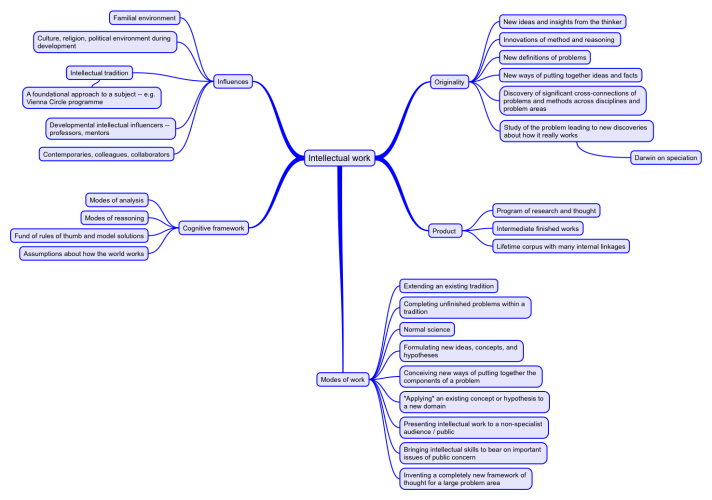
(I haven’t really studied this chart- but I thought it looked sufficiently complex to make the point that when I sit around thinking all day…it is not as easy as my wife might think it is.)

But the point is clear…all this intellectual work will take years and years.

Now add to this the fact that if one does not undertake all of these things with just the right teachers… well it will be hopeless.

Read any of these works with the wrong teacher and the student is set back. Nay perhaps even ruined!

There are so many errors to avoid, so many pitfalls. Never mind that all of it is very difficult to do in the first place!

The right teacher….a crucial choice!

And if one happens to accomplish all this but forgets to pay attention to the fine arts…singing two and three times a week learning Palestrina and Tallis and Gregorian Chant, acting in plays and learning to do calligraphy and draw at a tolerable level…. well now ….congratulations you are nothing but an educated barbarian!

There is no doubt about it, obtaining an excellent intellectual formation is as tough as it gets and if one does not start early and choose the right program and the right teachers and the right friends, and if one does not stick with it for years and years and years, then one might just as well forget about it.

But cheer up, because maybe you can say

“although I myself do not claim to be educated, at least I’m married to someone who is”

Or

“I happen to know someone who is educated”

Or

“at least I’m a Catholic and can get my answers from the priest…or the Bishop….or the Pope or, or … somebody.”

Posted in classical education | Tagged , | 4 Comments

Waking Up

As we were discussing the Decalogue in my Ethics class the other day, a question came up which struck me with new force. I say “struck me with new force” because I think the last time the question struck me with force was about ten years ago. And at the time the blow (of the question) was so forceful in my life, that I decided to participate in the founding of a small private institution of learning which would make it its sole business to make an attempt to address this question. Hence The Lyceum!

(This is a picture of The Lyceum- amazing how fashions change in such a short time!)

Before this, say 15 to 20 years ago, the question struck me periodically from year to year when I had the pleasure of teaching at my father-in-law’s school, The Trivium.

My father-in-law had been struck by the same question about 40 years before he founded Trivium in 1979, after he graduated from Harvard University and realized that education was not something that one gets at Harvard.

Photo

Here is a picture of Trivium School-Look at those chimneys!

This story about my father-in-law reminds me of the story I heard about Robert Hutchins, the young brilliant president of Chicago University who also apparently “woke up” one day after meeting Mortimer Adler, realizing that even after his brilliant academic career and his Ph. D., that somehow he managed to have missed his education as well- and so the two of them hatched the “Great Books” movement (along with lots of others – notably Prof. John Erskine of Columbia University and of course many others.)

I love stories about people who “wake up.” I think these stories are really testimonies to the fact that God is still perfoming miracles all the time, because for someone to have the humility to realize that he has not been educated despite his time at college and at the university, seems to me to be to be nothing short of a miracle.

As the great Heraclitus said “we should not act and think like those asleep.” And so following Heraclitus who is called “the father of the progress of the human mind,” my father-in-law spent a great deal of time answering the question in what does a genuine education consist? And in so doing he managed to wake up many others.

In asking in what does a genuine education consist? one should know that one is also asking lots of other questions, like:

  • what does one part of an education have to do with another? and
  • is one able to be educated if one only knows that things are so and not why they are so? and
  • are some minds only suited to one kind of learning but not to other kinds of learning? and
  • are all subjects equally worthy of study? and
  • Should each person pursue what he desires in education? and
  • is one able to skip various studies and pursue other studies? or is there a necessary path or course or curriculum that everyone must traverse if an education is what is being sought? and
  • Are the particular conclusions in one study necessary for other studies?
  • Is one able to understand, say, Theology if one does not understand, say, Mathematics?
  • Is one able to know oneself if one does not understand nature?
  • Is one able to be educated if one has ignored a concomitant formation in what is beautiful?
  • Is one able to be educated if one’s intellectual formation is divorced from his moral formation?

and of course many many more questions might be adduced… not least important

  • how is it that a human being is properly formed?

 That seems like a significant question. What if, say, a parent, or an educator, or a school, or even worse a prestigious and influential university did not know the answer to this question?

Wow! The consequences would be catastrophic, because what chances are there that the child or students or society which came under the influence of these would end up properly formed? Pretty slim I should guess!

What a shame it would be to “wake up” towards the end of one’s life and realize whoops! I think I missed my education. I guess my whole life has been based on ignorance….darn!

or whoops…I think I wrecked my children’s chances at being properly formed human beings….shucks! 

Posted in classical education, Liberal Arts | Tagged , , , , | Leave a comment

Shakespeare and Lying (A Useful Example)

I can’t remember which pope said something to the effect that a thorough reading of Shakespeare constituted a complete education in Ethics. I was struck by that today, reading Macbeth Act iv scene 3.

Ross enters fresh from Scotland and is about to tell MacDuff and Malcolm the horrifying news that Lady MacDuff, MacDuff’s son and houshold have all been put to the sword by Macbeth’s minions. And so this exchange is just a little perplexing:

MALCOLM
What’s the newest grief?

ROSS
That of an hour’s age doth hiss the speaker: Each minute teems a new one.

MACDUFF
How does my wife?

ROSS
Why, well.

MACDUFF
And all my children?

ROSS
Well too.

MACDUFF
The tyrant has not batter’d at their peace?

ROSS
No; they were well at peace when I did leave ’em.

This exchange provides us with an excellent opportunity to ask “is Ross Lying? Is he trying to shield MacDuff from the awful news of the death of all his loved ones?”

I think many students might be inclined to answer – rather quickly,

“Yes, Ross is lying, and in this case there is really nothing much wrong with lying.”

Upon closer inspection we see that Ross is not lying, but that the “peace” he speaks of is the peace of death. His words are not in themselves contrary to the truth although when he spoke them he no doubt understood how his hearers would interepret them in a way that was contrary to the truth.

A lie , however, requires that words be employed which are in fact contrary to the truth– as well as the intention to deceive. Simply deceiving another is not a lie all by itself.


Posted in Shakespeare | Tagged , , , , , | 3 Comments

γνῶθι σαὐτόν Know thyself

I am reading Macbeth with my ninth grade English Literature class and was particularly delighted with this little nugget of wisdom in Act 4 scene 2. Lady MacDuff has just discovered that her husband has fled and Ross is attempting to put the whole matter in the best light for her. After telling Lady Macduff that she must have patience, he says:

…I dare not speak much further; But cruel are the times when we are traitors And do not know ourselves; when we hold rumor From what we fear, yet know not what we fear, But float upon a wild and violent sea Each way and none…

A traitor is one who “betrays a trust” or is “false to a duty,” and Ross appears to be saying that those who do not know themselves become traitors.

You ask “Why does that follow? Why is it that one becomes a traitor who does not know himself?”

Well, if one does not know himself then one is not able to know the “trust” that he has been given.

If one does not know himself then he is not able to know whether there is a duty that he must perform stemming from who he is – and if one does not know his duty, he certainly does not have much chance of holding that duty as an inviolable trust. And if one does not hold his duty as an inviolable trust than it is easy to see, as night follows day, that he will most assuredly prove a traitor to his duty in short time. Thus it is that one who fails to know himself becomes the traitor. He beomes… a Benedict Arnold

Suppose one is a student and does not know himself to be a student. Perhaps he will fall prey to the many distractions and temptations that tend to take him away from performing his duties as a student. He might believe, for example, that he is really first an athlete and second a student. Or he might believe that he is first an actor or actress and second a student. Or he might believe that he must first cultivate his mind for the sake of a career. Does such a one betray a sacred trust?

What about a father who does not know himself as a father? Can we imagine that he might think of himself as first a business man and second a father? Or even, I suppose, a mother might believe that she is first a business woman and second a mother. Do people such as these remain true to themselves? Pollonius exhorts Laertes,

This above all- to thine own self be true, And it must follow, as the night the day, Thou canst not then be false to any man.

If for example man does not know that he is an “animal with reason” how will he know what his duties are? Could it be that man has a nature which is his sacred trust to live according to? Could it be that there is a duty that comes along with being a rational animal? What is that duty?

If a person does not answer these questions correctly, then he will not know that his life should be guided by reason. He will not know that his nature calls upon him to develop his reason to the utmost of his ability. He will therefore live his life according to other principles- in most cases he will follow his passions since that is the most prominent alternative to reason. And in following his passions, he will be like a boat that instead of being guided by the rudder of reason will instead,

float upon a wild and violent sea Each way and none

The passions may indeed be wild and violent giving no rest when left to themselves and given no rein by reason.

It’s kind of like the elective system of education that seems to be a universal fashion now in our schools and universities.

I was speaking to a professor at a nearby prestigious university and he remarked that it can be very painful to watch students navigating their way through college without any sense of conviction about who and what they are as human beings – but rather making every choice about their intellectual formation based upon fear for how they will make a living at some future date in an unknown economic environment.

Many students do appear to “hold rumor From what (they) fear, yet know not what (they) fear.” By holding rumor I take it to mean someone who thinks, speaks and acts according to an unsubstantiated report. And in the case of the modern student, he appears to think speak and act according to the rumor that unless he uses his high school and college education to prepare for a job through choosing some sort of career path very early– and specializing in that alone, then he will ultimately be a failure … a lost cause.

Whether his expectations are fulfilled is anybody’s guess given the volatility and ever changing market place.

But was he true to himself?

Or was he a traitor?


Posted in Literature, Shakespeare | Tagged , , | 5 Comments

Textbooks

My daughter read the last post about textbooks and fastfood restaurants  and pointed out that the article did not really contain many substantive reasons for why text books are boring. She wondered even about the point of the post.

I told her that my point was simply that I was bored of textbooks in general, and she replied “yes, but you didn’t really give any reasons.”

I had to agree – and was a little disappointed in myself for having simply stated a personal feeling  and nothing more. I was hoping that the association between textbooks and fastfood restaurants was going to strike my reader as particularly insightful perhaps even getting at the real problem with textbooks. But now I am not so sure, so maybe we had better start making a list of reasons why textbooks are boring. Here goes!

Substantive Reasons Why  Textbooks are Boring

  1.  Textbooks are not written by any certain person but rather by comittees and teams. I think this is a pretty good reason. Books are written by people whereas textbooks are written by groups. As we all know, interesting ideas are born from inidividual people, whereas ideas that are born from a group have been carefully sifted, and anything that is provocative or interesting has been painstakingly removed and gleaned out.
  2. Textbooks are written to create the illusion that a whole subject has been covered in an orderly manner. This too is an excellent reason. Having taught for quite a “chunk” of time now, I have always observed that students and teachers feel better when they have a textbook. The reason for this is that everyone feels like substantive learning is happening simply by turning pages! It is wonderful to go into class and say “please turn your pages to chapter 75” And “Voila” turning the pages is translated into actual learning. Parents and students and friends will say “where are you in the book?” And if you are lucky to have a teacher who knows how to turn the pages quickly, you will be able to say by the end of the year “we finished the whole textbook” and therefore “we have covered the material thouroughly” and therefore “we have learned the subject well!” And of course this illusion of learning is reinforced because the textbook comes with its own testing and assessment package. If students are able to perform adequately on these then – why of course – they have become wise indeed!
  3. Textbooks are very, very heavy. Now, I know this reason is not quite as good as the first two. But let’s all admit the fact that textbooks are usually quite heavy, and “the boring” is often associated with “the heavy,” even if you do grant some equivocation on the word heavy here. Perhaps we should put this reason in another list like “Why textbooks are bad for your health.” There is no doubt that many children hoisting around backpacks filled with 40 or 50 pounds of textbooks daily will suffer back problems later in life.
  4. Textbooks are purely pragmatic. I am not certain what evil genius invented the textbook but I am going to go ahead and pin this one on Sir Francis Bacon. As we all know Sir Francis Bacon was a really bad thinker and the cause of an indefinite amount of intellectual trouble in our world. I am not saying that he was necessarily a bad man, although I have some suspicions about him. I am only saying that he was really a bad thinker and has led millions upon millions over the cliff of pragmatism.

Image result for going over a cliff

You ask “what do you mean by the cliff of pragmatism?”

The cliff of pragmatism is nothing other than a “philosophy” that proposes that all learning and thinking is only valuable insofar as it allows us to make the world a “better place.” Now by “better place” no one ever means a place where everyone is wiser. No, “better place” means a world in which the most people possible are enjoying the highest possible material standard of living. In other words a world in which as many people as possible have a refrigerator that looks like this:

or this would sure would be nice!

Related image

Wow! As much as I do admire these refrigerators, I still maintain that Sir Francis Bacon was and still is a menace to right thinking and ultimately to the human race. You see – he did not know how to prepare the human being to benefit properly from his refrigerators. What does one put inside the refrigerator and what is it all for?

But this is all a digression. The point is that those who only think about things pragmatically do not care about things like “reasons” or “the why” or whether “something is just” but rather they care about results! And this is the kind of thinking that textbooks invariably encourage. (let’s not talk about textbooks on ethics and morality just now)

5. Textbooks are sleep inducing. I don’t need to explain this. How many students have fallen asleep literally with mouths open on their textbooks? The number is incalculable.

6. Textbooks base their success on the ability of students to memorize procedures and so called “facts” without necessarily understanding why the “so called facts” and procedures are the way they are.

7. Textbooks are written for teachers and parents and NOT for students. This is a little repetitive but bears repeating. Teachers and parents think textbooks are nifty because they look at the table of contents and assume that the title chapters are what their students will learn. But there are few who really consider “what it means to learn a thing”- and learning does not simply mean “covering the material” by turning pages. Nonetheless, teachers love textbooks because they say to themselves

“If I only turn all the pages, when the students are present, then I will have taught the subject”

And all of these reasons and more, add up to the fact that textbooks are boring. Maybe we should just get rid of them? Of course, I suppose, textbook authors and publishers would be angry about this proposal. After all they need to make a living as well.


Posted in Textbooks, Uncategorized | Tagged , | 1 Comment