Catholic Classical Education Is About Life

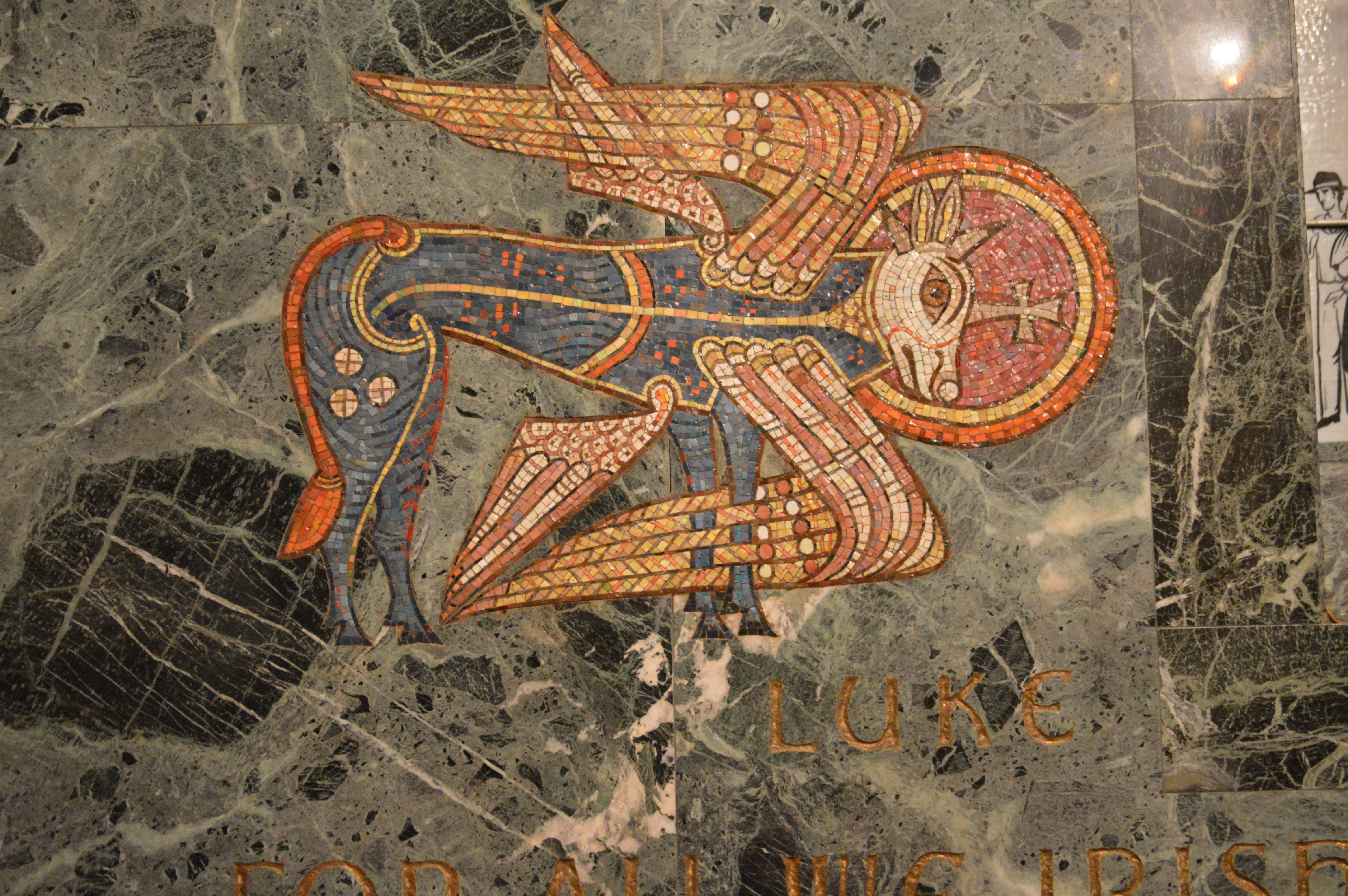
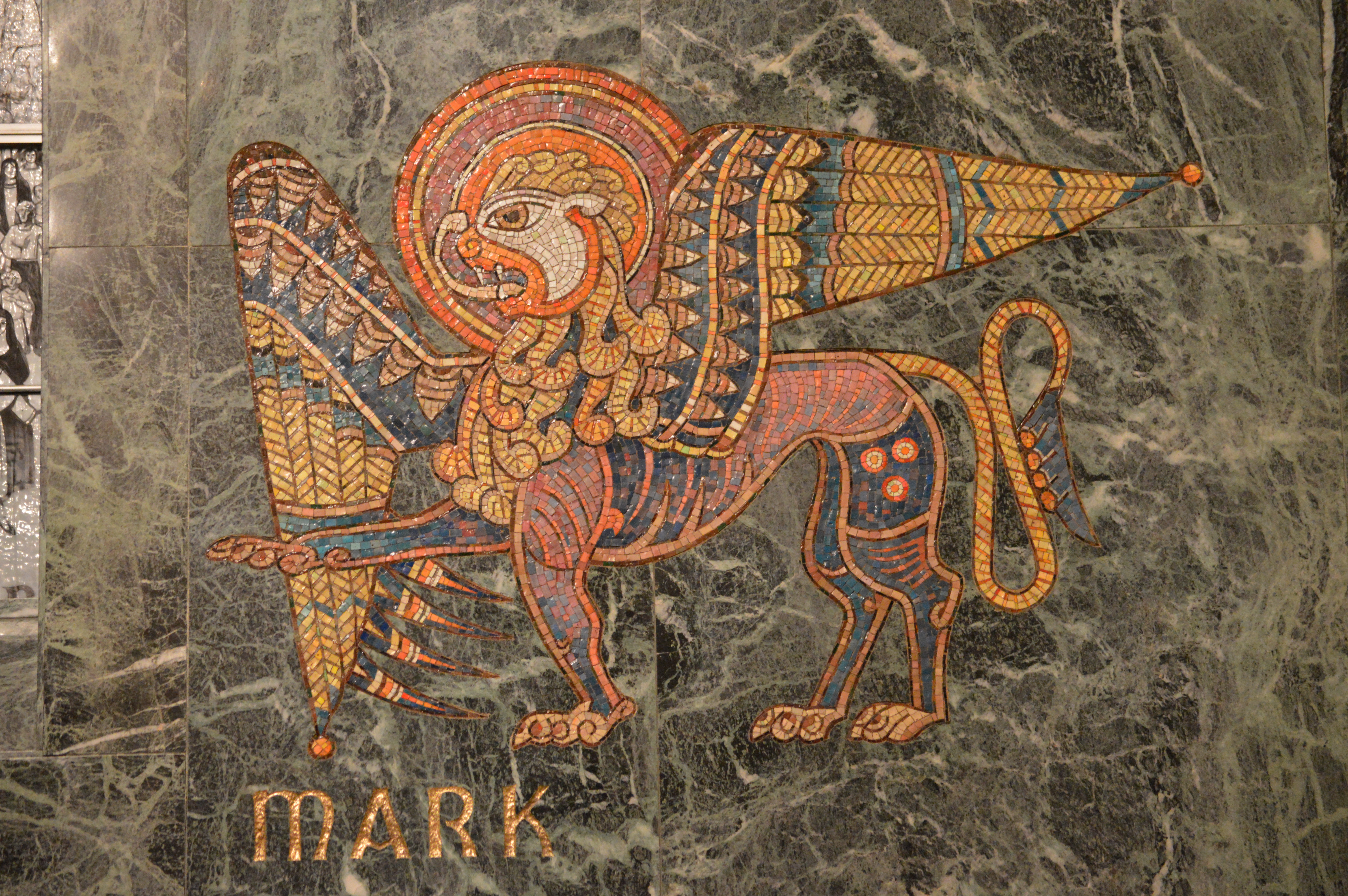
The Lion in the Crypt of The Basilica of the National Shrine of the Immaculate Conception.

The Lion in the Crypt of The Basilica of the National Shrine of the Immaculate Conception.

Catholic classical education, by the way, is primarily ordered to life. The whole point of classical education is life. To spread life. To increase life. To enrich life. To propagate and widen its extension. To deepen it and strengthen it. To perpetuate it and make it eternal.

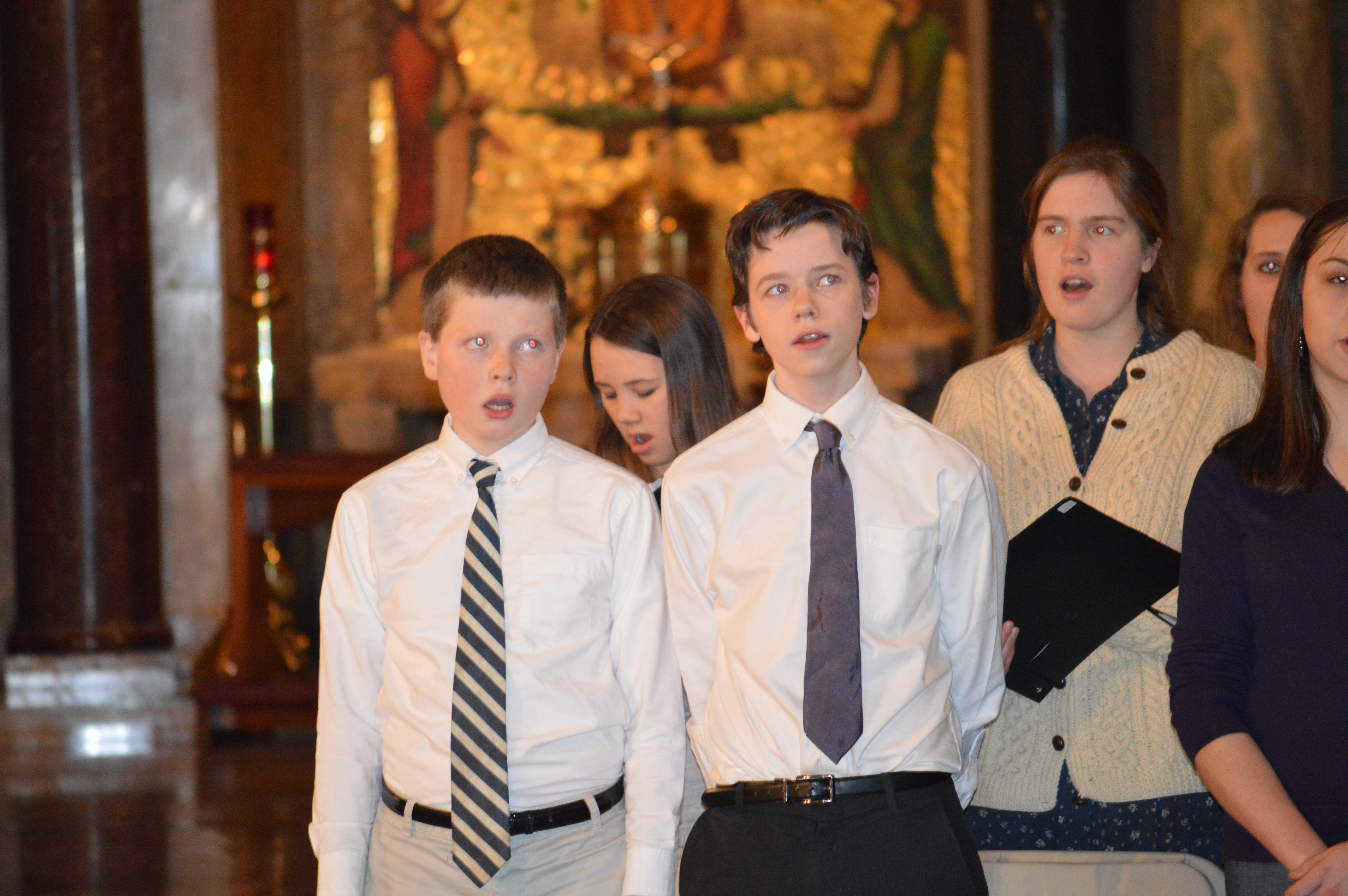
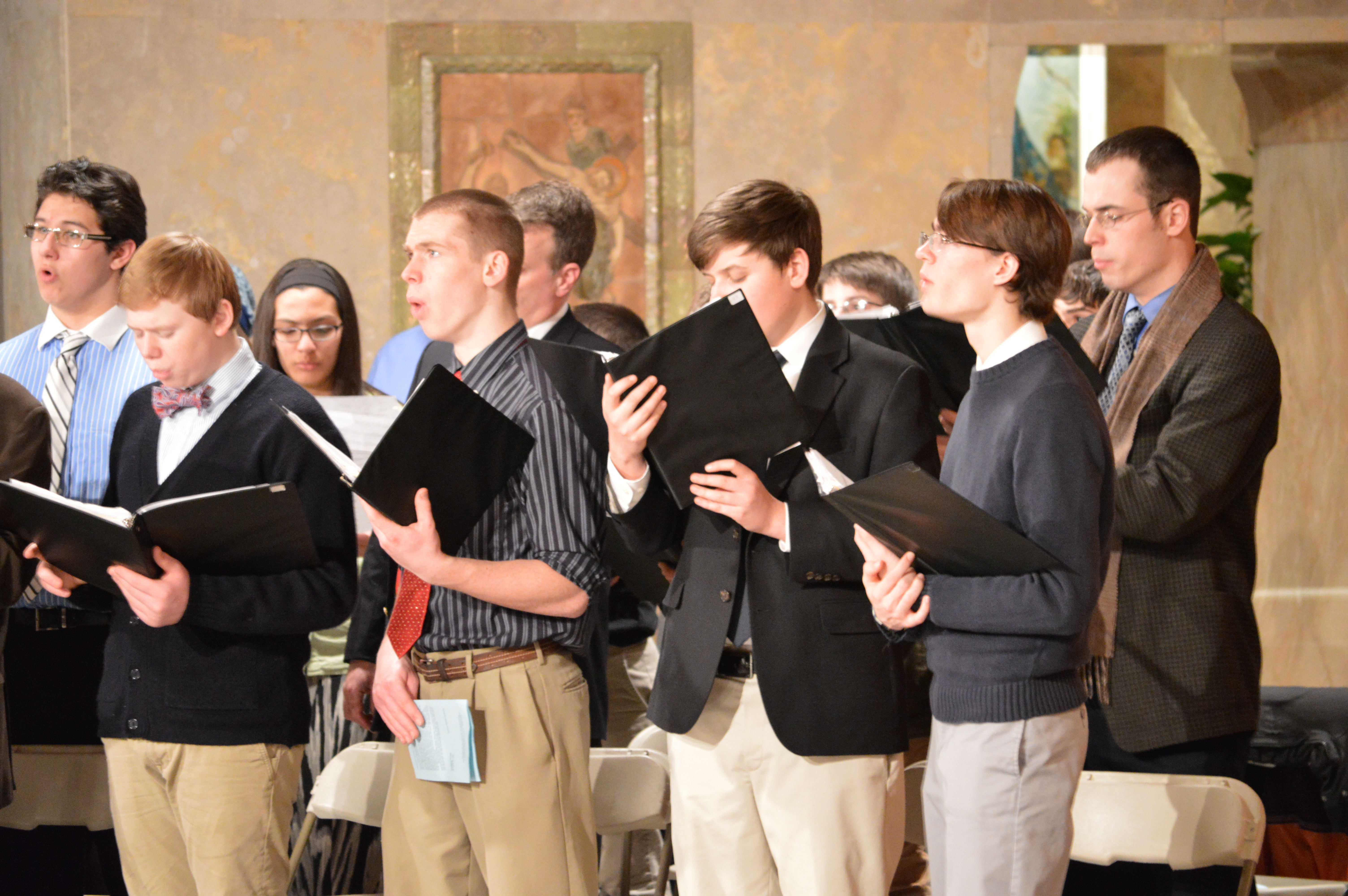
Of course life is also about singing- especially in the Crypt Church of The Basilica of The National Shrine of The Immaculate Conception!

Of course life is also about singing- especially in the Crypt Church of The Basilica of The National Shrine of The Immaculate Conception!

That in a nutshell is what Catholic classical education, otherwise known as Catholic liberal education, is all about.

Lyceum students also consider life to be a steady alternation between playing basketball, baseball and skiing!

Lyceum students also consider life to be a steady alternation between playing basketball, baseball and skiing!

The simple reason for this is that to know the truth and to live is the same thing. That is why Our Lord and Savior said in John 14:6,

I am the way, and the truth, and the life. No man cometh to the Father, but by me.

Mount Vernon would provide an excellent setting for Catholic Liberal Education.

Mount Vernon would provide an excellent setting for Catholic Liberal Education.

And Aristotle points out the equivalency of knowing and living in Book IX of his Ethics when he says,

…life is defined in the case of animals by the power of perception in that of man by the power of perception or thought; and a power is defined by reference to the corresponding activity, which is the essential thing; therefore life seems to be essentially the act of perceiving or thinking.

The Ox!

The Ox!

No wonder, then that of the over 1/2 million people marching in the recent March For Life, and the tens of millions that have marched in all the past Marches, for the last four decades, an enormous number of the marchers are Catholic students from Catholic schools, colleges and universities.

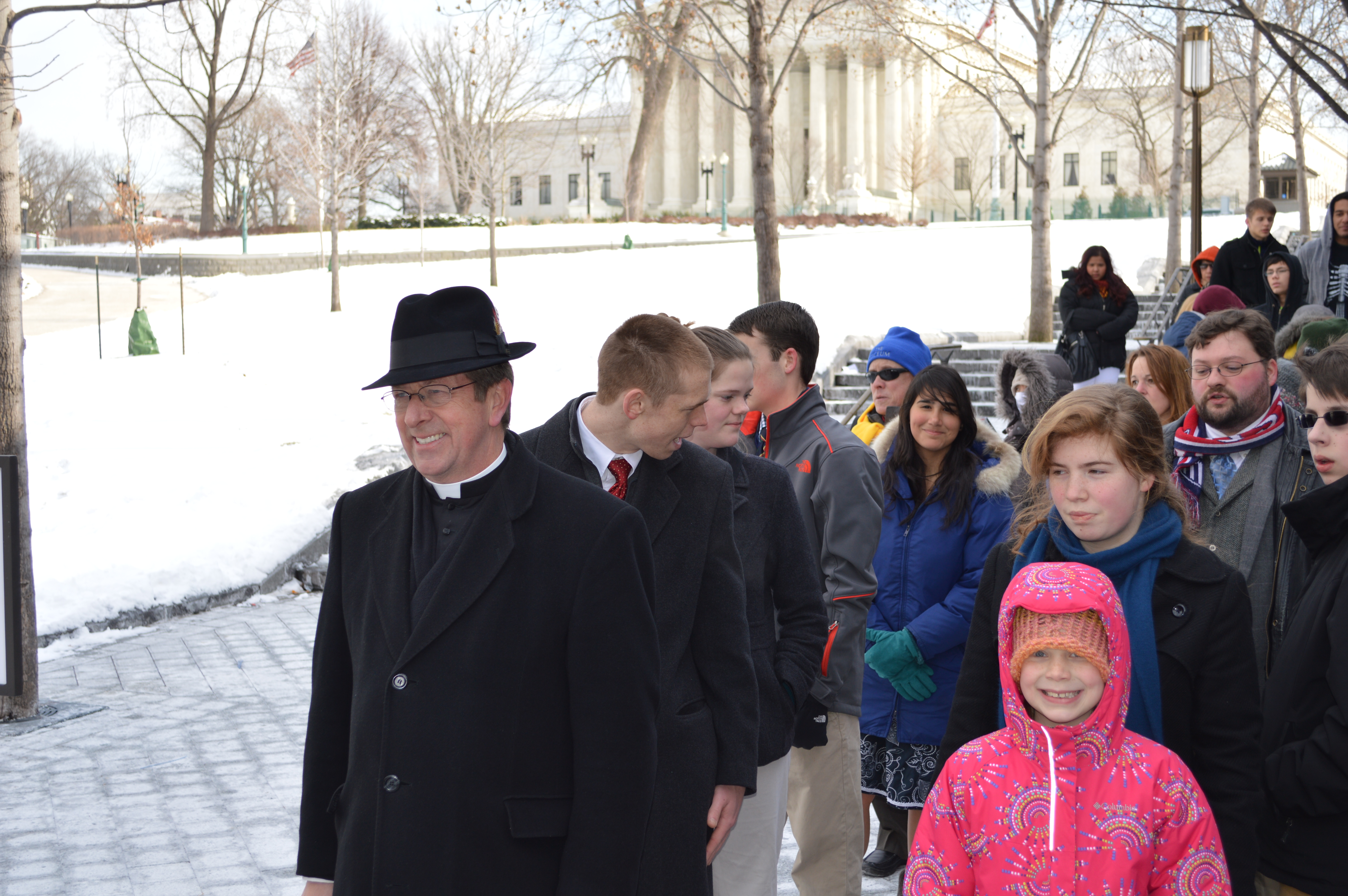
After the 2014 March For Life touring the Capitol

After the 2014 March For Life touring the Capitol

Education and life are inextricably connected and the opposite of one is the opposite of the other.

Now I am not certain that each and every student is aware of this fact – life, for many students, might seem to be something other than what happens at school. As a matter of fact, to many wholesome and well brought up students, what happens at school appears to be a sort of torture, suffering and death.

And it could be that this is exactly what many schools that have lost their intellectual moorings propose. These schools are like thieves that steal the intellectual patrimony of the students and instead give them the patrimony of slavery and death. Schools that have succumbed to the doctrines of utilitarianism, and therefore have handed their students over to the deadening task of mastering servile knowledge, are in fact a torture to any human spirit.

But Man is meant to be free. He is meant to live abundantly in the freedom that knowing the truth gives. As Our Lord says in John 8:32

And you shall know the truth, and the truth shall make you free.

and again in John 10:10 He says

The thief cometh not, but for to steal, and to kill, and to destroy. I am come that they may have life, and may have it more abundantly.

The Lyceum is dedicated to life.

This is the point of Catholic classical education. It is the only point really- that men can live life abundantly, happily, joyfully, in the fullness of truth in union with God.

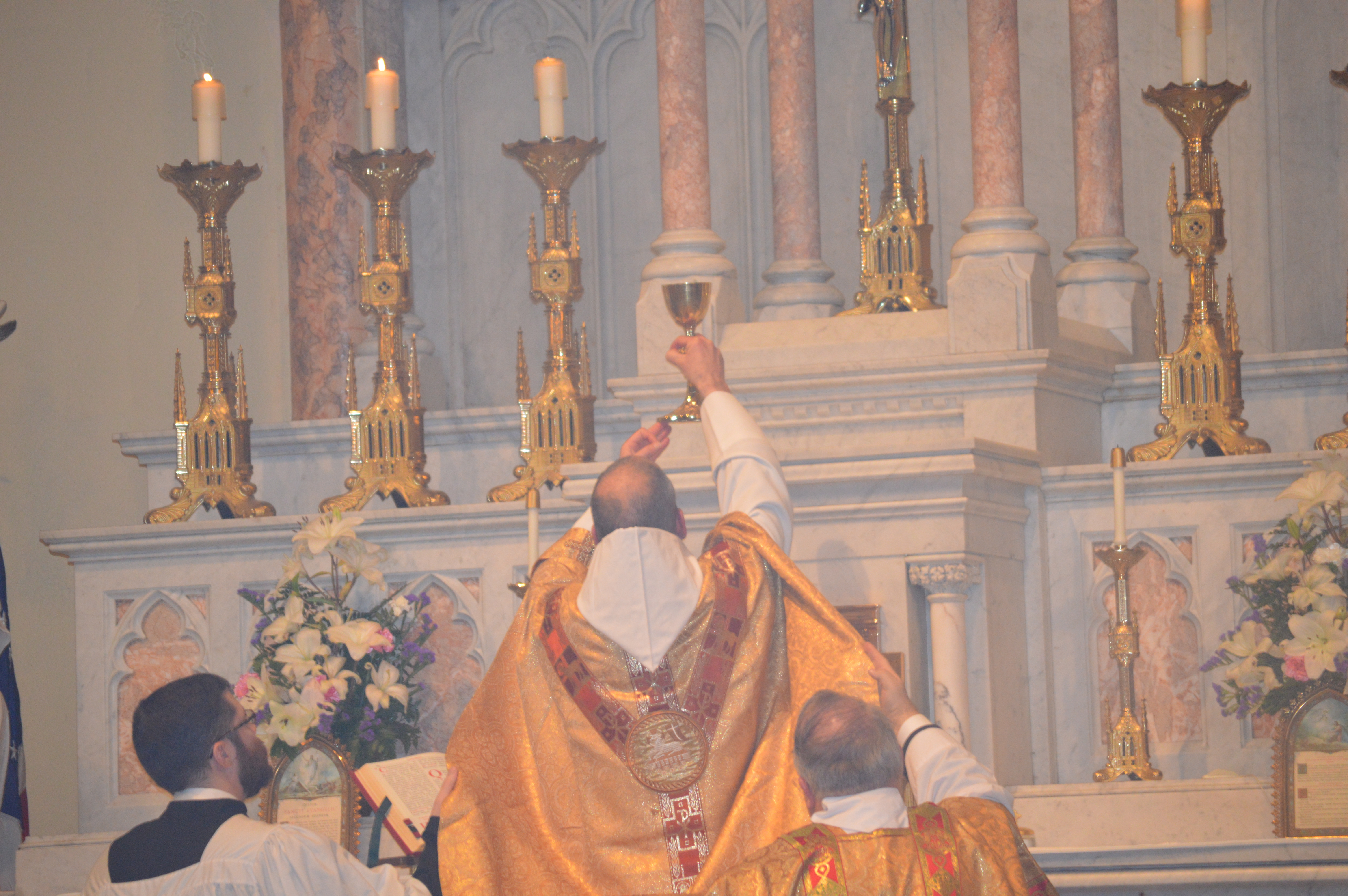
Abbot Anderson of Clear Creek Abbey

Abbot Anderson of Clear Creek Abbey elevating the Precious Blood- a fitting way to punctuate the March for Life!


Posted in classical education, Sacred Music, The Mass | Tagged , , , , | 1 Comment

The Lyceum Schola Cantorum On The March!

The Lyceum just returned from its annual pilgrimage to Washington D.C. to join with more than 500,000 other zealous people braving single digits to peacefully protest the Nation’s continued tolerance of abortion.

Tuesday January 21, 4:30 AM students and faculty board the Precious Cargo Luxury Motor Coach waiting for us at The Lyceum. Through the skillful and professional handling of John (our driver) the whole school, students, faculty and parent chaperones arrive in Washington DC around 2:30 PM. No small feat as many other buses from across the country had to cancel their trips due to the arctic temperature and sleety, snowy, icy road conditions.

Rolling up to the Hyatt Regency Hotel in Washington DC was exciting enough just because of the promise of the warm comfortable hospitality which it promised for weary travelers, but even more so for patriotic hearts who saw the illuminated capitol dome two blocks away gleaming through the snow!

After checking in and grabbing a quick bite, we again boarded the bus for a short drive to meet Archbishop Timothy P. Broglio, J.C.D in the chapel at his Archdiocesan Headquarters which are adjacent to the catholic University of America. The Lyceum has a special connection to the Archbishop because he was born and raised in Cleveland Heights and a good friend of our excellent ‘chaplain,’ (through whose intercession we gained this special audience).

Archbishop Broglio gave us an informal yet very informative talk about the role that his Archdiocese fulfills in serving all the branches of the military over whose Catholic members he is the shepherd. As a token of our thanks and appreciation the schola filled his chapel with the beautiful strains of Palestrina’s Sicut Cervus- which of course is everyone’s favorite motet- never grows old for some reason!

Thankfully John was waiting for us in the warm motor coach when we skated down the archdiocesan driveway, even though our next stop, The Basilica of the National Shrine of The Immaculate Conception, was only a hop skip and a jump away.

As anyone knows who has attended the  National Prayer Vigil for Life at the Basilica, it is hopeless to find a seat in an actual pew, even though it is the largest Catholic Church in the US as well as one of the ten largest churches in the world.

Nonetheless, we arrived far too close to the 6:30 pm Mass starting time to even hope for even standing space behind a pillar, much less a seat. Even though the standing capacity is about 6000 people there are only enough seats for 3500 – but my personal opinion is that there were more in the building than that! My advice to the boys with whom I had the pleasure of chaperoning was “do not make eye contact with the ushers” who were doing their best to sweep us out of the side aisles into some closet-like exit staircase. After making several attempts to sneak in and hug the walls or hide behind the pillars, we were ultimately no match for the basilica staff who were intent on making sufficient room in the aisles for the procession.

None of us had traveled the close to 400 miles to stand in a closet for three hours-and that is about how long Mass was. It took at least 40 minutes for the hundreds of clergy to simply process (through the aisles) to the sanctuary!

What a sight of clergy of every rank size and shape we beheld there, processing first down the aisle and then slowly up though the central nave of the basilica. Starting with the lowly acolytes, whom I suppose were composed of  box-loads of seminarians, then came buckets of deacons and then priests and abbots in all dimensions, then ascending there came bishops and archbishops both of the Eastern and Western stripe, then cardinals, although I don’t know how many, and even an Apostolic Nuncio to the Unites States of America. Finally came Cardinal O’Malley bringing up the tail end of the procession.

Now for those of us stuck in the exit halls we were only able to guess who was who by the procession of heads and various kinds of Berettas, miters and zucchettos. Occasionally by jumping and standing on tip-toes one was able to see a face or two.

The Basilica Choir of course was excellent. They began with a version of Laudate Dominum by Hans Leo Hassler. And then we sang nine verses of Crown Him with Many Crowns with a fairly lengthy interlude between each verse!

And then we sang an antiphon:

Lauda Jerusalem Dominum, lauda Deum tuum Sion: Hosanna! Hosanna! Hosanna Filio David.

alternating with the choir which sang at least five verses of Psalm 147 in chant and polyphony. And then the procession came to an end. The Mass then began!

After communion The Lyceum Schola Cantorum proceed directly to the Crypt church beneath which was also crowded with the subterranean worshipers who apparently had been watching the whole Mass on various screens. We needed to assemble there in order to get ready for our singing contribution to the National Rosary for Life which was to start at 10:00 pm. I think we collected ourselves in the Crypt at around 9:30.

The Crypt church of the Basilica is Shangri-La for any choir member.

Altar of Crypt church at Basilica in Washington stock photo, Basilica of the National Shrine of the Immaculate Conception in Washington DC showing interior of Crypt church built in 1920 by Steven Heap

It is incomparably better than singing in any large-tiled shower in which I have had the pleasure to sing. The Crypt Church is designed to transform the voices of ordinary human beings into those of immortals.

We sang Rachmaninoff’s Rejoice O Virgin Theotokos at the beginning and the Arcadelt Ave Maria at the end. Stunning! Beautiful!

Unfortunately, we did not record – but here is a pretty good rendition of the Rachmaninoff for those of you who are wondering,


Needless to say, we were all quite tired at the end of this first day of our pilgrimage and so when we returned to the Hyatt, I think most students resisted the urge to stay awake talking, knowing that they were to listen to speeches and march for Life in the cold AND sing at a solemn High Mass in the Extraordinary Form the very next day.

No rest, however, for the Gregorian chanters among us who had some work to do to put a little more finesse into the chant propers for the feast of Saints Vincent and Anastatius. Nothing beats having a Gregorian Chant party at the Hyatt Regency under the very dome of the capitol of our great nation. I think we practiced until midnight and no doubt our soothing tones crept through the walls of the entire hotel and lulled even the most fidgety of lodgers into a deeper and more peaceful sleep.

Now I will say that the March for Life was a thrill to join. For many long time marchers I am not certain that there was anything extraordinary about March for Life 2014 except that it was colder than any other in recent memory. For me it was as thrilling as the first March I had joined in the late 1980s. The sheer size of the crowd and the well-ordered ranks of marchers, the wholesome faces and spectacle of 1/2 million people peacefully protesting the greatest injustice of our time was fairly dramatic to say the least. Our new blue Lyceum hats and yellow scarves accentuated our own presence and I have no doubt were the reason that we returned to Cleveland with every student. I myself would have been lost had it not been for our ingenious color scheme. Perhaps most memorable to me was the sight of a dozen or fifteen strategically placed well-armed security forces placed at intervals on the steps of the supreme court building. Given that the March was largely composed of extraordinarily civil well-behaved Catholic and Christian students from The Lyceum, and Aquinas Academy and Holy Family Academy and Benedictine College and Christendom College and Franciscan University and Saint John’s Seminary and Mundelein Seminary and…. every Catholic and every Christian parish within a two day’s bus trip…the sight of these grim policemen guarding the supreme Court Building seemed disproportionately out-of-place.

The March for Life over, we then turned our attention to a quick late lunch before setting off on fairly short walk to Old Saint Mary’s Church on Fifth street. We arrived at 5:00 pm in plenty of time to rehearse for the 6:00pm evening Mass – the second annual mass in honor of the memory of Nellie Gray, sponsored by the Paulist Institute.

Now our illustrious choir director really had very little work to do given the fact that he had prudently and assiduously been preparing the choir for this occasion for several months in advance. Other than warming up, we were ready! And this was the program:

  • Procession- Ave Maria (J. Arcadelt)
  • Introit- Intret in conspéctu tuo sung beautifully by some of the Lyceum Female students and faculty (Mass of Several Martyrs)
  • Kyrie – Missa Brevis Palestrina
  • Gloria Missa Brevis Palestrina
  • Graduale Gloriósus Deus (Mass of Several Martyrs)
  • Alleluia Déxtera tua, Dómine (Mass of Several Martyrs)
  • Offertory Mirábilis Deus (Mass of Several Martyrs) and Victoria’s O Magnum Mysterium (for those of you wondering how we dared sing this- we argued that this was still appropriate liturgically anytime before February 2!)
  • Sanctus and Benedictus – Missa Brevis Palestrina
  • Agnus Dei  Missa Brevis  Palestrina
  • Communion – Et si coram homínibus (Mass of Several Martyrs) and Palestrina’s Sicut Cervus and the Victoria version of Iesu Dulcis Memoria!
  • Recessional – Cibavit Eos by Dr. Christopher Tye

For a full review and photos about the details of this Mass take a look over there at Rorate Coeli!  The Mass was beautiful and aside from the spiritual benefits that we received from singing and participating in Holy Mass, we were also just a little tickled by the notable priests who were in the sanctuary, like the executive director of ICEL, Monseigneur Andrew Wadsworth.

and the abbot of Clear Creek Abbey in Oklahoma!

Nonetheless, it was God to whom we directing our voices and we hope that those in the pew and assisting in the celebration of the Mass were uplifted through the glorious sound of the youthful voices of our choir.

On January 23, with our main work of marching and singing done, the school treated itself to a day’s worth of touring at the United States Capitol and Mount Vernon. No one can visit the Capitol without being struck with a sense of awe and pride at our nation’s founding vision and principles. A two-hour tour of the building itself is worth at least three weeks of classes in civics. Staring at the two wings of the Capitol gives rise to comments like “Oh…. so that’s what we mean when we say a bicameral legislature.”

The school received a flag that flew over the capitol from Ohio congressman Dave Joyce’s office. Congressman Joyce represents the county in which many of our families live and we were especially pleased to meet the congressman’s staff assistant Ken Callahan who is an old friend of one of our families.

Mount Vernon was impressive especially for the humility that it manifested in our first president. Although an extremely beautiful property, we were struck by the fairly simple brick mausoleum in which George Washington is buried.

Living as close as I do to the President Garfield Memorial, I was expecting something along the same lines:

George Washington apparently insisted that he be buried at Mount Vernon and not in the Capitol underneath the Dome, underneath the painting of his apotheosis on the ceiling of the Dome itself!

On the way back from Mount Vernon our Luxury Motor Coach stopped at the Lincoln Memorial and I couldn’t help but to think of how Mr. Smith felt when he visited.

I made a point to read the Second Inaugural address and especially the last paragraph where he says “With malice towards none…”

Truly remarkable place. Then we walked briskly through the Vietnam War memorial and touched some of the engraved names on the wall. This place is beautiful especially at night in the snow.

On the morning of January 24th, we spent about an hour and a half touring the National Gallery of Art. Now, as anyone knows the National Gallery is absolutely stunning and it would take at least two hours a day for an entire week to really just gain a cursory familiarity with its treasures. I made certain to see the Da Vinci!

And on the back of this painting is another beautiful painting

You can see the words “Virtutem Forma Decorat” which makes one wonder indeed about the what sort of woman the lady on the front really was.

Returning to the hotel one last time to collect our luggage, imagine my surprise when I saw a bottle of brut champagne in a bucket of ice along with a dish of fresh fruit and chocolates on my desk! Someone had remembered my birthday! It looked something like this:

Unfortunately we were already boarding the bus and so the best I could do was stuff the bubbly and the chocolates in my bag- and quickly consume the fruit. But from whom the mystery gift came I will always wonder.

We set off for our trip home making one final stop at Quantico Museum- the museum of the U. S. Marine Corps!

Apparently the museum has the same shape as the famous statue of the marines planting the flag at Iwo Jima.

Here it is- does that look the same?

Posted in ad libitum, beauty, Music, Sacred Music, The Mass | Tagged , , , , , , , | Leave a comment

Wisely and Slow: Salutary Advice For Students In The New Year

ROMEO O, let us hence; I stand on sudden haste.

FRIAR LAURENCE Wisely and slow; they stumble that run fast.

Students in general grow impatient with the advice of Friar Laurence. I don’t blame them. I, too, sometimes find myself wanting answers more quickly than the nature of this or that question allows. Anyone who has gone skipping through the Summa Theologica attempting to get a fast answer to some abstruse Theological question knows what I mean.

As a matter of fact anyone who has ever picked up the Summa Theologica without having read the major works of Aristotle should know what I mean – although in this case it is more forgivable.

Picking up St. Thomas at any time is probably a good idea, just as long as the humble reader is willing to take many things on faith, admitting his own ignorance rather than having the temerity to find fault with St Thomas.

But strictly speaking one should not read the Summa without having mastered, to some acceptable degree, the works of Aristotle. (i.e. from the Categories straight through the Metaphysics!)

So I don’t blame any student for indulging in what St Augustine condemns as a sort of curiositas – or to put it more unpleasantly – a perverse desire to know.

On the Trinity - WikipediaWhat’s more, the fact that students suffer from a ‘disordered desire to know’ is not entirely a fault stemming from their youth.  A fair share of the blame also lies squarely on the shoulders of the parents, teachers and the reigning educational establishment which all conspire with irresistible effectiveness in encouraging disorderly learning.

The ordinary parent is mostly (and understandably) concerned that his child be successful. A parent naturally wants to see his own child succeed in life.

Success is rarely measured in terms of wisdom.

The current prevailing fashion in education places a high value on productivity. The student is praised for his speed, accuracy and efficiency in “problem solving”, which as any Algebra teacher knows, does not require understanding.

As a matter of fact, the attempt to understand often gets in the way.

Why would anyone really want to know the meaning and significance of the terms “sine,” “cosine” and “tangent”?  No Algebra book makes an attempt to explain what “tangent” has to do with a real geometrical tangent. The meaning of these terms simply does not matter if the end one is pursuing is not understanding but productivity.

These days, by the time students have completed middle school they all seem to have received a completely upside down intellectual formation. That is, students now appear to learn everything backwards and in the opposite order that any particular field of learning ought to be learned.

Without having learned Grammar, Rhetoric and Logic they have instead received a complete indoctrination in the atomic theory.

They know about DNA, Quarks, Plasma, Black Holes, Anti Matter and Negative Energy- and all these things before they can even write a complete sentence!

In Mathematics they are familiar with the Pythagorean Theorem well before taking a single Geometry class.

They can invert ratios, cross multiply and alternate proportions without even being able to say what a proportion is.

SCARY!

Without having taken a single class in what the Greeks used to call “Arithmetike,”  they can talk about “numbers” positive and negative, “e”, “i” and “pi” and even the “square root of 2!”

They are blissfully unaware of the story of that unfortunate Pythagorean who was buried alive for his discovery of incommensurability.

But to get back to Friar Laurence, he says,

“Wisely and slow”

If we are to learn and obtain any wisdom ourselves, we ought to avoid the temptation to proceed swiftly.

The method of Catholic liberal education is absolutely contrary to the method of the world. The world would have children speed through text books and lessons  and books in the futile attempt to become “current.” Students are supposed to “get up to speed” and gain skill in surfing the waves of data that sweep in from the four corners of the globe with inexhaustible fury. The crown of victory goes to the fastest.

But to run fast, that is the very characteristic of youth. And unfortunately like Romeo this sort of behavior can lead to very real peril in the physical life but even more disastrously in the life of the mind.

The method of Catholic liberal education is the method born from leisure.

It demands quiet. It demands slow reading, speaking and listening.

It demands lengthy discussion.

It demands orderly procedure.

Wisely and slow.

Posted in classical education, Liberal Arts, Mathematics | Tagged , , , , | 4 Comments

“Make Your House Fair” By A Catholic Liberal Education!

Christmastide provides us with an excellent opportunity to reflect on many things surrounding the birth of Our Lord not the least of which is Catholic Liberal Education.

It is, of course, through education that the mind is disposed towards grace. It is specifically through a Catholic liberal education that the minds and hearts of the young are formed into more fitting homes for the arrival of Wisdom Himself.

I suppose some might use the fact that our Lord arrived in a stable to play down the importance of making a suitable home, in their souls, for the arrival of Jesus. But this is not a good interpretation of the stable. One would not want to say,

“Jesus was born in a stable, so certainly he will also not hesitate to be ‘born in my mind’ even if is a veritable intellectual pig pen!”

No, it would be far better for us to say,

Make your house fair as you are able, trim the hearth and set the table!

Granted of course that Jesus, on his part, is ready to meet each of us wherever we happen to be, but that doesn’t mean that we, on our part, should not try to the best of our ability to give Him a fitting reception.

And that is the point of a Catholic liberal education-to do what we can on our part to give Jesus a fitting reception into our hearts. And by “on our part” we might say in virtue of those gifts that we have received through our human nature, as opposed to the gifts that we have received through our participation in the sacramental life of Christians.

And everyone is capable of engaging in a Catholic liberal education to a greater or lesser extent. As a matter of fact, although it pains me to have to point this out, I think we have to admit that acquiring a Catholic liberal education is a requirement of our nature.

It is an obligation placed on all.

This is what Robert Maynard Hutchins was getting at when he said

The liberal arts are not merely indispensable; they are unavoidable, Nobody can decide for himself whether he is going to be a human being. The only question open to him is whether he will be an ignorant, undeveloped one or one who has sought to reach the highest point he is capable of attaining. The question, in short, is whether he will be a poor liberal artist or a good one.

Now there are some who perhaps still think that I am saying that Jesus prefers the company of the educated and the intellectually gifted. As if to say He only came for the wise men and not the shepherds.

But don’t tell me that those shepherds were hell-bent on avoiding liberal education like so many of our contemporaries. It wasn’t as if they were keeping watch in the fields by night completely distracted, “wired” and engrossed in the ugly music or “social media” of their day!

The angel who said “fear not” would not have said “fear not” if they were in fact actively engaged in pursuits which were adverse towards the arrival of wisdom! The shepherds did not reject liberal education and substitute the pursuit of temporal goods in its place.

I take it as a self-evident matter that those shepherds were practicing liberal education to the utmost of their ability! When they were not looking in awe at the stars they were probably soothing their souls with beautiful music on their pipes. They lived the  Quadivium!

You laugh and say I stretch the point.

No, listen to the wise Duke  in As You Like It as he describes the education of those who, like the shepherds, might be said to be in a certain kind of “exile” but who manage to find “tongues in trees,” and  “books in the running brooks, Sermons in stones, and good in everything”!

Now, my co-mates and brothers in exile,
Hath not old custom made this life more sweet
Than that of painted pomp? Are not these woods
More free from peril than the envious court?
Here feel we not the penalty of Adam,
The seasons’ difference; as the icy fang
And churlish chiding of the winter’s wind,
Which when it bites and blows upon my body,
Even till I shrink with cold, I smile and say
‘This is no flattery; these are counsellors
That feelingly persuade me what I am.’
Sweet are the uses of adversity,
Which, like the toad, ugly and venomous,
Wears yet a precious jewel in his head;
And this our life, exempt from public haunt,
Finds tongues in trees, books in the running brooks,
Sermons in stones, and good in everything.
I would not change it.

And this, our life, exempt from public haunt, finds tongues in trees, books in the running brooks, sermons in stones, and good in everything.  - William Shakespeare

Those shepherds were following the advice of Heraclitus better than most when he said

“wisdom is to speak the truth and to act, according to nature, giving ear thereto”.

The shepherds were doing the best they could in developing their hearts and minds and the gifts of human nature in the circumstances in which they were placed, and consequently they were rewarded with Wisdom.

All the more should we!

Posted in classical education, education | Tagged , , , , | Leave a comment

Pagan Literature: The Milk of Catholic Liberal Education

For whereas for the time you ought to be masters, you have need to be taught again what are the first elements of the words of God: and you are become such as have need of milk, and not of strong meat. (Hebrews 5:12)

There are some things in scripture which are like “strong meat.” The prologue of Saint John’s Gospel for example, or when Saint Paul says,

Although he was a Son, he learned obedience through what he suffered; and being made perfect he became the source of eternal salvation to all who obey him, being designated by God a high priest after the order of Melchizedek.

Strong meat indeed. He continues

About this we have much to say which is hard to explain, since you have become dull of hearing.

Now, I know that in comparison to these passages there are others in scripture which are much easier to understand. These passages are “milk.”

A new commandment I give unto you: That you love one another, as I have loved you…

A passage much more readily understandable, though still inexhaustible in its depth.

So I can understand that Saint Paul’s use of the meat and milk metaphor is primarily referring to the relative accessibility of various teachings in Scripture. Some teachings are meat and others milk.

But with the “rule of Charity” with which Saint Augustine bids we interpret all Scripture, I would  like to extend the metaphor.

Before doing so we might pause just a little to appreciate Saint Paul’s use of the food metaphor in his teaching. I find this comparison absolutely spot on, compelling, delightful and persuasive. Although I will count myself like the Hebrews whom St. Paul justly rebuked for their slowness and dullness, nonetheless when St Paul talks food I am completely on board-he could not be any clearer!

In other words, to those of us who are not quite ‘there yet’ with respect to our spiritual understanding, to those of us who are not intellectually mature, St Paul says

You need milk, not solid food; for every one who lives on milk is unskilled in the word of righteousness, for he is a child. But solid food is for the mature…

And this brings me to my point.

In comparison to scripture, which in its transcendent wisdom is all meat, even the very best of Greek literature and philosophy might certainly be compared to milk!

Ordinarily, I would prefer to compare the literature of Homer, Sophocles, Aeschylus and Euripides to a fine Bordeaux. Among the pagan authors Homer would be the Chateau Margaux!

The literature of the Greeks is wine in contrast to the tasteless literature of our own contemporaries which could only be compared to water- although I hate to insult water by the comparison. (Would Diet Soda work better?)

Nonetheless the wisdom of man is, comparatively speaking, childish as it stands to the wisdom of God.

A man is called childish compared to God; just as a boy, in comparison to a man. (Heraclitus, DK 79)

And so it seems to me that the wisdom of man found predominantly in Greek literature is aptly compared to milk- the stuff of which children are made.

I don’t mean to disparage the wisdom of man by calling it milk. Every child needs milk and so every intellectual child needs Greek literature.

I don’t know much about milk except that somehow if a child drinks enough of it and for a long time, he will soon be ready for meat and other solid food. Don’t ask me how. Milk is wonderful, there is evidently something incredibly nourishing about it. The point is that the literature of the great pagans stands in just the same way to the developing souls of men as does milk to the bodies of children.

And so, as St Thomas points out,

…it should be noted that sacred doctrine is, as it were, the food of the soul: ‘With the bread of life and understanding she shall feed him’ (Sir. 15:3) and in (24:29): ‘They that eat me shall yet hunger, and they that drink me shall yet thirst.’ Sacred doctrine, therefore, is food and drink, because it nourishes the soul.

Therefore it seems to me that should one wish to dispose himself towards the nourishment of the solid food that is Sacred Doctrine, should one wish to feast on the meat of Holy Scripture, one could do no better than to imbibe at length, and overtime in great quantity, the milk that is pagan Greek literature.

Posted in classical education, education, Homer, Sacred Doctrine | Tagged , , , , , | Leave a comment

The Elective System in Education:”You Cannot Train Everybody For Everything”

Whatever one may say about our twenty-eighth president’s views about The United States role as promoter of democracy and capitalism and interventionism throughout the world, I think we have to give him full-hearted applause for his views on authentic liberal education.Thomas Woodrow Wilson, Harris & Ewing bw photo portrait, 1919.jpg

Take this for example,

When you say a young person must be prepared for his life-work, are you prepared, is he prepared, are his parents prepared, to say what that life-work is going to be?

The answer to this is NO!

He proceeds,

Do you know a boy is going to be a mechanic by the color of his hair? Do you know that he is going to be a lawyer by the fact that his father was a lawyer? Does any average and representative modern parent dare to say what his children are going to be?

Again the answer to the first two questions is “no” and “no,” but there certainly are more than a few average modern parents who do in fact dare say what their children are going to be, or at least dare to say what their children wont be. Witness the shortage in religious vocations for example.

Wilson hits the nail on the head when he says,

My chief quarrel with the modern parent is that he does not know, and that he hands that question over to the youngster whom he is supposed to be advising and training.

The elective system of education which began in the university (where it properly belongs), and crept back into the college and has now permeated most high schools and is even seeping into (if you can believe it!) the primary school, is an exact exemplification of what Wilson is saying.

These days parents say to their children,

“Son, daughter, you must be successful in life. I don’t know what you are going to be or how you are going to accomplish this. I who am older and wiser than you don’t know how you should be educated. I don’t know what precise path you should take. I will not prescribe a certain path for you to follow. No… making these important decisions  about your life and your success must all be left up to you who are relatively ignorant about all things. Every choice about your intellectual formation must be made by you according to your own whims and passing fancies.

That is what the elective system is isn’t it? I just can’t get over how silly it is on the face of it. It represents a complete abdication of responsibility  on the part of those who are supposed to know better.

It would be like a pediatrician saying to a child ,

As your doctor I recommend health to you. But what health is and how you should acquire it is completely up to you. You must make your own diagnoses and choose your own prescriptions.

You might think that this comparison is too strong.

You say,

Yes- that would be ridiculous for doctors to let their patients diagnose themselves and write their own prescriptions. But the health of the body is a very delicate and important thing. There are very precise methods, rules, and best practices that must be adhered to in order to obtain and maintain health.

But Socrates would reply,

What is more important, the health of the body or the health of the soul? Which is more easy to achieve? If the health of the body requires certain precise methods and practices, how much more would the health of the soul require these!

It is not difficult to understand why parents abdicate their responsibilities as primary educators and why as a consequence, the children themselves, or rather the passions, whims and fancies of the children, become the primary architect of their own intellectual formation. The reason is that many parents no longer know what an education is. And so they substitute the imagined idea of their child’s success in a career, a career which they know not, for education.

This unknown career becomes the child’s purpose in life, and the school is asked to educate the child in order to make him “college and career ready.”

As Wilson says

“…when he says he wants his son’s training suited to his purpose of life he must admit his son has no purpose in life. Then we are asked to suit our processes to this undestined youth.”

Now this is a predicament. The school must educate children to be successful for a myriad unknown careers. Wilson write about the state of education in the early part of the twentieth century,

“With this complexity, what has the modern school attempted to do? It has attempted to do everything at once. It has said: Here are a lot of boys and girls whose future occupations we do not know and they do not know. They must be prepared for life. Therefore we must prepare everybody for everything that is in that life. We haven’t found it amusing. We haven’t found it possible. We have attempted it and we know we have failed at it. You cannot train everybody for everything. Moreover you are not competent to teach everything. There is not any body of teachers suited in gifts or training to do this impossible thing. Neither the schools nor those who guide them have attempted to make any discrimination with regard to purpose or to settle upon methods which will promise some degree of substantial success. That is the situation we are in.”

Wilson said this in 1909 speaking to the New York City High School Teachers Association.

More than a century later …. progress?

Posted in classical education, college, education, liberal education, Modernists | Tagged , , , | 5 Comments

Homer Sightings

Image result for souvlaki

Souvlaki!

We all know that Liberal education is what enables a person to become wise to some extent. Without pursuing it to the best of our abilities, without becoming acquainted with the tradition of the West, without receiving and being informed by the intellectual patrimony and civilization to which we are heirs, we must necessarily practice the liberal arts badly as Robert Maynard Hutchins suggests in his excellent essay entitled The Great Conversation.

 “As we live in the tradition, whether we know it or not, so we are all liberal artists, whether we know it or not. We all practice the liberal arts, well or badly, all the time every day. As we should understand the tradition as well as we can in order to understand ourselves, so we should be as good liberal artists as we can in order to become as fully human as we can.”

Now that is pretty powerful isn’t it? Hutchins sticks it to us straight between the eyes. We don’t have a choice about being liberal artists.

Being a liberal artist is not an elective. But being a bad one is.

Yikes!

Liberal education enables one to participate intelligently in a conversation that has been taking place over the course of about 4000 years. As Hutchins says in the very first sentence,

The tradition of the West is embodied in the Great Conversation that began in the dawn of history and that continues to the present day.

And it is liberal education that enables one to become an active participant in this conversation!

But what does this all have to do with souvlaki?

Well, imagine how pleased I was to read this in the Wall Street Journal (by Stelios Bouras November 13 2013):

Homer refers to souvlaki in the Iliad and the Odyssey. So does Aristotle in his writings, while there are archaeological finds suggesting that the fast-food souvlaki stand may have been doing business as long as 3,500 years ago.

cat

(I think the pita is simply a convenient souvlaki delivery vehicle)

Not being the sort of person that believes everything in print, I of course used my powers of critical thinking and judgment to determine whether Homer really did refer to Souvlaki and to my delight I quickly found this passage in book II of the Iliad,

So he (ED. Chryses) spoke in prayer, and Phoebus Apollo heard him.  Then, when they had prayed, and had sprinkled the barley grains, they first drew back the victims’ (ED. Oxen or bulls or rams or) heads…and flayed them, and cut out the thighs and covered them    [460]  with a double layer of fat, and laid raw flesh thereon. And the old man burned them on stakes of wood, and made libation over them of gleaming wine; and beside him the young men held in their hands the five-pronged forks.  But when the thigh-pieces were wholly burned, and they had tasted the entrails, they cut up the rest and spitted it,    [465]  and roasted it carefully, and drew all off the spits.  Then, when they had ceased from their labour and had made ready the meal, they feasted, nor did their hearts lack anything of the equal feast..

which of course is an obvious reference to souvlaki which is nothing other than small pieces of tender succulent meat skewered or spitted on small stakes or spits or what-have-you.

I thought to myself how prescient of me to point out that Homer is the teacher of all men  in my very last post on November 10! And what is more I distinctly remember saying,

“…in reading Homer one is educated in every aspect of life and the world; he is educated in ethics, political science, the philosophy of nature, worship, the fine arts, the soul, the family, friendship, marriage, architecture, and much, much more….even cuisine!

In honor of Homer I intend to go out and get myself some souvlaki as soon as possible!

The great conversation doesn’t consist in words alone!

Posted in ad libitum, Dinner, Homer, Homer Sightings, Liberal Arts | Tagged , , , , , | Leave a comment

Homerus Omnes Docuit

Every serious discussion about Catholic Liberal Education (which I call “Catholic Classical Education” sheerly for marketing purposes) must perforce dwell at considerable length from time to time on Homer and his works- especially the Iliad and the Odyssey.

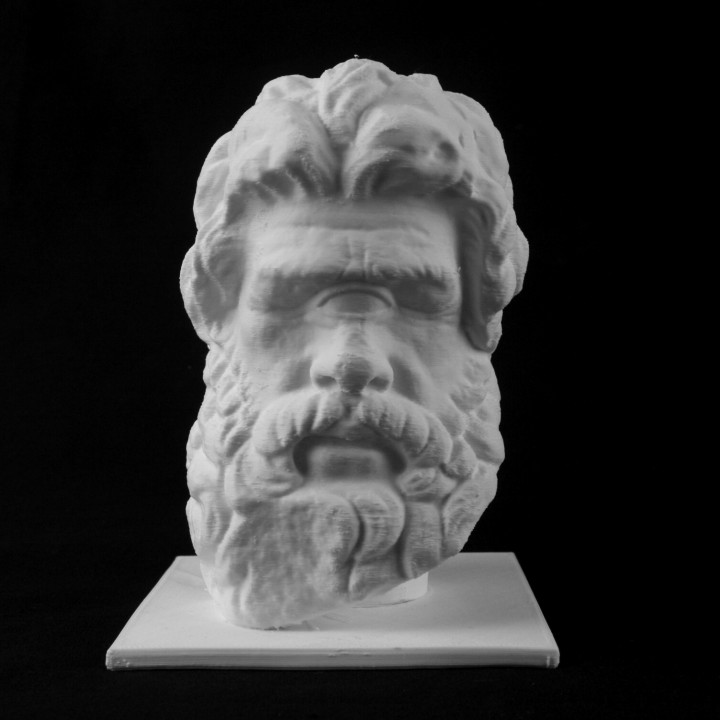
Homer British Museum.jpg

And this is because, as someone said long ago,

“Homer is the teacher of Greece”

Now let’s indulge ourselves in a little syllogism with a large conclusion.

  1. Homer is the teacher of Greece.
  2. Greece is the teacher of the world, that is Greece is the teacher of all.

Therefore Homer is the teacher of all!

That little switch in the second premise is of course purely for reasons of allowing us smoothly to support the title of this post. But it certainly is a large conclusion isn’t it?

Homerus Omnes Docuit!

Sometimes one meets a person who has awakened late to the realization that attaining a liberal education is an obligation that human nature places on each person. And this is of course a wonderful thing to see in anybody. It is never too late to realize this- although admittedly those who realize it earlier have a small head start. Nonetheless, like the parable of the workers in the vineyard, there are many stories of those who have commenced their own liberal education at the “eleventh hour,” so to speak, for whom the rewards of wisdom have equaled or even surpassed those who may have started in their childhoods.

Now, I am not endorsing death bed conversions to liberal education. My own livelihood as a teacher at a classical school depends on a fairly early realization that all children should have a liberal education. But in a spirit of snootiness, I submit the parable as a consolation for all of you “Liberal Education Johnny Come Lateleys” just to bolster your spirits.

Nonetheless, the question arises for the person who suddenly realizes,

“I have completed my education, but miserabile dictu! I am not educated!”

This person is blessed. What humility! I have even heard stories of highly degreed people that make this realization. It may not be true but I like to think that Robert Maynard Hutchins was such a person, perhaps through contact with people like Mortimer Adler.

There are many such people, and inevitably among the first thing they think to themselves is,

I need to start reading! But where shall I begin?!?

To which we reply with confident placidity:

Homer, of course!

As a matter of fact, I think I would just go ahead and put the Chesterton down. One would not want to go to one’s grave having read Chesterton and not Homer. What a spectacle that would be. Imagine having to explain that one to St. Peter!

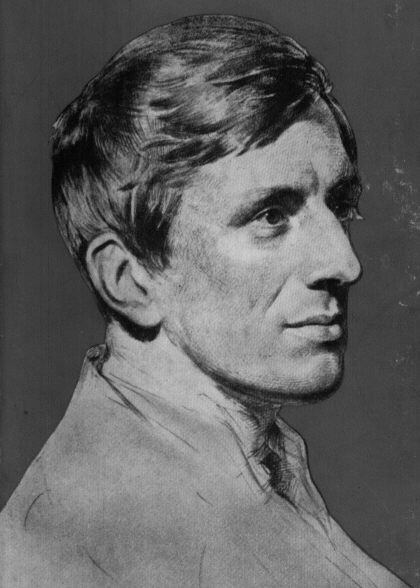
As if to make the very point that I am making, Pope Emeritus Benedict XVI went ahead and beatified John Henry Cardinal Newman in 2010!

Now you may be asking yourself, “What does the beatification of Newman have to do with reading Homer?”

Well, the connection is fairly plain for anyone who has eyes to see and ears to hear. Listen to Newman (whom I think we should just go ahead and call “the Apostle of Liberal Education”),

The great poet (Homer) remained unknown for some centuries,—that is, unknown to what we call fame. His verses were cherished by his countrymen, they might be the secret delight of thousands, but they were not collected into a volume, nor viewed as a whole, nor made a subject of criticism. At length an Athenian Prince took upon him the task of gathering together the scattered fragments of a genius which had not aspired to immortality, of reducing them to writing, and of fitting them to be the text-book of ancient education. Henceforth the vagrant ballad-singer, as he might be thought, was submitted, to his surprise, to a sort of literary canonization, and was invested with the office of forming the young mind of Greece to noble thoughts and bold deeds. To be read in Homer soon became the education of a gentleman; and a rule, recognized in her free age, remained as a tradition even in the times of her degradation. Xenophon introduces to us a youth who knew both Iliad and Odyssey by heart; Dio witnesses that they were some of the first books put into the hands of boys; and Horace decided that they taught the science of life better than Stoic or Academic. Alexander the Great nourished his imagination by the scenes of the Iliad.

I tell my students that a Lyceum education used to consist in having simply read the Odyssey and the Iliad. That alone would substantiate legitimate grounds for the conferral of a Lyceum diploma.

Now, over time Newman explains, education became a little more complicated.

As time went on, other poets were associated with Homer in the work of education, such as Hesiod and the Tragedians. The majestic lessons concerning duty and religion, justice and providence, which occur in Æschylus and Sophocles, belong to a higher school than that of Homer; and the verses of Euripides, even in his lifetime, were so familiar to Athenian lips and so dear to foreign ears, that, as is reported, the captives of Syracuse gained their freedom at the price of reciting them to their conquerors.

I love that. The Syracusans evidently understood what liberal education really is. If one is not liberally educated then one is a slave of sorts– and might as well be in chains! As soon as one learns to recite Homer by heart, however, certainly such a one is a slave no longer but a free man; a liberally educated lady or gentleman and therefore must be set free at once!

The father of the Atomic Theory, Democritus, knew why an education in Homer might constitute a complete liberal education.

“Homer, obtaining by fate a divine nature, built a cosmos of all kinds of verse.”

Democritus2.jpg

One cannot be liberally educated unless one has some education about the universe in all of its parts. Unfortunately there are many who think that being educated in one thing or another, limiting their intellectual formation to this or that specialty, is an appropriate pursuit for a human being. Psssshawwww! Foooooo!

These ones would seemingly prefer the kind of life that Polyphemus the Cyclops enjoyed, if one can say “enjoyed.”

Those who have one eye have no depth perception, and therefore live life on the surface- and a very narrow surface at that.

Image result for polyphemos

In defense of Polyphemus, my understanding is that he was born with one eye, whereas those who narrow their vision by premature specialization appear to pluck an eye out voluntarily!


But Homer wrote a cosmos in verse, and in reading Homer one is educated in the cosmos. That is to say, in reading Homer one is educated in every aspect of life and the world; he is educated in ethics, political science, the philosophy of nature, worship, the fine arts, the soul, the family, friendship, marriage, architecture, and much, much more….even cuisine!

If you doubt me, there is only one solution.

Read yourselves some Homer!

Posted in classical education, Literature, Newman, slavery, Wisdom | Tagged , , , , , | 4 Comments

The Brain: Organ of Thought? A Dialogue Part 3

Langley: Greetings Socrates! I see that you are looking amused this morning.

Socrates: Good morning Langley. Yes I was just thinking of something humorous related to our previous discussion which ended rather abruptly. But I am happy to see you again for I was hoping that you would be so good as to allow me to ask you some questions. That is, if you are able to spare the time from your busy life.

I know how valuable your time is and how little of it you are able to devote to the discussion of useless questions.

Langley: Well I am glad to hear you are in good spirits but then again I have never seen you really upset about anything, although frankly I thought you appeared a little faint after our discussion in which it became clear that the brain is the organ of thought. But I do have a few idle moments to spare.

Socrates: Yes I was feeling a little unwell the other day. The fact of the matter is that I had been thinking straight though the night and had quite forgotten to give my body proper nourishment.

Nonetheless, I was delighted with your line of questioning and even admired the convincing and deft manner in which you led the inquiry. You appeared very wise, but did you really mean the things that you said? And do you really think that the brain is the organ of thought?

Langley: Wasn’t that the conclusion?

Socrates: Yes, but I thought perhaps you were simply making an attempt to make the worse argument appear the better?

Langley: Why, what on earth do you mean Socrates? I thought the argument was quite clear.

Socrates: Then you really do think that thinking is an activity of a physical organ?

Langley: I do not see how I could have made my position any clearer Socrates.

Socrates: You argued that if a blow to the brain takes away one’s ability to think, then the brain must be the organ of thought.

Langley: I did.

Socrates: And then you pointed out that a blow to the brain does in fact take away one’s ability to think.

Langley: Yes…clearly.

Socrates: Therefore you said that the brain is the organ of thought.

Langley: Quite right. That is the argument.

Socrates: And it was very convincing when you spoke about the eye. Because it is quite clear that damage to the eye of any sort will also damage our ability to see.

Langley: Very clear indeed.

Socrates: And the eye is the organ of sight.

Langley: Obvious.

Socrates: But let us suppose that one is in a room without any windows.

Langley: That is quite common, especially nowadays. One sees them when one is compelled to rent a function hall for one purpose or another. Considerations of utility always seem to trump those of aesthetics.

Socrates: But suppose one is in a small windowless room with perhaps a single light bulb hanging from the ceiling, and further suppose that no other light is able to enter the room except that which comes from the bulb itself.

Langley: Certainly, what then Socrates?

Socrates: Is one able to see in such a room?

Langley: Yes.

Socrates: Suppose one strikes the light bulb with a hammer.

Langley: What of it?

Socrates: Would one then be able to see?

Langley: I should think not – especially if there is no other light in the room.

Socrates: Well then, is the light bulb the organ of sight?

Langley: No- why do you ask such a ridiculous question?

Socrates: But by your own argument, you ought to say that it is?

Langley: No, don’t be silly.

Socrates: But if a blow to a light bulb takes away our seeing, then the light bulb is the organ of sight. But a blow to a light bulb does take away our seeing. Therefore the light bulb is the organ of sight.

Langley: But that is not true!

Socrates: And if one is an empty room with nothing but a sizzling and succulent sirloin steak on the table then certainly one experiences a delightful aroma.

Langley: true

Socrates: But if the steak is removed and the aroma dissipates then one might not smell anything?

Langley: right- one would not smell anything.

Socrates: Therefore the sirloin steak is the organ of smell according to your argument.

Langley: that’s not true either. The organ of smell is the nose Socrates. You know that!

Socrates: But by what argument?

Langley: Socrates, if there is nothing to smell then of course we cannot smell, but that does not mean that we do not have the ability to smell!

Socrates: Do you mean that with every ability like smelling and seeing…and even thinking, that each of these have a respective object?

Langley: Yes precisely!

Socrates: And that if we remove or damage the object of these abilities- then perhaps we also remove or damage the smelling, seeing or even thinking of the respective object.

Langley: Well certainly in the case of smelling and seeing this is true. If one has nothing to see or nothing to smell then one does not see or smell.

Socrates: although one would still have the powers or abilities of seeing and smelling?

Langley: Yes one would still have eyes and a nose.

Socrates: And these organs might remain in perfect condition even if they are unable to meet their objects?

Langley: The eye and the nose might be in perfect condition, even when not seeing or smelling…if that is what you mean.

Socrates: And what about the ability to think? Does that too have an object?

Langley: Well I should think so?  

Socrates: And where is that object?

Langley: Well I really don’t know, or care. As you know I leave these silly and irrelevant questions for those who have nothing better to do with their time.

Socrates: Perhaps our thinking depends on images?

Langley: Perhaps it does. I care not!

Socrates: Perhaps these images reside within the brain?

Langley: Whatever!

Socrates: Perhaps damage to the brain might also inhibit, damage or remove these images?

Langley: I’m getting bored

Socrates: but these images are more on the side of the object of our thinking then on the side of the power or ability from which thinking proceeds.

Langley: Now I know that you are wasting my time Socrates! Socrates do you have a nursemaid?

Socrates: Why no Langley, why are you changing the subject?

Langley: Oh just forget about it! I have more important things to do!

Socrates: But I thought it would be helpful if we were to discuss just what the error is in the “if then” syllogism that you were using.

Langley: Error?

Socrates: would you agree that if it rains then the grass is wet?

Langley: Socrates who is changing the subject now? Of course the grass is wet when it rains.

Socrates: but suppose the grass is wet does that mean that it is raining?

Langley: yes of course!

Socrates: but couldn’t the grass become wet in any other way?

Langley: I’m tired of this silly and seemingly endless discussion, Socrates…..goodbye

Posted in Modernists, Socrates | Tagged , , , | 2 Comments

The Brain: Organ of Thought? A Dialogue Part 2

Socrates: I trust that you enjoyed your meal.

Langley: Yes very much thank you.

Socrates: Then we may as well proceed where we left off.

Langley: I agree, then we shall….but wait….we must remind ourselves of the question. Do you perchance remember what the question is? It would be a mistake to proceed without establishing what the question is. Don’t you agree?

Socrates: I do

Langley: After all, asking the right question is perhaps the most significant part of every intellectual endeavor, at least insofar as the beginning is concerned.

Socrates: Quite so.

Langley: Is not the beginning “half the battle”   or even “more than half the whole” as you Greeks like to say?


Socrates: Yes it is. I have always been very fond of that saying.

Langley: Then if the beginning is “more than half the whole”

and the question is the most important part of the beginning –

then I think it follows -as does the night the day- that determining what our question is once again will prove to be a very important thing indeed!

Socrates: Yes. I concur completely.

Our question was about the brain and whether the brain is truly the organ of thought?

Langley: Excellent that is my recollection as well. And might we state the question another way – say – Do we think with our brains?

Socrates: yes that would be another way of putting it.

Langley: Or perhaps, as Hercule Poirot might say Is it the little grey matter that accounts for our thoughts?


Socrates: I suppose

Langley: Or perhaps Bertie Wooster might call it the old noodle.

Socrates: call what “the old noodle?”

Langley: the brain, of course! For example, suppose Bertie has a sudden brainstorm. he would not say “I have just come up with a new thought.”

No…he would say something like “hey old bean…I was just biffed in the old noodle with the sudden realization …”

Socrates: Very peculiar, but I think I understand.

Langley: Right, and the empirical scientist who has perhaps spent years mapping the brain might ask the question a different way.

Socrates: I should expect so

Langley: Yes, he would most assuredly speak of such things as neurons, and the growth and evolution of our neural network. He would speak about cells transmitting nerve impulses through synapses and dopamine receptors and dopamine neuro- transmitters at the rate of over 268 miles per hour!

Or something like that…

but the question remains the same for the empirical scientist as it does for Bertie Wooster.

Do we really think with our brains or neural networks or noodles or whatever?!?

Socrates: Yes, of course.

No matter how complex the explanation becomes, with increasing information about the material components of the brain, the question always remains the same!

Langley: Quite right Socrates! Yes the question remains “do we think with our brains?”

Socrates: Yes, and so we have successfully remembered the question.

And now you are going to demonstrate to me that the brain is in fact the organ of thought?

Langley: Yes, now as I said before this whole question is astonishingly simple to answer.

Socrates: Well all the better! Please do continue.

Langley: Let me ask you then, my dear friend, would you say that an injury or blow to your eye might affect your ability to see?

Socrates: Yes, surely.

Langley: And is that because the eye is the organ of sight?

Socrates: Yes it is, we certainly do see with our eyes.

Langley: Yes we do, and therefore a blow to the organ of sight will perhaps even destroy our ability to see if it is too violent.

Socrates: Quite right.

Langley: And will not an injury to the ear affect our ability to hear?

Socrates: Yes it could.

Langley: Even a very loud sound or clap of thunder or some kind of explosion which occurs too near the ear might harm or even destroy the ability to hear, might it not?

Socrates: Yes, this has been known to happen.

Langley: What could be clearer explanation for this than that the ear is the organ of hearing? And if we damage this organ then we will damage our hearing.

Socrates: This does make sense, and I accept the explanation.

Langley: Well Socrates, shall we ask these same question about the other senses as well? For example suppose we damage the nose, will this not affect our ability to smell?

Socrates: Yes

Langley: And is this not because the nose is the organ whereby we are able to smell?

Socrates: That is the reason.

Langley: Socrates, I think we are now ready to collect our conclusions. We have seen that every time the organ of some power is injured, then the power itself is also injured.

This appears to lead to the conclusion that if damage to some organ affects some power, that organ must assuredly be the organ responsible for that power!

Socrates: hmmmmm.

Langley:  Let us arrange our conclusions into an “if-then” syllogism.

Socrates: very good.

Langley: Then I think we might say something like the following:

  1. if a blow to the eye affects our sight then the eye is the organ of sight
  2. but a blow to the eye does affect our sight

Therefore the eye is the organ of sight!

Socrates: Yes that is wonderful. Let’s go ahead and talk about the ear now.

Langley: I was thinking the same thing!

  1. If some blow or violence to our ear affects our hearing, then the ear is the organ of hearing.
  2. But a blow to the ear does affect our hearing

Therefore the ear is the organ of hearing!

Socrates: Bravo Langley! Bravo! Your logic is compelling! The nose…The nose!

Langley: I am ready.

  1. If a blow to the nose (or any sort of damage) affects our smell, then the nose is the organ of smelling.
  2. But a blow to the nose does indeed affect our ability to smell!

Therefore the nose is the organ whereby we smell!

Socrates: Wonderful Langley! But….. what relevance does this have to our brains?

Langley: This is why I said the whole matter is very simple, because the same argument can be used to prove without a doubt that the brain is the organ of thought!

Socrates: Ah ha! I am beginning to perceive your meaning.

Langley: Shall we proceed?

Socrates: Yes Langley, but I have to admit that I am all atremble, because I think I see where this is going.

Langley: Don’t worry Socrates, after you see that our thoughts (and hence philosophy itself) can be explained through the mere workings of a corporeal organ, and is not due to some mystical ethereal and incorporeal substance, you will recover from the shock in a shorter time than you think- and will then perhaps turn your life’s pursuits towards the acquisition of more tangible rewards!

Socrates: If our thinking does turn out to be the work of a completely corporeal organ, then indeed we will lose a significant reason for thinking that man is anything but a corporeal being!

Langley: Yes Socrates, that is true…but perhaps we can just rely on faith. For as the Faith teaches us, man is composed of a body and a soul.

Socrates: Well, I suppose it does. But one would think that your faith had something to do with your reason.

Langley: Are you ready?

Socrates: Yes….. bring on the if-then syllogism. I am well braced now.

Langley: I will state it one premise at a time to lessen the shock.

Socrates: Thank you

Langley: Ok, then here goes!

  1. If a blow to the brain affects our thinking, then the brain is the organ of thought!

Socrates: ohh…ahhh…ummmm…

Langley:  now for the second premise.

2. But a blow to the brain DOES affect our thinking.

Socrates: Yes it really does appear that way…..undeniable.

Langley: Therefore the brain is the organ of thought!

Socrates: I am reeling….I think I might faint!

Langley: Steady Socrates…steady I’ve got you…..sit down right here in this cushioned chair.

Socrates: Thank you…….. There I think I’ve recovered Langley. What a compelling argument that appears to be.

I would guess that this is the very same argument that must sway the minds of the many- no wonder that the mind appears to be no more than the physical brain itself.

Just as Seeing and hearing, no matter how incorporeal or immaterial the actions might feel, are in the end nothing more than complex physical behaviors of bodily organs-so, I suppose, one might think that thinking is nothing substantially different although admittedly far more complex even than these!

Your argument appears to carry everything before it with inexorable power. Who is there to deny it? Where is the fault in your reasoning?

But we must gather our wits about us before we admit that thinking is nothing more than an action performed by the brain and therefore reducible to the actions of electrical impulses.

Do you mind if I ask you a few questions?

Langley: Well Socrates, I just remembered something that I have to do. Maybe another time. 

Socrates: What? You are going to leave without allowing for a sufficient cross examination?

Langley: I wish I had the time- but we have already wasted too much of that already. Think of the things that we could have accomplished of real value instead of this academic exercise – nonetheless I wish you the best until we meet again and perhaps at that time you might bring up any questions that are still transmitting themselves around in your brain- through the synapses and dopamine receptors, although perhaps over the next few days they will run out of energy and even disappear. One can only hope!
Posted in Modernists, Science, Socrates | Tagged , , , , | 2 Comments