
Tomorrow, and Tomorrow, and Tomorrow

I’m not so certain that I want to be king of Scotland anymore.
Act 1 - Macbeth

After reading The Tragedy of Macbeth with my students, I am having a difficult time shaking off a sense that life is meaningless when worldly ambition is the governing principle.

In Act II, King Duncan has been dispatched “to heaven or to hell,” by his own kith and kin- nay more even by his host and hostess who are now able to supplant him as king and Queen of Scotland. One would think that this would be enough to bring some kind of pleasure even if we grant it a guilty one. But Lady Macbeth dispels any doubt about this pleasure in Act III,

LADY MACBETH
Nought’s had, all’s spent,
Where our desire is got without content:
Tis safer to be that which we destroy
Than by destruction dwell in doubtful joy…

And then Macbeth himself confirms the sentiment saying,

MACBETH
…better be with the dead,
Whom we, to gain our peace, have sent to peace,
Than on the torture of the mind to lie
In restless ecstasy. Duncan is in his grave;
After life’s fitful fever he sleeps well;
Treason has done his worst: nor steel, nor poison,
Malice domestic, foreign levy, nothing,
Can touch him further.

But you might say

You
Langley, you are mistaken about the intent of the author here. Of course Macbeth and Lady Macbeth are not content, of course they are miserable. They have guilty consciences! This is another play about guilty consciences…just like that other one…what was it…er…

Do you mean Aeschylus’ The Eumenides?  I spoke about that play here if you’re interested.

You
Yes that’s it. You are simply repeating now what you said then. Shakespeare and Aeschylus both attest to the reality of conscience. They both attest to the reality of the natural law. They both attest that crimes against nature will not go unpunished….especially regicide!

Well, that’s a good point. I had failed to make that connection. I suppose Shakespeare’s Lady Macbeth does remind me a bit of Lady Agamemnon or rather Clytemnestra.

But Clytemnestra was far more certain of herself and less remorseful. I could never see Clytemnestra walking in her sleep uttering things like,
LADY MACBETH
Yet here’s a spot.

Doctor
Hark! she speaks. I will set down what comes
from her, to satisfy my remembrance the more
strongly.

LADY MACBETH
Out, damned spot! out, I say!—One: two: why,
then, ’tis time to do’t.—Hell is murky!—Fie, my
lord, fie! a soldier, and afeard? What need we
fear who knows it, when none can call our power
to account?—Yet who would have thought the old
man to have had so much blood in him?

Doctor
Do you mark that?

LADY MACBETH
The thane of Fife had a wife; where is she now?—
What, will these hands ne’er be clean?—No more o’
that, my lord, no more o’ that: you mar all with
this starting.
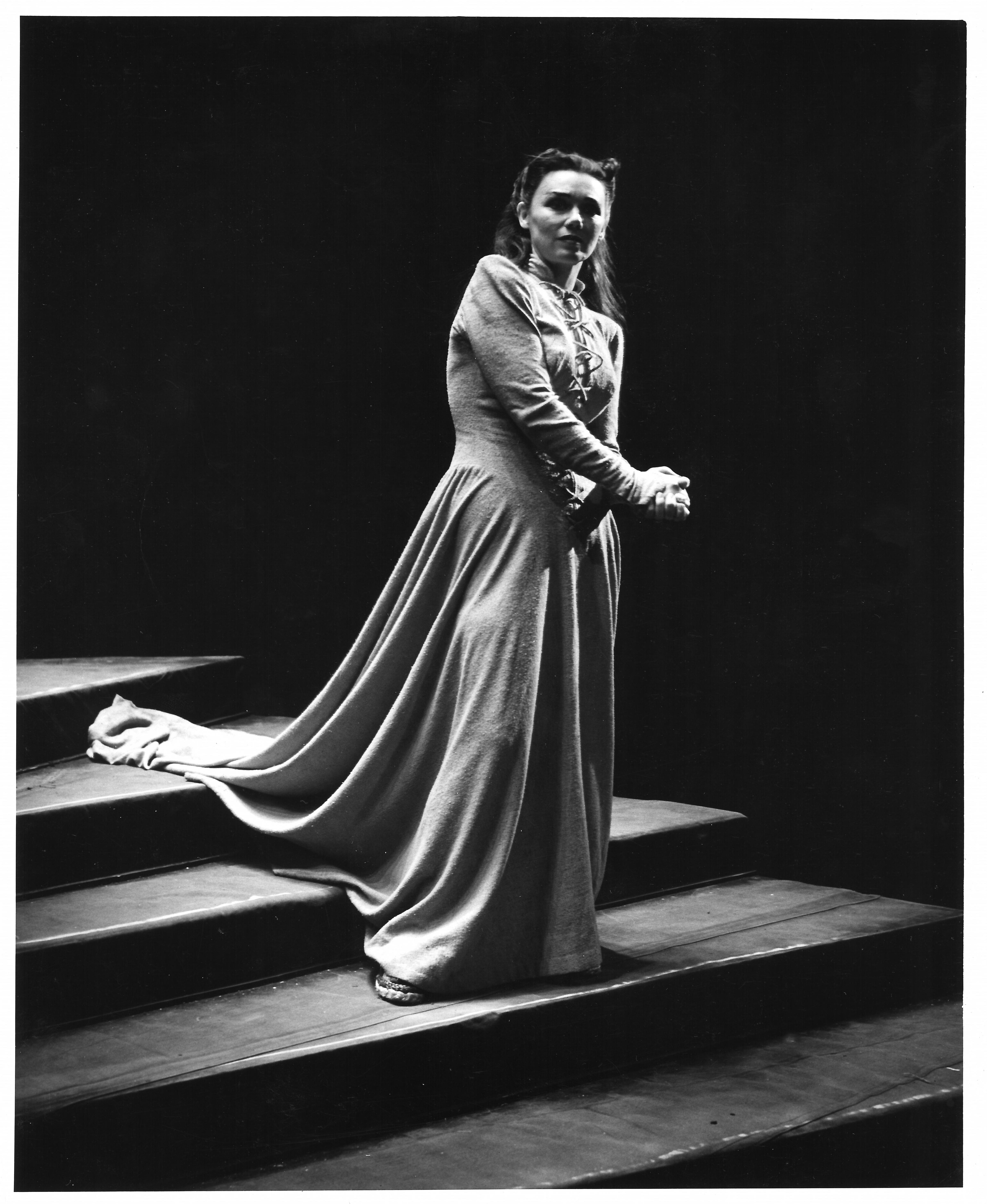
She’s on the verge of a mental breakdown. Lady Macbeth is not so tough after all, even though she made herself appear so in the first act, when she said:
LADY MACBETH
…Come, you spirits
That tend on mortal thoughts, unsex me here,
And fill me from the crown to the toe top-full
Of direst cruelty! make thick my blood;
Stop up the access and passage to remorse,
That no compunctious visitings of nature
Shake my fell purpose, nor keep peace between
The effect and it! Come to my woman’s breasts,
And take my milk for gall, you murdering ministers,
Wherever in your sightless substances
You wait on nature’s mischief! Come, thick night,
And pall thee in the dunnest smoke of hell,
That my keen knife see not the wound it makes,
Nor heaven peep through the blanket of the dark,
To cry ‘Hold, hold!’

Clytemnestra would not have said that. I suppose she had ten years to brood and plan her husband’s murder. Perhaps over the decade while Agamemnon was fighting in Troy her blood had the time it needed to congeal making any such speech unnecessary.

Nonetheless, aside from the teaching about conscience and crimes against nature that we find in Macbeth, aside from his poignant portrayals of a man and a woman who are driven deeper and deeper into acts of deception and violence- and ultimately even to madness in the case of Lady Macbeth- Shakespeare is adding a lesson for us about worldly ambition.

If success in this world is the principal objective of a person’s life then “life is but a walking shadow, a poor player, that frets and struts his hour upon the stage, and then is heard no more.”

The ambitious man is a “walking shadow,” that is, his life is dim, empty and insubstantial.

Why?

Because, after a while the ambitious man will undoubtedly consider himself as a “poor player” on the stage; he will consider himself as one who has the appearance of being something that he is not. He will see that his life is that of one fretting and strutting for an hour upon the stage but soon he will be heard from no more. Other actors will soon take his place.

Time itself reminds us all of the potential meaninglessness of life. Each day passes much like the day before in the endless succession of tomorrows. All of our yesterdays are non-existent except in memory. And fools, those who esteemed themselves as something they were not, have simply returned unto the dust from which they came. For the ambitious life sometimes, if not often, is suddenly cut short without a proper ending – like a story told by an idiot.

Tomorrow, and tomorrow, and tomorrow,
Creeps in this petty pace from day to day,
To the last syllable of recorded time;
And all our yesterdays have lighted fools
The way to dusty death. Out, out, brief candle!
Life’s but a walking shadow, a poor player,
That struts and frets his hour upon the stage,
And then is heard no more. It is a tale
Told by an idiot, full of sound and fury,
Signifying nothing.
Posted in beauty, classical education, Literature, Seven Fine Arts, Shakespeare | Tagged , , , , , | 1 Comment

Catholic Liberal Education And Respect For Life

Over the past several days I have been stewing over a proposition that seems perfectly obvious to me but which, I am afraid, will be offensive to the vast majority of good and well-intentioned  people who choose to send their children to schools which do not espouse the principles of a Catholic Liberal Education. The proposition is this:

Catholic Liberal Education provides the only intellectual formation which accords a proper respect for human life.

That is to say that Catholic Liberal Education endows its recipients with an understanding of human life and consequently a true and just estimation of that wherein its dignity resides. No other kind of education is able to do this.

The reason for this is simple. Whereas Catholic Education bases itself in the principle that created things have dignity in their own natures, the opposing prevalent educational “philosophy” grounds itself in the proposition that things have dignity in their use.

One side claims that dignity is found in a thing to the extent that it reflects and is an image of its Creator. The other side asserts the doctrine of utility; things have value insofar as they are productive. One view regards the thing itself, the other regards use. One view regards what a thing is, the other looks to what a thing does.

Consequently should a thing be “useless,” that is, should a thing appear to produce nothing beyond itself, then, in the estimation of those who espouse the doctrine of utility, it has no value. It has no dignity. The doctrine of utility, the doctrine that some thing ought to be studied, pursued, and promoted only insofar as that thing is productive of something other, is a principle opposed to a proper respect for the dignity of human life.

Human life does not derive its dignity by what it produces. Catholic Education has always understood this until recent times when leading Catholic educators, led notably by the late former president of the University of Notre Dame,  Father Theodore Hesburg,  formally abandoned its Catholic identity and instead espoused the doctrine of utility. In the Land O’Lakes declaration concerning “The Idea of the Catholic University,” Catholic educators renounced their Catholic identity in the following words,
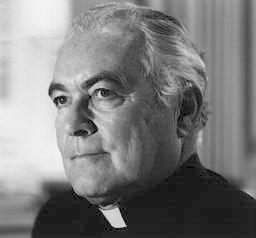
The Catholic University today must be a university in the full modern sense of the word, with a strong commitment to and concern for academic excellence. To perform its teaching and research functions effectively the Catholic university must have a true autonomy and academic freedom in the face of authority of whatever kind, lay or clerical, external to the academic community itself. To say this is simply to assert that institutional autonomy and academic freedom are essential conditions of life and growth and indeed of survival for Catholic universities as for all universities.

Of course the seeds for this radical renunciation of the principles of Catholic education were sown long before Father Hesburg and his friends arrived in Wisconsin in July of 1967. The Land O’Lakes Conference was simply a celebration of the harvest. Now it may not be clear at first how Father Hesburg and his companions at the Land O’Lakes conference espoused the doctrine of utility simply be declaring the autonomy of the Catholic University from the Catholic Church.


But when one considers that the Catholic University formerly understood itself to be an institution founded upon the proposition that Theology is the queen of the sciences and that Theology is therefore the end to which every other discipline is ordered, and is the judge and head, and in short the rai·son d’ê·tre of every intellectual pursuit, only then can one see how radical it is for the presidents of our leading catholic universities to make a declaration of autonomy from the Catholic Church.

It would be less radical if, say, an army declared its autonomy from its general….or better, if the members of the human body, the legs and arms and eyes and fingers, all in unison declared their autonomy from the head. Although the land O’Lakes declaration did not say in an outright and explicit way, that the role of the Catholic University is to inculcate the doctrine of utility, it did say words to the same effect when it declared

The Catholic university participates in the total university life of our time, has the same functions as all other true universities and, in general, offers the same services to society. The Catholic university adds to the basic idea of a modern university distinctive characteristics which round out and fulfill that idea. Distinctively, then, the Catholic university must be an institution, a community of learners or a community of scholars, in which Catholicism is perceptibly present and effectively operative.

Notice, however, that Catholicism will be “perceptibly present and effectively operative.” I am not certain what that means. Perhaps crucifixes hanging in the classrooms? Perhaps daily Mass in the chapel? Finally the document concludes,

The evolving nature of the Catholic university will necessitate basic reorganizations of structure…A great deal of study and experimentation will be necessary to carry out these changes, but changes of this kind are essential for the future of the Catholic university. In fine, the Catholic university of the future will be a true modern university but specifically Catholic in profound and creative ways for the service of society and the people of God.

Which is to say, that it will take some time to shake off the last vestiges of authentic Catholic identity, it will take a little time to empty Theology departments of crusty and resistant old Theology professors and a little more time to reshape the views of the Catholic laity…but have no fear The Catholic University will soon assume the fundamental utilitarian role that characterizes the “modern university.”

All of which, I say, adds up to a fatal and diminished view concerning the dignity of human life. To put it negatively, every kind of intellectual formation which departs from the principles of a Catholic Liberal Education thereby departs from the principles that are fundamental to a philosophy that respects human life.

And what is more, forms of education which are opposed to a Catholic liberal education set its adherents on an intellectual trajectory which is opposed to the dignity of human life. Or we might say, to the extent that a student is educated in a manner which is at variance with a Catholic Liberal Education, it is to that same extent that he is formed in an intellectual habit which does not regard the proper dignity of the human person. I hope I have made my position clear.

Now when I maintain that an education that departs from “the principles of a Catholic Liberal Education thereby departs from the principles that are fundamental to a philosophy that respects human life,” I do not say that the unfortunate students of such an education are necessarily opposed to human life. I do not say that such students are actually anti life. I do not say that such students have an active disrespect for the dignity of human life. I only say that such students have been governed by a philosophy of education which is founded on principles that logically lead to a diminished view of the dignity of human life.

And should these principles be drawn out to their inevitable consequences and should they be believed and espoused and acted on and lived, the adherents of these principles will then inevitably espouse a world view which disdains and has contempt for the very things in which human dignity consists.

Posted in classical education, college, truth for its own sake | Tagged , , , | Leave a comment

Bottling Day

The English Pale Ale is now bottled and safely tucked away in a corner of my kitchen awaiting the Resurrection.

Lent is a great time for bottling beer if for no other reason than the continual reminder it provides us of the steady growth in virtue that we should be attempting throughout these penitential days leading to Easter. I won’t press the analogy too hard, but there is plenty of spiritual symbolism for anyone who wishes to see the invisible things of God through the visible things of this world. No wonder monks are famous for brewing.

philip2

There is a certain amount of washing and sanitizing of old bottles that the liberally educated home-brewer needs to be willing to do. Again, this is another obvious source for Lenten meditation.

First collect about a pile of about 50 bottles, preferably amber in color.

0304152103a

Then plunge them into a sink full of hot water. A bottle scrubbing-brush helps, but repeated rinsing with hot water is effective. After three rinses I finish the cleansing process by using two table-spoons of my One-Step No-Rinse cleansing agent, which is some kind of magical oxygen-based cleanser. I don’t know how it works but it is a powerful substance, and I trust it completely. One cannot be too fastidious when it comes to the cleaning and sterilization of the bottles and other brewing equipment.

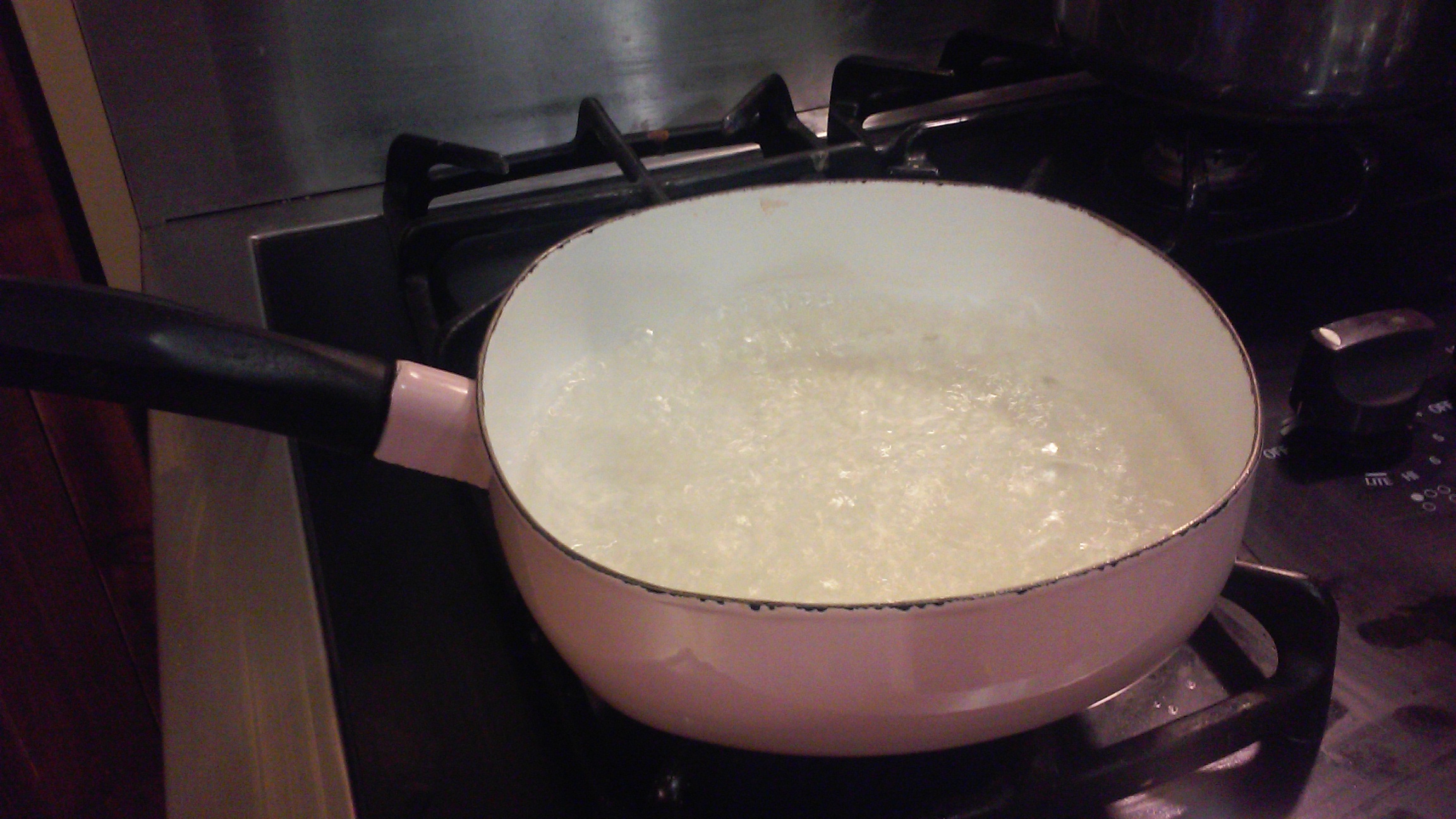
The next step is to transfer the fermented beer (formerly wort) into a new glass Carboy. But since I am going to bottle the beer now, I will dissolve a packet of priming sugar into two cups of water and boil that for five minutes.

0304152113a

Apparently, through the wonders of chemistry, this priming sugar will, when added to the beer, act as a carbonation agent. The sugar introduced into each bottle will provide the yeast some new food for another fermentation. But this time the carbon dioxide will not be able to escape the bottles and, voila! the beer will be carbonated!

I meant to employ a two stage fermentation program by simply transferring the brew into another five gallon Carboy before the fermentation had stopped. But alas, the days passed quickly and the fermentation appeared to come to an almost complete stop. I suppose I could have restarted the fermentation with the addition of some sugar or perhaps even by the mere transferral of the wort from one container to another- but no matter, I have enjoyed my brewing experiments to date without following the double fermentation process. There is always next time.

We boil the priming sugar.

0304152117a

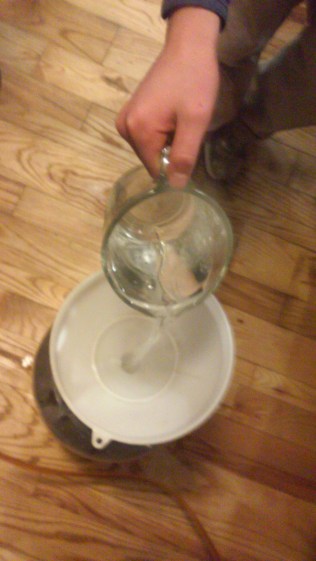
and add it to the empty Carboy.

0304152120aThe fermented wort, now un-carbonated beer is transferred from one Carboy to another by siphoning- so simple even a child can do it! Adding the sugar first allows for the beer to mix fully.
0304152121a

We have to be careful not to siphon the yeast by-products and sediment at the bottom.

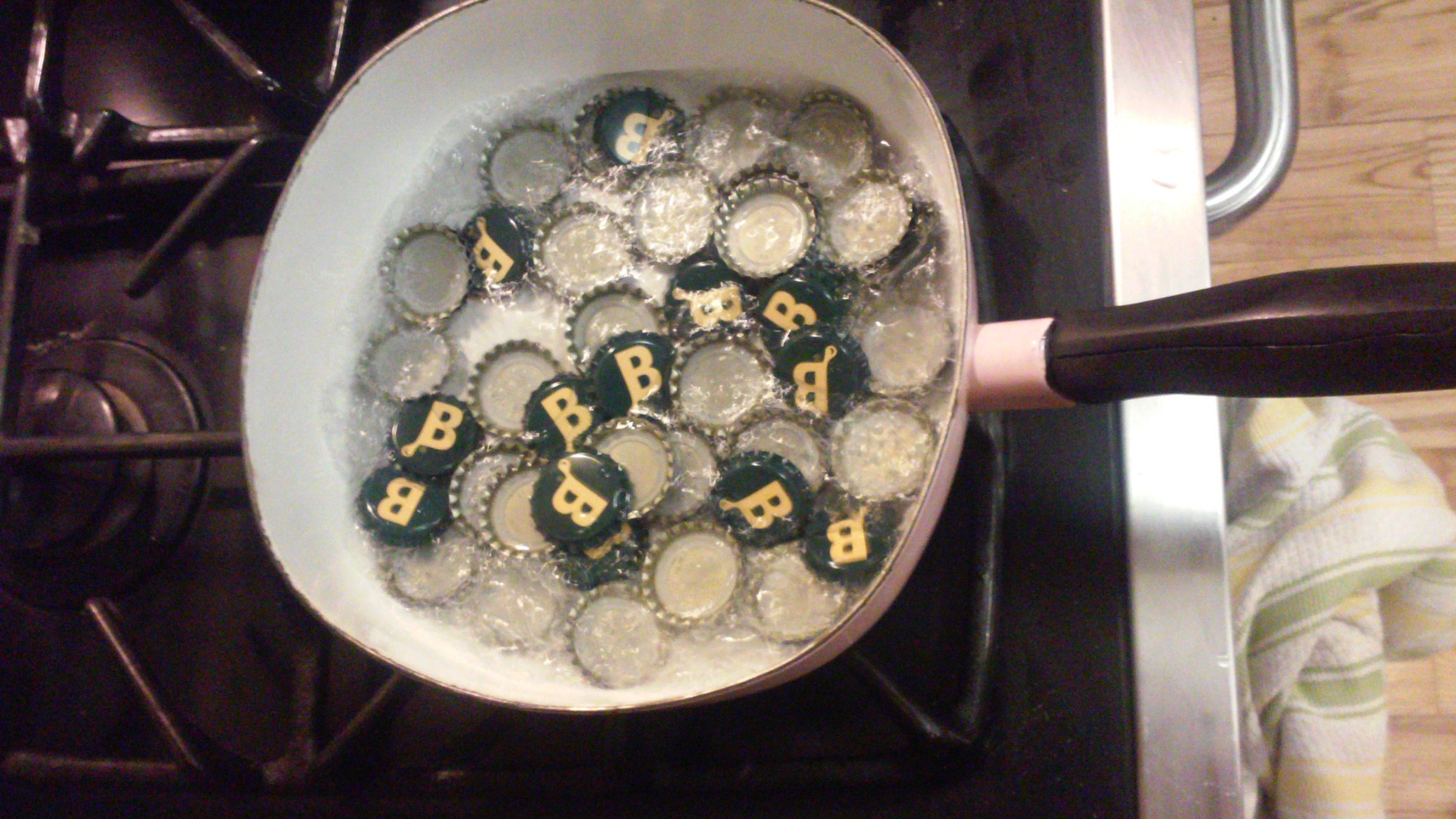
In the mean time, I also think it is a good idea to sterilize all of the bottle caps.

0304152140a

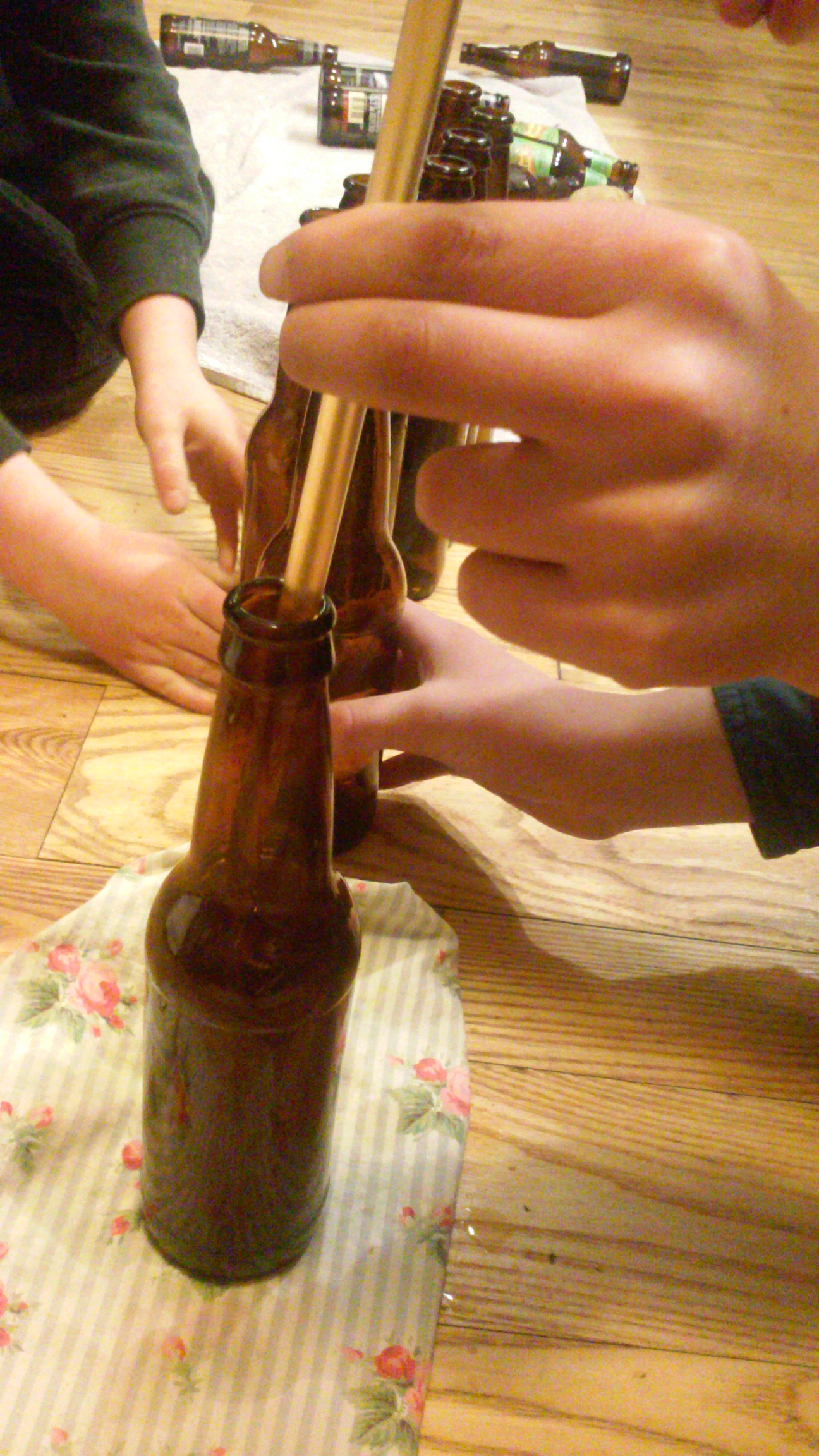
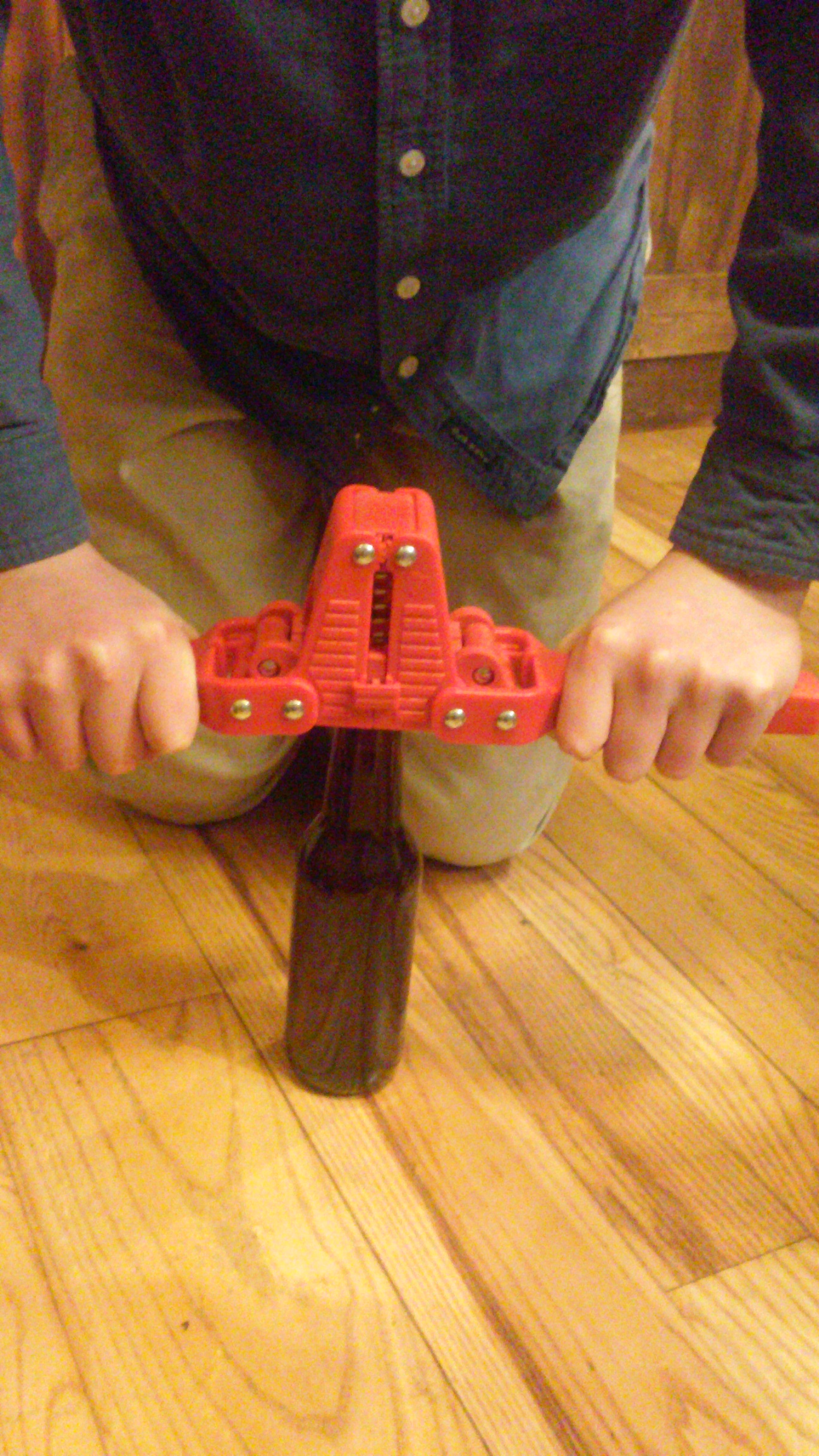
Now with the help of a bottling wand, the beer is transferred to each individual bottle and immediately capped.

0304152155c

0304152151a

Soon the process is finished and the bottles should be transferred to a dark place to complete the carbonation process.

0304152213b

On Easter Sunday our now rather flat beer will have been transformed into a rich, refreshing, effervescent beverage. Fifty bottles to celebrate each day leading to Pentecost!

Posted in Brewing, Feasts | Tagged , , , , , , | 1 Comment

I Can See Clearly Now

Who says that the Liberal Artist isn’t practical?

Who says that teaching Latin, Shakespeare and St. Thomas will not equip a man for life in this world?

Nothing, and I mean NOTHING, could be further from the truth!

Au contraire!

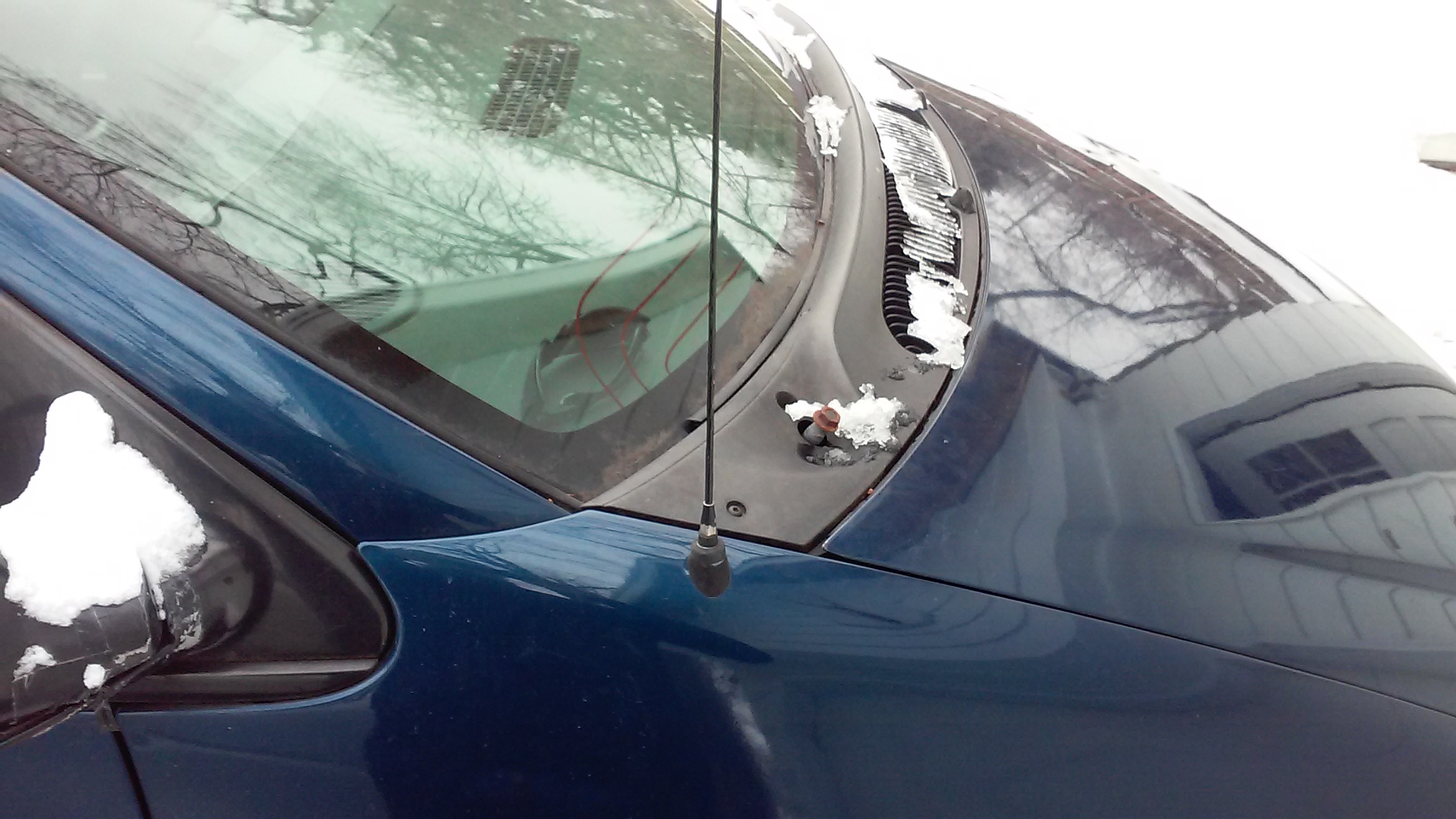
You may remember from a recent post entitled “Liberal Education and piano Repair: Beware You Specialists,” I inserted a photo of the “Blue Bullet” sans windshield wipers.

The wiper motor was broken and needed to be replaced!

0216151452 (1)

Well, I am still working on the piano. It is all back in one piece but I must admit that there are still some technical difficulties. I will also admit that I did make one small trip to Bill Kapp Piano and had the delightful opportunity to visit with the Mr Kapp’s son, Mr Kapp who I consider to be among one of the minor deities of piano repair.

I am not certain just which one of these deities he is, but he is, doubtless, included in this photo somewhere!

Mr. Kapp was kind enough to fix two of the flanges on my piano in front of my very eyes. You see, although I had glued the pieces back together myself and had sanded them down and had reinserted them in the piano- all with the utmost care,

0216151216b[1]

nonetheless the flange immediately broke when I struck the key!

I must have miscalculated (through a minor calculation error of the law of torque) how much force is exerted on each of these 88 flanges when even the most subtle of pianists, such as I, play the instrument.

You see, although Liberal Education is a powerful tool, one does learn one or two things from experience.

But the small matter of the Blue Bullet with a broken windshield wiper motor has turned out to be a great demonstrations of the power of Liberal Education. Solving this problem was nothing more than a tribute to the ancient principle “mind over matter,” as well as a tribute to the importance of friendship!

The importance of friendship is of course something with which every liberally educated person is keenly aware. Cicero wrote about it in his book “De Amicitia!” Aristotle also in his great work The Nichomachean Ethics!

Aristotle –  The very image of a Friend!

You see, Liberal Education equips a man with friends. That is, it does so to the one who takes the precepts of Liberal Education seriously.

And with the help of friends even the most difficult problems can be solved!

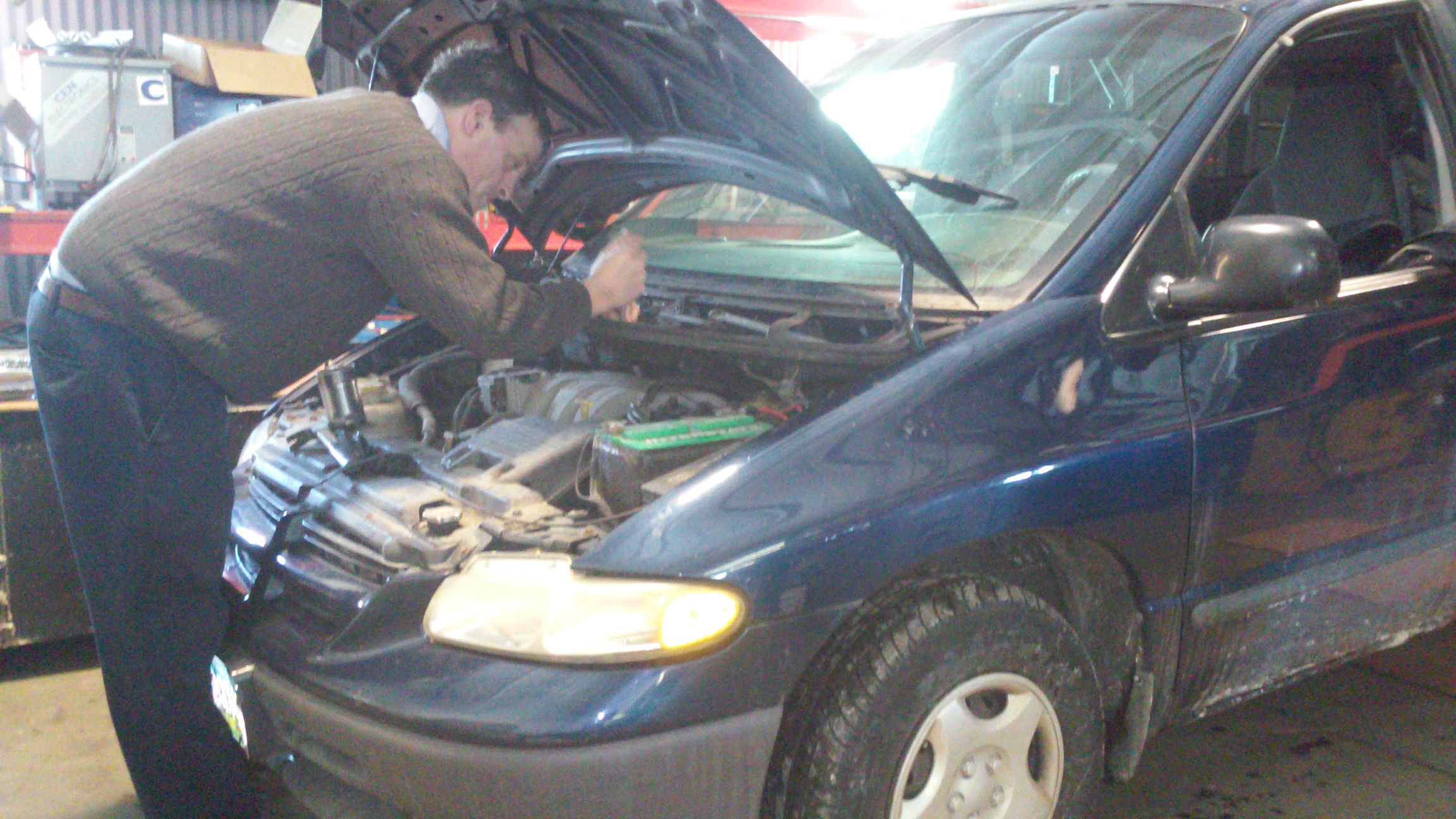
Well, one of my friends just happens to have a glorious shop in which the cool deliberations that accompany complex automotive repair can be done in the warmth of a cozy indoor environment with every imaginable tool at one’s disposal.

This is the proper environment for real work like welding!

This is the proper environment for real work like welding!

Although perhps not strictly necessary for fixing windshield wipers- one never can be sure when one might need a forklift!

Although perhaps not strictly necessary for fixing windshield wipers- one never can be sure when one might need a forklift!

These are extra forklift batteries just in case.

These are extra forklift batteries just in case. Meanwhile son Mark is engaged with the windshield wipers.

0228151133

Now as I was saying, friendship is very important, especially when one has friends with a great deal of practical know-how. One simply needs to be extremely docile and attentive to such friends – two other important skills that Liberal Education imparts to its disciples.

Car repair can be tedious work, but when energy begins to flag, it helps tremendously to have an adjacent spare fully-stocked kitchen for lunch!

Everything necessary for preparing a delicious Pasta!

Everything necessary for preparing a delicious Pasta!

Do you see the bottle of Ten year old Laphroig Single Malt?

In the adjacent classy office- do you see the bottle of Ten year old Laphroaig Single Malt? (hint: lying on its side on the left.)

After a delightful morning we had our wipers back!

Windshield Wipers are a great invention - and very useful in the North East!

Windshield Wipers are a great invention – and very useful in the North East!

And now back to the piano!

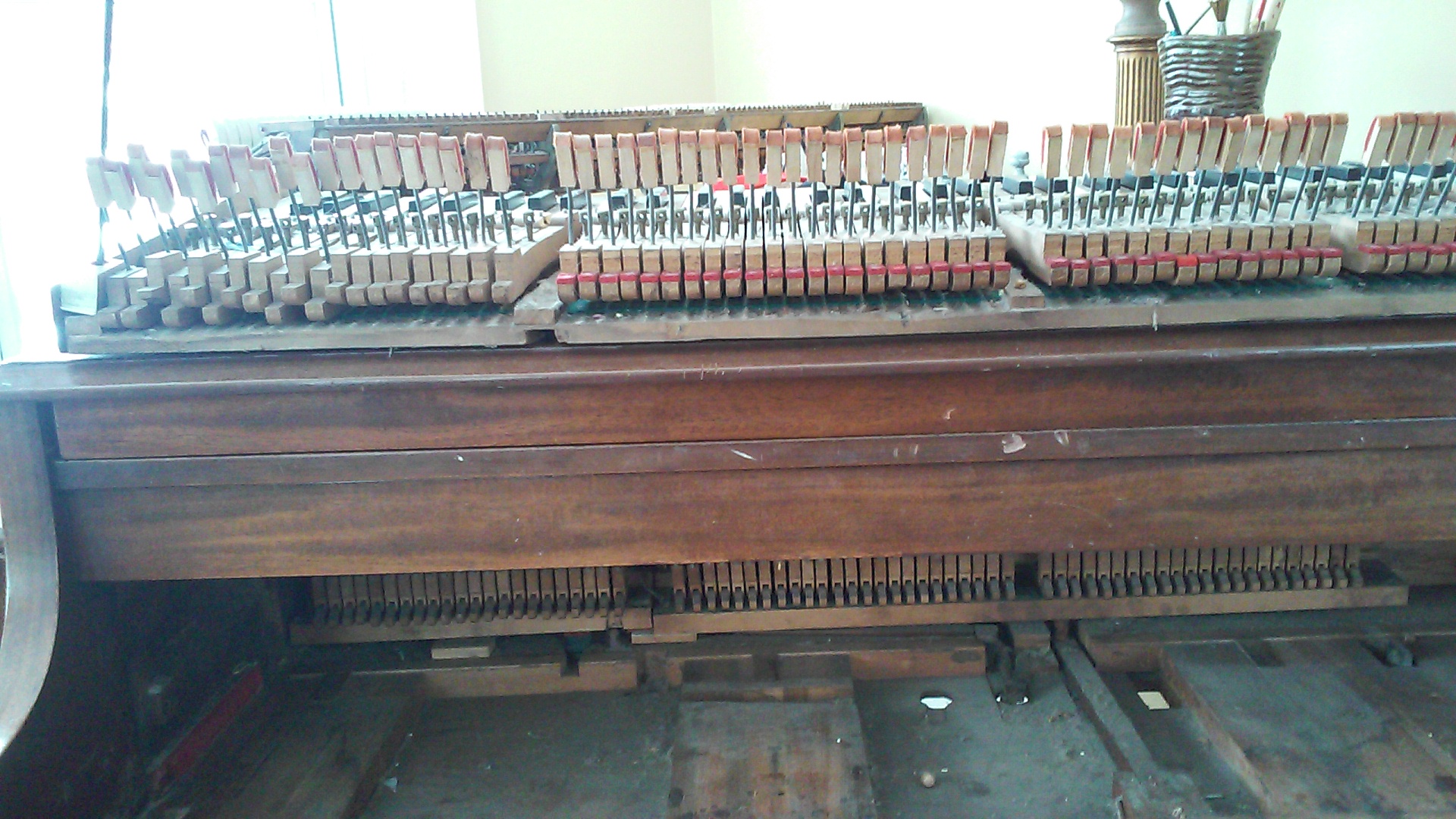
My Lindeman Piano with the engine removed. Beautiful!

Posted in liberal education works | Tagged , , , | Leave a comment

The Attempt And Not The Deed Confounds Us.

Of all the authors we should compel our students to read, surely no one is so foolhardy as to demand a reason for reading Shakespeare.


I can forgive the one who asks,

Why should students read Aeschylus?

Or

Why do you force them to read Thucydides?

But this is only because these authors are ancient Greeks and therefore might appear (at first glance) to be so remote, so out-dated and outmoded that perhaps devouring time has blunted their relevance.

Of course nothing could be further from the truth!

Thankfully Shakespeare still appears to be among the authors with whose works a more than passing familiarity is still deemed a sine qua non for the one who dares to think himself educated.

Notice the phrase “passing familiarity.” I chose those words very carefully because that is an exact characterization of my own knowledge of Shakespeare. Embarrassing, but no matter how many times I read his plays, I am only able to tell you about the very one that I happen to be reading at the moment. Sadly this disqualifies me from the prestigious ranks of Shakespeare scholars- a group I admire beyond words.

Nonetheless, as I am currently reading The Tragedy of Macbeth I am astounded by the poignancy with which Shakespeare teaches his readers about human action and the nature of sin.

Take this for example. In Act I Scene VII, Lady Macbeth has managed to cajole and persuade Macbeth to “screw up his courage to the sticking-place” and resolve to kill his kinsman and his king, the unfortunate and doomed Duncan.

Macbeth says, betokening his interior resolution and interior purpose,

I am settled, and bend up each corporal agent to this terrible feat. Away and mock the time with fairest show: False face must hide what the false heart doth know.

Shakespeare teaches us with poignancy about the difference between the internal and the external; the inner act and the outer act. He teaches us that sin is first in the will as Saint Augustine taught in the fourth century.

Saint Thomas Aquinas quotes Augustine in his Summa,

Augustine says (Retract. i, 9) that “it is by the will that we sin, and that we behave aright.” Therefore moral good and evil are first in the will.

This is a profound teaching. It is not the external act that condemns us. It is not the outer sin that confounds us so much as the act of the will whereby we resolve to commit the outer sin. And this Lady Macbeth affirms in Act II. After having drugged Duncan’s guards, she fails to commit the murder herself,

Macbeth. [Within] Who’s there? what, ho!

Lady Macbeth. Alack, I am afraid they have awaked,
And ’tis not done. The attempt and not the deed
Confounds us. Hark! I laid their daggers ready;
He could not miss ’em. Had he not resembled
My father as he slept, I had done’t.
[Enter MACBETH]
My husband!

Frightened by every noise, Lady Macbeth gives evidence of a guilty conscience even though she had not the strength to carry out the ghastly deed outwardly that she had already committed inwardly. It doesn’t matter. She is a murderer.

The attempt and not the deed Confounds us.

It is the attempt, the intention, the will settled on evil that condemns us.

This is not to say that the outward act doesn’t matter. No, in fact the external action adds and increases the evil – but seemingly only in degree, not in kind. Thus St. Thomas explains,

… every inclination or movement is perfected by attaining its end or reaching its term. Wherefore the will is not perfect, unless it be such that, given the opportunity, it realizes the operation. But if this prove impossible, as long as the will is perfect, so as to realize the operation if it could; the lack of perfection derived from the external action, is simply involuntary.

Shakespeare helps us to understand what our Lord is speaking about when he says in Matthew,

You have heard that it was said to them of old: Thou shalt not kill. And whosoever shall kill shall be in danger of the judgment. But I say to you, that whosoever is angry with his brother, shall be in danger of the judgment….You have heard that it was said to them of old: Thou shalt not commit adultery. But I say to you, that whosoever shall look on a woman to lust after her, hath already committed adultery with her in his heart.

If anything, Christ came not to overturn the law with regard to the exterior act, the outward man. Our external actions and behavior are important, and there was roughly two thousand years of Old Testament history to prove that.

But Our Lord appears to be even more interested in the interior man than the exterior man. He is interested more in what is on the inside than what is on the outside; Perhaps the external is really for the sake of the internal?

Could it be that Our Lord is really after our souls?

Posted in classical education, Literature, Shakespeare | Tagged , , , | 1 Comment

Forty Days For Fermentation

As it is the first week of Lent I am congratulating myself on the steps that I have taken to prepare well for Easter.

First I have made the usual meaningful but ordinary commitments towards keeping my Lenten resolutions. Here it is – already day two and so far so good!

Second, I have prepared a new batch of English Pale Ale which will be ready precisely on Easter Sunday.

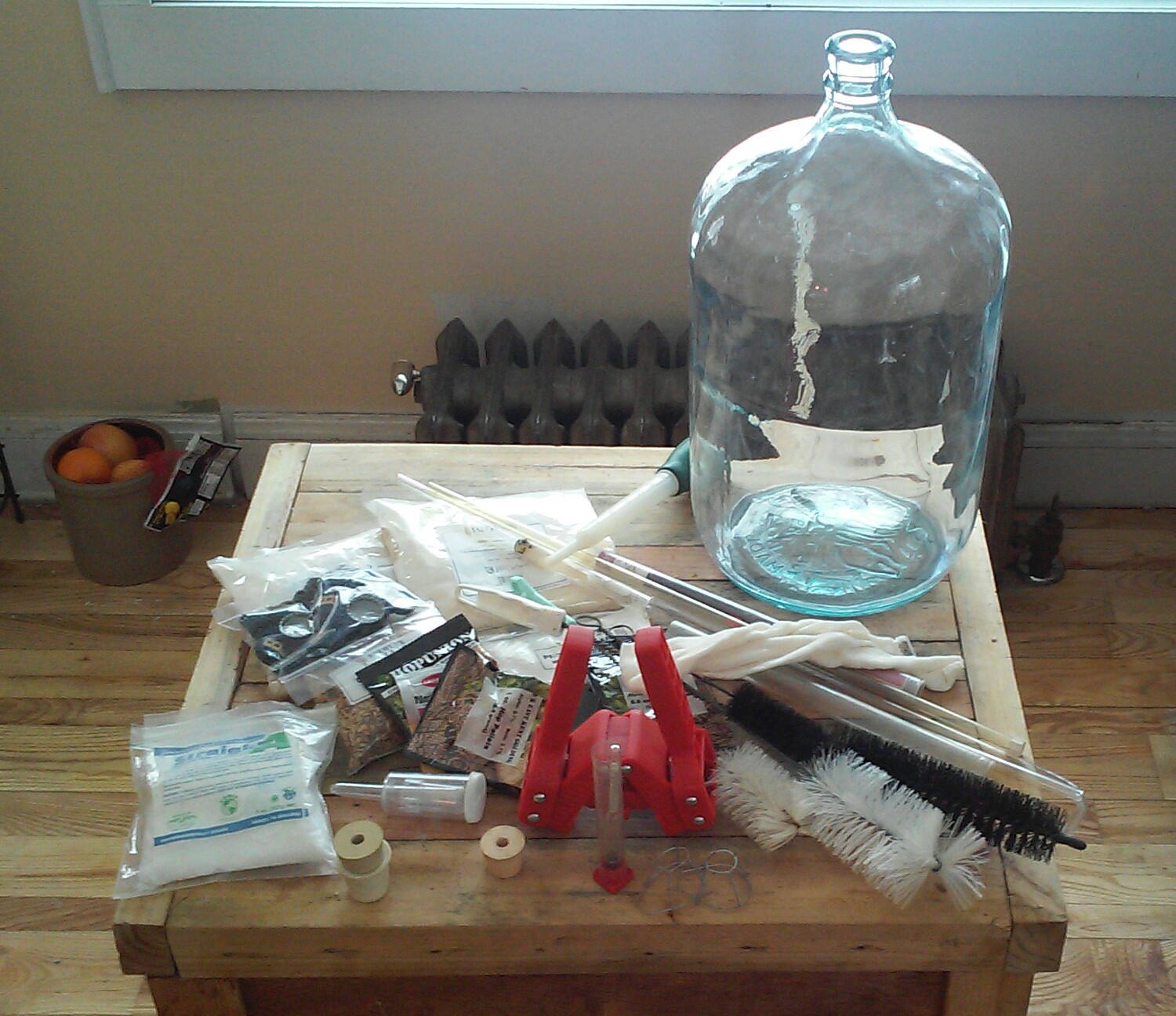
Everything the ambitious Brewer needs including ingredients for an English Pale Ale.

Everything the ambitious Brewer needs including ingredients for an English Pale Ale.

You see, again I need to point out how Liberal Education endows its recipient with enormous power to face crosses and tribulations. It enables one to scan bleak horizons, scope out dark places, examine desert wastes and find the spark of hope, the point of light, the candle flickering ever so faintly at the end of the difficult path!

The Carboy-and everything else- needs to be carefully cleansed.

The Carboy-and everything else- needs to be carefully cleansed.

But in my case, I do not see a flickering candle at the end of this years’ Lenten journey. No, I see a burst of glory and the veritable Super Nova, that is Christ’s Resurrection from the tomb, and what’s more, I also see  over two cases of a very fine Pale Ale, some of which will enable me to celebrate that Resurrection with more propriety.

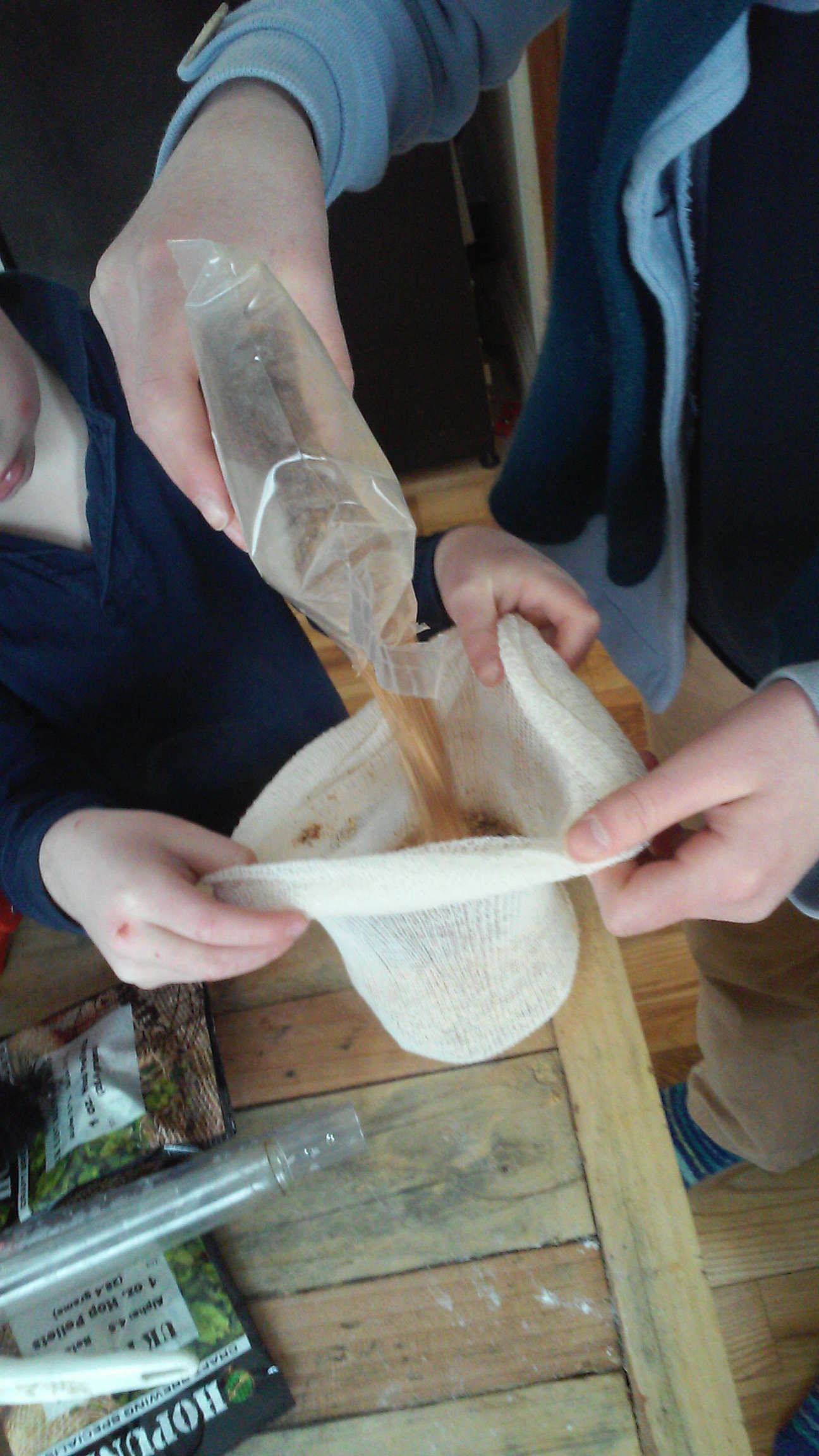
Lucy and Peter fill the sack-really a very large tea bag- with the crushed caramel grains.

My helpers fill the sack-really a very large tea bag- with the crushed caramel malt grains.

Lent was specifically designed for brewing beer. The reason for this is obvious. Beer takes exactly 40 days (more or less) to ferment and grow from a weak sweet slop of “wort” into a fine, noble, life-giving, heart-cheering, spiritually-enhancing liquid – whose foam raises itself in the glass as does incense in the chapel. Forty days exactly! (more or less)

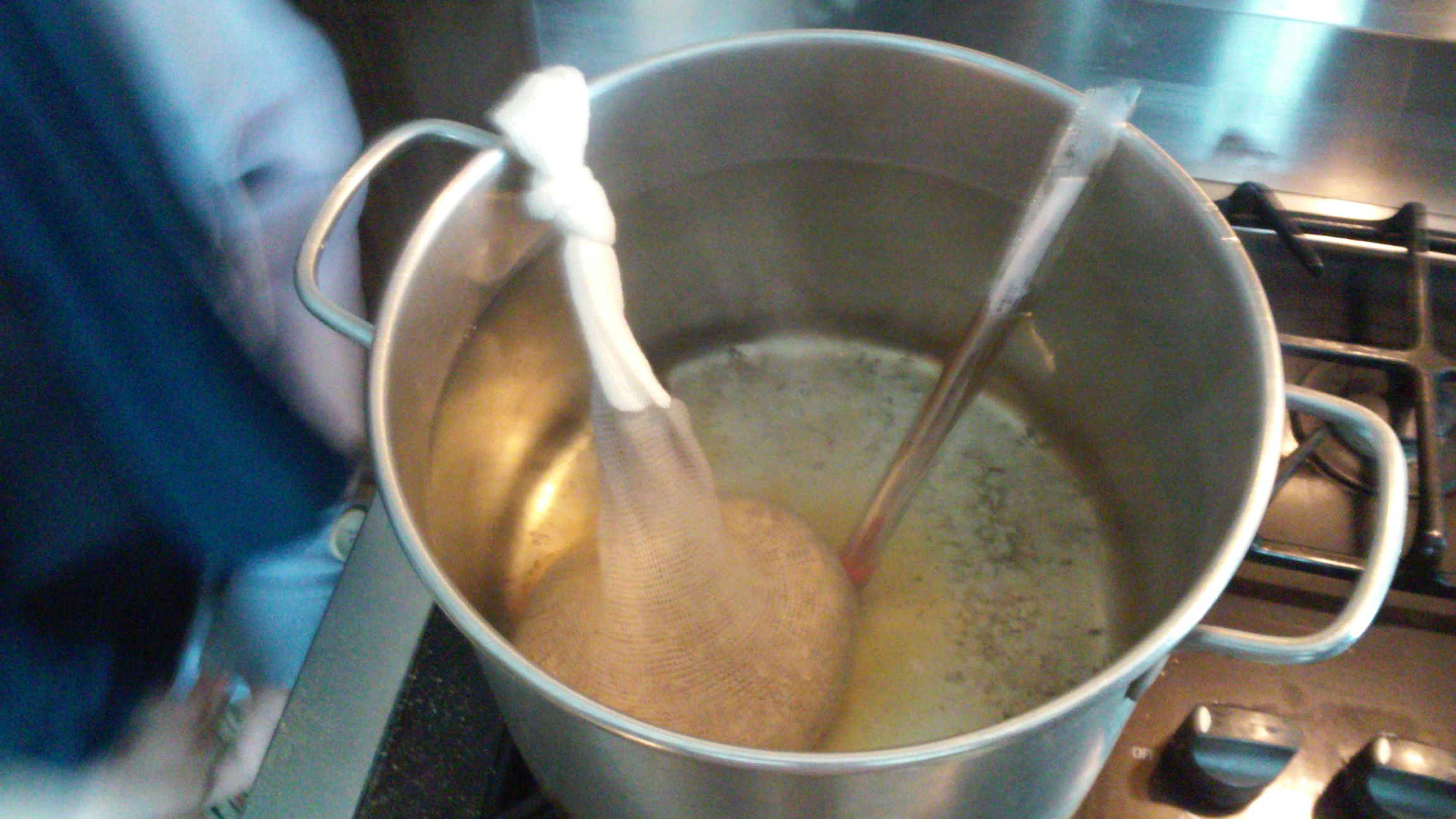
The crushed caramel grains placed in 2.5 gallons of water at 157 degrees.

The crushed caramel grains placed in 2.5 gallons of water at 157 degrees.

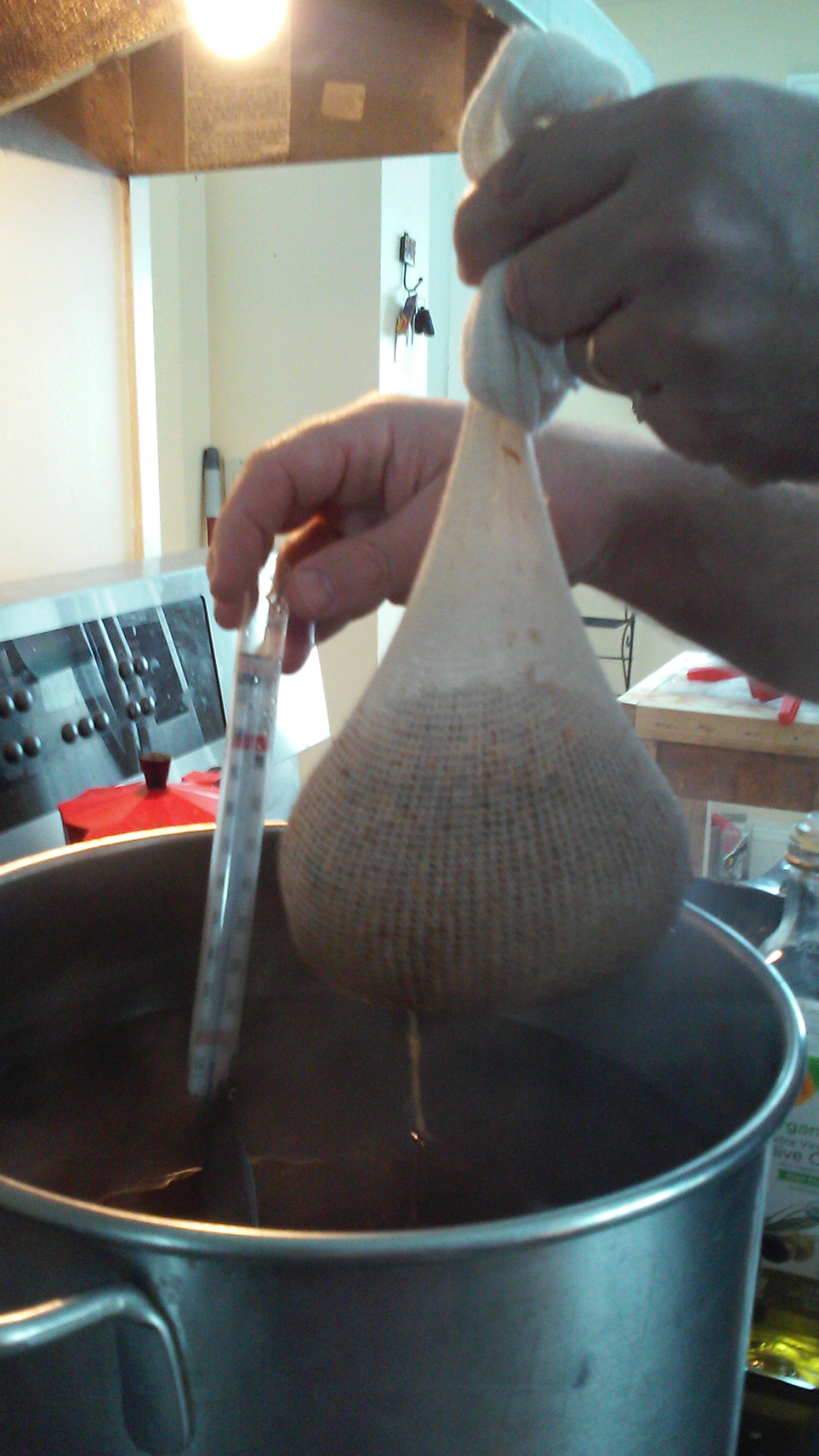
Twenty minutes later the grains are removed. Now it is 2.5 gallons of "Wort!"

Twenty minutes later the grains are removed. Now it is 2.5 gallons of “Wort!”

Of course we fast and pray for forty days first primarily in imitation of our Lord. And then of course we are reminded of all the things that foreshadowed our Lord’s salvific action: the forty years that the Jews wandered in the desert, God’s cleansing of the world with rain and flood for forty days and forty nights in the time of Noah,  Elijah’s fasting for forty days at Mt. Horeb, the people of Nineveh who fasted for forty days in sack-cloth and ashes and thus averted punishment, Moses’ fasting for forty days on Mount Sinai.

Now we pour in the absolutely scrumptious Liquid Malt Extract...Yummy!

Now we pour in the absolutely scrumptious Liquid Malt Extract…Yummy!

But the same period of time is also roughly speaking an ideal space for brewing beer, and therefore I think it is obvious that this is a fitting thing for Christians to do in the first week of Lent.

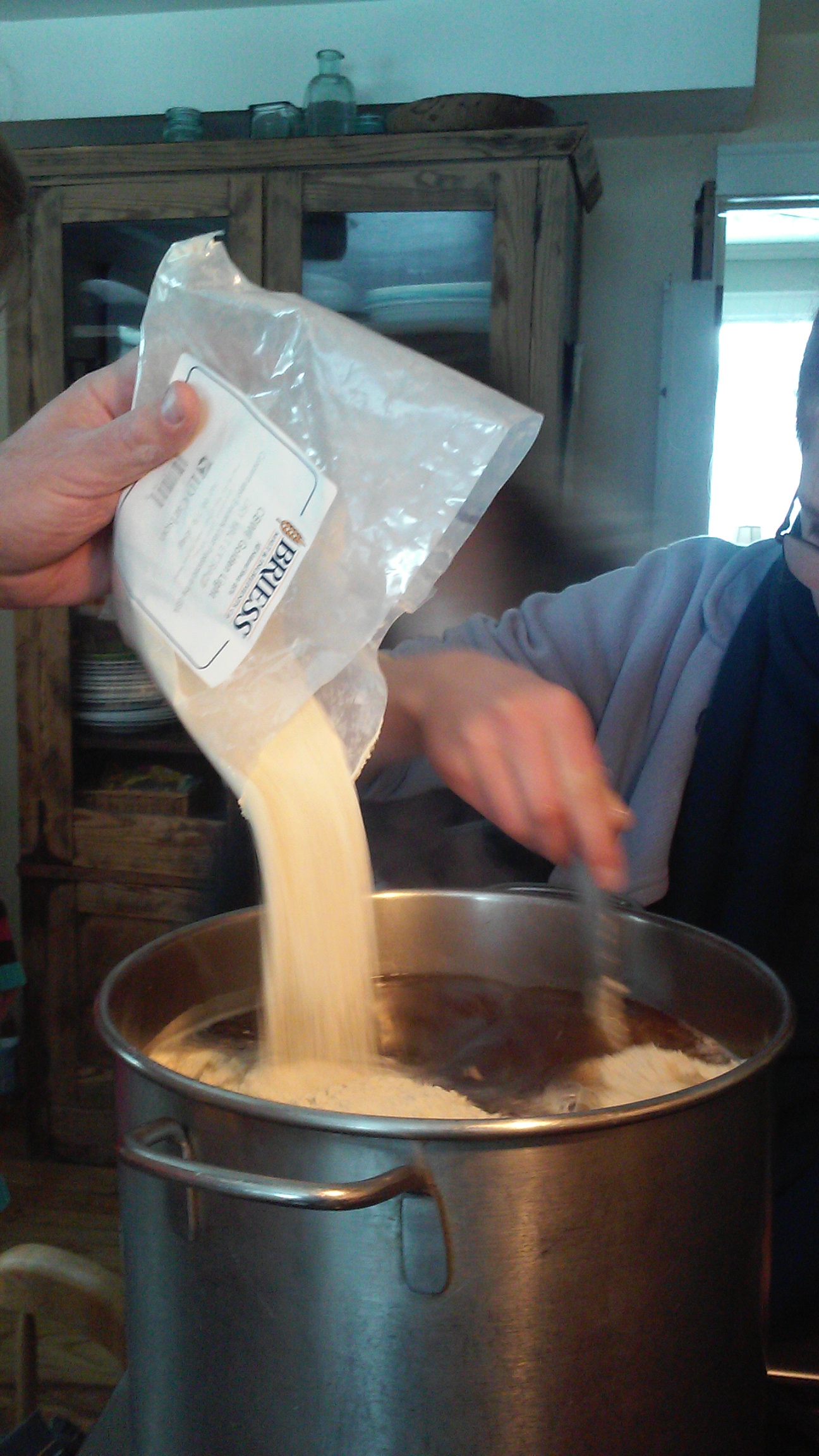
Then comes the Dry Malt Extract...Two bags. This is a sweet Wort.

Then comes the Dry Malt Extract…Two bags. This is a sweet Wort.

I haven’t thought carefully enough about the spiritual significance of brewing beer. I am certain that St Paul would see a deeper significance than I since he was the master of seeing the invisible things of God through the visible things of this earth.

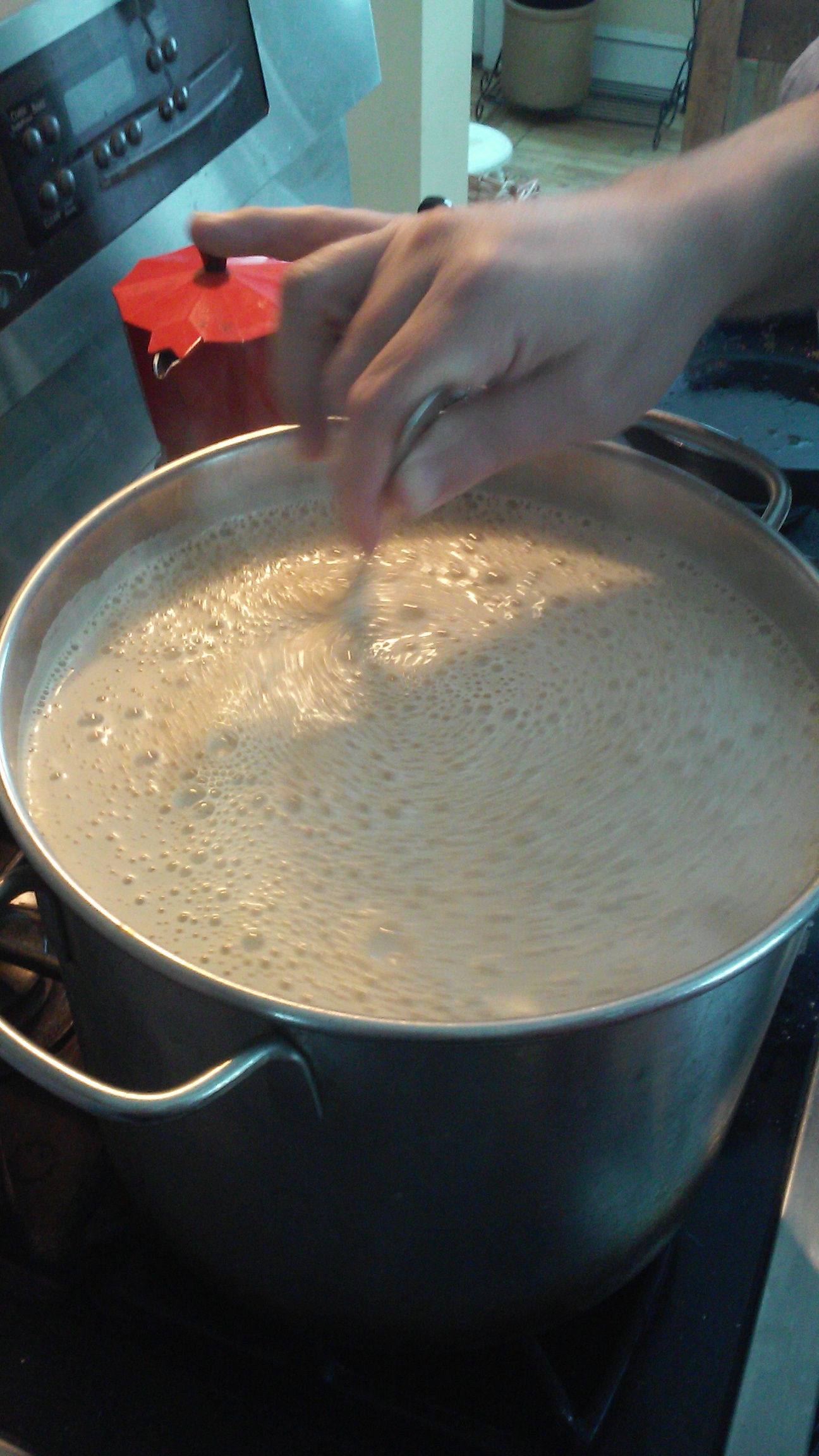
All that Malt appears to lower the boiling point. We have to be very careful not to let it boil over.

All that Malt appears to lower the boiling point. We have to be very careful not to let it boil over.

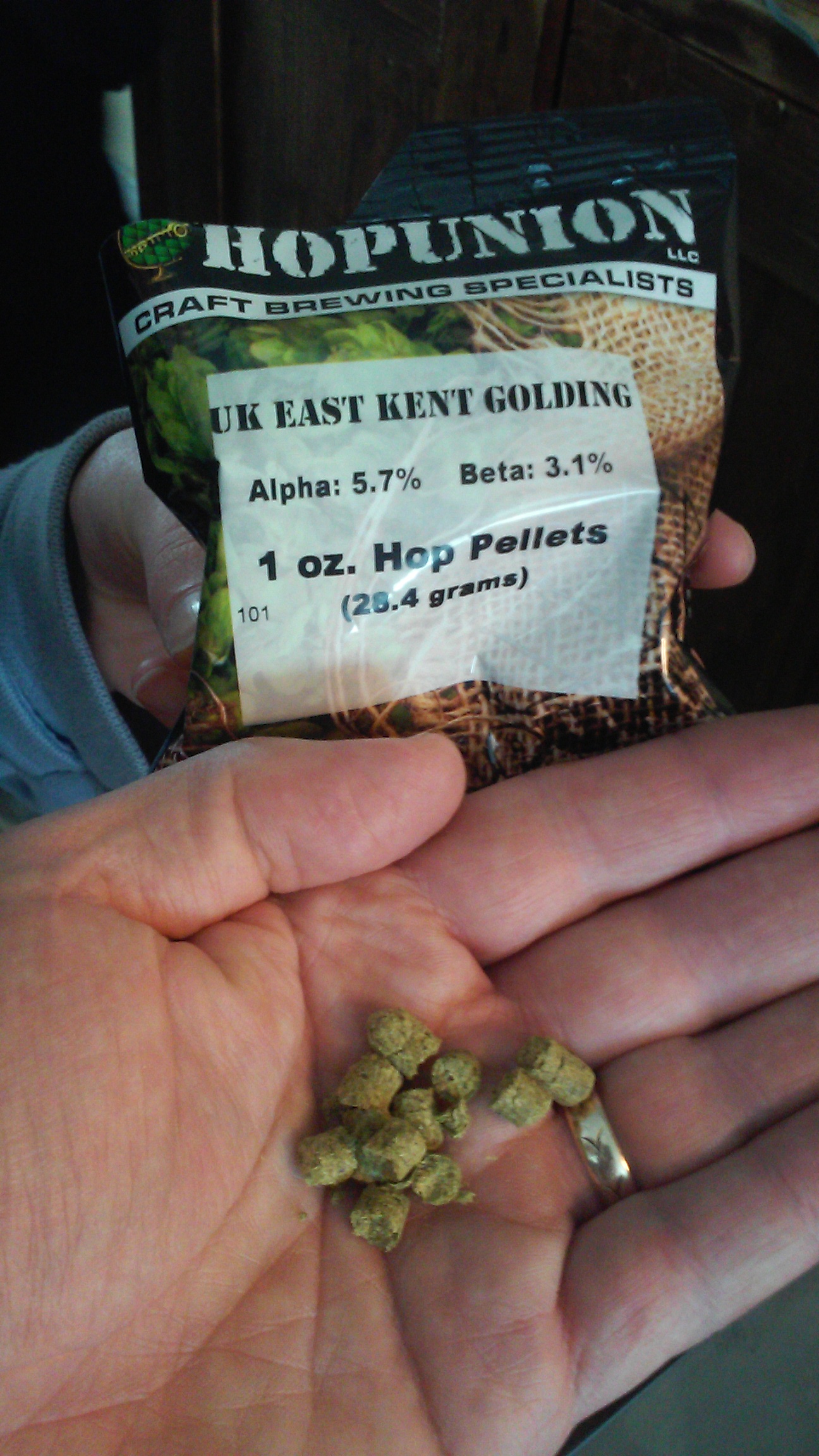
Next Comes the East Kent Golding Hops

Next Comes the East Kent Golding Hops

0219151434

Now apparently the superstitious among us think that Hops brings peaceful sleep, prevents nightmares and encourages “lucky number dreams.” But the liberally educated soul knows better and sees a deeper spiritual significance in Hops. Hops is a “bittering” herb. Hops puts the bitter in beer, and therefore Hops is an excellent herb to contemplate during Lent. Hops is to beer what salt is to food. And Christians should be the salt of the earth! By a simple extension we might say that Christians are the hops of the earth!

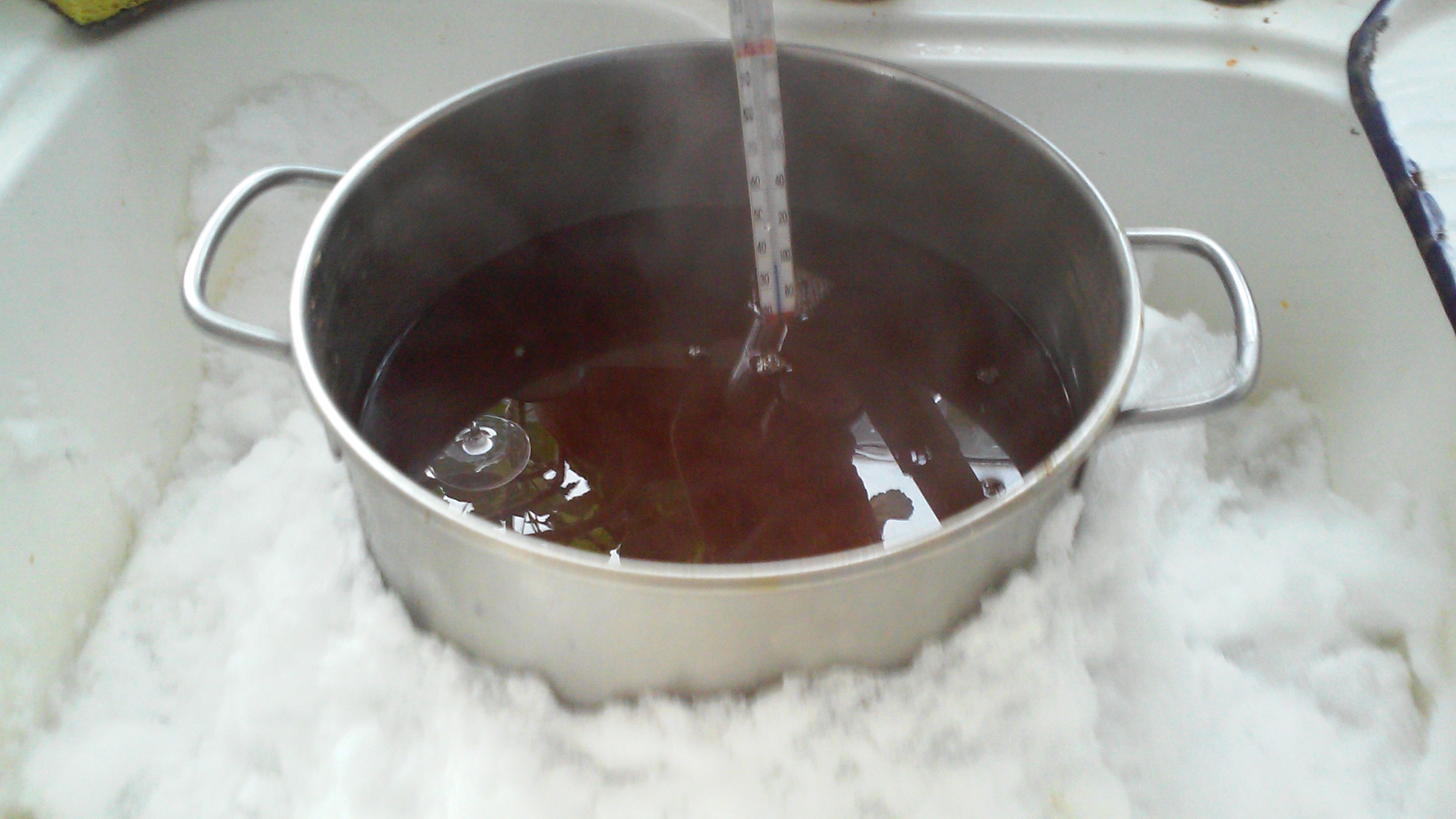
After brewing for sixty minutes, the wort needs to be cooled quickly. Winter snow is perfect - another reason why Lent is a time for brewing.

After brewing for sixty minutes, the wort needs to be cooled quickly. Winter snow is perfect – another reason why Lent is a time for brewing.

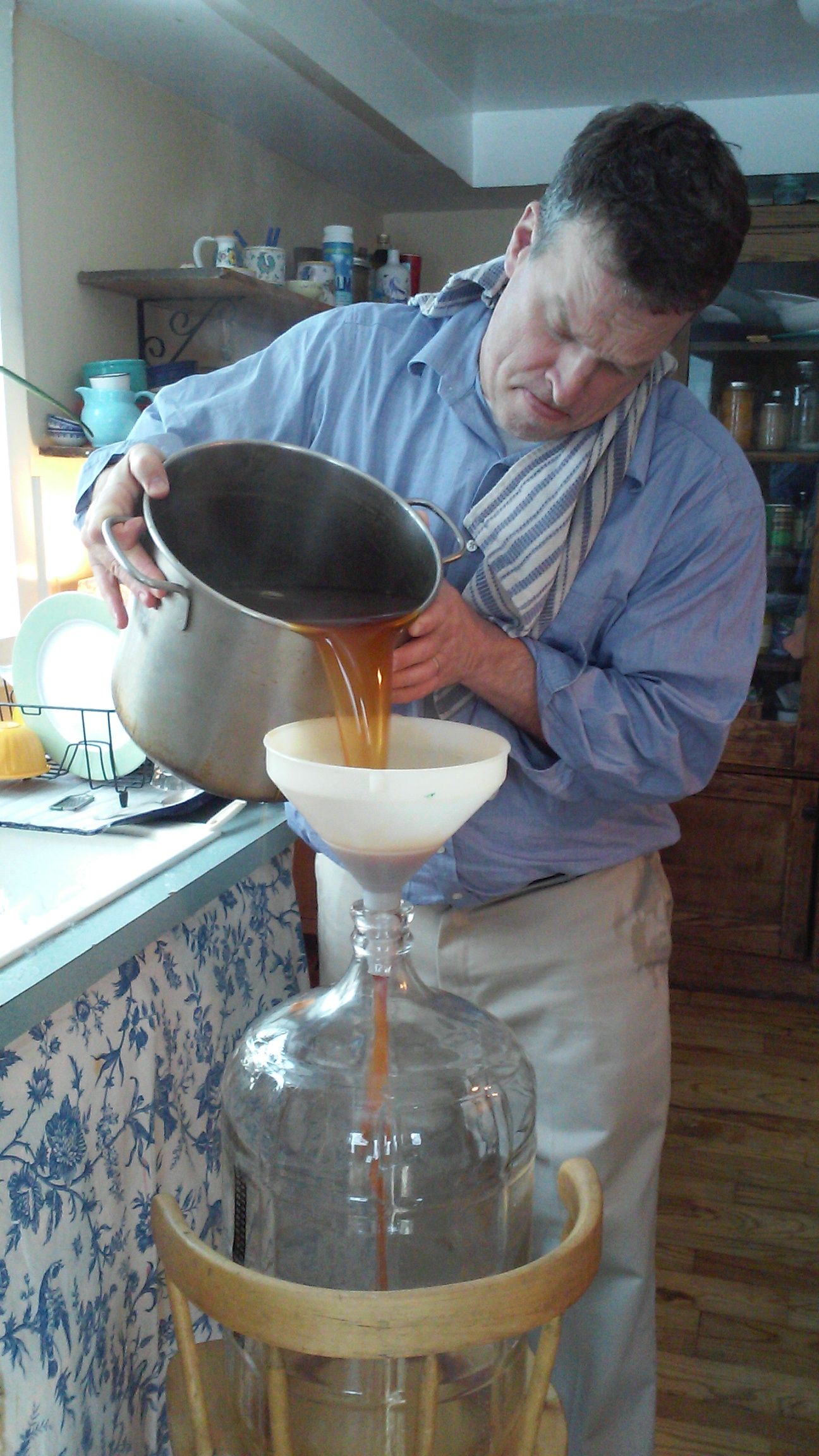
Steady.... The Wort is transferred to the Carboy.

Steady…. The Wort is transferred to the Carboy.

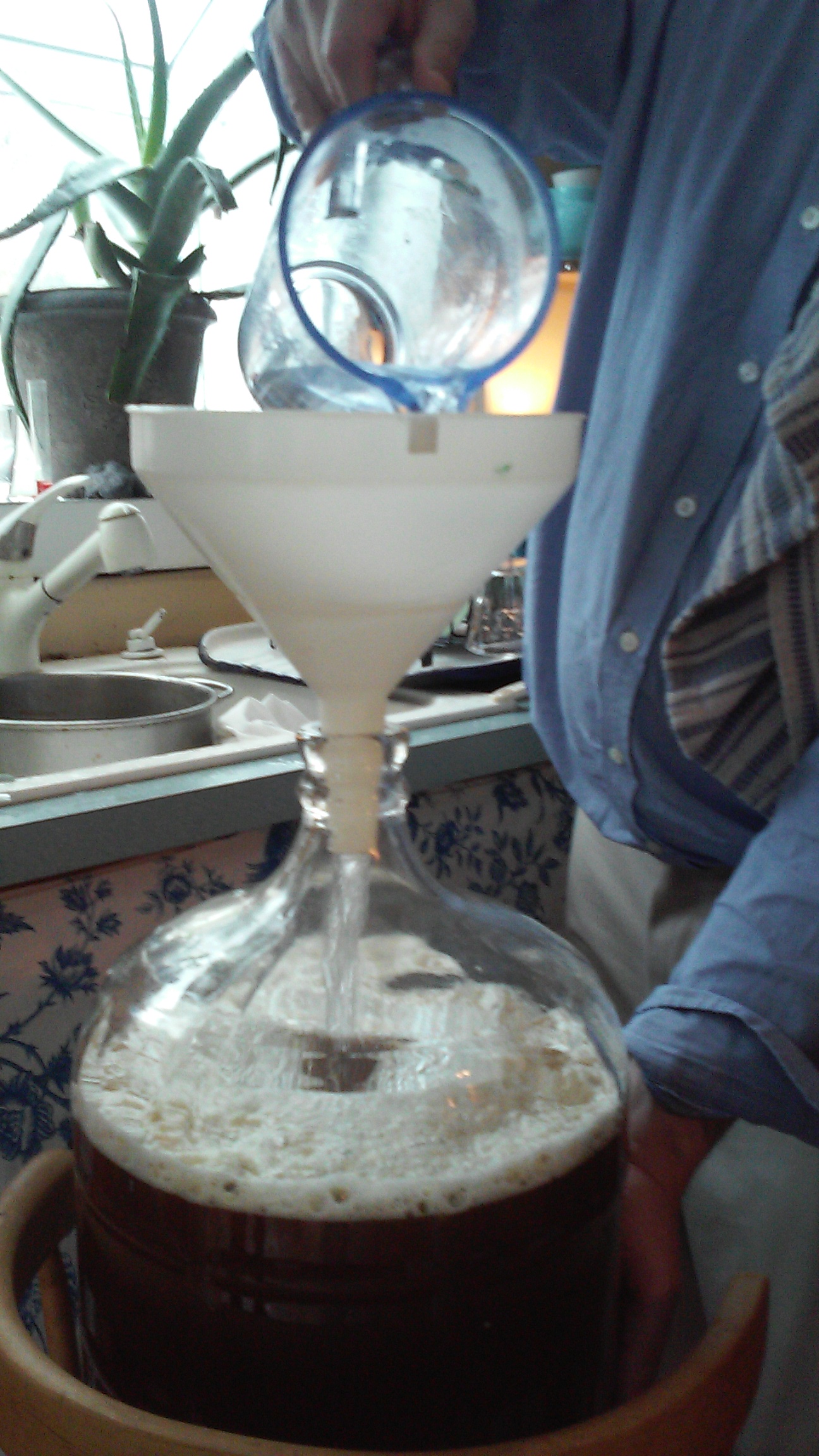
Now we top things off with some fresh water at about 70 degrees.

Now we top things off with some fresh water at about 70 degrees.

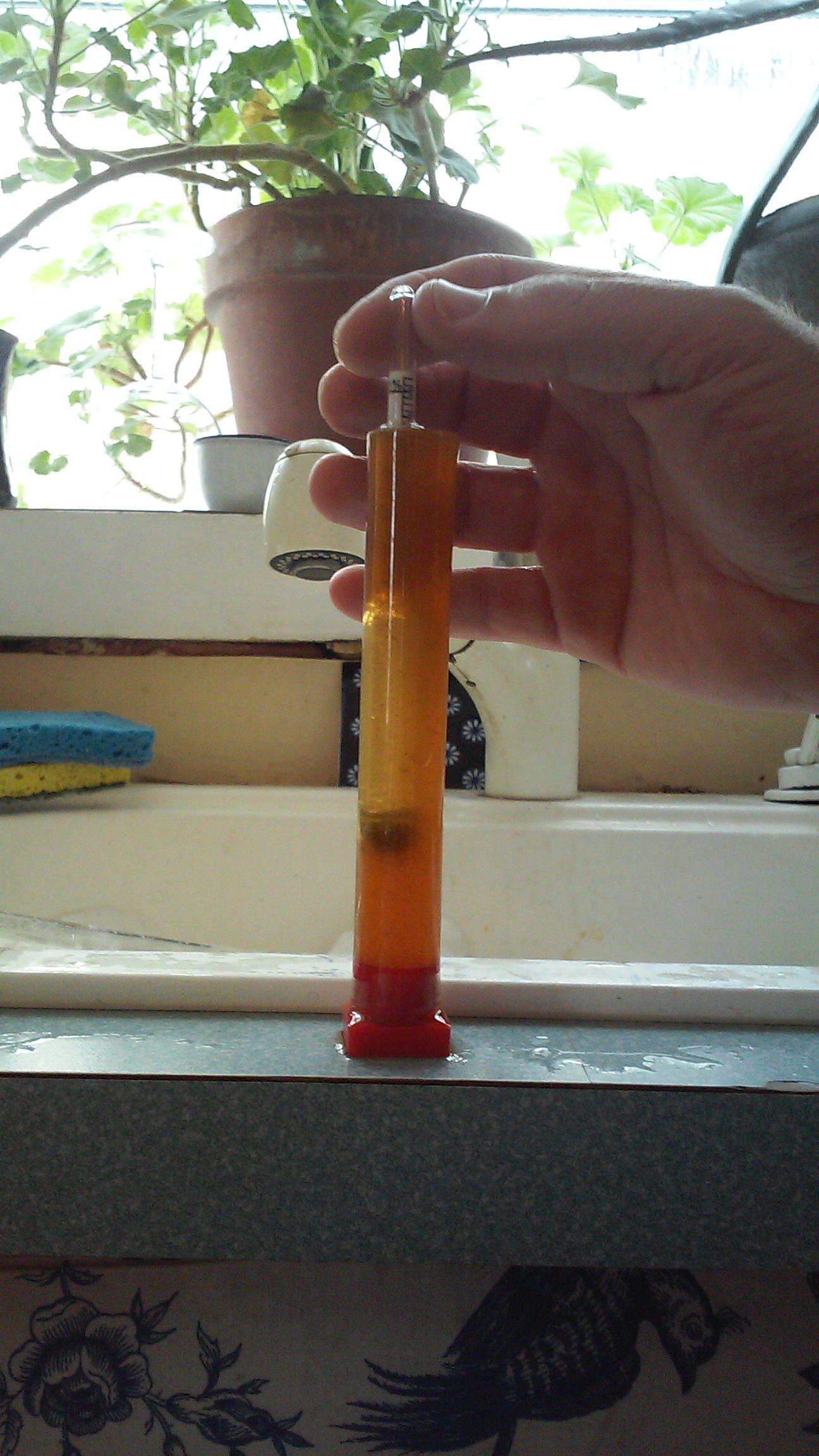
Taking the first specific gravity reading- Brewing beer requires no small grasp of science!

Taking the first specific gravity reading- Brewing beer requires no small grasp of science!

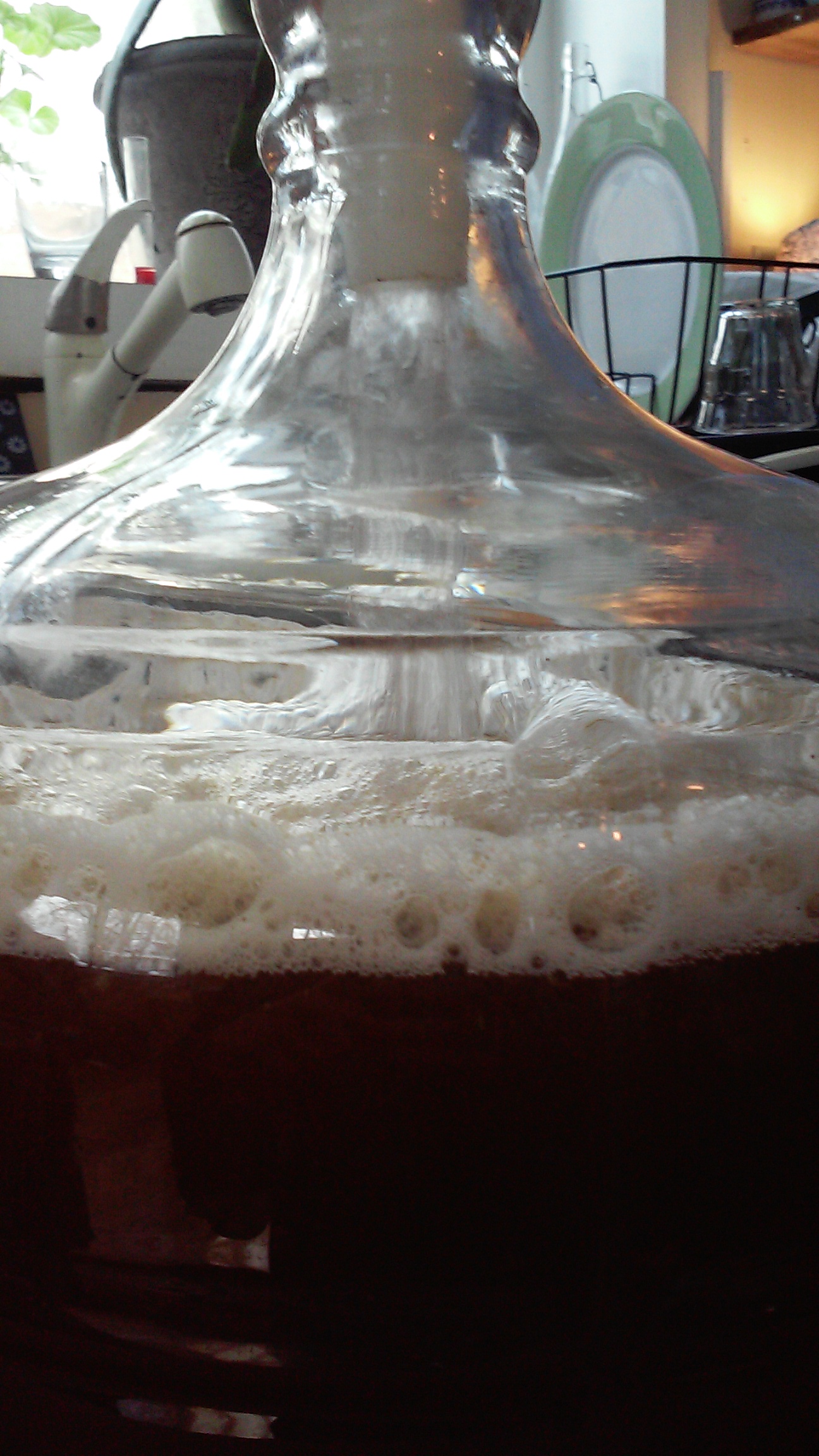
You might think that it is a stretch to see spiritual significance in brewing beer. But who can deny the subtle likeness – although through a glass darkly- that the fermentation process has to the development of virtue in the soul. The Wort will now go into a dark place (near my furnace under a towel) where the yeast will gradually disappear and something more powerful will result.

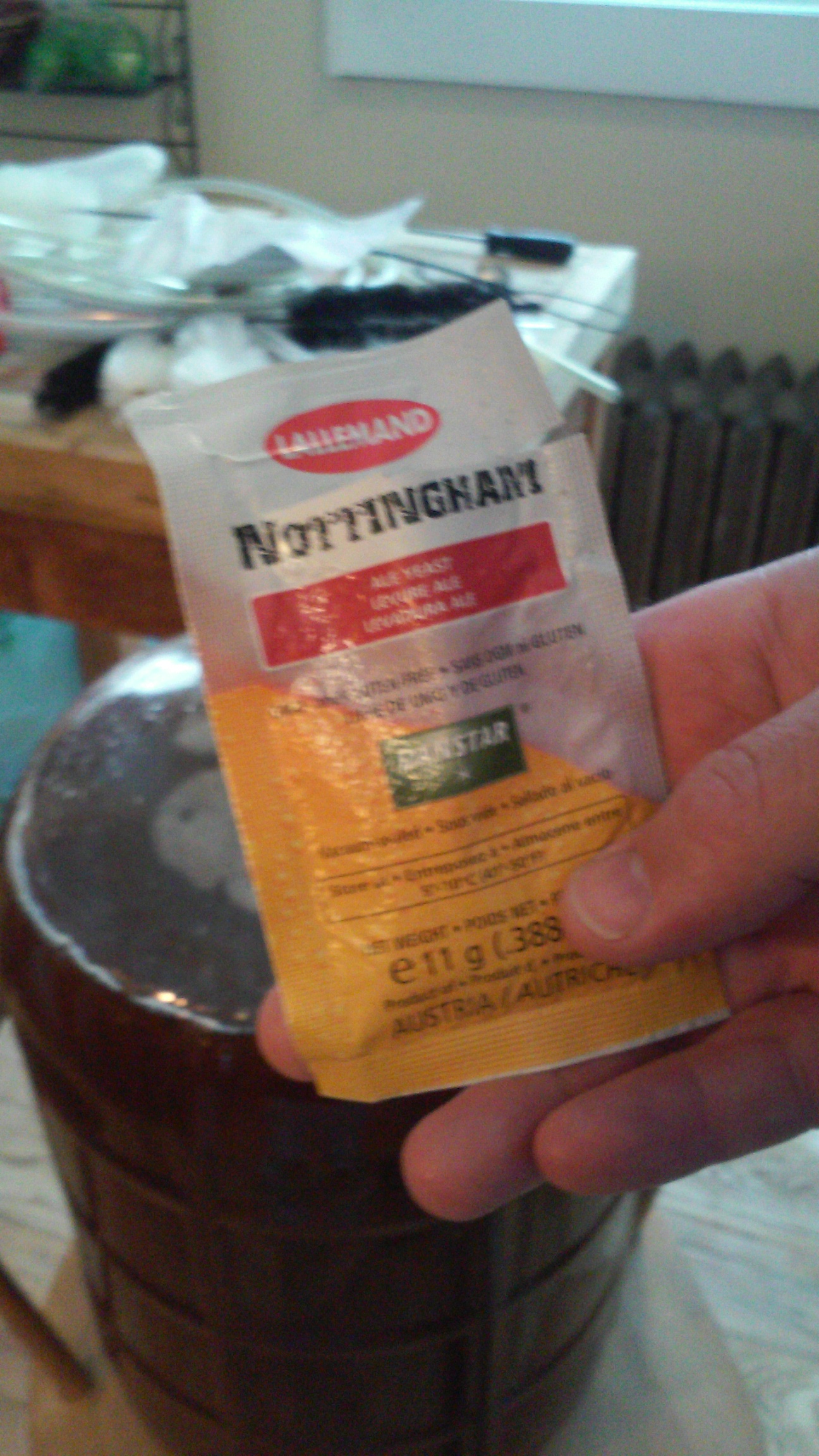
Nottingham Ale Yeast

Nottingham Ale Yeast

0219151514d


I can’t wait for Easter!

Posted in Easter, Feasts, liberal education works | Tagged , , , , | 14 Comments

Liberal Education And Piano Repair: Beware You Specialists!

You and I both know that Liberal Education is the antidote to nearly every problem in life. Liberal education is to the dry mind what balm is to cracked skin. Liberal education is to the tortured soul what Aloe Vera is to every burn.

Bad things happen in life and it is the contention of this writer that the Liberal Artist is the one most equipped to handle the problem. Why?

Because Liberal Education makes one flexible. Liberal education makes one an analytical thinker. Liberal education endows one with the capability of looking into any problem and quickly finding the cause!  And in this way Liberal education enables one to see the value of and appreciate, more than anybody, the significance of … the specialist!

Excuse me, I didn’t mean that. We are not presently engaged in praising the specialist. The specialist already has his reward. There are already enough who appreciate the specialist for obvious reasons. There are far too few who appreciate the liberal artist.

Let us take this example from my own life.

I have been trying to solve the problem of my five foot Lindeman baby grand piano which I purchased in 2003. Although there are some who have criticized me for this purchase, I have doggedly refused to give up hope. I refuse to “throw in the towel” on what I think is a thing of beauty.

And so recently in an attempt to bring the piano back into tune, I decided to have a look at the motor.

My Lindeman Piano with the engine removed. Beautiful!

My Lindeman Piano with the engine removed. Beautiful!

I am amazed at what a piano looks like on the inside. If I built one of these things I would be very proud to sell it to you for $150,000.00!

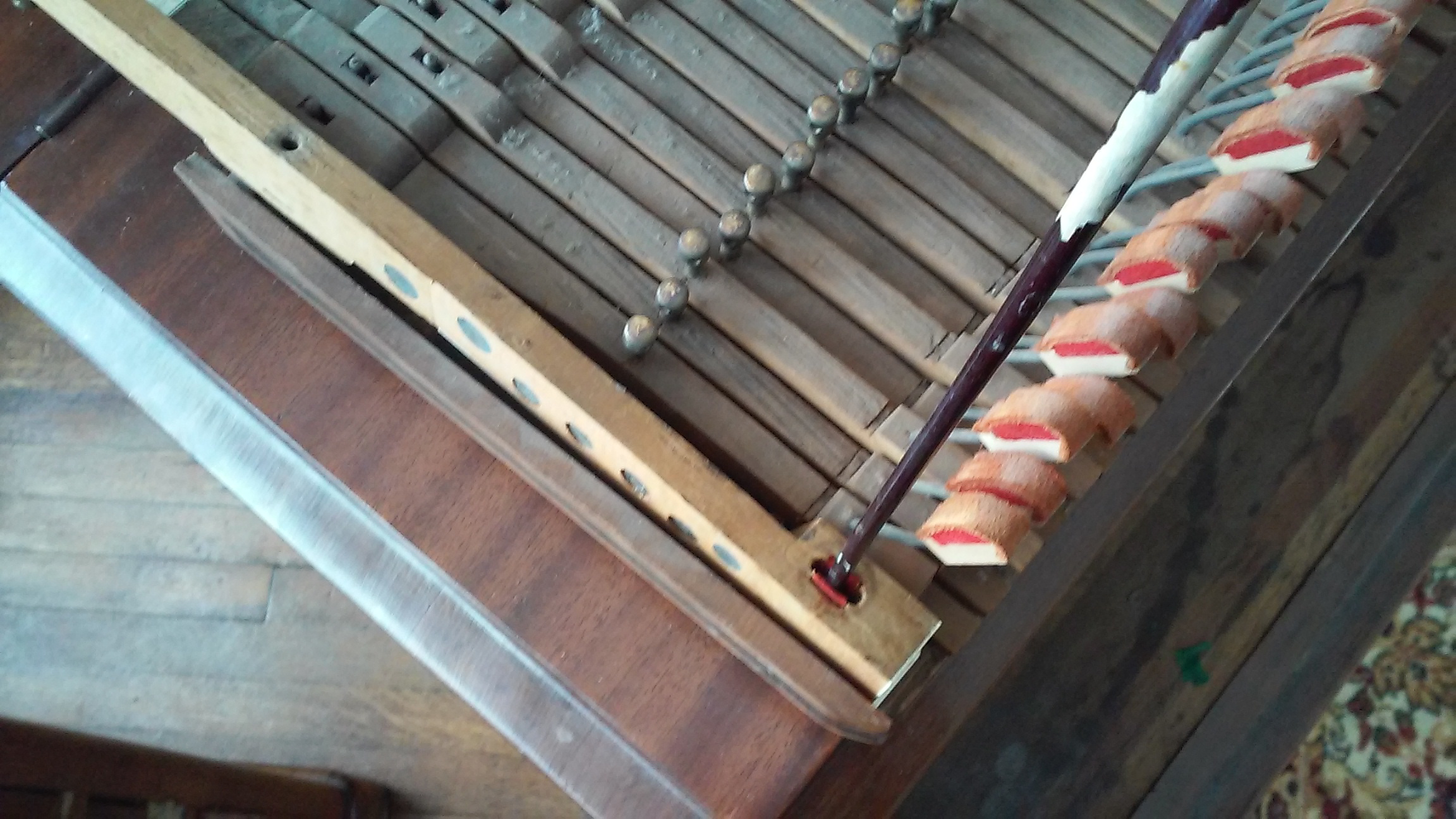
Upside down key with paintbrush stuck in as I glue some of the felt back together.

Upside down key with paintbrush stuck in as I glue some of the felt back together.

Now it is true that the reason why I took the piano apart was only because I myself appeared to have broken two of the notes in my curiosity to see just how they worked. That is, I damaged the action. Now precisely what part of the action I damaged is up for the specialist to say.

All I know is that two of my keys were not working (i.e. the 32 and 33 keys- the E and the adjacent F to be precise) after I had imprudently exerted too much pressure on the keys in trying to get them to lie back down after I had foolishly elevated both too far. Get the picture?

Actually, I can tell you the parts that I broke more precisely. It was the thingamabob that kept the action thingy (the Wippen?) attached to the railing to which each of the 88 wippens are attached with 88 separate screws. It does not appear, unbelievably, to even be listed in the diagram.

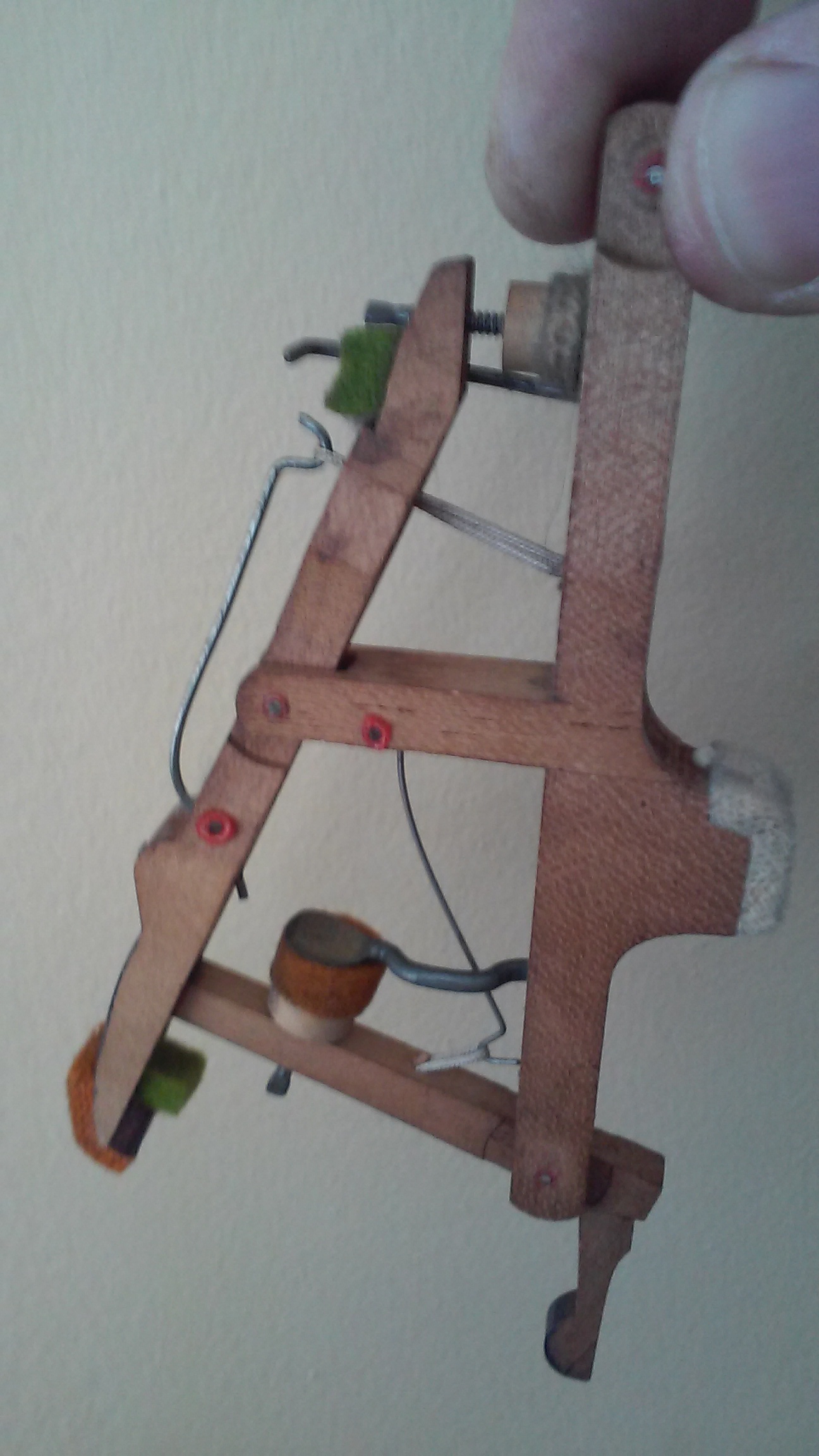
Here is a picture of what I am calling a wippen. But really it looks like all the parts described in #16-#35 or thereabouts in the diagram above.

Is this a wippen? Or is it just the action thingy?

Is this a wippen? Or is it just the action thingy?

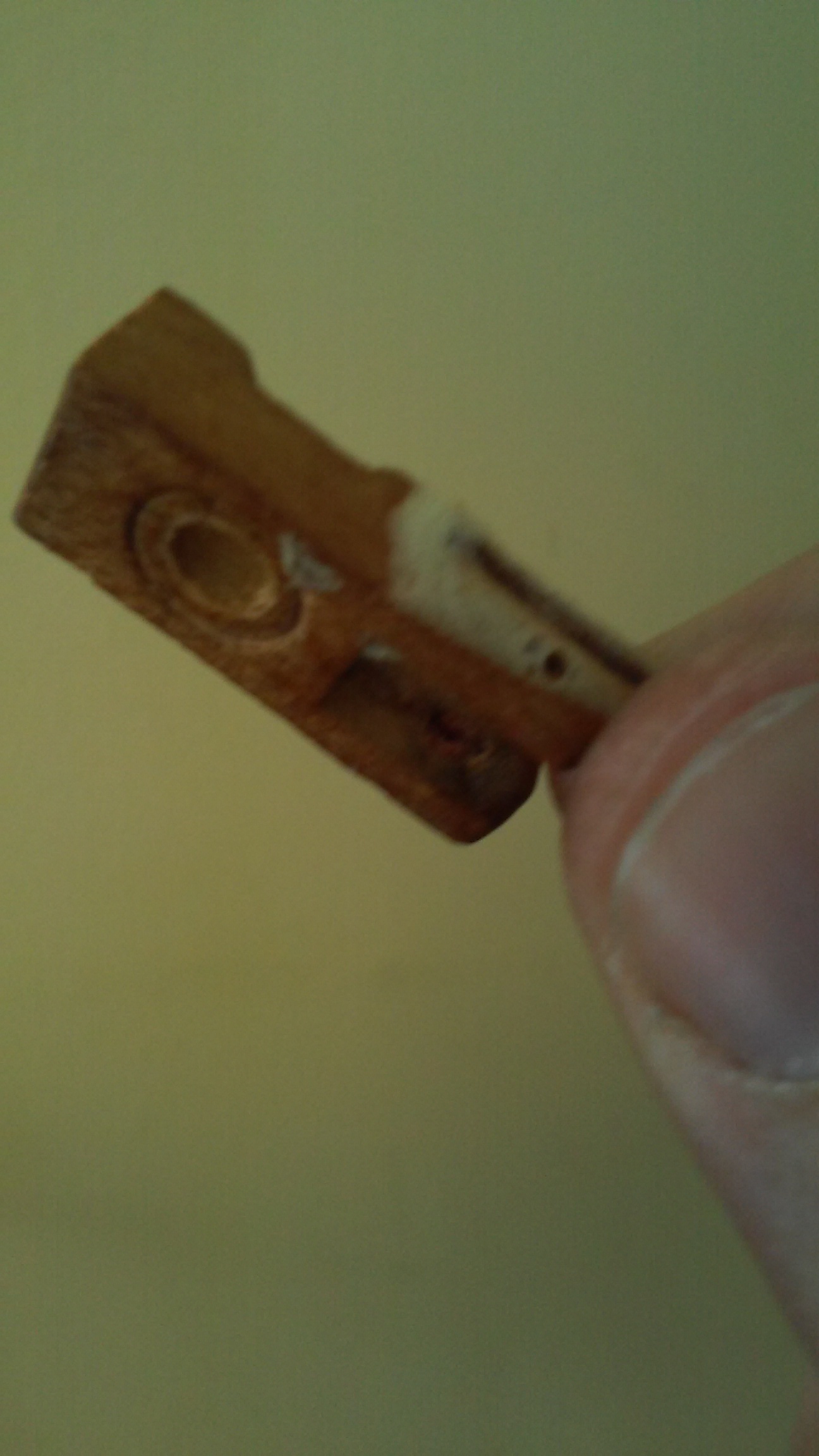
Here is the part I broke.

I am holding onto a small piece of plywood that I glued to it with some guerilla glue. Afterwards I will sand it down and make it look like it was always there!

I am holding onto a small piece of plywood that I glued. Afterwards I will sand it down and make it look like it was always there!

Another view.

0216151216b[1]

I can’t wait to see if my fix works. Hopefully it will all go back together, and then I can get around to tuning each of the 88 individual notes. And did you know that, for the most part, each note has three separate strings that produce each sound? How do those piano tuner manage to tune 236 strings in one hour? I would feel pretty good about tuning, say, 45 a day. That would take at least a week, and I suppose I would have to charge you $1,500.00. That seems eminently fair to me.

But before I put the action back into the piano case, I am going to spend at least an hour dusting and vacuuming the various parts. Looks like my piano has been accumulating dust and debris for about 50 years.

We shall see how this goes. Perhaps the piano will never work again. But if it does, then watch out all you specialists! Don’t think for a minute that you can’t be replaced by a feisty liberal artist! Your specialist days may be numbered!!

And now, while the glue is drying on the piano, I think I will research how to replace the window wiper motor apparatus on my sporty Dodge minivan!

0216151452 (1)


Posted in liberal education works, Music | Tagged , , | 1 Comment

On small beginnings: Wisely and Slow Part V

Classical education has something to do with wisdom. It has something to do with becoming wise.

The classical scholars among you will undoubtedly recognize two litotes in that clever opener. Of course classical education has something to do with wisdom. Isn’t wisdom the very aim of a classical education? Why of course it is!

And so we continue a discussion of a very important matter concerning procedure, namely, concerning the pace which we should adopt towards wisdom. Should we race to wisdom as fast as we can? Should we run and leap towards wisdom like a greyhound pursuing a stag?

https://i0.wp.com/upload.wikimedia.org/wikipedia/commons/3/38/Hart_Hunting.jpgAs it turns out, there are times when we need to go slow. There are times we need to go wisely and slow.

We need to recognize these times and we have already considered three of them here and here.

Today we will consider a fourth time (although the third in our list) that we should proceed wisely and slow, to wit,

Where there is a beginning small in size, but great in power.

https://i0.wp.com/sojo.net/sites/default/files/mainimages/blog/shutterstock_143728513.jpg

Now this is an interesting thing to ponder. First of all, note the word “beginning.” That is a good English word. As a matter of fact it is a good Old English word.

Some of you would probably prefer to speak Latin when you are speaking English by using the word “principle” (principium, ii, n) or some other abstraction like “foundational concept” (conceptum, i, n) or “fundamental proposition.” (propositio, propositionis, f). Even though we (i.e. we at lionandox.com) have an attraction and a bias towards employing Latin whenever possible, we do think that one ought to avoid speaking Latin when one is in fact speaking English. Comprehendes-ne?

Therefore we will prefer good concrete English words (words like beginning rather than principle) that have soaked and marinated and stewed in our collective Anglo Saxon minds for centuries. What a beginning is, is clear to all of us English speakers. What a principle is, is just a little more murky.

A beginning is something that comes before something and nothing comes before it.  A beginning is something from which something else proceeds; something else comes after.

Beginnings sometimes have very little to come after them. Other times a beginning might be the start of something very large, something very big.

Take the unit for example. That is a very powerful beginning. All number proceeds from one.

And the extraordinary thing about the unit is that the unit is not very big. No! The unit is actually quite small. As a matter of fact the unit is so small that it doesn’t even appear to have any size whatsoever. Whereas all of the numbers that proceed from the unit seem quite large in comparison.

Take 1,000,000 for example. How about 50,000,000! How about 100,000,000!

Now if all number proceeds from the unit, that is if one is the beginning of all number, then perhaps we ought to take some time to consider the unit very carefully.

We should proceed wisely and slow in our consideration of the unit.

Why?

Well quite simply if we make even a small mistake in the beginning our mistake will only be compounded and enlarged and magnified the further we proceed from the beginning. The philosopher, Duane Berquist writes,

Aristotle and Thomas Aquinas compare a little mistake in the beginning to taking the wrong way at a fork in the road. Although the mistake is small in the beginning, it becomes greater the further one proceeds.

Image result for angle

Just imagine one who has not considered the unit carefully, what a piteous spectacle! Should he be mistaken about the unit and what it is, he must, perforce, spend an entire life dealing with all of those things called numbers which proceed from the unit being mistaken about every one of them. And as he counts he only adds one mistaken notion to another. Ugh!

Just such a piteous spectacle is the one who denies the unity of the unit and instead unwittingly, asserts its multiplicity by calling it (infandum!) a number!

But being mistaken about what the unit is and what numbers are will not necessarily interfere with his ability to calculate with extraordinary proficiency…should that be the sort of thing in which he finds delight! (O Tempora! O Mores!)

There are other important beginnings that we should consider carefully as well. Beginnings in our reason, beginnings in our will. Ignore them at your peril! Again Dr. Berquist:

Hence, one who does not consider a powerful beginning wisely and slowly will stumble more and more throughout all his subsequent thinking which is dependent on that beginning. Thus, the distinction of nature & reason and the distinction of nature & will underlie all or most of our knowledge. Hence, the  misunderstanding of these beginnings in the modern philosophers has led to chaos in logic and in ethics, in our thinking and in our living.

Posted in classical education, education, truth for its own sake, Wisdom | Tagged , , | Leave a comment

Two Reasons Why Things Are Difficult to Understand: Wisely and Slow Part IV

https://lionandox.com/wp-content/uploads/2015/01/451ab-tatto.jpg

As has been thoroughly set forth and expounded here in a beautiful succinct and brilliant paper on this very subject, there are seven times when we need to go wisely and slow in our path towards wisdom, that is in our attempt to increase our understanding, to wit:

  1. where many things must be considered before a judgment can be made
  2. where a thing is difficult to understand
  3. where there is a beginning small in size, but great in its power
  4. where there is knowledge over a road and knowledge of the road to follow
  5. where there is general knowledge and particular knowledge
  6. where there is a word equivocal by reason
  7. where there are the words of a wise man

To date we have discussed two of these times (which are in bold) here.

Today I propose that we tackle the second time that we need to go wisely and slow. We should go wisely and slow when a thing is difficult to understand.
What’s that? Do I hear an objection already?

Gentle Reader: Yes, I object on the ground that what you have proposed is already too obvious. We would prefer that you don’t assault our patience, in your usual way, by explaining the obvious! Why not tell us what your wise friend means by #3, #4 or #5. Those are incomprehensible. Instead you concentrate on the very one that appears to need no explanation at all!

Well, I do understand your concern and it is not my intention to protract this discussion unnecessarily. But there is something about difficulty that may not have occurred to you. Will you hear me out just a little longer?

Gentle Reader: Perhaps for a few more seconds. I hope you will not disappoint.

Thank you. I will try my best. Perhaps you could slip away into the background a bit and allow me to speak without further interruption.

Gentle Reader: I thought this was a discussion.

Well not quite. I admit that I use the word discussion often. But this is partly due to a marketing sense which helps to drive up my readership. Sometimes we need to play to our audience and take its interests into account. Nonetheless, we could probably cover the material that we propose to cover today faster if you were simply to  agree to sit back and take notes silently.

Gentle Reader: I don’t think I can agree to this. I have ideas and questions and I am not going to allow you to simply talk over me or at me without addressing these questions as they come up naturally. What good would that be? Are you interested in teaching me something or do you just want to talk and make speeches based on the borrowed wisdom of your so called wise man?

You leave me with no alternative other than to simply turn you out of the room. I am sorry to do this, but we will simply not be able to make any progress today with your frequent interjections and interruptions.

Gentle Reader: But wait! You can’t do that…. I have the right to….. (click…..dial tone…..)

Now let us return to our discussion. As I was saying before, we should go wisely and slow when there is a thing difficult to understand. The interesting question to consider here is:

‘When is a thing difficult to understand?’ or ‘What is it that makes something difficult?

There are two times when a thing is difficult to understand.

  1. When the difficulty occurs in the thing that we are trying to understand.
  2. When the difficulty occurs in ourselves, that is in our own reason.

Consider the first. Somethings are difficult to understand because there is something about the thing which is just plain difficult to understand. Take ‘motion’ for example.

Motion is difficult to understand. Why? Well simply because motion happens to belong to that class of things which barely exists.

https://i0.wp.com/img.bhs4.com/2f/6/2f68a8a7c2033b3fa4899828cac4dbc02f3e5446_large.jpg

Local motion is a good example. First a thing is here and then it is there and then it is there and then it is there and so on…. How is one able to understand something that is moving? Ordinarily our understanding is based on the fact that something stands still for at least a little while. What does the word understanding mean if there is nothing that stands, or  stands under? Do you see what I mean here?

Understanding is a thing which is based on some kind of rest. And that is why the great Heraclitus should be held up and revered by all thinking people.

https://thegatesofdamascus.files.wordpress.com/2010/12/heraclitus-lxxv.jpg

It was Heraclitus who pointed out the problem of knowing things which do not rest when he famously uttered those immortal words:

We both step and do not step in the same rivers. We are and are not.
http://upload.wikimedia.org/wikipedia/commons/thumb/e/e8/RiverWampool(SimonLedingham)Sep2004.jpg/220px-RiverWampool(SimonLedingham)Sep2004.jpg

Another example of a thing which is difficult to understand is time. Talk about something which doesn’t stand still, my goodness, time has got to be the most fluid thing there is!

https://i0.wp.com/cdn.wonderfulengineering.com/wp-content/uploads/2014/10/time-wallpaper-2.jpg

It boggles the mind. The question really should be does time even exist? I think it does…but just barely!

Consider, what part of time exists at any given time? The past does not exist. The future does not exist. Only the present appears to exist and the present is not very long is it?

How long? well about as long as a point is long. And that is not very long!

At any rate, I think it is clear that time is one of those things that is very difficult to understand. Mind you I don’t say it is impossible to understand. But I would assert that it is impossible to understand without reading Aristotle’s 8 Books on Natural Hearing (otherwise known as Physics).

And so the first time when a thing is difficult appears to be when the difficulty occurs in the thing itself.

Now for the second. A thing is also difficult when there is a difficulty due to the weakness of our own reason.

This is evident especially when we consider things above our own reason, like God and His angels.

This accounts very well for the fact that there are very few homilies in our churches concerning the Holy Trinity or the distinction among the heavenly spirits.

Why?

Simply because the subject matter is so far above us that our own reason encounters great difficulty in thinking about these things. Immaterial things are tough to think about. It is not that these things barely exist, or have a slim hold on existence, no, quite the contrary!

These things are difficult to understand because there is a deficiency in our own ability to understand.

Nonetheless, it is incumbent upon us to think about them despite their difficulty. In fact, it turns out that God is really the only thing worth thinking about ultimately, The only reason why we should think about anything else is because of the light that these other things might shed upon our understanding of God. Right? Right!

That is the reason why we call Theology the Queen of the Sciences. Every other branch of learning has value or dignity as a handmaiden. And the more another field of thought enables us to think about God, the higher it is in the scale of worthwhileness or dignity.

https://i0.wp.com/images.huffingtonpost.com/2013-03-14-QueenofSciencesCut.jpg

That, among other things, is what Saint Paul was alluding to when he said,

For the invisible things of him from the creation of the world are clearly seen, being understood by the things that are made, even his eternal power and Godhead; so that they are without excuse:

And so we should go wisely and slow when trying to understand difficult things, bearing in mind where the difficulty lies.

We should first attempt to ascertain whether the difficulty is based in the thing or in us.

Posted in classical education, discussion, Heraclitus, Philosophy of Nature, truth for its own sake | Tagged , , , | Leave a comment

Wisdom Takes Time: Wisely and Slow Part III

 I can tell when a topic is so fascinating that people are just not ready to move on. And you, O fortunate reader, are lucky that I have this gift!

Many would have long since abandoned the interesting topic of the last post and would, no doubt, already have posted three or four or even a dozen other trivial posts, concerning any number of the passing topics de jour, which lose their relevance almost as soon as they are published.

Here at Lionandox.com you will find that when we bring up something of interest we will dwell on it at length. We will savor it. We will sip it and taste it, rolling it around in our mouths like a good wine, allowing the sweet flavors to yield themselves up to our ready and eager intellectual taste buds.

We will not gulp our topics down like some cheap beer.

Quaffing it like some tasteless swill meant only for those who have no ability to distinguish, no sense for subtlety, no idea of gustatory refinement.

Good ideas need to be milked….or perhaps I should say “tapped.” Yes, tapped is a better image. You can be sure that we will do our utmost to tap every ounce of the sweet sap from our Maples! We will not leave a gusher gushing without sticking a bucket under it to catch every drop!

We do not flit from one topic to another in paroxysms of intellectual curiosity- the intellectual malady indicative of our age. Flitting now here now there, up one line of thought, abandoning it, only to pick up another before that too is abandoned according as our feelings, fashion, or impulse directs.

Instead, we will plod wisely and slowly in our attempt to understand. Why?

Because, my good friend, if we run fast we risk stumbling! And further, as you may recall, we need to go wisely and slow precisely when talking about going wisely and slow because these are the words of a wise man. Do you doubt me?

Here again are the seven times that we should go wisely and slow and I invite you to scrutinize #7 carefully:

  1. where many things must be considered before a judgment can be made
  2. where a thing is difficult to understand
  3. where there is a beginning small in size, but great in its power
  4. where there is knowledge over a road and knowledge of the road to follow
  5. where there is general knowledge and particular knowledge
  6. where there is a word equivocal by reason
  7. where there are the words of a wise man

Who is there that doesn’t understand this reason? When a wise man speaks we might easily guess that his words would be wise and weighty. We should listen to the words of the wise with reverence pondering them frequently.

The words of God are the obvious example. One should not read through Scripture quickly- running as it were from one verse to another, barreling through pages and chapters and books as if wisdom could be gained in the manner that the cup is won at the Kentucky Derby!

No! On the contrary, when reading Sacred Scripture far better to take a stylus out and copy just a few words beautifully while contemplating them in peace and quiet for at least a day or two…or a couple a years…or for a lifetime.

Those who are wise have the special capability of saying very much in a few words. That is their secret. Therefore it belongs to the rest of us to spend time unwrapping and unveiling the profundities that the words of the wise undoubtedly contain (in addition to calligraph-ing them).

And so without further ado, without any circumlocution, without wasting any words whatsoever to justify the attempt further, let us examine these seven times when we should go wisely and slow.

Actually I suppose we have already extrapolated on #7 (i.e. where there are the words of a wise man). Quite inadvertently we find ourselves in the awkward position of having explained the last when we meant to start with the first! But you, O compassionate reader, understand that this was necessary. You understand that without explaining the last first you would not even be reading as you are now.

And so let us be done with the seventh reason why we should go wisely and slow and turn our attention to the remaining six beginning with the first. That was fast. Too fast?

And so the first time that we need to consider when to go wisely and slow is:

1. where many things must be considered before a judgment can be made

Now fortunately for us this is quite simple. The best example that I can think of off-hand is of course taken from the great Euclid, about whom too much honor and praise is not able to be bestowed. (May his name be revered by every student everywhere!)

Take Euclid’s presentation of proposition 47 in his first book, the Pythagorean Theorem. Well, as anyone can see who consults the text, Euclid presents the demonstration of this significant mathematical concept after having first demonstrated 46 prior propositions.

In other words, the business of understanding the Pythagorean Theorem is not the affair of an hour or an afternoon or even a day. No …in order to understand it well I would say one needs to spend all the time necessary that it will take to completely understand the 46 prior demonstrations. How long will that take? 46 hours? 23 Hours? 11.5 hours? I don’t know, but I would recommend spreading it out over at least one good month especially if you try this on your own.

The Pythagorean Theorem, mind you, is fairly elementary knowledge for math students even as young as the seventh and eighth grade. And yet we regularly force them to make a judgment about  its truth on the very slimmest grounds….nay even a pretty picture!

Well, maybe it is not a crime to tell someone that a thing is true without giving substantive reasons, especially if, like the Pythagorean Theorem it is very useful, but we really ought to do our best to provide all the reasoning at the earliest possible opportunity. That way, the poor student isn’t in the terrible position of thinking that he knows something which he really is not able to  know.

The truth is that very many things- even things that we might have thought of as fundamental- require many steps for their understanding. That is to say that before we can make any sort of judgment we need to approach many things wisely and slow because of the multitude of steps require in their understanding.

You would like another example?

Take the many skills required by the musician before he is able to play those big pieces that he wants to play. Many violin teachers wont even let their students touch the violin before the first couple of lessons. But aside from this think of all those preliminary skills the musician has to learn! One just doesn’t start playing the Beethoven Violin Concerto on day one!

Take the enthusiastic student of Theology who longs to dive into the heart of things thinking he is going to study the Blessed Trinity after a week or two of introductory remarks.

It only takes a quick look at the very first article in the Summa Theologica of Saint Thomas to realize that even the beginner in the Sacred Science is expected to have acquired more than an acquaintance with mathematics and Astronomy and the major works of Aristotle including his Metaphysics.

Theology is a science that requires many things before judgments can be made.

And so we need to resist the immature thinker who is most prone towards racing and zipping along at breakneck speed thinking that the serious work of understanding is something like speed reading or calculating. He might think something like

 Well…I completed Algebra 1 and 2 before I was out of diapers, in comparison to that Aristotle’s De Anima and his Metaphysics will be a cake walk!

We need to say to him.

Young man, some things cannot be acquired like the big mac meal at McDonald’s.

Some things take years of application before they admit to being understood. If you wish to court Lady Philosophy then go wisely and slow.

Ms 3045 Fol.68V Lady Philosophy Offers to Boethius the Wings That Will Enable His Mind to Fly Aloft Giclee Print

Posted in education, Wisdom | Tagged , , , | 2 Comments