Exploring the Catechism of the Council of Trent: Day 2

Lionandox has moved the podcast here:
Posted in Uncategorized | Leave a comment

Exploring the Catechism of the Council of Trent (in less than a year) Day 1

In today’s episode we discuss the origins and development of the catechism of the Council of Trent and read some of the high praise given to this nearly five century old work by popes, cardinals and saints.

Posted in Podcast | 1 Comment

New Podcast Announcement: Exploring The Catechism of the Council of Trent (in less than a year)

Friends, I have long been interested in exploring The Catechism of The Council of Trent on lionandox. Inspired by the popular Fr. Mike Schmitz and his podcasts The Bible in a Year, and now The Catechism in a Year, it seemed to me (as imitation is the highest form of flattery), that we could do no better than Exploring The Catechism of the Council of Trent, intending that we also would complete the project in a year!

Written in the second half of the 16th century (under the direction of two saints!), The Catechism of The Council of Trent is arguably the clearest and most succinct presentation of the Catholic Faith available.

The newer Catechism of the Catholic Church, was not intended to replace the Catechism of Trent (aka “The Roman Catechism”) but was intended as a supplement. A great idea for Catholics to have both!

Given that the year appears to have already commenced, our new podcast will therefore have to accomplish the entire task in less than a year.

Therefore, beginning this Wednesday – January 11, 2023 – watch for the beginning of this exciting new series!

Given the nature of things, we do not anticipate necessarily posting a new installment of this series on a daily basis, but then again we just might.

Unfortunately, there does not appear to be a way to disable email notifications. Consequently, with our apologies, some subscribers may find it necessary to unsubscribe from the blog (sadly) in order to eliminate crowded inboxes.

I hope you will enjoy this new feature hosted on lionandox.com.

Posted in Podcast | 9 Comments

Christus Natus Est! Christmas Feasting 2023

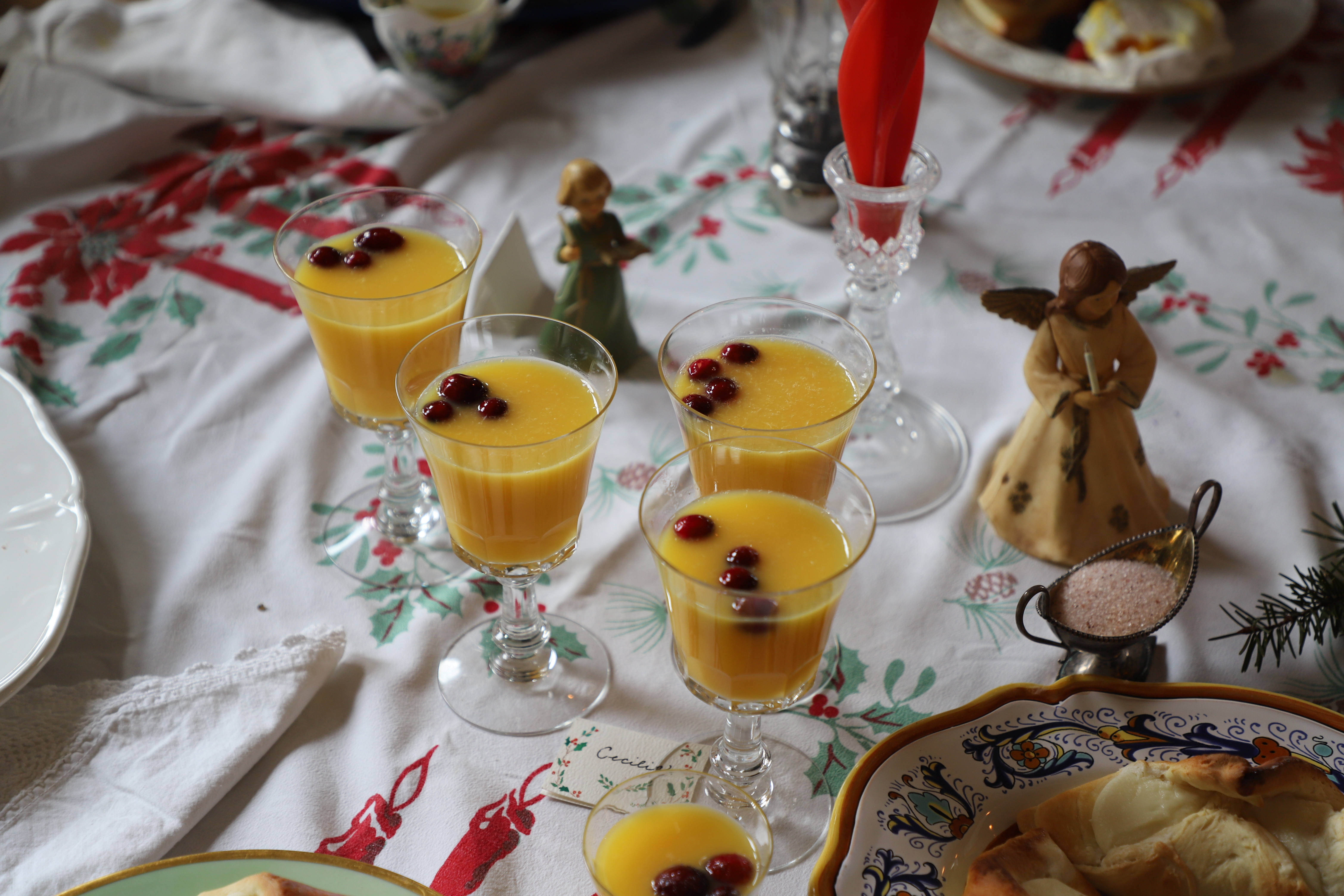
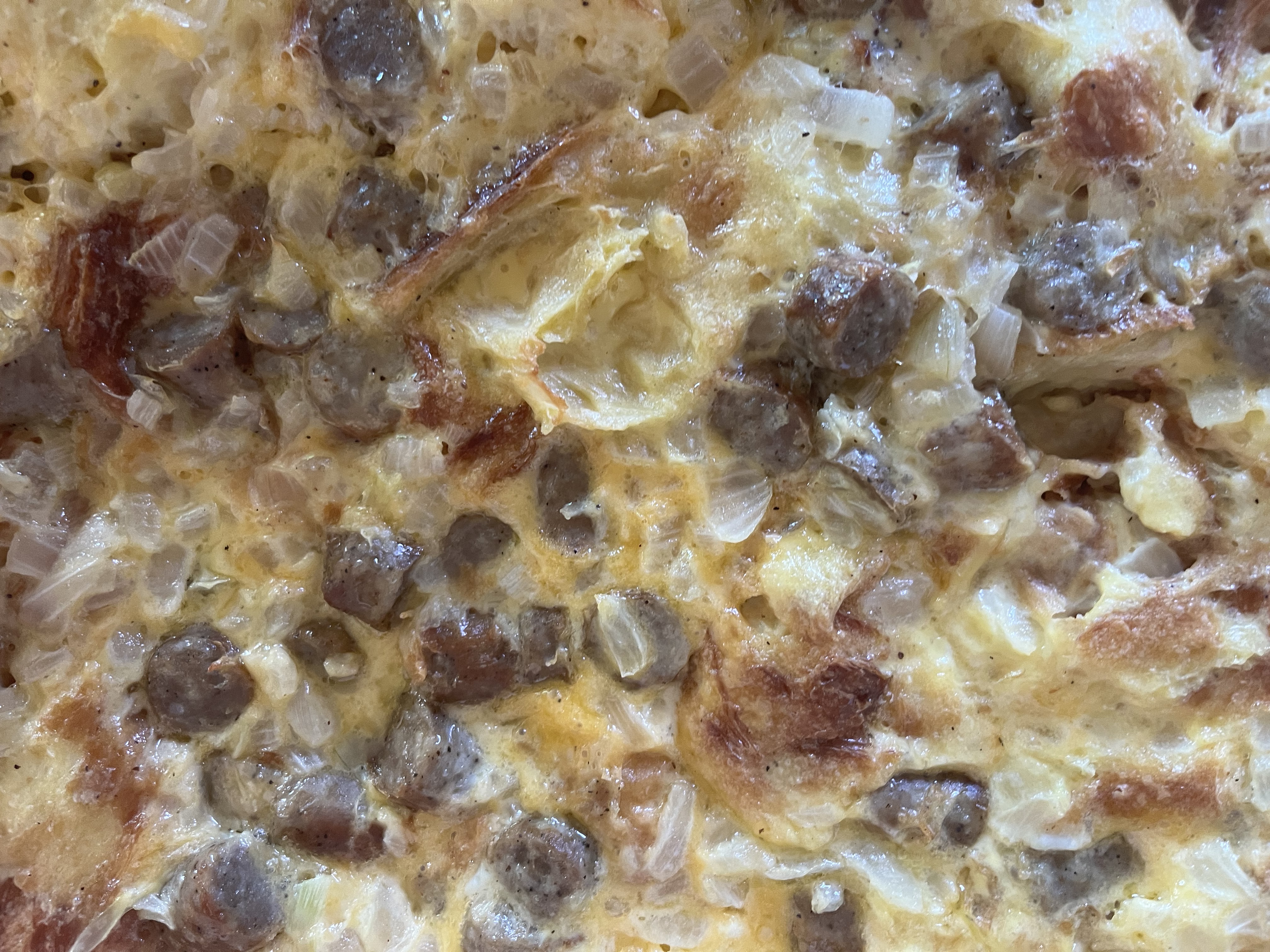
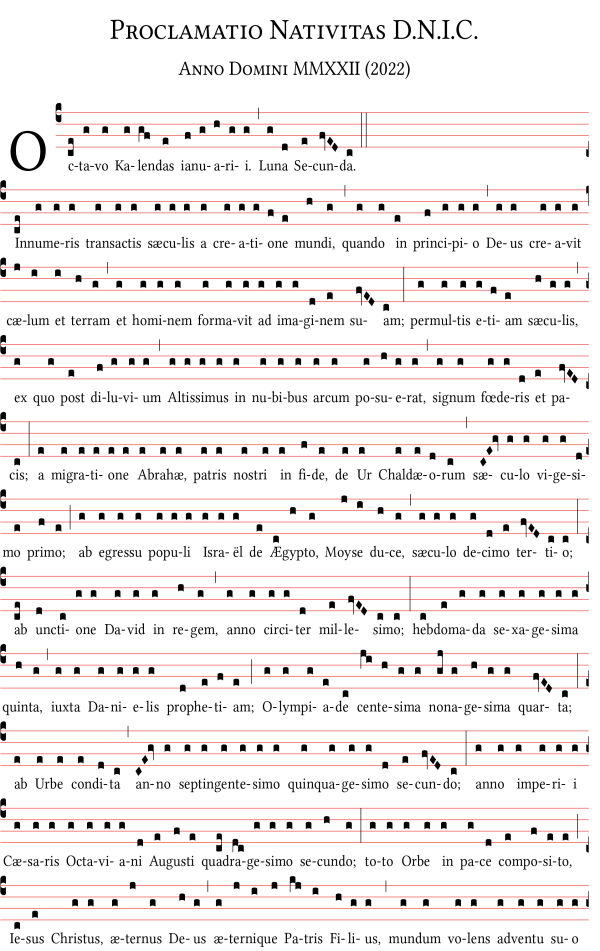
After a beautiful (but strenuous) Midnight Mass complete with a sung “Proclamation Nativitatis,” and, of course, all the “propers”, with appropriate motets (Quem Pastores, Psallite Unigenite, Verbum Caro Factum Est , etc. etc.) the handy and easily sung Missa Brevis by Claudio Casciolini but with the Hassler Gloria from his Missa Secunda, what could be a better way to fulfil our sacred role as guardians of tradition than the traditional Christmas morning BRUNCH!

The Christmas Proclamation from the Martyrology!

Well informed “Guardians of Tradition” do not only attend to the sacred liturgical tasks having to do with Divine worship, the Sacred Banquet that is the sacrifice of the Mass, but they also must keep a vigilant eye on other ‘sacred traditions’ having to do with matters a little more secular, a little more bodily…like the humble corporal feasting that is a dim reflection of that more divine feast!

Every feast requires assiduous work, and thankfully, after a long sound well deserved sleep, after unpacking the treats and surprises in the stockings, our chefs threw themselves upon the preparations with gusto.

The “Boulder Sausage” represents the very best sausage Colorado has to offer in my view, but I am open to other possibilities.

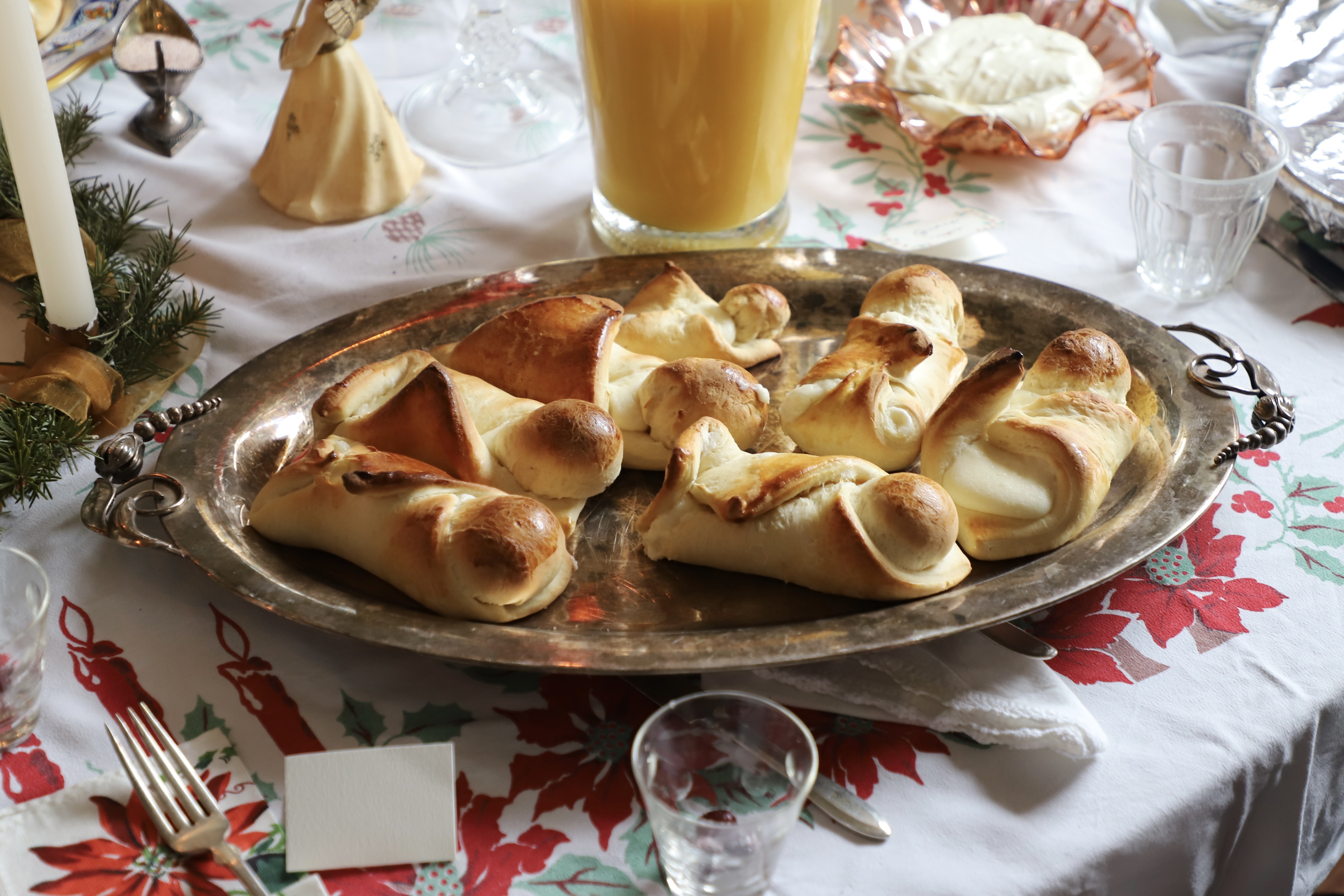
These soft scrumptious “Baby Jesus Buns” are a must! Packed with a delightful cream filling, I always save mine for the end to finish with my coffee!

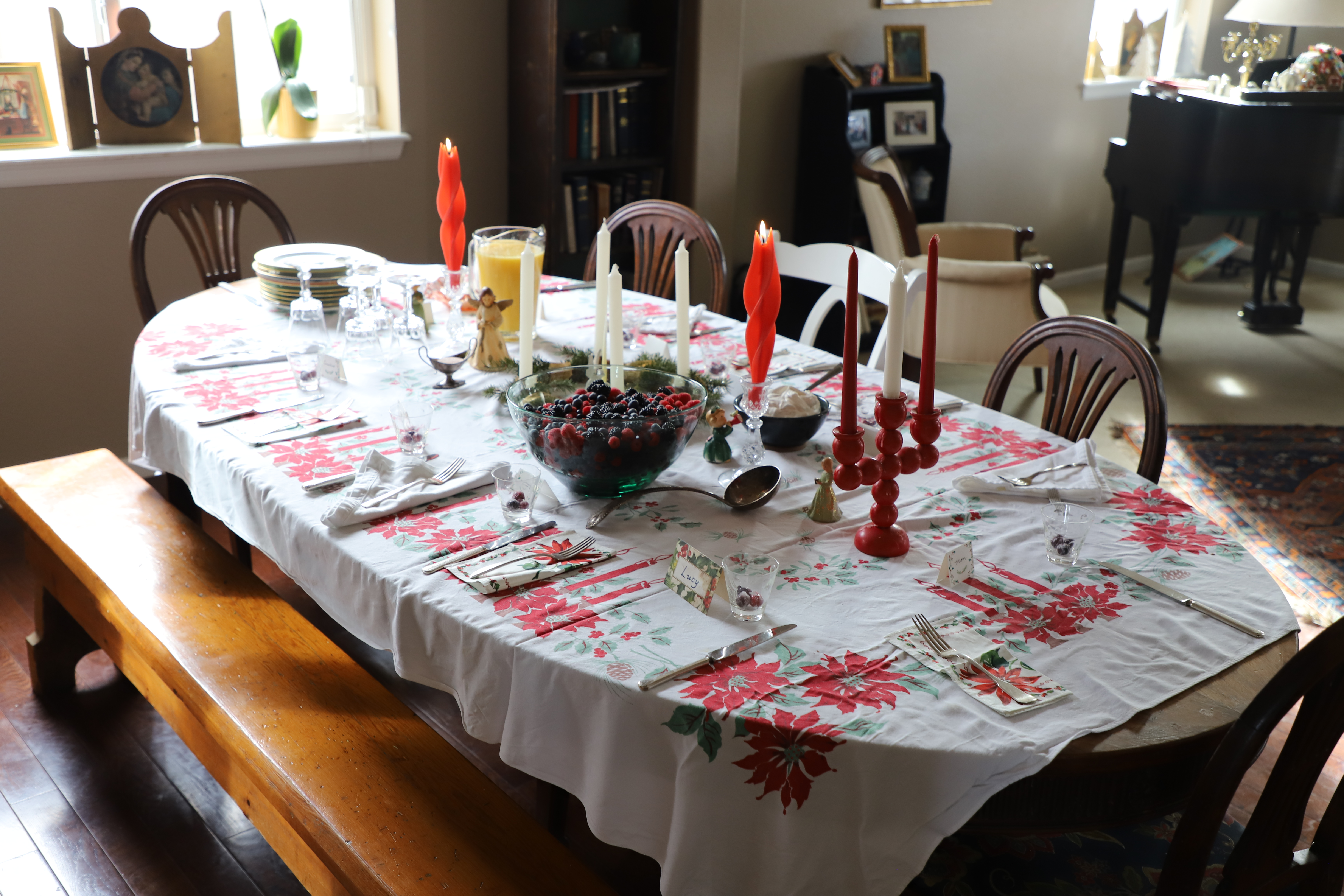
Christmas is a time for candles!

No Christmas Brunch is complete without a fruit salad of some sort. This year we opted for a salad composed solely of berries.

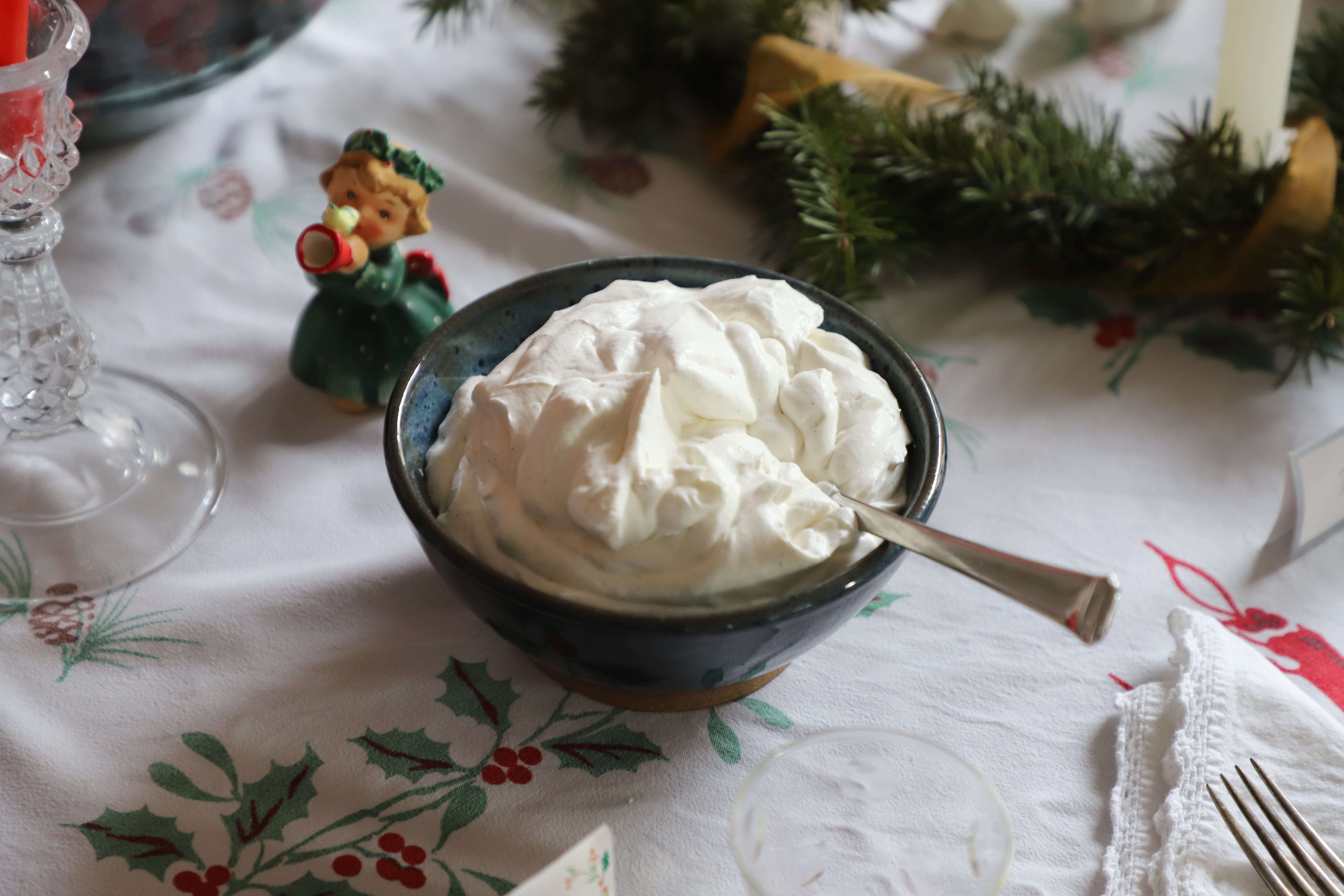
Topped with whipped cream laced with vanilla!

Out comes the Eggs Benedict with bacon.

Voila!

This year I forgot the English Muffins but fortunately we had some sourdough bread on hand which, toasted, more than supplied for this oversight.

Now, I know that this remark may sound a little self serving, but I am a firm believer that proper feasting is the duty of every human being. Whether we examine the question from a position of nature or of grace, the consummate activity of the human being appears to be ‘the feast.’ We should certainly examine this assertion in more detail and at great length…but another time!

Right now we have to attend to Christmas dinner!

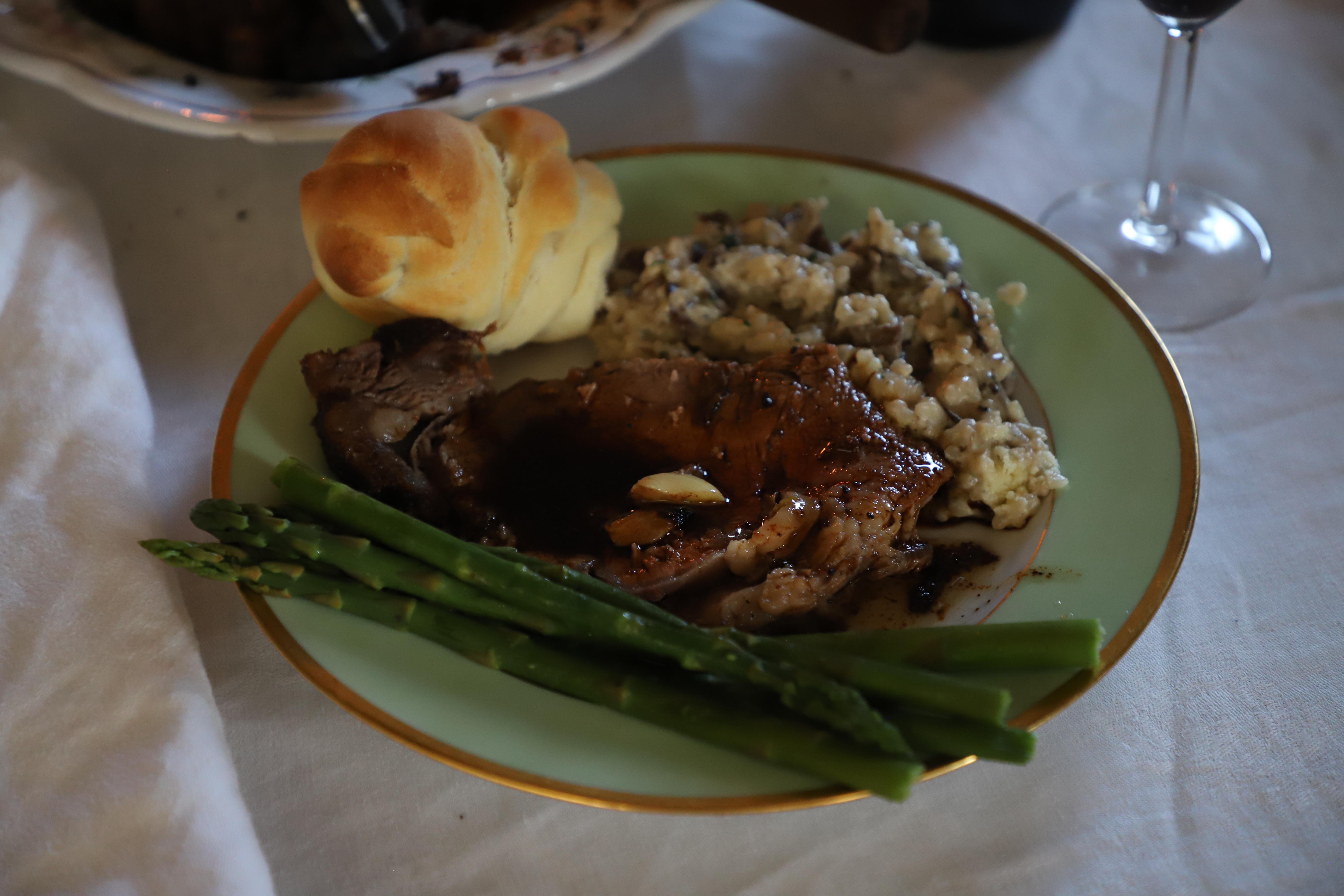
The dinner feast was splendid- but one might not be able to tell from the photos given the general lack of light during these shortest days of the year!

Always a challenge- but our tireless chefs managed to time everything perfectly. First sliced potatoes roasted with fennel and olive oil.

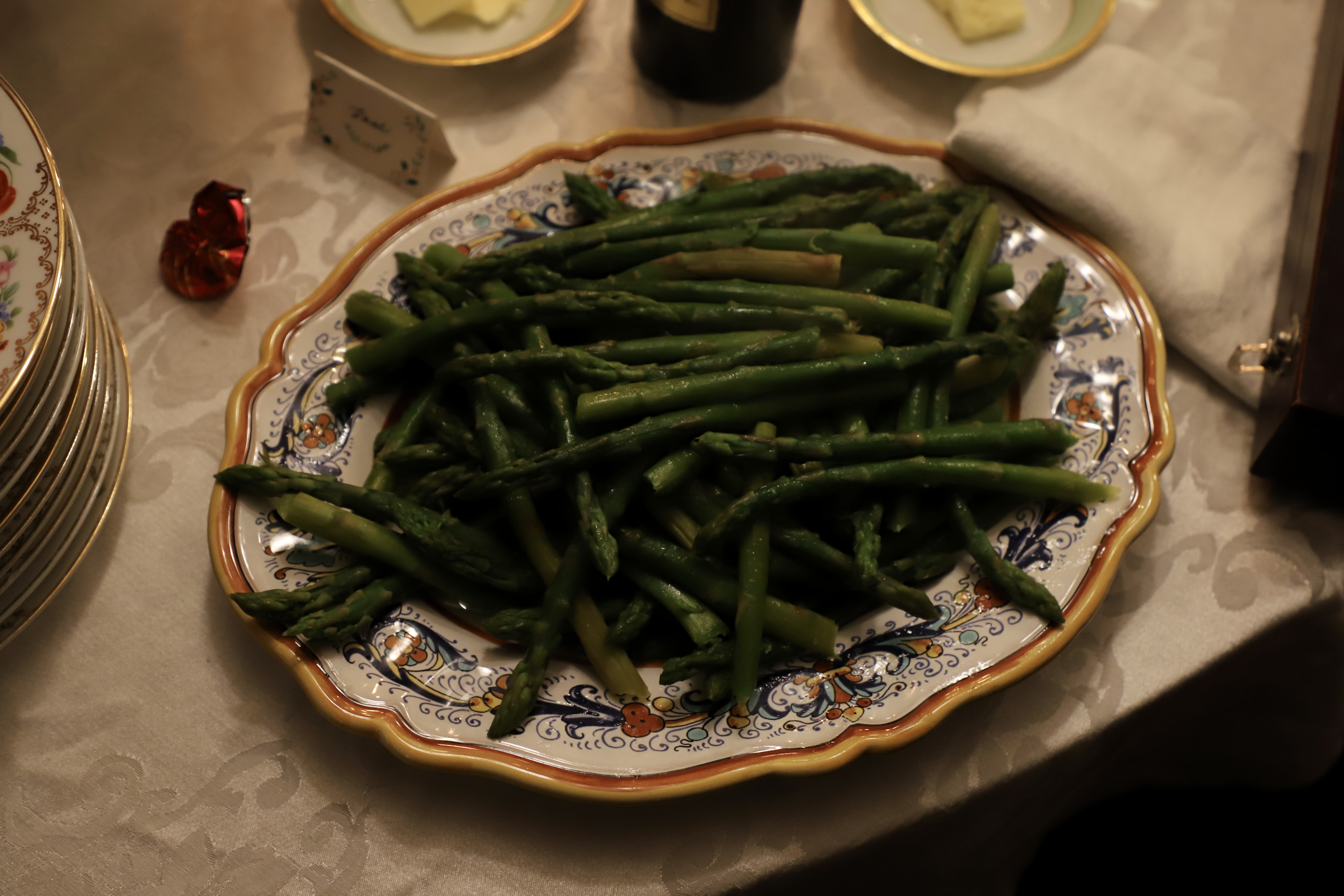
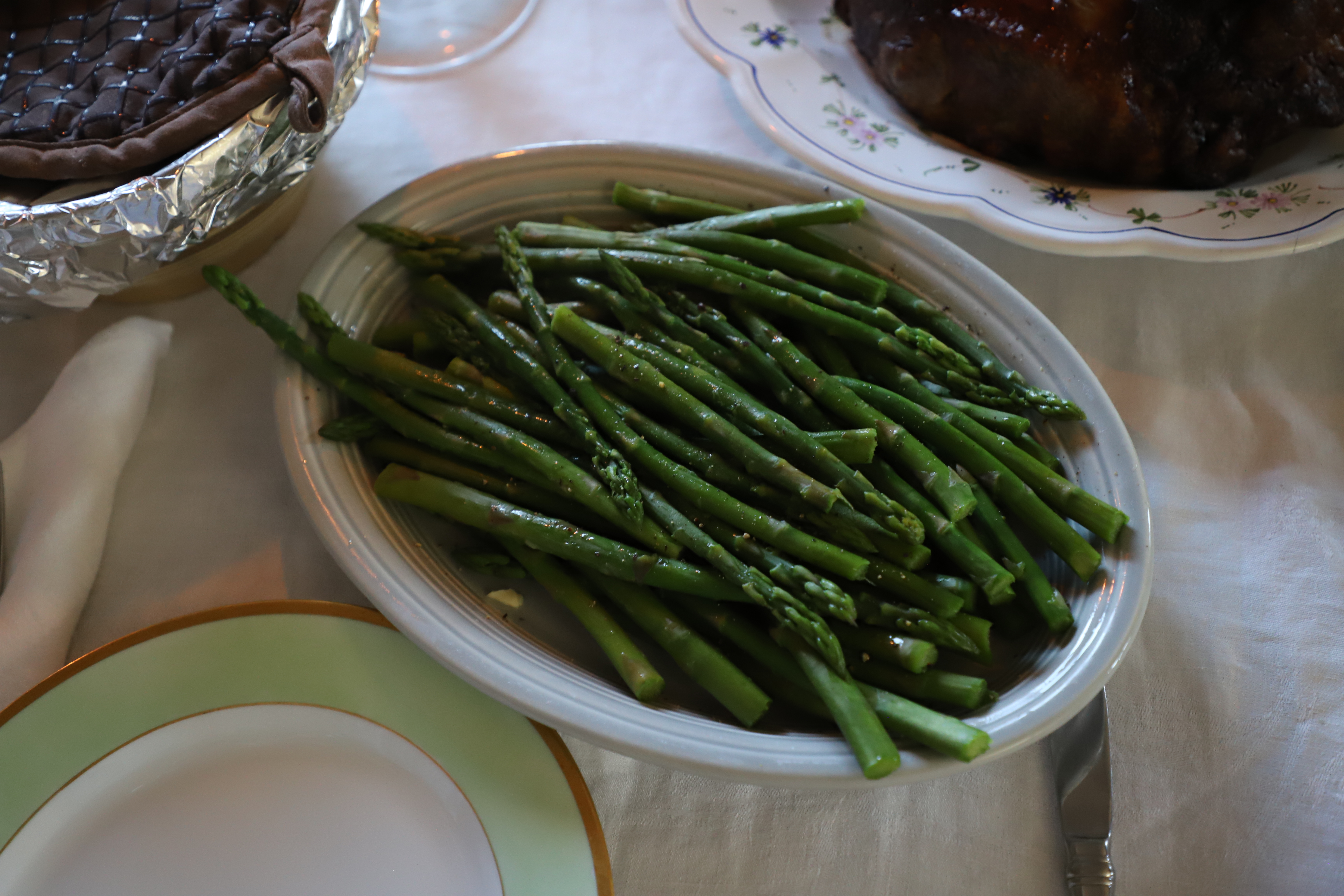
Then the buttery asparagus steamed to perfection – al dente as the Italians say.

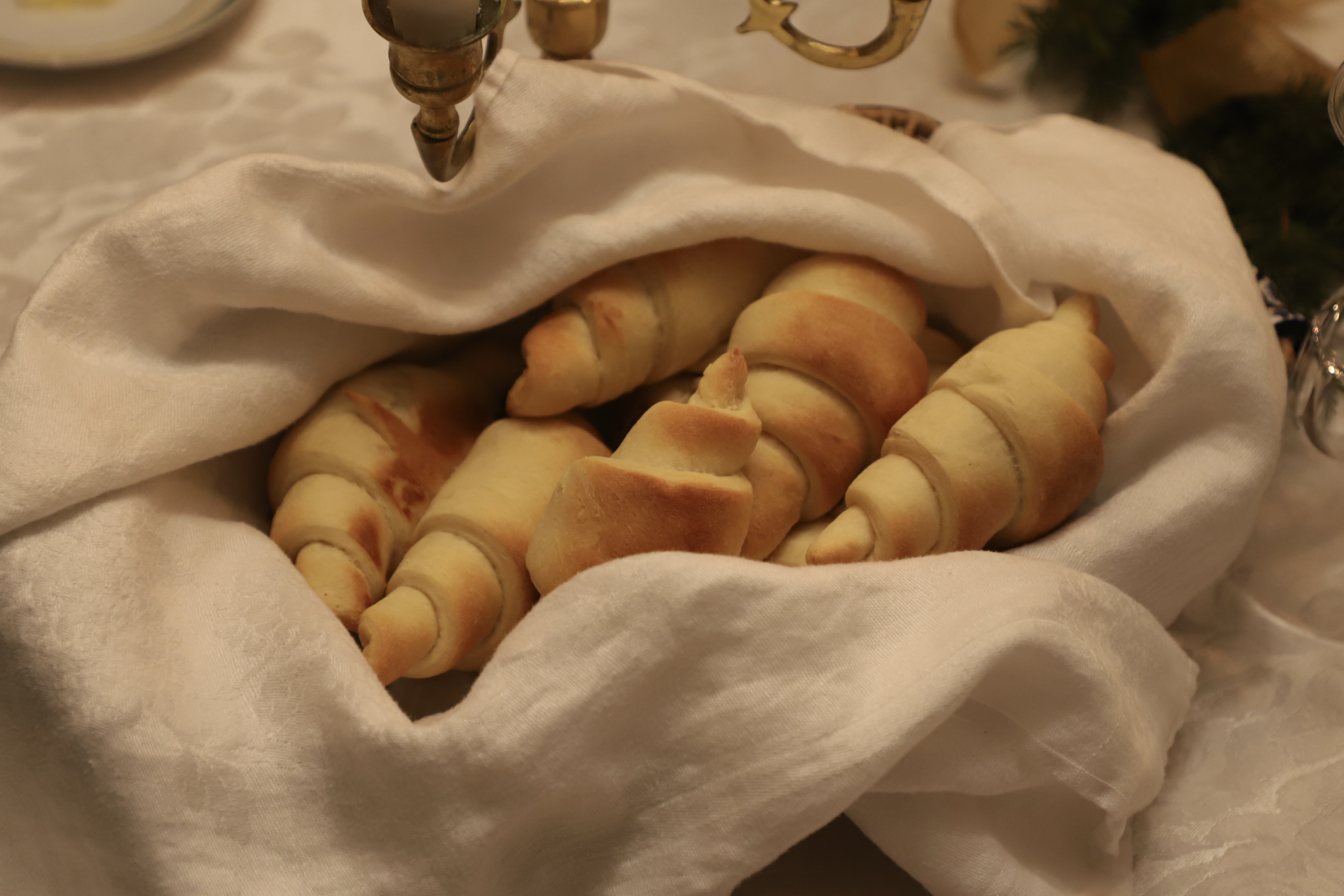
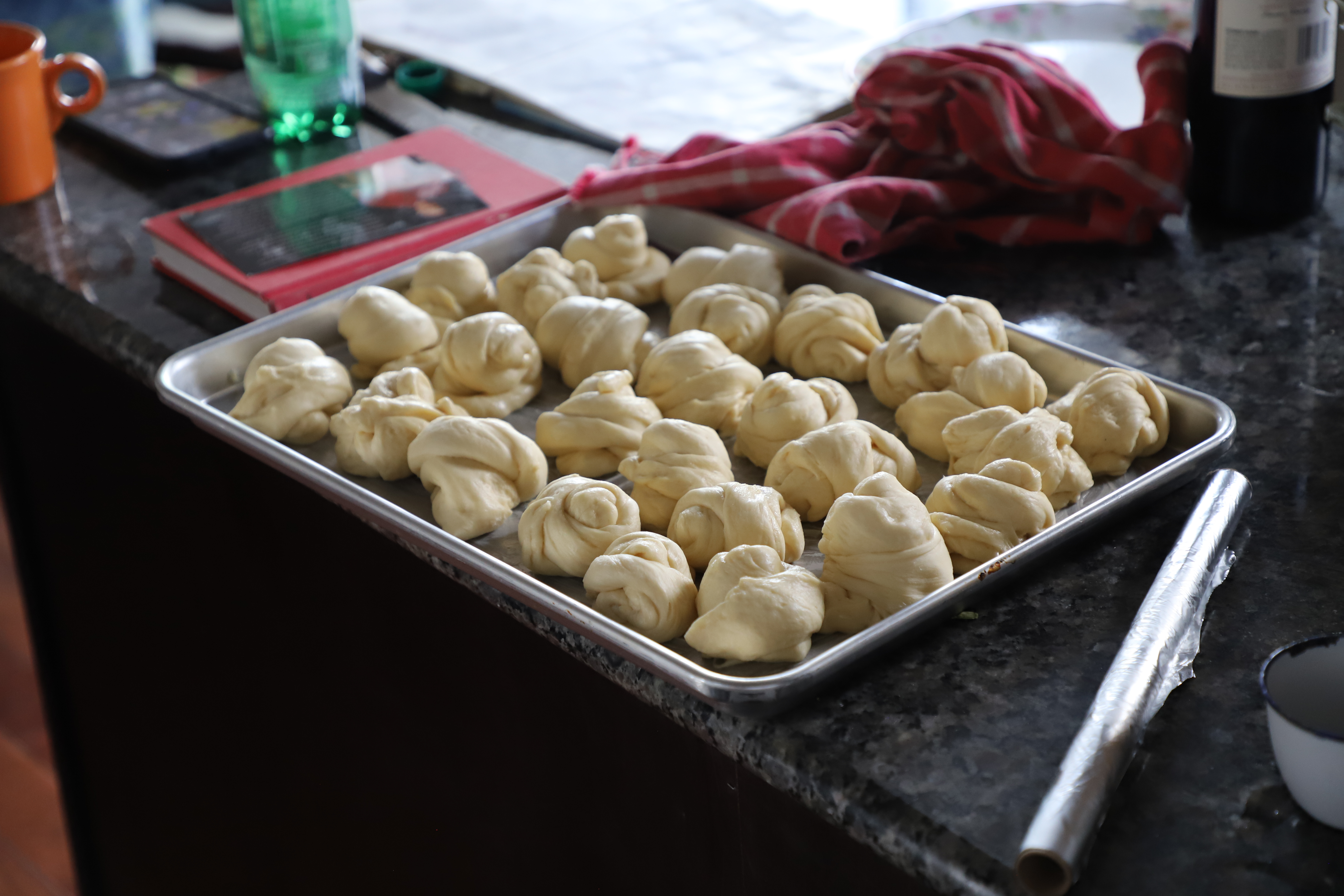
soft home-made rolls

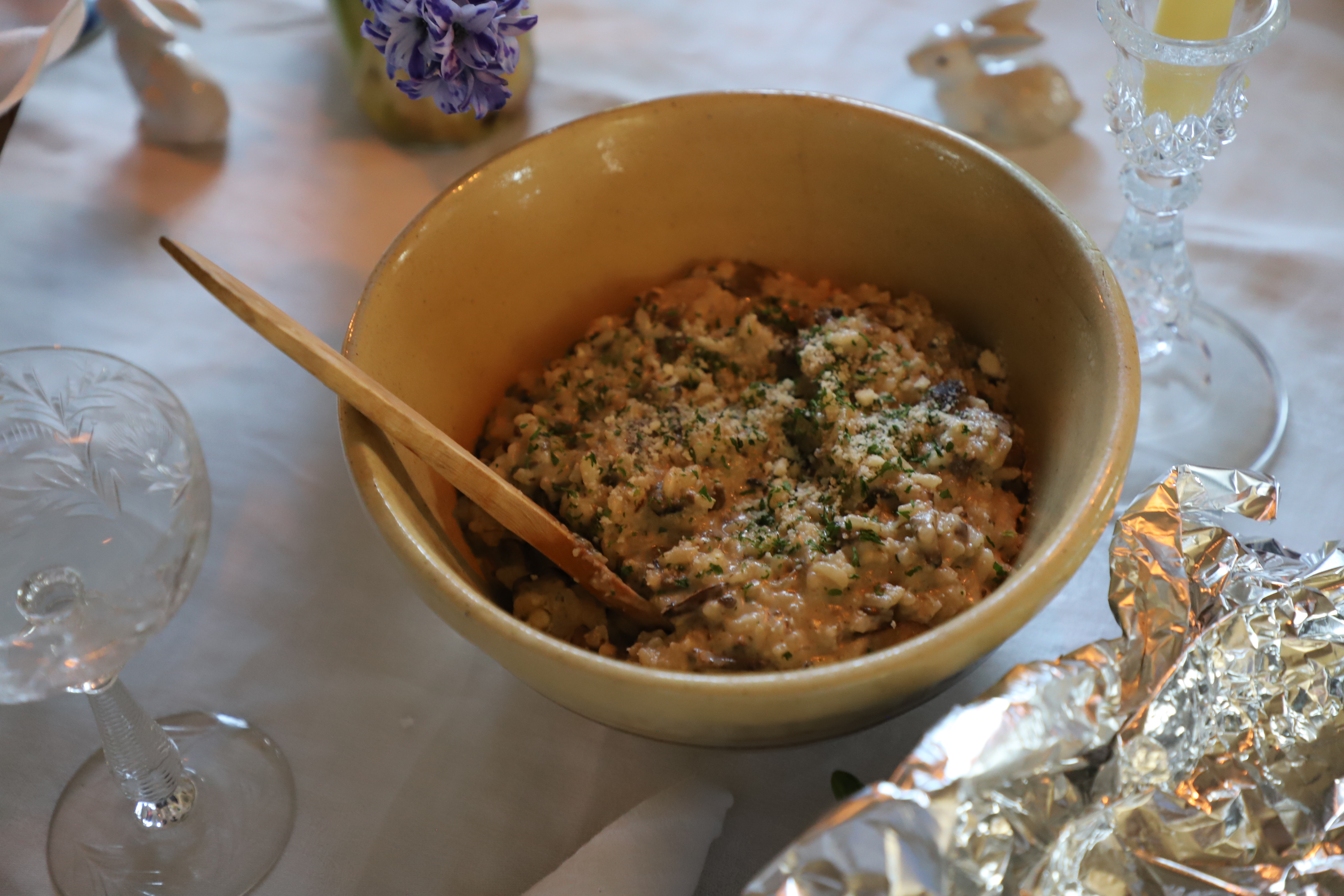
And of course a sort of giant beef Wellington with buttery chopped mushrooms, oionions sherry and herbs de provence!

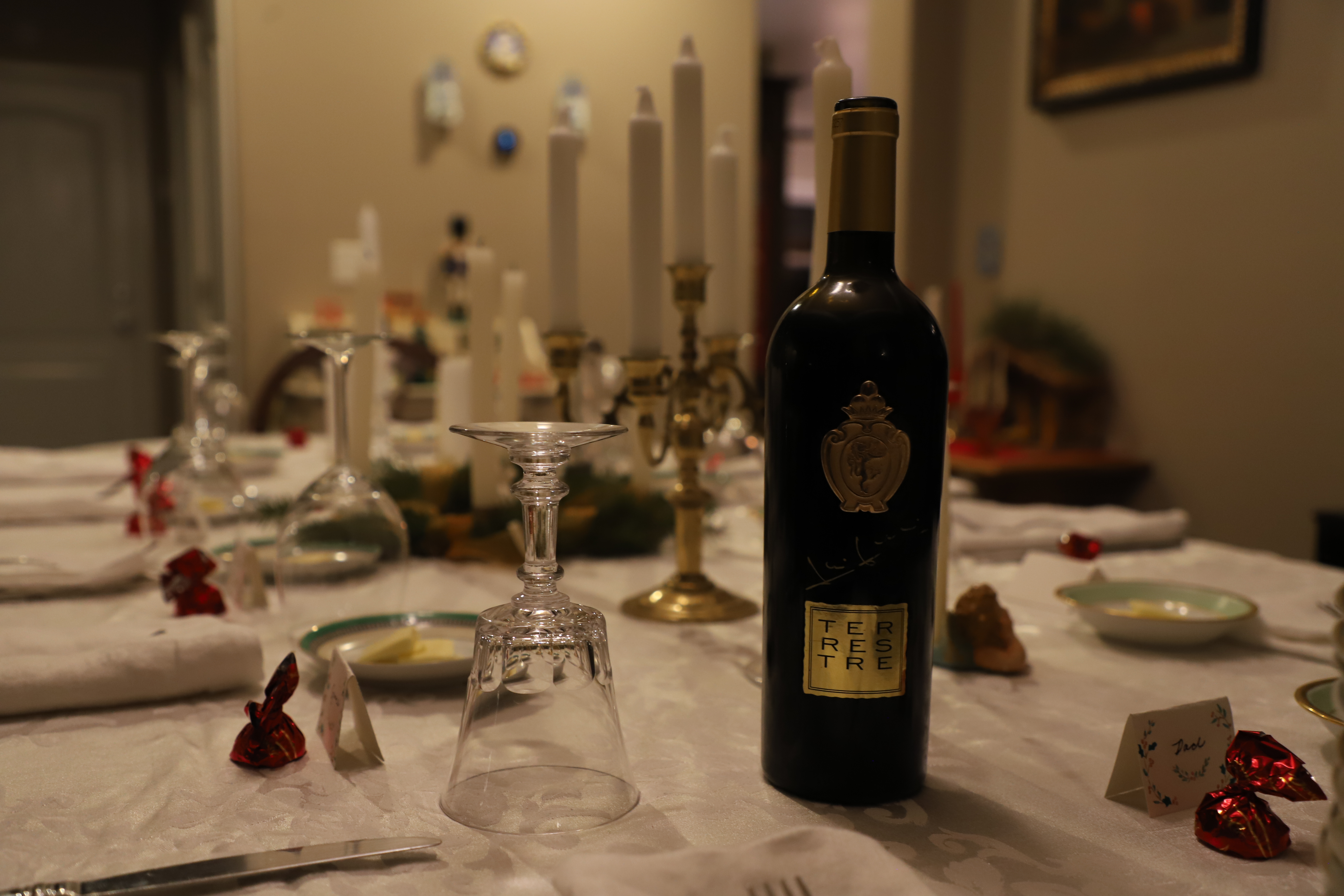
This fantastic bottle of Tuscan full bodied red wine paired perfectly with the rich beef.

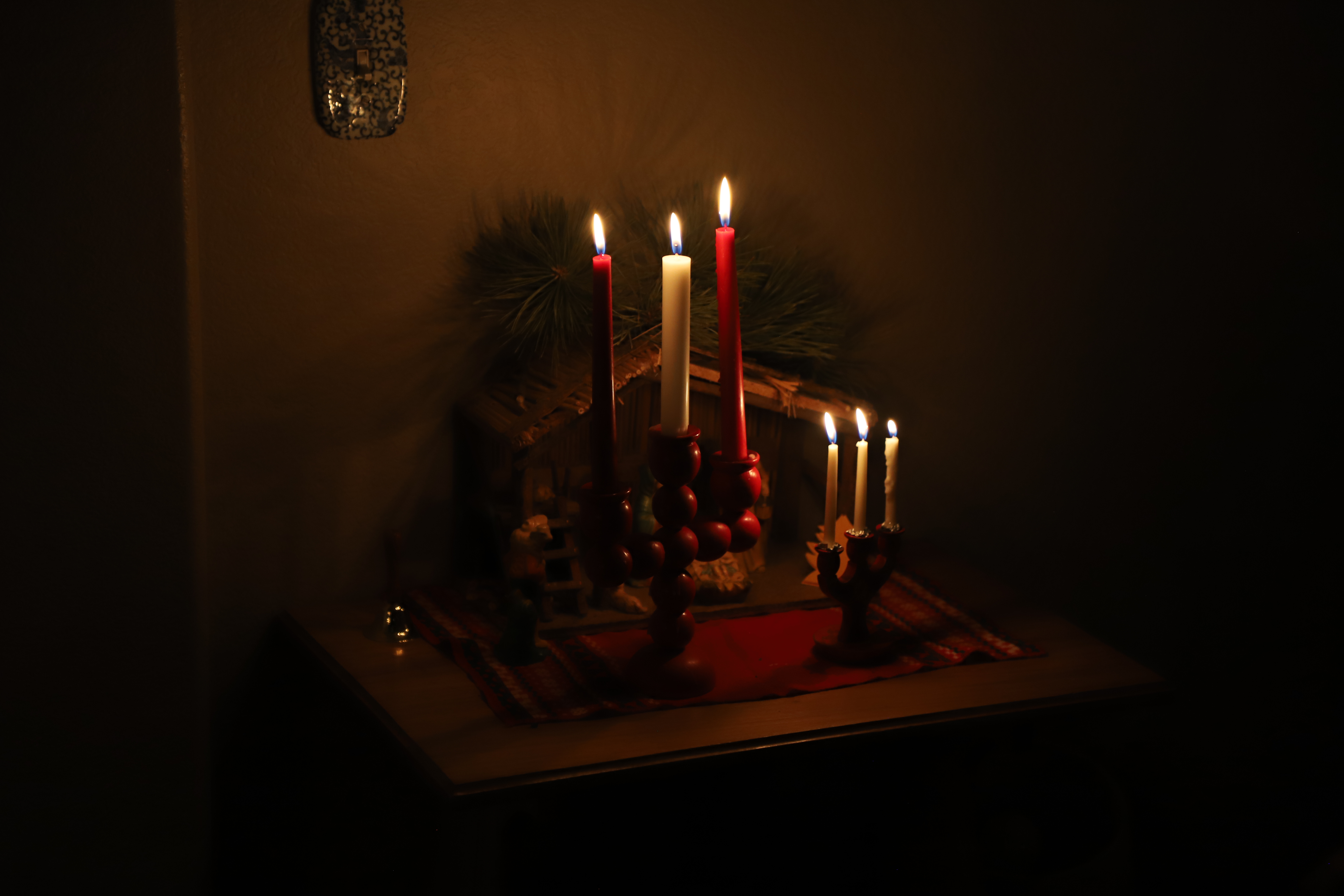
Christmas dinner does require more than a few candles!

Merry Christmas!

Posted in beauty, breakfast, Christmas, Dinner, Feasts, Sacred Music | Tagged , , , | Leave a comment

“Today’s Cathedral Coffee Break”

While on a recent summer pilgrimage to St. Louis (the “Rome of the West”) with twenty-five of my students at Our Lady of Walsingham, we were able to visit at least eleven different magnificent churches for which the city is justly famous. Aside from attending Mass and admiring the exquisite sacred architecture (from an age not so long ago when the very structure of the churches were built as if to manifest the Theology of the Catholic church in stone, mosaics, and stained glass) the students were also able to exploit the acoustics of each of these churches with their voices!

Thanks to the quick thinking work of a colleague, we were able to capture one of these moments in the gorgeous “new” Cathedral Basilica of St. Louis. Here the students are singing Sicut Cervus in a setting for which Palestrina envisioned it.

Posted in beauty, Palestrina, Sacred Music | Tagged , , , | 3 Comments

Why Does Christ Say “Do Not be Called Teacher”? A Word to Teachers for the New School Year.

Christ the Teacher Icon Print - Catholic to the Max - Online Catholic Store

As for you, do not be called ‘Rabbi.’
You have but one teacher, and you are all brothers.

Now it is not only clear from this text (Matthew 23:8), but I have had it on authority from multiple sources that the word ‘Rabbi’ means ‘teacher.’

Hence the King James version of this same passage reads,

And do not be called teachers; for One is your Teacher, the Christ.

Now, what exactly is Our Lord saying here? Is this a case of Our Lord using hyperbole as he was sometimes known to do (e.g. “And if thy right eye offend thee, pluck it out, and cast it from thee”). So under this interpretation, he might be saying,

Don’t get puffed up and arrogant because of your various titles, especially those that indicate that you might have some kind of wisdom!

Or perhaps, along the same lines, our Lord is simply exhorting us to humility? As if he is saying,

Given that teachers and instructors tend to be intellectually proud, do not be called teachers!

I am not a professor at an Ivy League school. Nor am I a professor at a tier 2 school, nor a professor at a tier 3 school. As a matter of fact, I am not really a professor at all!

No, I am a ‘teacher’ at a relatively small unknown (and unknown unfairly!) high-school. Nonetheless, even I know what it feels like to be intellectually proud! So I can imagine that our Lord might say “do not be called teacher” to me.

But could He have also been saying something else?

For example, could Our Lord have been saying,

Do not be called teachers, because guess what? There are no teachers among you!

Could it be that our Lord is not just using hyperbole, but is rather pointing out that, in the strict sense of the term, there are precisely no teachers among men? In other words, He is saying,

Call no man teacher, because God alone has claim to this title.

God alone is a teacher in the most interior and prime way. And therefore our Lord is reminding us that God alone is to be thanked and praised for being the cause of every good thing we have including our most prized possession, to wit, any small wisdom that we might have?

Why is this?

Well, just think about it for a minute. Think about what a teacher is. Isn’t a teacher supposed to be someone who teaches? And if someone teaches, doesn’t that mean that he has some sort of knowledge which he transfers from himself to a student?

In other words, since he knows something he is able to cause his students to know those same things through a process which we call “teaching.”

Related image

But wait a moment! Is this really possible?

Is a teacher really able to cause knowledge in his students?

Interestingly the Latin word for teacher is ‘doctor, doctoris’ and it is no wonder because we might ask the exact same questions about doctors. Our Lord might just as well have said,

Do not be called doctors.

This is because, as we all know, a doctor is not someone who makes sick people healthy. A doctor is rather someone who supposedly knows how to work with nature so that the sick will heal themselves!

As the great Heraclitus said,

Wisdom is to speak the truth and act, according to nature, giving ear thereto.

Related image

The wise doctor is, thus, someone who ‘listens to nature’ and ‘speaks’ and ‘acts’ according to what nature herself proposes in bringing a sick person to health.

But the important thing to remember is that the principles of health are already in the sick person! The doctor did not implant these seeds of health in his patient.

The seeds of his health are already there and the doctor merely knows how to aid those seeds to flourish and restore the sick person to health. He does this by either removing impediments or supplementing what nature herself needs in order to restore health.

And therefore, St. Thomas Aquinas points out that, just as the seeds of health are in the sick, so are the seeds of knowledge already in the ignorant. The teacher is one who aids and abets nature in bringing those ‘active’ seeds of knowledge to full flower.

A Complete Guide To Germinating Seeds | Love The Garden

Therefore, just as the doctor is said to cause health in the sick man with nature working, so also one is said to cause knowledge in another by the activity of the power of reasoning in that person, and this is called teaching. In this way one person is said to teach another and to be his teacher.

And he further distinguishes two ways that the mind might come to know,

Therefore, just as someone can be healed in two ways — first by the action of nature only, second by the collaboration of nature and medicine — so also there are two ways of acquiring knowledge. First, when the mind moves by its own natural power to an understanding of things previously unknown to it. This is called discovery (inventio). Second, when the mind is helped by an outside power of reason. This is called teaching (disciplina).

But the incipient causes of all of our knowledge have been implanted in us by God Himself. The wise teacher, like the wise doctor, is one who merely knows how to water and nourish those incipient causes of our knowledge. The teacher can not cause knowledge in a student except as a sort of secondary cause; the teacher might facilitate the growth of knowledge in his student from the active seeds of knowledge that were implanted in the student by God Himself!

It was He alone who planted in us the ability to understand. It was God who sowed the first principles in us and the light of intelligence by which those principles are known and in which all of our subsequent knowledge is rooted.

God alone is the primary and interior cause of our knowledge. God alone can be called teacher.

Now you dear reader, if you see for yourself what I am saying, and if this has provoked you to understand something new, may call me ‘teacher.’

But you may only call me ‘teacher’ in a secondary way. Because I have only enabled you to see something that you ‘knew all along’ in a seminal way.

Posted in Aquinas, education, Heraclitus | Tagged , , | 3 Comments

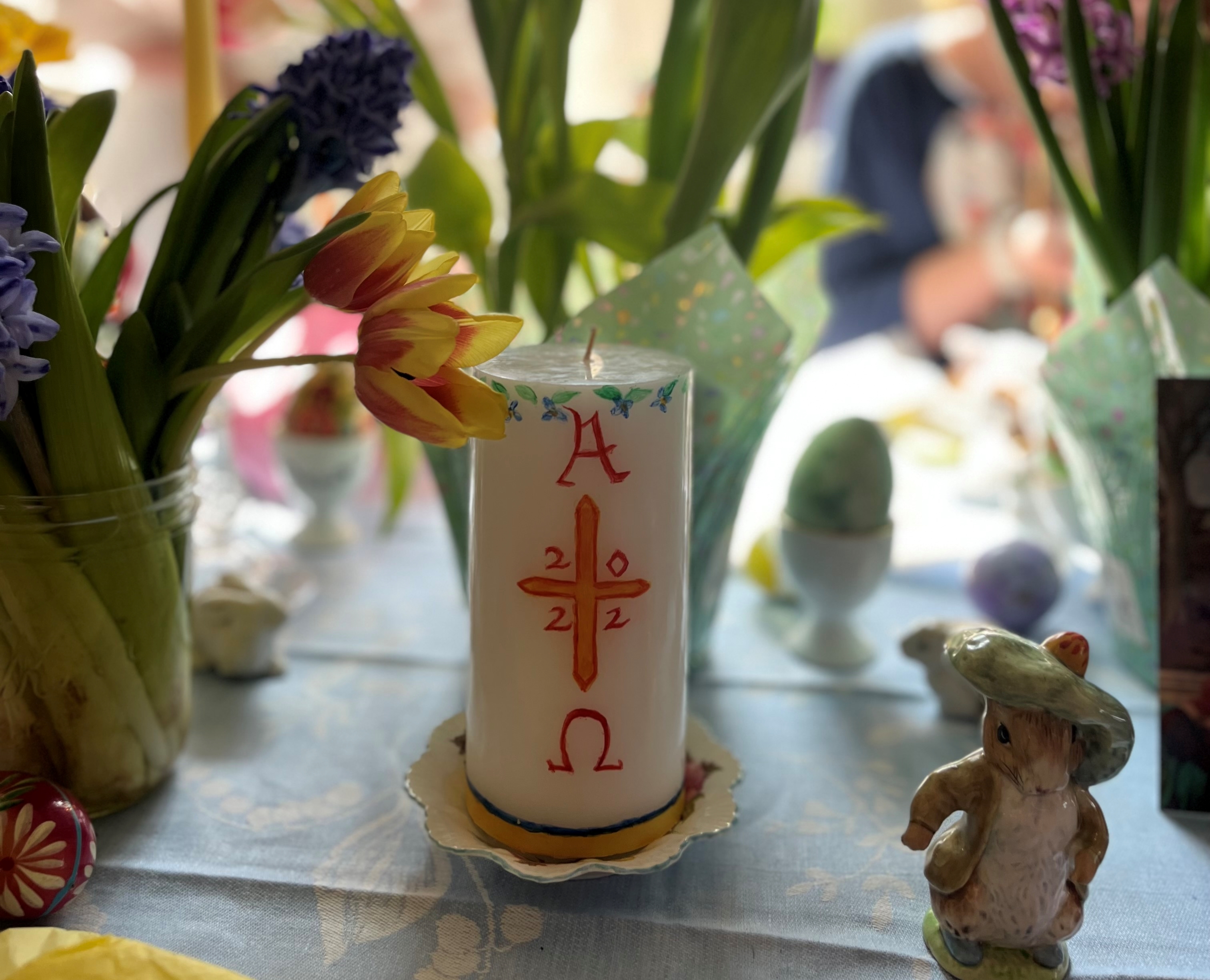
Easter Feasting!

Posted in Easter, Feasts, Seven Fine Arts | Tagged , , , , | Leave a comment

Resurrexit! Easter Brunch 2022

Posted in beauty, breakfast, Easter, Feasts, Fine Arts | Tagged , , | Leave a comment

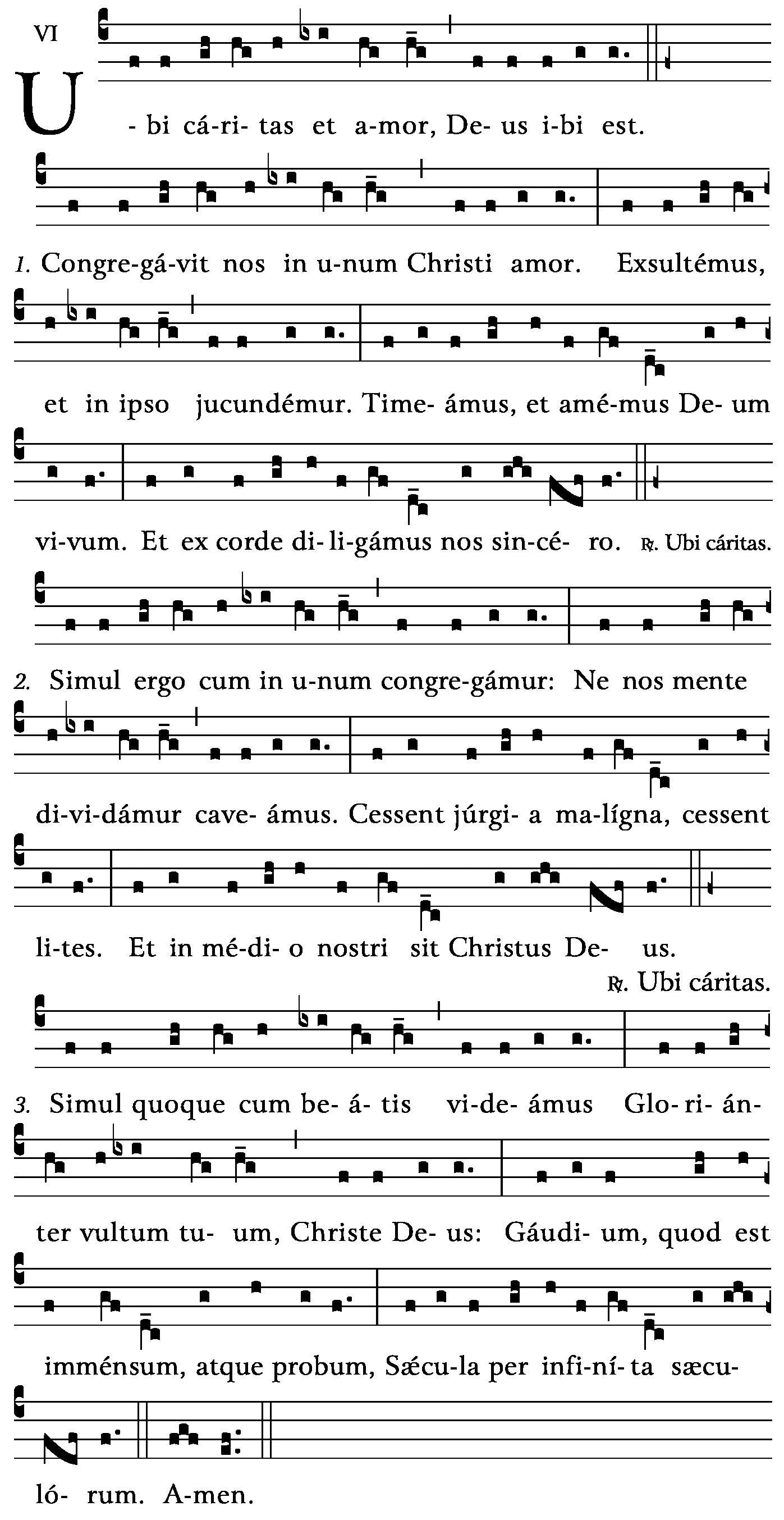
Today, Sing “Ubi Caritas!”

marklangley's avatarClassical Catholic Education

Today, Holy Thursday, is the day for singing the ancient chant Ubi Caritas!

UBI caritas et amor, Deus ibi est.
Congregavit nos in unum Christi amor.
Exultemus, et in ipso iucundemur.
Timeamus, et amemus Deum vivum.
Et ex corde diligamus nos sincero.

Which I translate freely,

Where charity and love are, there is God. The love of Christ has gathered us into one. Let us exult, and let us take delight in Him. Let us fear and let us love the living God. Let us love out of a sincere heart.

This of course is only the first verse. But it is beautiful! And totally appropriate for today’s feast!

Apparently this chant was composed sometime between the fourth century and the twelfth century. Now how is that for historical precision?

Image result for ubi caritas

According to one, Mr. Aaron Green,

What began as a Gregorian chant that some music scholars believe originated before…

View original post 494 more words

Posted in Uncategorized | Leave a comment

Catholic Classical Education: Sing to The Lord a New Song!

Posted in catholic education, education, Sacred Music | Tagged , , , | 1 Comment