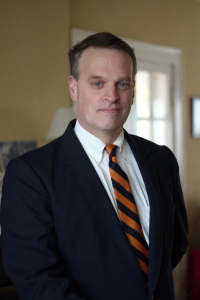
I am Mark Langley. In case you didn't notice, I am all about liberal education.
-
-
Subscribe to the Catechism of The Council of Trent in Less than a Year Podcast!
-

Support Lion and Ox!

-
Recent Posts
- Celebrating Christ The King Sunday In A Democratic Republic
- A Fitting Sentiment on the Feast Day of Leo the Great: Go away Barbarians
- Newman and the “Education of a Gentleman”
- Resurrexit 2025
- Completing the Catechism Podcast Series: A Christmas Gift
- The First Two Words of The Lord’s Prayer
- Discussion with Dr. Jason Fugikawa about The Catechism of the Council of Trent
- Days 116-118: Ninth and Tenth Commandments and Part IV: Prayer- the necessity, fruits and parts of prayer
- Liberal Arts and Fine Arts: Understanding the Trivium, Quadrivium, and the Place of Music in Catholic Education
- On False Humility and the Missing Episodes of The Catechism of the Council of Trent in a Year!
- Easter 2024 Resurrexit!
- Day 86 The Sacrament of Penance – Conclusion
- Day 85 The third integral part of Penance – Satisfaction
- Days 80-84 The sacrament of Penance: its form, the integral parts, the definition of contrition and the qualities of a good confession
- Day 79 Why Penance is a Sacrament
Recent Comments
- TVESDAY EARLY-MORNING EDITION - BIG PULPIT on Newman and the “Education of a Gentleman”
- Newman and the “Education of a Gentleman” | Classical Catholic Education on Homerus Omnes Docuit
- Wendy on Why Would Anyone Eat Locusts and Wild Honey?
- marklangley on Why Would Anyone Eat Locusts and Wild Honey?
- Wendy Frith on Why Would Anyone Eat Locusts and Wild Honey?
- Completing the Catechism Podcast Series: A Christmas Gift | Classical Catholic Education on New Podcast Announcement: Exploring The Catechism of the Council of Trent (in less than a year)
- VVEDNESDAY MORNING EDITION | BIG PULPIT on Discussion with Dr. Jason Fugikawa about The Catechism of the Council of Trent
- petranchmom on Easter 2024 Resurrexit!
- Jason Fugikawa, Ph.D. on Discussion with Dr. Jason Fugikawa about The Catechism of the Council of Trent
- marklangley on New Podcast Announcement: Exploring The Catechism of the Council of Trent (in less than a year)
- dianavredeveld5983 on New Podcast Announcement: Exploring The Catechism of the Council of Trent (in less than a year)
- THVRSDAY MORNING EDITION | BIG PULPIT on Liberal Arts and Fine Arts: Understanding the Trivium, Quadrivium, and the Place of Music in Catholic Education
- Alexander Gu on Why We Read Herodotus
- On False Humility and the Missing Episodes of The Catechism of the Council of Trent in a Year! | Classical Catholic Education on Day 86 The Sacrament of Penance – Conclusion
- Christ: Your Mediating and Conquering King - Jack Kilcrease on Celebrating Christ The King Sunday In A Democratic Republic
Archives
- November 2025
- August 2025
- April 2025
- December 2024
- October 2024
- September 2024
- August 2024
- April 2024
- September 2023
- August 2023
- July 2023
- June 2023
- May 2023
- April 2023
- March 2023
- February 2023
- January 2023
- December 2022
- September 2022
- August 2022
- April 2022
- February 2022
- December 2021
- July 2021
- June 2021
- April 2021
- November 2020
- October 2020
- August 2020
- July 2020
- June 2020
- May 2020
- April 2020
- March 2020
- February 2020
- January 2020
- December 2019
- November 2019
- October 2019
- September 2019
- August 2019
- July 2019
- June 2019
- April 2019
- March 2019
- February 2019
- January 2019
- December 2018
- November 2018
- September 2018
- August 2018
- June 2018
- May 2018
- April 2018
- March 2018
- February 2018
- December 2017
- November 2017
- October 2017
- September 2017
- August 2017
- July 2017
- June 2017
- May 2017
- April 2017
- March 2017
- February 2017
- January 2017
- December 2016
- October 2016
- August 2016
- July 2016
- June 2016
- March 2016
- February 2016
- December 2015
- August 2015
- July 2015
- May 2015
- April 2015
- March 2015
- February 2015
- January 2015
- December 2014
- November 2014
- June 2014
- May 2014
- April 2014
- March 2014
- January 2014
- December 2013
- November 2013
- October 2013
- September 2013
- August 2013
- July 2013
- June 2013
- May 2013
- April 2013
- March 2013
- February 2013
- January 2013
- December 2012
- November 2012
- October 2012
- September 2012
- August 2012
- July 2012
- June 2012
- April 2012
- March 2012
- February 2012
- January 2012
- December 2011
Categories
- 12 articles of faith
- ad libitum
- Advent
- aeschylus
- Ambrose
- America
- Aquinas
- Augustine
- Baptism
- bathroom restoration
- beauty
- breakfast
- Brewing
- Carl Schmitt
- Catechism
- Catena Aurea
- catholic education
- Christendom
- Christmas
- classical education
- college
- Common Good
- Confirmation
- Council of Trent
- Custom
- Decalogue
- Delphi
- Dickens
- Dinner
- discussion
- Easter
- education
- enlightenment
- Ex Umbris
- fashion
- Feasts
- Fine Arts
- Grammar
- Heraclitus
- Herodotus
- Hesiod
- History
- Homer
- Homer Sightings
- Latin
- Liberal Arts
- liberal education
- liberal education works
- Literature
- Lord's Prayer
- Mathematics
- Metaphysics
- Modernists
- Mozart
- Music
- Newman
- Origen
- Palestrina
- passions
- Penance
- philosophy
- Philosophy of Nature
- Podcast
- Religious Freedom
- Sacraments
- Sacred Doctrine
- Sacred Music
- Sacrosanctum Consilium
- Saint Paul
- Science
- Seven Fine Arts
- Shakespeare
- slavery
- Socrates
- socratic dialogue
- Solon
- soul
- summer vacation
- Temptation
- Textbooks
- Thales
- The Eucharist
- The Lord's Prayer
- The Mass
- The Passion
- truth for its own sake
- Uncategorized
- Virgil
- virtue
- William Byrd
- Wisdom
- Work
- Follow Classical Catholic Education on WordPress.com
Follow Us
Liberal education, Aristotle and Catharsis
Posted in classical education, education, Literature, slavery
Tagged Aristotle, catharsis, liberal education, literature, music, parable of the talents, poetry
5 Comments
Liberal Education and the Slavery to Passion
I had mentioned before that liberal education is an education that “frees” the student specifically from four types of slavery. It might be worth mentioning that while liberal education is wonderfully useful in advancing the happiness of a human being, there are other things besides a liberal education that are useful for leading a happy life (e.g. air, water, money).
Nonetheless liberal education enables a student to use these other things properly because it disposes, or rather gives a right disposition to a person’s soul- and it is the rightly disposed soul to which these other lesser goods (e.g. air, water, money) find their proper use. We might also add (just to admit that liberal education does have its own limits) that liberal education does not impart sanctifying grace to a person. Sometimes my students accuse me of teaching that salvation is achieved through a liberal education (nulla salus extra educationem liberalem!) but I guess I have to admit sanctifying grace is actually far more instrumental!
Nonetheless, I will maintain that the person who is liberally educated will be in fact -to that extent – properly disposed towards the reception of sanctifying grace, in so far as a liberal education is directed towards disposing the nature of the person aright (remember “Gratia supponit naturam!” Grace presupposes nature).
Let’s make a few brief comments about the first sort of slavery from which liberal education frees the student. It is the easiest to see and perhaps most obvious of all slaveries (apart from actually being shackled or driven at the end of a whip).
Aristotle makes reference to the first kind of slavery when in the Ethics he says that it is of no use teaching the science of Politics to the young because of the influence of their passions.
“Hence a young man is not a proper hearer of lectures on political science; for he is inexperienced in the actions that occur in life, but its discussions start from these and are about these; and further, since he tends to follow his passions, his study will be vain and unprofitable, because the end aimed at is not knowledge but action. and it makes no difference whether he is young in years or youthful in character; the defect does not depend on time, but on his living, and pursuing each successive object as passion directs.”
This is an especially easy thing to see in small children who are indeed at the mercy of their emotions. No parent will rely on reason alone to persuade a child to clean his room, or brush his teeth regularly. In the same way, a responsible parent will not rely solely on the force of logic to insure that his children do not indulge in alcohol and tobacco and any other sort of inappropriate behavior. Someone who experiences a strong desire for something is inclined to see with utter clarity the reasons why immediate possession of the desired object is necessary, while at the same time opposing reasons are curiously obfuscated and unintelligible.
Passion has a clever way of making its object the summum bonum at the very moment that the passion for it is felt. If what we desire is the highest good, then it follows that we should have it without delay! It is easy to see that those who are at the mercy of their emotions, or who are in any way disinclined to behave reasonably, will also be disinclined to see the reasons why their behavior is unreasonable!
Parents argue endlessly with their children about the evils of staying out late, smoking, heavy metal music, and all of the objects that move adolescent desire, but the effects of this first sort of slavery on the minds of those who enjoy any of these things powerfully sways their understanding almost to the point where argumentation is totally in vain. One would like to think that kids are just stubborn in this regard and that they can see intellectually why passion should not rule. We must not forget that those who are at the mercy of disordered emotions lack both the equanimity and mental clarity from which correct judgment proceeds.
Slavery to disordered passion does not just affect the mind in regard to learning right moral behavior, but even in purely intellectual matters like the study of Latin or Geometry, students struggle with themselves to gain mastery over their emotional disinclination from the study of such subjects. Learning, like listening, occurs only when one has quieted himself and has the focus to think!
Which, of course, all leads to the next question: “In what does a liberal education consist that it is able to break the slavery to passion?”
Posted in classical education, education, Liberal Arts, slavery
Tagged Aristotle, liberal education, passion
2 Comments
Here’s a million dollars…now do you still want to go to school?
I ask my students students from time to time why they want to “get an education.” These days the expected answer is of course “so that I can get a good job and make a great deal of money.”
“Great!” I respond, “if I give you $1,000,000 right now, would you quit school?”
This is a great starter for getting students to think about the real purpose of education – something which must necessarily have to do with something more important than money.
In fact, after some consideration, students can usually see that only those who have had a liberal education would know what to do with themselves or all of their money should they ever become wealthy. Liberal education allows a person to see the order in things; allows him to see, as St. Augustine distinguishes, which things are means and are meant to be used, and which things are ends and, consequently, are to be enjoyed for their own sakes.
Liberal education allows, or rather, it frees a human being to see
and live for those things for which jobs, careers, and money are merely a stepping stone. Those without a liberal education will inevitably misuse their wealth, and the gift of leisure becomes a time for mere self gratification or recreation. Ironically, though the usefulness of such an education might be questioned, it is precisely by the study of things which appear “useless” that the student acquires a the knowledge which will prove to be most useful to him throughout his life.
The student of the liberal arts learns how to learn. Any education may give students knowledge, but a liberal education gives students the tools needed to acquire knowledge. The student who is unable to acquire knowledge for himself is perpetually enslaved by his own ignorance, but the man who knows ‘how to learn’ has the ability to set free himself free.
Besides, practicing the liberal arts is not even optional; their practice is essentially part of being fully human:
“The liberal arts are not merely indispensable; they are unavoidable. Nobody can decide for himself whether he is going to be a human being. The only question open to him is whether he will be an ignorant, undeveloped one, or one who has sought to reach the highest point he is capable of attaining. The question, in short, is whether he will be a poor liberal artist or a good one. The liberal artist learns to read, write, speak, listen, understand, and think. He learns to reckon, measure, and manipulate matter, quantity, and motion in order to predict, produce and exchange. As we live in the tradition, whether we know it or not, so we are all liberal artists, whether we know it or not. We all practice the liberal arts, well or badly, all the time every day. As we should understand the [Western] tradition as well as we can in order to understand ourselves, so we should be as good liberal artists as we can in order to become as fully human as we can.”
(Robert Hutchins Great Books of the Western World, vol. 1: The Great Conversation: The Substance of a Liberal Education,
Encyclopedia Britannica, Inc., Chicago, 1952.)
Jean Henri Fabre and the Purpose of Mountains
Even though Jean Henri Fabre is best known for his prolific writings and investigations of the insect world, I am enjoying his work on the earth, This Earth of Ours, in which he discusses the entire inanimate world around us.
Fabre has the rare capability of sparking wonder in his readers. Wonder is the name of that desire that children and philosophers share- the desire to know causes for their own sake. Wonder is the beginning of wisdom, and Fabre is indeed childlike in his wonder. I don’t say “childish” but childlike, and I think it is in this very same sense that Our Lord, who is Wisdom incarnate, says “Let the children come to me.”
In his chapter on mountains, Fabre asks
“what kind of world would this be if all the dry land, on emerging from the deep, had taken the form of an uninterrupted plateau … It would be just like the one monotonous stretch of territory on which a sparse population would drag out a languishing and miserable existence…”
He then goes on to brilliantly discuss the very significant functions that mountains perform in the service of life.
He points out that without mountains there could be no proper circulation of water on the globe. Mountains are therefore among the chief causes of the earth’s fertility. They continually enrich the valleys below them with new soil and the uneven surface of the earth effects a variety of food products!
As if this is not enough, Fabre is not afraid, as a scientist, to propose that Mountains also serve to make the earth beautiful! Such an aesthetic consideration is not beneath the scientist to make.
By the end of the chapter a student of Fabre is left with a rather stunning realization that whereas before he had never entertained the question “what is the purpose of a mountain?” he is now filled with the consciousness that mountains are critical for his existence. That is, among things that have a clear and significant purpose, Mountains loom rather large on the scale!
Contrast Fabre’s approach to Mountains with Richard Dawkins (who appears to make a very good living impersonating an atheist)
Obviously Richard Dawkins did not feed his mind in his youth on the wholesome writings of Jean Henri Fabre. What sort of scientific formation did Dawkins have? Could it have been the kind of formation that the pre-Socratic thinkers had before Aristotle discovered his four causes? At least Thales and Anixamander and Anaximenes (and the rest of them) had an excuse for positing only material causes for things. The progress of science had only arrived at a material cause when they walked the earth. What is Richard Dawkins’ excuse?
Posted in classical education, Science
Tagged atheist, Dawkins, education, Fabre, purpose of mountain, science
4 Comments
“Widen your Hearts” How?….. By Catholic classical education of course!
It struck me afresh how important Catholic liberal education is to the very life of the Church. Think about how heartening the sight would be to our 84 year old Holy Father, if he could see young people learning Latin, Gregorian Chant and sacred polyphony. If he could see daily recitations of the Psalms of David, and the reading and discussion of the Great Books.
You, like I, have celebrated Pope Benedict’s eloquent denunciation of the “dictatorship of relativism.” I have pointed out that a classical curriculum is in fact the antidote to this dictatorship, and I never tire of explaining how a genuine liberal education disposes the mind of students towards the love of objective truth.
Now in the seventh year of his reign, a reign prominently characterized by liturgical reform, our Holy Father has presented a striking opportunity for us to appreciate another aspect of the benefits of a Catholic classical education. Let us not even dwell on the mere fact that it is only by a classical education that a person can even read and understand the very words penned in Latin by Benedict (say for example in his famous and even signature document Summorum Pontificum or the follow up instruction Universae Ecclesiae) not to mention understanding the words, their context, and the theological and philosophical reasonings that support them. It is by a classical education that one can know for oneself and communicate effectively to others what the spirit and the letter of his motu proprio actually enjoin. In other words let us not dwell on the obvious intellectual benefits that a classical education bestows on the mind of the student, but let us rather contemplate another transformation that a classical education offers.
To be precise, a Classical education offers a formation of the heart, a formation of the imagination, and a formation of the emotions without which a proper response to any of the Church’s pronouncements is impossible. In his Summorum Pontificum, our Holy Father himself seems to allude to this, at least in part, when, in his letter accompanying the Motu Proprio, he quotes St. Paul’s Second Letter to the Corinthians:
“Our mouth is open to you, Corinthians; our heart is wide. You are not restricted by us, but you are restricted in your own affections. In return… widen your hearts also!” (2 Cor 6:11-13).
And Pope Benedict adds : “Paul was certainly speaking in another context, but his exhortation can and must touch us too, precisely on this subject. Let us generously open our hearts and make room for everything that the faith itself allows.”
How, indeed, should we try to do what Benedict exhorts? How can we widen our hearts so that our affections are not restricted? The answer is obvious to me because liberal education is defined by the freedom that it bestows. Liberal education frees a person from the very things that restrict not only his mind, but his heart and his affections, so that he can freely choose to live in the fullest manner possible– in as human a manner as possible– as a free creation and not as a slave to passion, custom, error and fashion. A genuine liberal education is largely a matter of disposing the affections of the student, and a process of widening the hearts of the young so that they are able to respond with an appropriate human response. Endowing himself with all natural moral and intellectual virtues, the person, in turn, becomes a fitting vehicle for God’s grace. Gratia supponit naturam (Grace builds on nature). By using well the “talent” of human nature that God has given us, we become apt vessels of grace able to return fitting praise back to the Creator. Accordingly, a liberal education enables us to participate fittingly in the praise of the Creator, especially in those most important actions through which man himself is given a share in his own redemption. I mean the liturgical actions of the Church and especially Holy Mass.
Is this going too far? Is it too much to claim for liberal education that it is the education that prepares a man to worship his creator? If this is true it would appear to me that everyone who is educable ought to pursue a liberal education. In other words, I am claiming that a liberal education aside from teaching students how to think, aside from exposing students to the glory of Euclid’s geometry and the wonders of natural science, aside from exposing student to the beauty of Virgil’s Aeneid or Homer’s Iliad, aside from the pursuit of wisdom– I say aside from these things, a liberal education gives a student the ability to appreciate the entire liturgical action of the church. One might say that a liberal education endows a student with a “liturgical aesthetic” that enables him to take delight in the perennial liturgical action of the church. “Widen your hearts,” exhorts Paul. There is a particular formation of the heart, of the imagination, and of the emotions that makes the “Catholic heart” wider and sympathetic towards the kinds of things that Pope Benedict is encouraging. This formation is called Catholic classical education.
Liberal Education….Why bother?
Liberal education, why would anyone want to do that? Those of us who are proponents of classical liberal education have an uphill battle to fight. Even the phrase “liberal education” would seemingly have to be abandoned simply because of the potential for confusing it with other types of liberalism. That is why I often reluctantly choose the phrase “classical education” to describe the education we offer at The Lyceum.
In one of those odd ironies of the English language, Liberal education is hardly an education for liberals. Liberal education concerns itself almost entirely with reading the works of authors long dead in an attempt to preserve, or rather conserve, all that is best in literature and music and art. Liberal education is about reading and discussing the canon of authors to whom Western Civilization owes its origins. It is about immersing oneself in the very sources of civilization holding fast to its elements and principles, to time honored truths and traditions; to the vision of all those who contributed to civilization.
Of course, there may be those who read Homer, Aristotle, Aquinas and Shakespeare for other purposes than to learn to think like these men. But true liberal education enables students to grasp and assimilate the thoughts of the greatest thinkers in an attempt to understand the world. We would be happy if our students could do nothing more than understand the great thinkers at all. Perhaps some might see a bit further standing, as it were, on the shoulders of such giants.
The end of liberal education is not first “to think for oneself,” but to know the truth. To know the truth that makes one free, this is the end of liberal education. Liber and libertas, in Latin, denote freedom, as opposed to servility and the servile. Liberal education is the education appropriate to free men and is a source of that freedom. Liberal education, this encounter with and conformity to the truth, frees man from enslavement to unruly passions, ignorance, current intellectual trends and public opinion. Once freed from these bonds, a man may choose to live a good life, hold to the truth, and delight in beauty – not to please others or gain some practical reward, but simply because these things are good, or true, or beautiful. Once freed, a man might even choose to serve others, as Christ did. “And you shall know the Truth, and the Truth shall make you free.”
Why do we want a liberal education for our children? Why, simply to make them free.
Speaking of Fashion
One of my favorite scientists of all time is that “Homer of the insect world,” that “incomparable observer,” that Frenchman of voluminous knowledge and childlike wonder, Jean Henri Fabre!
I just love reading Fabre with students. Unfortunately the “intellectual fashion” of our time (which is one of the four kinds of slavery from which liberal education frees us) is dead set against exposing children to Fabre and his approach to nature.
Even in the late nineteenth century, Fabre was deeply concerned about the modern monolithic approach to science:
“Others have reproached me with my style, which has not the solemnity, nay, better, the dryness of the schools. They fear lest a page that is read without fatigue should not always be the expression of the truth. Were I to take their word for it, we are profound only on condition of being obscure.”
And he continues to excoriate these sorts of scientists with gusto and passion!
“You rip up the animal and I study it alive; you turn it into an object of horror and pity, whereas I cause it to be loved; you labour in a torture-chamber and dissecting-room, I make my observations under the blue sky, to the song of the Cicadae, you subject cell and protoplasm to chemical tests, I study instinct in its loftiest manifestations; you pry into death, I pry into life. And why should I not complete my thought: the boars have muddied the clear stream; natural history, youth’s glorious study, has, by dint of cellular improvements, become a hateful and repulsive thing. Well, if I write for men of learning, for philosophers, who, one day, will try to some extent to unravel the tough problem of instinct, I write also, I write above all things, for the young, I want to make them love the natural history which you make them hate; and that is why, while keeping strictly to the domain of truth, I avoid your scientific prose, which too often, alas, seems borrowed from some Iroquois idiom!”
I love this. The prevailing fashion in science instruction is just as Fabre describes. Anyone who has examined the current science text book scene will agree. For those interested in an authentic discussion of nature and of the things that fill our common experience, the current scientific fashion appears to have nothing but a condescending scorn. No, real science entails investigating things that could only be known through what Aristotle might call “private experience,” which can only be gained by very few and that through the use of very expensive laboratory equipment. Fabre sees this in his own day:
Laboratories are being founded at great expense, on our Atlantic and Mediterranean coasts, where people cut up small sea-animals, of but meagre interest to us; they spend a fortune on powerful microscopes, delicate dissecting-instruments, engines of capture, boats, fishing-crews, aquariums, to find out how the yolk of an Annelid’s (A red-blooded worm.–Translator’s Note.) egg is constructed, a question whereof I have never yet been able to grasp the full importance; and they scorn the little land-animal, which lives in constant touch with us, which provides universal psychology with documents of inestimable value, which too often threatens the public wealth by destroying our crops. When shall we have an entomological laboratory for the study not of the dead insect, steeped in alcohol, but of the living insect; a laboratory having for its object the instinct, the habits, the manner of living, the work, the struggles, the propagation of that little world with which agriculture and philosophy have most seriously to reckon? To know thoroughly the history of the destroyer of our vines might perhaps be more important than to know how this or that nerve-fibre of a Cirriped ends (Cirripeds are sea-animals with hair-like legs, including the Barnacles and Acorn-shells.–Translator’s Note.); to establish by experiment the line of demarcation between intellect and instinct; to prove, by comparing facts in the zoological progression, whether human reason be an irreducible faculty or not: all this ought surely to take precedence of the number of joints in a Crustacean’s antenna. These enormous questions would need an army of workers; and we have not one. The fashion is all for the Mollusc and the Zoophyte. (Zoophytes are plant-like sea-animals, including Star-fishes, Jelly-fishes, Sea-anemones, and Sponges.–Translator’s Note.) The depths of the sea are explored with many drag-nets; the soil which we tread is consistently disregarded. While waiting for the fashion to change, I open my harmas laboratory of living entomology; and this laboratory shall not cost the ratepayers one farthing.
If you chance upon one of Fabre’s many books grab it and start your collection. He is, of course, at his best when discussing insects but I also love his discussions about the earth (This Earth of Ours) and Astronomy (The Heavens).
The Oracle of Nature and of Truth
Now that John Henry Cardinal Newman is Blessed John Henry Cardinal Newman, I suppose everyone has to take him a little more seriously when he says things like the following:
“Do not suppose, that in thus appealing to the ancients, I am throwing back the world two thousand years, and fettering Philosophy with the reasonings of paganism. While the world lasts, will Aristotle’s doctrine on these matters last, for he is the oracle of nature and of truth. While we are men, we cannot help, to a great extent, being Aristotelians, for the great Master does but analyze the thoughts, feelings, views, and opinions of human kind. He has told us the meaning of our own words and ideas, {110} before we were born. In many subject-matters, to think correctly, is to think like Aristotle; and we are his disciples whether we will or no, though we may not know it.”
(From the Newman Reader)
This is a shocking passage indeed. Does he really say that thinking correctly about many things is to think like Aristotle? Is he equating being a man, to a great extent, with being an Aristotelian?
Pardon my dis-ingenuousness!
The truth of the matter is that Newman’s statements are about as an unambiguous endorsement of the philosopher as any devotee of Aristotle could ever hope to get from a high ranking influential member of the Ecclesiastical Hierarchy.
By elevating Newman (who is really a patron saint of liberal education!) to the rank of Blessed, Pope Benedict appears to be continuing his strong emphasis on teaching the modern world to rethink and reevaluate its view about what education is.
Soil of Civilization
Blessed John Henry Cardinal Newman takes first place, among authors of recent memory, for enunciating most clearly the principles and procedure of a Classical Liberal Education. He alone seems to understand fully the role of the seven liberal arts in the cultivation of the intellect, as well as the role of the fine arts in forming and refining the interior dispositions and emotions, or what some might call the ‘heart’. These two time honored traditions of the arts both liberal and fine, are the soil of “civilization”.
Many people use the word “classic” to describe old things. Books written by authors over one hundred years ago are classics. “Classical music” seems to be music that was written one hundred fifty years ago and before. A ‘classical curriculum’ probably means for many a set of courses that has some resemblance to the curriculum at an English boy’s school during the nineteenth century. At its best, the phrase classical education perhaps is meant to imply all those ‘time honored’ subjects and disciplines which work in developing the mind, and, as a consequence, have been handed down from generation to generation.
Education brings out the conservative in a parent. There is no mystery here. Novel approaches and innovative ideas might give the cutting edge in the market place, but in education one is suspicious of innovation as nothing more than ‘intellectual experimentation’. Intellectual experimentation is good for someone else’s children, but parents are the last ones who wish to experiment on their own children. The formation and instruction of the mind is such a serious and delicate work that it is easy to understand why parents would tend to be conservative in this area. Indeed, so jealous of this responsibility are a great many that the education of their children is not to be delegated outside the home. Busy parents do not have time to experiment on the minds of their children, nor would they wish to be responsible for harming their own child’s mind. The search for what is lasting, the perennial in education, will last as long as parents care for their children.
It is both fascinating and heartening to behold the extent to which parents are reclaiming the primary direction of their children’s minds. Home schoolers have evolved from something of an oddity to something very nearly fashionable. It is reassuring to see parents reclaim a more active role in the education of their children. At the same time one can only notice in parents a certain degree of haste to avail themselves of whatever means that are available for educating their children. Text books, Curriculum Lists, Reading Lists and “how to” books dealing with the education of the young no longer haunt the shelves of the professionals only. In this scramble for educational materials, parents of course keep an eye out for those things which work, and consequently have worked, the classic. “I would like my children to have a classical education” are words that any parent might utter with a sense of confidence that they are asking for something that needs no justification. If there is a sense of uncertainty about what classical education entails precisely, this uncertainty is offset by the conviction that Classical education is the education that has produced most of the great men in history.
Does “classical education” have a definition or is the phrase meant to imply simply all education up to the time of our grandparents? By “classical education”, let us understand nothing more than what is meant by ‘liberal education’ , a phrase itself more classic in describing what we mean. Liberal Education is the sort of education of which John Henry Cardinal Newman speaks. Liberal Education is the education of men like St. Thomas More.
Still, what is meant by liberal education is also something that has been given a very broad signification. Some think that liberal education teaches something about everything. Others think that it teaches everything about something. Both of these imply that liberal education is nothing other than a general education. Those who know something about everything may or may not have conviction about anything. Those who know everything about something in fact may have wisdom about nothing. Although liberal education implies a certain breadth of knowledge or “orbis doctrinae” as Quintilian says, mere general knowledge is not the same thing as liberal education. Again, liberal education does not exclude expertise or mastery of something. In fact the mastery of certain arts or skills is a sine qua non of liberal education. The particular choice of skills that we encourage our students to master is not an arbitrary one. In whatever manner ‘general knowledge’ is understood, it is important not to confuse general education with liberal education. General education may or may not imply intellectual conviction or intellectual formation whereas both of these are implied by Liberal education.
There are others who will speak about liberal education as consisting of an education in the liberal arts or humanities as if these terms were synonymous. As we shall see, the liberal arts have a definition that is quite opposite to that of the humanities. The difference between the liberal arts and the humanities will be of great use in our endeavor to specify what we mean by liberal education.
“Chronological snobs”, according to C. S. Lewis, are those who regard as significant only the ideas that belong to their own time. In our day one rarely hears the ideas of the past regarded with anything but contempt. I am refreshed, therefore, at what seems to me a growing interest in the education of the past, which is styled by many ‘classical education.’ Whatever is implied by the expression there is nothing snobbish in the attempt to rediscover it and give it to children. We can afford, however, to be more precise in defining what this education is which, in Ciceros’ expression, has stood the “test of time” (“Testis Temporum.”) Although there may have been periods before ours when the cultivation of the understanding and the development of the interior life was more generally understood and appreciated, nonetheless the proper formation of human beings is a process whose method belongs to every age.
A great deal more than children learning arithmetic and music hangs on the correct discussion of liberal education. In great measure, civilization itself depends on it. Newman himself sees this:
“…for we are but reiterating an old tradition, and carrying on those august methods of enlarging the mind, and cultivating the intellect, and refining the feelings, in which the process of civilization has always consisted.”
 Classical Catholic Education