The Brain: Organ of Thought? A Dialogue Part 1


Langley: Greetings Socrates, what a pleasure to meet you so early in the  morning here in the Agora!

Socrates: Why bless my soul! Is it morning already? I suppose I have lost my sense of time. As a matter of fact I had been thinking about time, and was so engrossed in asking “time…what is it?” that I had quite forgotten to ask “what time is it?”

Langley: Do you mean that you have been standing here all night long, on this corner, where I saw you last evening? My word Socrates, really… you should have more care for the good of your body like the rest of us, or perhaps your own time to philosophize and consider such useless questions will be cut short!

Socrates: Yes I suppose my body might be angry with me.  It must be quite jealous of other bodies which receive a good deal more attention. Most men take great pains to dress the body and feed it. They make certain that the body sleeps in a comfortable bed and take heed as to whether it is too warm or too cold. It’s a wonder that my body has not risen in rebellious protest- perhaps it doesn’t know any better?

But why did you suggest that my time for philosophy might be cut short if I pay little attention to my body? Isn’t the soul immaterial?

Langley: Well Socrates, I am ashamed to remind you of the obvious!

But if you should catch your death of a cold or pneumonia or some other infectious ailment blown by the south wind, then it will surely come to pass that a fever or noxious bile will pass into your brain and consequently, since the brain is the organ of thought, you will either die or lose your capacity for thinking.

In either case you will no longer be able to indulge in your favorite pastime – thinking!

Socrates: Upon my word Langley, now it makes sense to me why you pay such close regard to your body. You are merely trying to protect your brain which you believe is the organ of thought!

But why do you say that the brain is the organ of thought? It must be an extraordinary organ to be able to accomplish such a thing!

Langley: Socrates, you are asking questions that a child might ask! But as a grown man you certainly ought to be ashamed for asking such questions! I am not the first one to tell you, to be sure, that your bad habit of philosophy would get you nowhere.

And besides your toga is torn and Xanthippe is surely quite worried about where you are!

In my opinion Socrates, you should give up philosophy altogether, seeing that you do not even know what organ of the body is responsible for thought and philosophy.

You would be far better off to pursue something more profitable for you and your family.

After all every man must look to his own good- his honor, his wealth and reputation.

Socrates: Perhaps what you say contains some truth Langley, for you appear to be very wise. Please enlighten me then, for I very much want to know- and if indeed the brain is the organ of thought – then I will give up philosophy.

Langley: Very well Socrates. There is really no great mystery here and I will be happy to show you, or rather as you might say “help you to remember.”

Socrates: Ahhh … then you will ask me questions and I will answer them… and thus you will draw the truth from me.

Langley: Exactly…shall we proceed then?

Socrates: Please and without further delay.

Langley: very well then.

Socrates: very well indeed!

Langley: Then I shall ask you a question.

Socrates: I stand ready and will do my best to render an intelligent reply.

Langley: Then please have patience because in important matters we should not rush.

Rather we should make haste slowly as they say or “festina Lente!” as the Romans would say or “σπεῦδε βραδέως” as your countrymen are fond of saying.

Socrates: I agree and will do my best to contain my impatience with what might appear to some to be a rather cumbersome and pedantic procedure.

Langley: Very good and I needn’t remind you that the wise Friar Lawrence also advocates a slow procedure…although perhaps you have not read the play, I will quote it:


ROMEO

O, let us hence; I stand on sudden haste.

FRIAR LAURENCE

Wisely and slow; they stumble that run fast.

Socrates: thank you, I am convinced! Let us proceed very slowly.

Langley: very well, then we shall.

Socrates: Good I am all for it!

Langley: one can not be too careful.

Socrates: No indeed…one cannot.

Langley: Then let us proceed

Socrates: Yes….Please do….proceed at once!

Langley: but slowly.

Socrates: Yes slowly…slowly…slooowwwlly!

Langley: Yes, but perhaps we should have a bite to eat first, for as you know it was Odysseus himself who famously said “Belly must be fed!”

Socrates: Yes, I remember that. This was after the lovely princess Nausikaa discovered him on the shore of Phiakia- and he subsequently appeared before the court of Alkinoos and his lovely queen Arete.

Langley: Yes, and we should follow his example because Homer is certainly the teacher of all!- there is a time for talking and a time for eating! 

Socrates: And evidently, for you, this is a time for eating.

Langley: Quite so…shall we? And later we may pick up the thread of our discussion.

Socrates: If we must, then let it be.


Posted in discussion, Philosophy of Nature, Socrates | Tagged , , , , , , | Leave a comment

Don’t Be A Barbarian

Liberal education is the ordinary process by which ladies and gentlemen are formed. Without it one will always remain a barbarian.

Now if you are a barbarian please don’t take this as a put down. I am proud to count barbarians among some of my closest friends!

Except when they are tearing down civilization and overrunning cities, Barbarians can be very decent people.

Sometimes even when sacking a city barbarians can act in a civil manner. Take Alaric, King of the Visigoths, for instance… now here was a first-rate barbarian.

Besieging Rome twice he finally sacked the city in 410. He only burnt a few of the buildings and supposedly the inhabitants were treated humanely. And this is difficult to do! How does one go about sacking an enormous city without at least a token of some plundering and pillaging? I mean even barbarians do have appearances to keep!

Then, of course, you have a barbarian like Attila the Hun. What a stand up guy! Pope Leo the Great was able to convince him to withdraw from Italy (don’t ask me how?) probably through some discussion and perhaps a shared prayer or two. I doubt they held hands, but Attila must have had something more than a little respect for the chair of St. Peter, which is a great deal more than what some of our current barbarian world leaders have.

So without condoning barbarians qua barbarians, I am just trying to cite a couple of examples of some extraordinary barbarians who though not famous for their liberal educations still managed to turn out as fairly decent chaps!

Frankly, I expect to meet many barbarians in purgatory where they will all finally be liberally educated for about twelve years, while I am punished for thousands because of my bottomless pride!

But as I said above the only natural way to avoid being a barbarian is through liberal education.

Now, I suppose God might simply sidestep the whole lengthy process of liberal education from time to time and simply transform someone into a full-blown gentleman or lady in a flash – sort of like Athena springing forth from the head of Zeus.

Occasionally one hears that this or that saint was able to sidestep the rigorous training in Grammar, Rhetoric and Logic that the rest of us have to undergo to become proficient and eloquent speakers, because God Himself has some special time sensitive mission to accomplish.

For example, whereas the great Greek orator Demosthenes had apparently taken great pains to overcome his speech impediments, Moses appears to have taken a shortcut.

Moses said: I beseech thee, Lord, I am not eloquent from yesterday and the day before; and since thou hast spoken to thy servant, I have more impediment and slowness of tongue. The Lord said to him: Who made man’s mouth? or who made the dumb and the deaf, the seeing and the blind? did not I?  Go therefore, and I will be in thy mouth; and I will teach thee what thou shalt speak

I think this passage may give some students unrealistic expectations. We should be very careful to point out that it would be presumptuous for most of us to count on this kind of Divine intervention.

And so unless a parent has some kind of spiritual prompting to the contrary, I would advise that they keep making those costly tuition payments and students should definitely stick to their memorization of Shakespeare and by all means KEEP CHANTING THOSE LATIN AND GREEK FORMS!”

So the point remains – and I suppose we ought to recap and “tie things up” here, that although here and there we find a decent barbarian, and again, although we might from time to time find some saint who appears to have skipped the normal educational process, nonetheless everyone ought to do what they can to be liberally educated.

Posted in classical education | Tagged , , , , | 3 Comments

The Common Core…Uh-Oh….

Suddenly any jocose banter about the Common Core (aka ObamaCore) doesn’t seem so amusing anymore.

As a matter of fact, after seeing this video of a friendly looking and intelligent fellow American being abruptly and unceremoniously dragged out of a public meeting, I am now scrambling to see whether it is possible to have my entire electronic trail expunged and cleansed from the internet.

He was apparently attending a public forum on the Common Core somewhere in the vicinity of Baltimore. The meeting was all smiles until this troublemaker had the audacity to stand up and ask a question. And I don’t think he was dragged out just because he was a little long winded and a little tough to follow!

Now in light of witnessing this man’s experience, I would certainly NOT want ANYONE to think that I am in any way opposed to the grand and visionary schemes…pardon…I mean the beneficent and sweeping plans of the federal government with regard to the doting care that it has for each and every child to whom the Common Core is lovingly directed.

And so perhaps we need to make some clarifications about this whole thing together just to make certain that there are no misconceptions.

I hope none of my readers think that I have ever been the least bit negative about the Common Core.

For example in a previous post you may have misunderstood my comparison of the servile Common Core to the 5th century BC Persian invasion of Greece. And I don’t say “servile” with any negative implications. What’s wrong with servility? The history of humanity is filled with servility and that’s just the way things are.

The fact of the matter is that I really am very fond of Persians. After all, the Persians were fairly advanced with respect to their educational ideas. In what three things was it, again, that Herodotus says a Persian boy’s education consisted? – to ride well, shoot straight, and speak the truth? Certainly these would go far in making any student “college and career ready.”

Who on earth could be against kids learning how to be “college and career ready ?!?”

That is practically the whole aim of a classical liberal education isn’t it?

I think the Blessed John Henry Cardinal Newman has an entire chapter on being “career ready” in his famous work… The Idea of a University,  which if my memory serves correctly is fundamentally a book about Liberal education as the best preparation for a career….

That’s why we teach Latin right? And Greek and Literature and History and Euclidean Geometry and of course Theology.

No one is ready for college, much less a career, without knowing some Theology…..right?


Posted in classical education, Liberal Arts | Tagged , , , | Leave a comment

Ohioans Against The Common Core

Just as the fifth century B.C. Persian invasion united all Greece against Xerxes and his army of slaves, so too the Common Core- or ObamaCore- appears to be uniting good people throughout the land against the servile educational standards proposed by the Federal Government!

Sometimes it takes a Persian invasion to awaken a people. Granted the analogy between the spread of ObamaCore throughout the United States and the spread of Xerxes reign over Greece is not perfect in everyway (e.g. I don’t remember Greek governors actually inviting Xerxes to take away their liberty as the Governors of  at least 45 states have) nonetheless, the fact that The Common Core has as its chief and sole aim the preparation of an effective American worker is startlingly similar to the aims of Xerxes in his proposal to enslave the Greek world.

 Those of us at schools like The Lyceum have of course been sounding the alarm bells for some time now. For most of my life I have become accustomed to the idea that classical education will never be popular and will never be espoused by people in the mainstream. But maybe there is hope!

For example it is thrilling to see a well made video like the following which does a great job presenting the benefits of a classical education.

(Make certain that you see mention of The Lyceum at 17:08)

Of course this presentation of classical education misses the heart and soul of the whole enterprise since it does not show how all learning is ordered to Theology  (the Queen of the Sciences); it does not give the final end and purpose of classical liberal education which is the knowledge of God. Nonetheless the speaker still manages to present a compelling case for classical education just in virtue of the moral enterprise that it is, and its ability to produce free men and women capable of living in a free society.


Posted in classical education, education | Tagged , , | 3 Comments

Why Go To College?

A new academic year has sprung upon us, and those of us who are involved in the world of secondary education have once again taken up the arguably impossible attempt to teach students.

But what is it all for?

College?

Why should anyone go to college?

Every student needs to consider this question. Every parent needs to think about it as well.

And as luck would have it, I have an excellent little article written by Mark C. Henrie that does all the heavy intellectual lifting for us. So we need not do anything but sit back, relax and read.

Take a look at this!


Posted in education, Newman | Tagged , , | Leave a comment

No Royal Road

We remain convinced that The Lyceum and the many (growing and increasing!) new small Catholic independent schools across the nation are, indeed, part of the solution to the ongoing crisis in education. It is ironic that the solution these little schools offer is nothing more than what has been offered for centuries and even millennia– to wit the “lost tools of learning”— the liberal arts.

Every five or ten years, it seems, “new initiatives” in education are advanced, “new proposals” are made, “new programs” are funded. But for anyone with a memory, it becomes  clear none of them are new. They have all been tried before- although admittedly the packaging has changed.

All the while the simple fact remains that human nature is unchanging and the same for all. The method by which the human mind is formed is the same now as it has been for two thousand years, and will be until the end of time.

What is this method?

Reading “great” books and discussing them. Studying Latin and Greek. Memorizing poetry. Writing argumentative essays. Demonstrating Euclidean theorems. Learning Grammar, Rhetoric, and Logic!

These are the various roads by which the human mind is formed and made ready for further wisdom. There is no mystery to education.

“There is no royal road to Geometry” as Euclid said to King Ptolemy I, and similarly there is no royal road to authentic education. That is to say, memorizing a Shakespearean sonnet and demonstrating a proposition from Euclid’s Elements is no easier for a king than it is for a peasant.  With regard to the mind itself, fancy robes and gold plated chalkboards do not make understanding truth any easier.

I suppose a gold plated “Apple MacBook Pro” might help!

Neither do fancy facilities, athletic buildings, theaters, expensive equipment and laboratories, million-volume libraries and exorbitant tuitions!

As alluring as these things are, they will never replace the substance of real education. These externals will never replace the essential internal things necessary for education.

There is no royal road to the formation of the mind.

Great minds are made through the reading of relatively inexpensive books. From Aristotle to  Abraham Lincoln to John Henry Cardinal Newman – from philosophers to statesmen to Saints!- we see that the formation of the mind is largely due to things that are accessible to all– and accessible by the same road!

A student has only to take advantage of these simple things, these books, and whatever wisdom he can find in his teachers and peers.

For education, these things are sufficient.

Posted in classical education, Latin, Liberal Arts | Tagged , , , , | Leave a comment

All Hail the Common Core!

Amazing!

I thought that public schools could not adopt a curriculum that is any more utilitarian than they already have! But thanks to the new almost universally adopted so-called “Common Core” we can look forward to an even more pragmatic Federal and state mandated “education.”

Current Status of Common Core Adoption by States

It is wonderful to see how the doctrine of pragmatism works itself out to its logical conclusions.

First the schools individually and freely jettisoned liberal education for a more useful education (we used to say “servile”). As I say, the schools did this pretty much on their own volition and singly. There was no state pressure as far as I know, but the schools freely chose to throw out the education of free men. And when I say “the schools” I mean every college, every university, and every secondary school! But not of course primary schools… I am not aware of any sort of elective system in place for kindergarten and first grade students.

But now…. having educated generations with the education of useful pragmatism, these same  schools are being forced to adopt collectively en masse an even more servile set of education standards at the risk of losing substantial funding.

And so each state stands to receive a good deal of funding for their “free” adoption of the Common Core. For example, California stands to receive 1.25 billion dollars this year! Apparently that amounts to about $200 per student. Imagine a school with say 500 students. That’s an additional $100,000 according to my calculation. Not a bad little windfall to help those struggling tax supported institutions to crawl along for another year.

“But,” you ask, “what does the Common Core require that by its adoption allows a school to receive this money?”

Well take this for example. It has been reported that adopting the Common Core  will

“make it compulsory for at least 70 per cent of books studied to be non-fiction, in an effort to ready pupils for the workplace.”

After all what good does it do for kids to sit around reading a bunch of fiction anyway? Why would we ever want them to spend hours and hours and hours reading books by dead people like Homer and Shakespeare or even J.D. Salinger and Harper Lee!?!

At first I was delighted to see this (the full text of which you may find here):

American literature classics are to be replaced by insulation manuals and plant inventories in US classrooms by 2014….Books such as JD Salinger’s Catcher in the Rye and Harper Lee’s To Kill a Mockingbird will be replaced by “informational texts” approved by the Common Core State Standards.

Suggested non-fiction texts include Recommended Levels of Insulation by the US Environmental Protection Agency, and the Invasive Plant Inventory, by California’s Invasive Plant Council.

JD Salinger's novel Catcher in the Rye is to be replaced by 'informational texts' on the US curriculum.

Now I have never been a proponent of students reading Catcher in the Rye although I know all sorts of people who like To Kill a Mockingbird. But I have to say that this little bit of news makes me almost want to go out and purchase both books at once in protest.

But nonetheless everyone has to admit that “informational texts” are absolutely more useful than works of fiction. I don’t think anyone can deny this who has already made the choice not to educate his own children with a classical education.

What interests me is, why is anyone upset about this now?

In other words, there are a half-dozen colleges in the country that offer a genuine classical liberal education. These are small colleges and frankly have to compete among themselves for a relatively small pool of students who are even interested in this kind of education.

The alternative to a classical or liberal  education is of course some thing which I affectionately call a Francis Bacon-utilitarian-pragmatic-type education. And this is what every other college offers (well… except for maybe art and music schools). And so it just seems to me that the vast majority of people who do not send their children to a liberal arts college have already bought the central tenets of the philosophy that underlies the “Common Core.”

And so the question interests me “why are we upset now?”

I suppose the Common Core has struck people in such a way that they have awoken from a very deep sleep.  Maybe there is a feeling that the Common Core is to education what the Affordable Health Care Act is to health– and without understanding how very deep the philosophy of the common core already is in their own intellectual custom people are instinctively against it as another Federal intrusion against state sovereignty? Or at least (and I say this for you Northerners who do not object to Federal intrusions upon “state sovereignty”) an intrusion upon our personal liberty to choose the kind of education that we please. And it might be that we might choose an entirely utilitarian kind of education…”but,” you say “at least we are the ones choosing it!”

But …the fact of the matter is that the Common Core did not spring up overnight.

Charles W. Eliot cph.3a02149.jpg

It was the great Charles William Eliot that dealt the death-blow to liberal education at Harvard University.

Of course liberal education did not die all at once but rather by a thousand cuts with the first blow being directly aimed at the Greeks. In 1887 Harvard dropped Greek as a mandatory undergraduate requirement, and then it soon after adopted the “elective system.” I suppose you might say that Harvard dropped its own common core!

And of course soon thereafter (you guessed it!) Harvard gained relevance and significance and fame and stature and is now the intellectual trend setter for everybody.

Every other school simply must “get in line” and “bow down” and genuflect to the standards set by Harvard, right? Right.

Apparently before Eliot came along Harvard was stuck in its old ways of trying to impart classical education in order to make a bunch of learned preachers or something like that. The school was reportedly slipping because it

“continued to embrace classical curricula that had little relevance to an industrializing nation.”

Interestingly, before he was president at Harvard, in 1869, Eliot wrote his “famous” educational manifesto in the Atlantic Monthly Journal with the foreboding title The New Education.

The article begins with the following, (my comments in italic, a la Fr. Z)


What can I do with my boy? (I don’t know if Eliot had any girls, but note that the focus on boys. Liberal education might be fine for girls as sort of a “finishing” education but surely not suitable for boys who need to do important things!) I can afford, and am glad, to give him the best training to be had (I like his use of the word “training” here which I think should be distinguished from education.) I should be proud to have him turn out a preacher or a learned man; but I don’t think he has the making of that in him. (hmmm….interesting…is he admitting that his son does not have the wherewithal to be educated? I hope his son didn’t read this. ) I want to give him a practical education; one that will prepare him, better than I was prepared, to follow my business or any other active calling.(the best preparation for life is liberal education- the best preparation for any career!)  The classical schools and the colleges do not offer what I want. (yes they do… or did) Where can I put him? Here is a real need and a very serious problem. The difficulty presses more heavily upon the thoughtful American than upon the European. He is absolutely free to choose a way of life for himself and his children (no he isn’t, not without a liberal education….liberal education is among the things that one needs to become free); no government leading-strings or social prescriptions guide or limit him in his choice. (those were good times, but ironically in large part thanks to Charles William Eliot we can no longer say this!)But freedom is responsibility.

Subsequently Eliot was elected as the 21st and youngest yet president of Harvard College.

The nation’s leading intellectual institution set the trajectory for every college and secondary school on a precipitous downward slope (I can’t remember if a cliff has a slope…I guess a slope of “infinity” Algebraically speaking) the terminus of which is sheer naked utility.

It is probably improper to speak of the bottom of a cliff as a terminus. Somehow the word terminus seems to imply an end that is at least slightly elevated. But the path to sheer utility is not up. It is “towards matter” as Aristotle would say and is therefore “downwards.” It is not towards form and the upper regions. There is no utility in heaven as far as I know,  and heaven is certainly upwards. I am not criticizing utility or matter here. I am just trying to identify in what direction it lies.

Of course Catholic Schools and colleges, as if not to be outdone, have tried to keep pace with secular standards. Tough to accomplish without losing one’s Catholic identity.

But those of us working in the secondary school world at least have consoled ourselves with the idea that “if utilitarianism – a la Francis Bacon- has pervaded and prevailed among the nations colleges and universities, at least the nation’s secondary schools have provided a safe haven into which classical education might retreat. At least a student might pursue truth for its own sake and perhaps spend a little uninterrupted time deepening his humanity in primary and secondary school.

But now comes “THE COMMON CORE!”

Looks to me like the primary school may be the last refuge for liberal education.

Posted in classical education, college, education, Liberal Arts, Modernists | Tagged , , , , | 4 Comments

“Everyone Can Be And Should Be Given a Liberal Education”

As I was searching for a particular statement that Mortimer Adler made somewhere I found an interesting article that he wrote for the University of Chicago Magazine in 1945. I still cannot find the particular thing that he said that I was looking for (it was something to the effect that even though liberal education has suffered a defeat at most colleges and even in secondary schools, it still appears to have a safe haven in the elementary school-of course that was in 1945 and back then there was no “Common Core”), but this particular article gave me a slight jolt because it reminded me just how much I have been influenced by Adler.

You know, one begins to say things for himself without always alluding to mentors and teachers, and then after a while one begins to forget that his own ideas are not necessarily original. I have never really thought my ideas were original, nor do I hope that they are. As a matter of fact a completely original idea should be frightening to any well-educated person in so far as it is given that every significant discovery has its roots in something that came before it. I mean, if one cannot find at least a seed or small suggestion for his “new” idea in Homer or Heraclitus, then my advice would be to back slowly away from it and forget about it forever!

Nonetheless, I did sort of pride myself on being slightly more radical than others in my attempt to spread the gospel of Liberal Education. But now having re-read this article I have been confronted with the stark truth of the matter. Mortimer Adler was the apostle of liberal education (I say “the apostle” of course by antonomasia).

First of all, Dr. Adler thinks that everyone should have a liberal education.  He points out that our ancestors were not “democrats” (i.e. children of democracies) and therefore they thought more clearly about education than we do, that is, they understood that liberal education was the best education and therefore is the education for the best.

Adler thinks that they were right in one way and wrong in another. They were right that liberal education is the best education, but they were wrong in reserving it only for the few. Children of democracies should know that what is best for the best, is best for all!

After explaining that “The direct product of liberal education is a good mind” he asserts that liberal education is for everyone in proportion to the capacity of each to receive it.

Anyone who thus understands the point of liberal education should recognize three corollaries. (1) Since every normal being is born with an intelligence that can be disciplined and cultivated—with some degree of capacity for developing a good mind—everyone can be and should be given a liberal education to an extent that equals his capacity. (2) No one can be given a completed liberal education in school, college, or university, for unlike the body, the mind’s capacity for growth does not terminate with youth; on the contrary, the mature mind is more educable than the immature; therefore, adult education must take up where the schools leave off and continue the process through all the years of adult life. (3) Schools and colleges may concern themselves with other goods than a good mind—in a defective society this may be necessary—but if they do, they do so at the expense of time and energy taken away from liberal education.

I agree completely! I am not certain that this should have been included in the Declaration as one of man’s natural rights (e.g. “All men have the right to pursue a liberal education”) only because I would rather insist that it was a human duty to pursue one… not merely a right!

Adler appears to understand that colleges are unfairly burdened with performing a task that is not really their own. That is they have been sidetracked from the principal task of forming good minds to other tasks like preparing students for the myriad careers and vocations that they will eventually pursue. Therefore the bane of education… the elective system!

In truth a liberal education is an education for a lifetime and this what colleges should aim to prepare a student to begin. That is the college commencement should represent a “decent preparation” for a lifetime of learning.

I love Mortimer Adler’s radically clear vision of education as well as his bold proposals for reform. I have emboldened sentiments which might sound familiar to readers of this blog:

 The practical suggestions I have to offer as therapy follow from the foregoing diagnosis of the illness of our colleges. We must so reform the curriculum, methods of teaching, and examinations, that we do not mistake the B.A. degree as signifying either a completed liberal education or adequate preparation for earning a living or living a happy life. It should signify only decent preparation for the continuing task of adult education.

A liberal curriculum should, therefore, include no vocational instruction; nor should it permit any subject-matter specialization. In a liberal college there should be no departmental divisions, no electives, no separate course in which grades are given for “covering” a specified amount of “ground,” no textbooks or manuals which set forth what students must memorize to pass true-false examinations. The faculty should comprise teachers all of whom are responsible for understanding and administering the whole curriculum; lectures should be kept to a minimum and they should be of such generality that they can be given to the whole student body without distinction of year; the basic precept of pedagogy should be the direction of the mind by questions and the methods of answering them, not the stuffing of it with answers; oral examinations must be used to separate facile verbalizers and memorizers from those in whom genuine intellectual skills are beginning to develop and whose minds have become hospitable to ideas. No student should be dropped from college because he fails to measure up to an arbitrary standard determined by a percentage of mastery of a subject matter or skill; he should be kept in college as long as he manifests any development of his own capacities, and lack of such evidence should be interpreted as a failure on the part of the college, not the student.

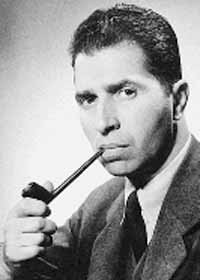
The Apostle of Liberal Education (December 28, 1902 – June 28, 2001)

Posted in classical education, education, Liberal Arts, Textbooks | Tagged , , | 2 Comments

The Lyceum Around the Town

The other day I had the pleasure of driving down to Canton, Ohio at the invitation of the local radio station “Living Bread Radio.” My friend, colleague and director of the prestigious Lyceum Schola Cantorum , James Flood was there as well.

You may hear the interview here.

or click on this url: http://www.livingbreadradio.com/index.php?option=com_sermonspeaker&view=sermon&id=11724 or copy and paste it into your internet browser!

I always enjoy talking about The Lyceum and Catholic classical education so I simply could not turn down the opportunity to participate in the interview.

Incidentally, as far as I can tell, it really is true that one does not have to dress up for a radio interview. I was wearing a shirt and tie… but nobody else was. I have not done many radio interviews….but my guess is that wearing a tie does not make a difference except insofar as it might make one speak with more confidence.

So as you listen please do know that I am in fact wearing a tie.

The interview lasts about twenty minutes and it is mainly about The Lyceum, the mission of Catholic classical education, but with a particular focus on the choir.

In fact if you listen to the whole interview you will then hear the schola sing the Mozart Ave Verum Corpus…..Just beautiful!


Posted in beauty, classical education | Tagged , , | 5 Comments

The Elective System in Education: A Denial That Nature Acts For An End.

As we have argued elsewhere the question “does nature act for an end” is of the utmost significance for everybody. Of the important lessons to be learned from a Catholic classical education, that nature acts for an end, is perhaps the most significant thing that a student can obtain.

The things one learns in mathematics are certainly very important as well. Properties of lines and surfaces, triangles and circles, Parallel lines and tangents…. all wonderful things!

Knowledge of history (insofar as one is able to have “knowledge” of history) is significant as well. Definitely worth the money! A wide familiarity with the classics and great literature is of course absolutely essential. These add that little extra polish!

And then you have Latin and Greek and Grammar, Rhetoric and Logic….I admit it…all these things are critical.

But if nature does not act for an end then as we have seen all these things are arbitrary! For example ….Grammar, Rhetoric and Logic which are all arts that attempt to help nature do what it is trying to do already. But if nature is not trying to do anything in the first place…then these arts lose significance…except of course if one happens to like them and feels like learning them….they become “electives” so to speak.

If man’s mind, which is still a production of nature as far as I know, was not made for an end…then knowledge of mathematics and Latin and Greek become purely ornamental. One might as learn the arts of CD polishing and fingernail painting…or whatever it is that pleases one.

If nature does not act for an end then faith does not build on it…because Faith is for an end… a supernatural one at that.

If nature does not act for an end then knowledge of  literature and the “classics” and  fine poetry and fine arts all become merely a sort of decorative display of intellectual curiosities that might make a person more interesting to someone else who happens to be interested in these curiosities. Kind of like multiple piercings. Why bother wearing just one set of earrings? Better to wear as many as the ear will fit! And stick one in your nose too! And your belly button!!!

In other words if nature does not act for an end in the things that it does and in the things that it produces then EVERYTHING IS UP FOR GRABS. Life becomes purely a matter of choice. What do I choose to do today? What shall I choose to do now? And what shall I choose to do now, because I no longer choose to do the other thing.

And this actually sounds attractive to the modern ear because choice appears to walk “arm in arm” with freedom. Freedom appears to be something like the ability to choose without any constraints.

But if nature acts for an end then this would present us with a major constraint. If nature acts for an end, then one simply has to get out of bed at a decent time in the morning and get to work. One has to sit around studying, against one’s will and immediate interests, for years and years and years!

If nature acts for an end then one has to find out what that end is and then find out how to best achieve it…or else one will literally not know what to do with himself.

It would be kind of like a rabbit that just sat there thinking “what am I supposed to do?” And what if he never figured it out? Imagine how pathetic that would be!

Imagine a fly just buzzing for no reason…or a spider sitting there wondering what his web making apparatus was for (forget the fact that if nature did not act for an end then one would not call it a “web making apparatus”).

It is interesting that we live in a time which fundamentally denies that nature acts for an end.

That nature acts for an end is against the intellectual custom in which we have been raised. Here is a provocation…While you might think that it is obvious that nature acts for an end you probably are still a defender of the elective system of education….

You might even think that it is acceptable for someone not to obtain a liberal education….the horror!

I bet you have entertained the idea that if one does not want to learn Euclid then one does not have to.

Maybe you think that it is morally justifiable for someone to refuse to learn how to sing!

Perhaps you are comfortable with the choice that many students make to “elect” Spanish over Latin.

Wow!

You say “yes, yes” when I propose that nature acts for an end…but then you deny it with force and passion when defending the elective system….

Posted in education, Liberal Arts, Philosophy of Nature | Tagged , , , | 3 Comments