I have been telling my students for a long time that, if they had lived around 600 BC, the requirements for graduation consisted in having studied two principal works The Iliad and The Odyssey. Having mastered these foundational texts, they could, clad in cap and gown, march proudly up the isle and justly receive a diploma claiming membership in the elite society of “those who know.”
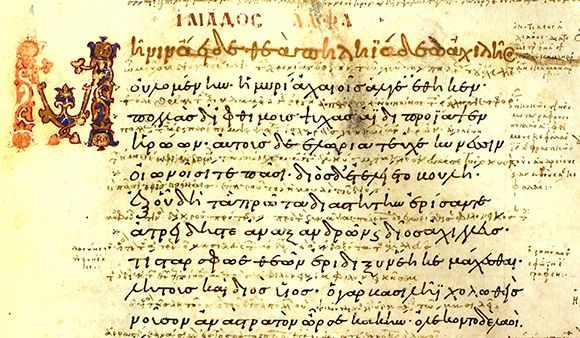
Now, I suppose mastery of these works at the time would have presumed an attentive and repeated listening to the texts sung in ancient Greek. Consequently, the knowledge of ancient Greek would be assumed in this distinction- and we might as well assume that such a student would also have the intellectual skills to appreciate the beauty of the works themselves, for example the ability to appreciate dactylic hexameter (i.e. scansion) and the various figures of speech Homer employed (e.g. the natural similes, metaphors, chiastic structures, epithets, ekphrases and so on). Merely having listened to the texts sung once around a village fire would not have been quite enough!
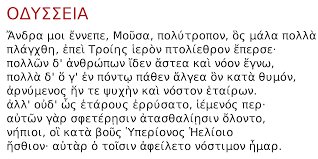
The “Ivy league” schools at the time (circa seventh century BC!)- and I suppose Greece is known for its ivy, properly named Hedera Helix-would also have required such a student to be able to chant at least one book of each of these works from memory, or at least their respective prologues.

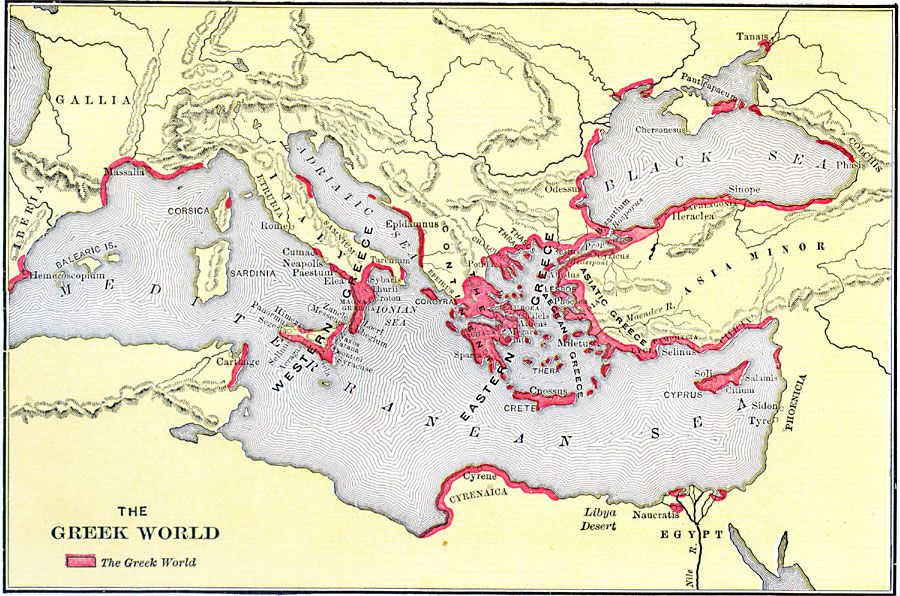
Of course an understanding of The Iliad and The Odyssey would require a fair knowledge of Geography and a full scope of the ‘world’ at the time, mostly limited to the regions containing the Mediterranean sea and all the islands therein. How else can we understand the ten years it took Odysseus without this? Some passing knowledge of Astronomy, meteorology, topography, the nature of waves, winds, and currents would help for sure.
Even a fundamental knowledge of medicine and trauma management is to be presumed for the reader of The Iliad and The Odyssey. Yes, these works are replete with information for the student of medicine! According to one source,
A plethora of medical information lies within Iliad’s 24 rhapsodies, and a total of 147 injuries are described…A total of 21 cases were found and evaluated with a 5% mortality rate. The majority of these injuries were caused by an arrow (43%) and were located to the upper extremity (43%). Injuries of the head, neck and trunk were not treated as all of them were lethal. Many of the recorded trauma management techniques can be correlated to modern medicine.
Although an understanding of Homer’s works might not have required four years of what we call “mathematics”- but is really the art of calculation – the λογιστικός that we call Algebra and Calculus, nonetheless some computational or estimative skill is certainly required in a correct numbering of the ships (1186!) that sailed to Troy, the number of men contained in each trireme and the total number of warriors involved.
Who can understand The Iliad and The Odyssey without also having a passing knowledge of Greek “theology,” the pantheon, the panoply of gods and goddesses involved? I suppose a reading of Homer the Homeric Hymns and Hesiod’s Theogony would help. Well, it wouldn’t just help, such knowledge is crucial in order to understand these works.
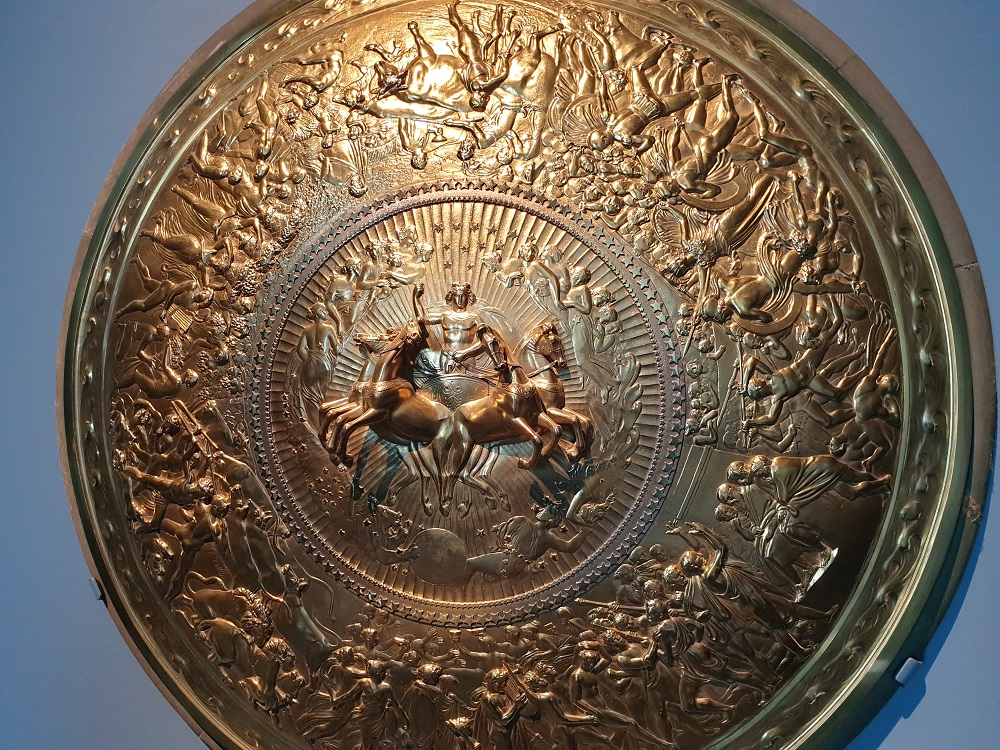
As we mentioned, our prospective graduates in the seventh century BC would surely have been required to chant, or at least appreciate the beauty of the chant of these epic poems or songs. Some fair musical ability is obviously important for understanding the chief works of the muses!
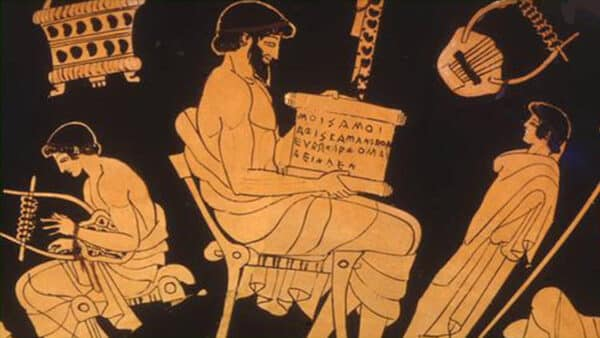
No doubt some degree of familiarity with the art of logical debate and persuasion, which is none other than the liberal art of rhetoric, is assumed for understanding Homer’s works. Without such knowledge we can scarcely appreciate many of the major dialogues and speeches in these works (e.g think of Odysseus, Ajax and Phoenix attempting to persuade Achilles to return to battle. Think of Odysseus’, in a rather pitiable condition, mastery of persuasion in persuading princess Nausicaa to help him, or Nestor’s rousing words inciting the Achaeans, paralyzed with fear, to fight again. Think of the words between Odysseus and Polyphemus, and Circe, and Calypso and of course Penelope!) These two works provide many examples where the art of persuasive speech was of pivotal importance for getting out of trouble and even mere survival.
On the other hand I suppose in reading Homer’s works all these various arts that belong to the educated person were to be acquired simply be reading and rereading these works as opposed to being assumed. Homer is the “teacher of all.” Homerus omnes docuit!
There really is nothing that is not contained in the works of Homer at least in some seminal way. After all, it was the great pre-Socratic philosopher Democritus who said,
Homer, obtaining by fate a divine nature, built a cosmos of all kinds of verse. (DK 21)
Happy the students that have the opportunity to read and discuss these works at length! No wonder, for comprised in these two relatively brief works is the entire substance of a liberal education.
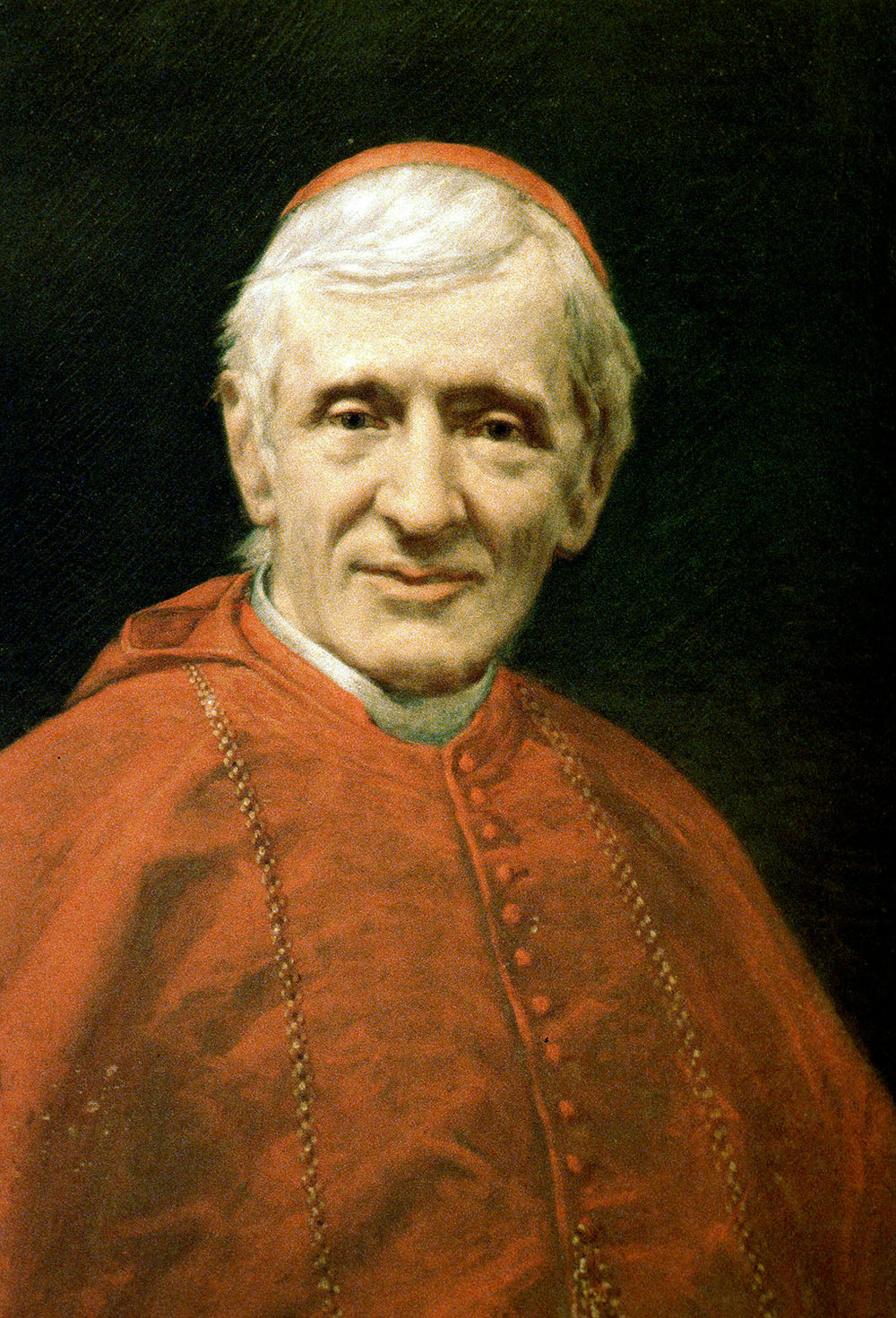
Declared “Doctor of the Church” let us allow John Henry Cardinal Newman to have the last word on the matter,
The great poet (Homer) remained unknown for some centuries,.. His verses were cherished by his countrymen, they might be the secret delight of thousands, but they were not collected into a volume, nor viewed as a whole, nor made a subject of criticism. At length an Athenian Prince took upon him the task of gathering together the scattered fragments of a genius which had not aspired to immortality, of reducing them to writing, and of fitting them to be the text-book of ancient education. Henceforth the vagrant ballad-singer… was submitted, to his surprise, to a sort of literary canonization, and was invested with the office of forming the young mind of Greece to noble thoughts and bold deeds.
Newman continues,
To be read in Homer soon became the education of a gentleman; and a rule, recognized in her free age, remained as a tradition even in the times of her degradation. Xenophon introduces to us a youth who knew both Iliad and Odyssey by heart; Dio witnesses that they were some of the first books put into the hands of boys; and Horace decided that they taught the science of life better than Stoic or Academic. Alexander the Great nourished his imagination by the scenes of the Iliad.
And in a little passage just before this Newman says,
In the country which has been the fountain head of intellectual gifts, in the age which preceded or introduced the first formations of Human Society, in an era scarcely historical, we may dimly discern an almost mythical personage, who, putting out of consideration the actors in Old Testament history, may be called the first Apostle of Civilization. Like an Apostle in a higher order of things, he was poor and a wanderer, and feeble in the flesh, though he was to do such great things, and to live in the mouths of a hundred generations and a thousand tribes. A blind old man; whose wanderings were such that, when he became famous, his birth-place could not be ascertained, so that it was said,
“Seven famous towns contend for Homer dead,
Through which the living Homer begged his bread.”





 Classical Catholic Education
Pingback: TVESDAY EARLY-MORNING EDITION - BIG PULPIT